- Company Articles
- Products and Technology
- Product knowledge
- Aluminum Pipe Clamps: Recyclable Materials for Sustainable Manufacturing

Aluminum Pipe Clamps: Recyclable Materials for Sustainable Manufacturing
Related Product
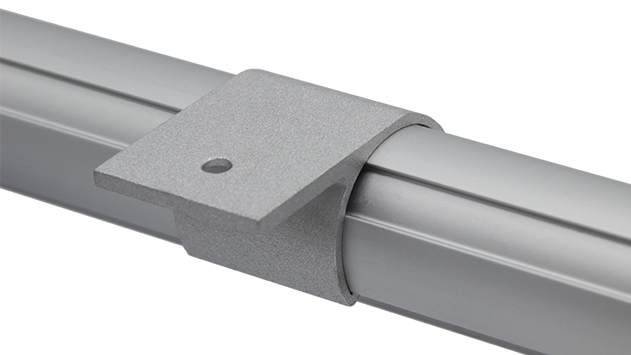
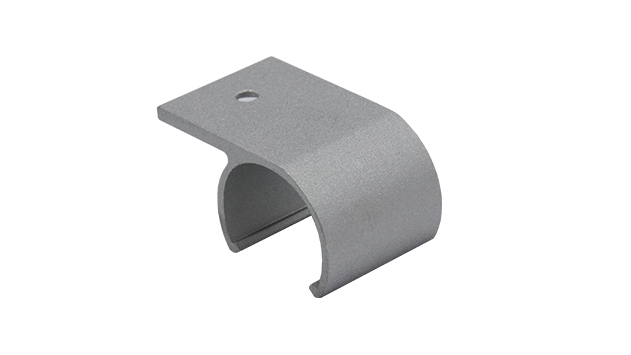
Aluminum Pipe Clamp
Aluminum pipe side clamp used for 28mm aluminum pipe connect with table top, or other accessories.

Walk into any modern manufacturing facility, and you'll likely notice a symphony of moving parts: conveyor belts gliding, workbenches bustling with assembly, and racks neatly organizing materials. Behind this efficiency lies a network of unassuming yet critical components—one of which, the aluminum pipe clamp, plays a quiet but powerful role in shaping both productivity and sustainability. In an era where "green manufacturing" is no longer a buzzword but a business imperative, these small connectors are proving that sustainability can start with the smallest details. Let's dive into how aluminum pipe clamps, paired with aluminum profiles and lean systems, are redefining what it means to build a manufacturing process that's both efficient and kind to the planet.
What Are Aluminum Pipe Clamps, and Why Do They Matter?
At first glance, an aluminum pipe clamp might seem like little more than a metal bracket. But in reality, it's the unsung hero of modular manufacturing setups. These clamps are designed to securely join aluminum pipes, aluminum profiles, and other components, creating structures like workbenches, flow racks, conveyor systems, and material carts. What makes them unique is their simplicity: they're lightweight, easy to install, and—most importantly—highly adaptable. Unlike welded steel connections or one-time-use plastic fasteners, aluminum pipe clamps allow for quick disassembly and reconfiguration. Need to adjust the height of a workbench? Swap out a clamp. Repurpose a flow rack for a new product line? Just loosen a few clamps and rearrange the pipes. This flexibility isn't just about convenience; it's about reducing waste. When a manufacturing line evolves, there's no need to scrap entire structures—you can reuse the same pipes and clamps, cutting down on the demand for new materials.
But their real superpower lies in their material: aluminum. Aluminum is one of the most recyclable materials on the planet, with a recycling rate of over 90% in many industries. Unlike plastic, which degrades over time and often ends up in landfills, or steel, which is heavy and energy-intensive to recycle, aluminum can be melted down and reused repeatedly without losing its strength or quality. For manufacturers aiming to shrink their carbon footprint, this is a game-changer. Every aluminum pipe clamp in use is a step away from single-use plastics or non-recyclable alternatives, and every clamp that gets recycled is a step toward closing the loop on material waste.
Sustainability by Design: Aluminum vs. the Alternatives
To truly appreciate the sustainability of aluminum pipe clamps, it helps to compare them to the alternatives. Let's break down how they stack up against common fasteners like steel clamps and plastic clips:
| Feature | Aluminum Pipe Clamps | Steel Clamps | Plastic Clips |
|---|---|---|---|
| Recyclability | 100% recyclable; can be melted and reused indefinitely without quality loss | Recyclable but energy-intensive to process; often downcycled into lower-grade products | Mostly non-recyclable; degrade over time and contribute to plastic pollution |
| Weight | Lightweight (about 1/3 the weight of steel), reducing transportation emissions | Heavy, increasing fuel use during shipping and handling | Lightweight but prone to breaking under stress |
| Durability | Resistant to corrosion and wear; lasts 10+ years in industrial settings | Durable but prone to rust if not coated; heavier weight can strain structures | Weak under heavy loads; degrades with exposure to heat or chemicals |
| Flexibility | Reusable and reconfigurable; no permanent damage to pipes/profiles | Often welded or permanently fastened; difficult to repurpose | Single-use or brittle; break easily when disassembled |
| Carbon Footprint | Low; aluminum recycling uses 95% less energy than producing new aluminum | High; mining and refining steel require significant energy | High; plastic production relies on fossil fuels and emits greenhouse gases |
The table tells a clear story: aluminum pipe clamps outshine alternatives in nearly every sustainability metric. But their impact goes beyond just being "less bad"—they're actively contributing to a circular economy. For example, when a manufacturing plant upgrades its production line, instead of sending old steel brackets to the scrapyard or plastic clips to a landfill, the aluminum clamps can be collected, melted down, and turned into new clamps, aluminum extrusion profiles, or even other aluminum products. This closed-loop system drastically reduces the need for mining bauxite (the ore used to make aluminum) and cuts down on the energy required to produce new materials.
Aluminum Pipe Clamps and Lean Systems: A Match Made for Efficiency
Sustainability and efficiency often go hand in hand, and nowhere is that more true than in lean manufacturing. Lean systems are all about minimizing waste—whether it's wasted time, wasted materials, or wasted energy. Aluminum pipe clamps fit seamlessly into this philosophy for two key reasons: their modularity and their durability.
Let's start with modularity. Lean systems thrive on adaptability. A production line that can quickly shift from making Product A to Product B without major overhauls is a lean line. Aluminum pipe clamps make this adaptability possible. Imagine a facility that uses aluminum profiles and clamps to build its workbenches. When a new product with different assembly requirements comes along, workers don't need to order custom-built workbenches—they can adjust the existing ones by moving the clamps. This reduces lead times and eliminates the waste of building entirely new structures. Similarly, flow racks—used to move materials from one workstation to another—can be reconfigured with new aluminum pipe clamps to accommodate different part sizes or production volumes. No more waiting for custom racks; just a few tweaks, and the system is ready to go.
Then there's durability. Lean systems aim to eliminate "waste of defects," which includes equipment that breaks down or needs frequent replacement. Aluminum pipe clamps are built to last. Their resistance to corrosion means they can withstand the humidity of a warehouse or the oils and coolants of a machining shop without rusting or weakening. This longevity reduces the need for constant replacements, cutting down on the waste of both materials and labor (since workers aren't spending time fixing or replacing broken clamps). In fact, many manufacturers report aluminum pipe clamps lasting 15+ years with minimal maintenance—far longer than plastic alternatives, which might need replacement every 1–2 years.
Real-World Impact: A Case Study
A mid-sized electronics manufacturer in the Midwest recently switched from steel brackets and plastic clips to aluminum pipe clamps and aluminum profiles for their assembly lines. Within a year, they reported:
A mid-sized electronics manufacturer in the Midwest recently switched from steel brackets and plastic clips to aluminum pipe clamps and aluminum profiles for their assembly lines. Within a year, they reported:
- A 30% reduction in waste sent to landfills, thanks to reusing clamps and profiles during line reconfigurations.
- 25% lower energy costs for material handling, since aluminum structures are lighter and easier to move.
- A 40% decrease in downtime when switching between product lines, as reconfiguring with clamps took hours instead of days.
- A 15% reduction in their carbon footprint, primarily from reduced material production and transportation (since recycled aluminum uses less energy).
Beyond Clamps: The Role of Aluminum Profiles and Extrusion Profiles
Aluminum pipe clamps don't work in isolation—they're part of a larger ecosystem that includes aluminum profiles and aluminum extrusion profiles. To understand their full sustainability impact, we need to look at this ecosystem as a whole.
Aluminum profiles are the "bones" of modular manufacturing structures. They're long, rigid pieces of aluminum with standardized shapes—often with T-slots or grooves that make them easy to connect with clamps. Aluminum extrusion profiles, specifically, are made by pushing heated aluminum through a die to create these shapes. Extrusion is an energy-efficient process compared to other metal-forming methods, and because aluminum is so malleable, it can be extruded into complex profiles with minimal waste. Once extruded, these profiles are cut to length and paired with aluminum pipe clamps to build everything from workbenches to conveyor frames.
The beauty of this system is its uniformity. Aluminum profiles and clamps are designed to work together across brands and applications. A clamp that fits a 20mm aluminum profile from one supplier will likely fit a 20mm profile from another. This standardization means manufacturers aren't locked into proprietary systems—they can mix and match components, further reducing waste. If a profile gets damaged, it can be replaced with a standard part, and the clamps can be reused. There's no need to replace the entire structure, just the damaged piece.
Another key advantage is the weight savings. Aluminum extrusion profiles are strong but lightweight—about 30% lighter than steel profiles of the same strength. This reduces the energy required to transport the profiles and clamps to the manufacturing facility, as well as the energy needed to move the finished structures around the plant. Lighter workbenches are easier to reposition, lighter flow racks require less power to move materials, and lighter conveyor systems put less strain on motors—all of which add up to lower energy use and lower carbon emissions.

The Lifecycle of an Aluminum Pipe Clamp: From Mine to Manufacturing (and Back Again)
To truly grasp the sustainability of aluminum pipe clamps, let's trace their lifecycle from start to finish. It's a journey that highlights why aluminum is often called the "green metal."
1. Raw Material: Bauxite Mining and Aluminum Production
The process starts with bauxite, an ore rich in aluminum. While mining bauxite does have environmental impacts, modern mining practices are becoming more sustainable, with companies restoring ecosystems after mining and using renewable energy to power operations. Once mined, bauxite is refined into alumina, which is then smelted into aluminum. Here's where aluminum's sustainability story begins: smelting aluminum requires a lot of energy, but this energy can come from renewable sources like hydroelectric power (many aluminum plants are located near hydro dams for this reason). What's more, this step only needs to happen once for the aluminum in a pipe clamp—because aluminum is infinitely recyclable.
The process starts with bauxite, an ore rich in aluminum. While mining bauxite does have environmental impacts, modern mining practices are becoming more sustainable, with companies restoring ecosystems after mining and using renewable energy to power operations. Once mined, bauxite is refined into alumina, which is then smelted into aluminum. Here's where aluminum's sustainability story begins: smelting aluminum requires a lot of energy, but this energy can come from renewable sources like hydroelectric power (many aluminum plants are located near hydro dams for this reason). What's more, this step only needs to happen once for the aluminum in a pipe clamp—because aluminum is infinitely recyclable.
2. Extrusion and Manufacturing
The raw aluminum is then extruded into profiles or formed into clamps. Extrusion is a low-waste process: the aluminum is heated until it's malleable, then pushed through a die to create the desired shape. Any scrap from this process is immediately recycled, melting down and reused in the next batch. The clamps themselves are often machined from solid aluminum blocks, with minimal waste—again, scrap is recycled on-site.
The raw aluminum is then extruded into profiles or formed into clamps. Extrusion is a low-waste process: the aluminum is heated until it's malleable, then pushed through a die to create the desired shape. Any scrap from this process is immediately recycled, melting down and reused in the next batch. The clamps themselves are often machined from solid aluminum blocks, with minimal waste—again, scrap is recycled on-site.
3. Use in Manufacturing Facilities
Once the clamps and profiles are manufactured, they're shipped to factories, where they spend years (often decades) being used, reused, and reconfigured. During this time, they require little maintenance—just occasional cleaning or tightening. Their durability means they rarely break, so there's no need for frequent replacements.
Once the clamps and profiles are manufactured, they're shipped to factories, where they spend years (often decades) being used, reused, and reconfigured. During this time, they require little maintenance—just occasional cleaning or tightening. Their durability means they rarely break, so there's no need for frequent replacements.
4. End-of-Life: Recycling and Reuse
When a manufacturing facility finally decides to retire a structure (after 10, 15, or even 20 years), the aluminum pipe clamps and profiles don't end up in a landfill. Instead, they're collected, sorted, and sent to a recycling facility. There, they're melted down at a fraction of the energy cost of producing new aluminum (remember: 95% less energy!) and turned into new clamps, profiles, or other aluminum products. This cycle can repeat indefinitely—aluminum never loses its quality, no matter how many times it's recycled.
When a manufacturing facility finally decides to retire a structure (after 10, 15, or even 20 years), the aluminum pipe clamps and profiles don't end up in a landfill. Instead, they're collected, sorted, and sent to a recycling facility. There, they're melted down at a fraction of the energy cost of producing new aluminum (remember: 95% less energy!) and turned into new clamps, profiles, or other aluminum products. This cycle can repeat indefinitely—aluminum never loses its quality, no matter how many times it's recycled.
This lifecycle is a stark contrast to plastic fasteners, which often end up in landfills after a few years, or steel brackets, which may be recycled but require far more energy to process. Aluminum pipe clamps aren't just sustainable for their use phase—they're sustainable from cradle to cradle.
Overcoming Misconceptions: "Aren't Aluminum Clamps More Expensive?"
One common pushback against aluminum pipe clamps is cost. At first glance, they may seem pricier than plastic clips or even some steel brackets. But this is a classic case of "pay now or pay later." Let's break down the total cost of ownership:
Initial Cost vs. Long-Term Savings
Yes, aluminum pipe clamps may have a higher upfront cost than plastic clips. But plastic clips break easily—if you're replacing them every 1–2 years, the cumulative cost adds up. Steel brackets, while durable, are heavier, which increases shipping costs and may require stronger (and more expensive) support structures. Aluminum clamps, on the other hand, last 10+ years, require no replacement, and reduce shipping costs due to their light weight. Over time, they're almost always cheaper.
Yes, aluminum pipe clamps may have a higher upfront cost than plastic clips. But plastic clips break easily—if you're replacing them every 1–2 years, the cumulative cost adds up. Steel brackets, while durable, are heavier, which increases shipping costs and may require stronger (and more expensive) support structures. Aluminum clamps, on the other hand, last 10+ years, require no replacement, and reduce shipping costs due to their light weight. Over time, they're almost always cheaper.
Waste Reduction = Cost Reduction
Lean systems focus on eliminating waste, and waste has a direct cost. Every time a plastic clip breaks, you're not just paying for a new clip—you're paying for the labor to replace it, the downtime while the structure is being fixed, and the cost of disposing of the broken clip. Aluminum clamps rarely break, so they eliminate these hidden costs. Similarly, when you can reconfigure a workbench with existing clamps instead of buying a new one, you're saving on the cost of a new bench, the shipping cost, and the disposal cost of the old one. These savings add up quickly.
Lean systems focus on eliminating waste, and waste has a direct cost. Every time a plastic clip breaks, you're not just paying for a new clip—you're paying for the labor to replace it, the downtime while the structure is being fixed, and the cost of disposing of the broken clip. Aluminum clamps rarely break, so they eliminate these hidden costs. Similarly, when you can reconfigure a workbench with existing clamps instead of buying a new one, you're saving on the cost of a new bench, the shipping cost, and the disposal cost of the old one. These savings add up quickly.
Sustainability as a Competitive Advantage
Finally, there's the intangible cost of not being sustainable. Today's consumers and business partners are increasingly choosing suppliers with strong environmental credentials. A manufacturing plant that uses aluminum pipe clamps and lean systems can market itself as a sustainable operation, opening doors to partnerships with eco-conscious brands and even qualifying for green incentives or certifications. In this sense, the "cost" of aluminum clamps is offset by the value of building a sustainable reputation.
Finally, there's the intangible cost of not being sustainable. Today's consumers and business partners are increasingly choosing suppliers with strong environmental credentials. A manufacturing plant that uses aluminum pipe clamps and lean systems can market itself as a sustainable operation, opening doors to partnerships with eco-conscious brands and even qualifying for green incentives or certifications. In this sense, the "cost" of aluminum clamps is offset by the value of building a sustainable reputation.
The Future of Sustainable Manufacturing: Small Parts, Big Impact
As manufacturers face growing pressure to reduce their carbon footprints and adopt circular economy principles, the focus is shifting from big-ticket items like solar panels or electric forklifts to the smaller components that make up the backbone of production. Aluminum pipe clamps are a perfect example of how these "small parts" can drive big change. They're not flashy, but they're effective. They prove that sustainability doesn't require a complete overhaul of your operations—it can start with swapping out a few fasteners.
Looking ahead, we can expect to see even more innovation in this space. Manufacturers are already developing aluminum pipe clamps with built-in sensors to monitor wear and tear, ensuring they're replaced only when necessary. Others are experimenting with recycled aluminum alloys that are even stronger or lighter, further improving performance and sustainability. And as aluminum extrusion technology advances, we'll see more complex, efficient profiles that work seamlessly with these clamps, opening up new possibilities for modular, sustainable manufacturing.
In the end, aluminum pipe clamps are more than just connectors—they're a symbol of a manufacturing future where efficiency and sustainability go hand in hand. They remind us that every choice, no matter how small, has an impact. So the next time you walk through a manufacturing facility, take a closer look at those unassuming metal brackets holding the workbenches and racks together. Chances are, they're aluminum pipe clamps—and they're quietly building a more sustainable world, one connection at a time.