- Company Articles
- Products and Technology
- Solution
- Aluminum Pipe Systems: The Foundation to Strengthen Lean Management in Factories

Aluminum Pipe Systems: The Foundation to Strengthen Lean Management in Factories
Related Product
Strengthen Lean Management
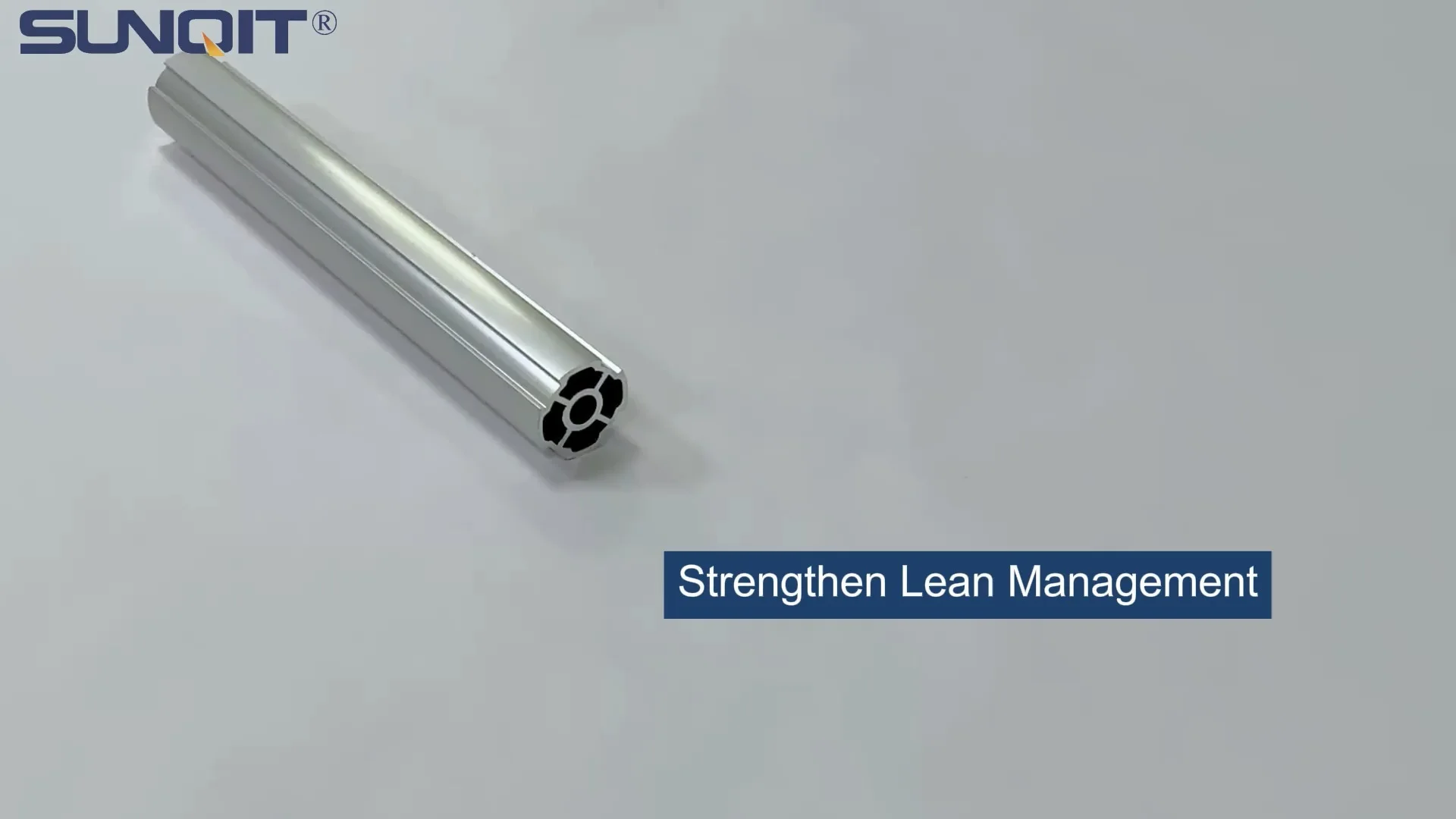
This product is called reinforced aluminum tube, and its bending strength is about twice that of the basic aluminum tube. The end face can process m1o threaded holes, install foot cups and other accessories, or convert internal and external screws in
Walk into a modern manufacturing facility, and you'll notice something different about the workflow. The cluttered workbenches of yesteryear are gone, replaced by sleek, organized stations. Heavy, immovable racks have made way for flexible structures that adapt as production needs change. What's driving this transformation? At the heart of it all is a quiet revolution in material handling: aluminum pipe systems. These unassuming components—aluminum lean pipes, workbenches, flow racks, and conveyors—aren't just tools; they're the backbone of a leaner, more efficient way of working. For factory managers, floor supervisors, and frontline workers alike, they represent the difference between struggling to keep up and thriving in a fast-paced, ever-changing industry.
But why aluminum? And how exactly do these systems strengthen lean management—the philosophy that's become the gold standard for reducing waste, boosting productivity, and keeping customers happy? Let's dive in. This isn't just about metal pipes and joints; it's about creating workplaces where every action adds value, every space is used wisely, and every team member can do their best work. It's about turning the chaos of traditional manufacturing into a symphony of efficiency—one aluminum pipe at a time.
What is Lean Management, Anyway? (No Jargon, Promise)
Before we talk about aluminum pipes, let's make sure we're on the same page about lean management. At its core, lean is simple: it's about doing more with less. Less waste, less time, less effort—while delivering more value to your customers. Think of it as spring cleaning for your factory, but instead of decluttering once a year, you're constantly finding ways to make things smoother, faster, and smarter.
Waste, in lean terms, isn't just trash. It's anything that doesn't add value to the product. That could be waiting for materials to arrive, moving parts from one end of the factory to the other unnecessarily, or struggling with a workbench that's too high or too low. Lean management is about spotting these inefficiencies and fixing them. And here's where aluminum pipe systems come in: they're not just part of the solution—they're the foundation that makes lean possible.
Why Aluminum? The Material That Changes Everything
Let's start with the basics: why aluminum? For decades, factories relied on steel, wood, or even plastic for their racks, workbenches, and conveyor systems. Steel is strong, but it's heavy—try moving a steel workbench when you need to rearrange the line. Wood is cheap, but it scratches, warps, and can't handle heavy loads forever. Plastic? It's lightweight, but not nearly durable enough for a busy factory floor.
Aluminum, though? It's like the Goldilocks of materials: just right. It's lightweight enough that two workers can carry a section of aluminum lean pipe without breaking a sweat, but strong enough to support heavy tools and materials. It resists rust, so it lasts longer in humid or dusty environments. And here's the kicker: it's infinitely customizable. Cut it to length, connect it with simple joints, add accessories like wheels or shelves—all without welding or special tools. That flexibility is game-changing for lean management, where adaptability is key.
But don't just take our word for it. Let's compare aluminum lean pipe to traditional materials. The table below breaks down why aluminum stands out:
| Feature | Steel Pipe | Wooden Structures | Aluminum Lean Pipe |
|---|---|---|---|
| Weight | Heavy (hard to move/reconfigure) | Moderate (but bulky) | Lightweight (easy to handle) |
| Assembly Time | Hours (requires welding/tools) | Hours (cutting, screwing, gluing) | Minutes (snap-together joints) |
| Reconfigurability | Almost impossible (permanent welds) | Difficult (screws strip, wood splits) | Easy (unscrew joints, rearrange) |
| Durability | High (but rusts over time) | Low (scratches, warps, rots) | High (rust-resistant, scratch-proof) |
| Cost Over Time | High (installation + replacement costs) | High (frequent repairs/replacements) | Low (one-time purchase, reusable) |

The Building Blocks: Key Components of Aluminum Pipe Systems
Aluminum pipe systems aren't just a single product—they're a toolkit. Let's walk through the essential components and how each one contributes to lean management. From workbenches that keep tools within arm's reach to flow racks that let materials glide to where they're needed, these parts work together to create a seamless workflow.
Aluminum Lean Pipe: The Backbone of It All
At the center of every aluminum system is the aluminum lean pipe itself. Think of it as the DNA of your factory's layout. These pipes come in standard lengths, but they're easy to cut with a simple hacksaw if you need a custom size. The real magic, though, is in the joints. Most aluminum lean pipe systems use internal rotary aluminum joints or external straight joints—small, plastic or metal connectors that snap onto the pipe and lock into place. Twist a joint, slide on another pipe, twist again, and you're done. No bolts, no nuts, no hassle.
This simplicity means workers can reconfigure a workbench or rack in minutes, not days. Need to add a shelf to hold a new tool? Grab a pipe, a couple of joints, and you're set. Seasonal demand spiking? Rearrange the flow racks to double production without calling in contractors. That's lean management in action: adapting quickly to change without wasting time or money.
Workbench: Where the Work Happens (and Gets Better)
A workbench isn't just a table—it's where your team spends most of their day. If it's cluttered, too low, or missing storage, productivity plummets. Traditional workbenches are one-size-fits-all, but aluminum workbenches? They're built for the way your team works. Want a single-deck workbench without casters for a stationary station? Done. Need a double-deck bench with wheels so it can roll to the assembly line? No problem. Add a shelf for tools, a bin for scraps, or a monitor arm for digital work instructions—all with simple aluminum pipe and accessories.
Ergonomics matter, too. A workbench that's too high leads to shoulder strain; too low, and workers hunch over, causing back pain. Aluminum workbenches are adjustable—raise or lower the legs by swapping out pipe lengths—to fit every team member, reducing fatigue and injuries. When workers are comfortable, they're faster and more focused. That's not just good for morale; it's good for your bottom line.
Flow Rack: Let Gravity Do the Work
Imagine this: a worker spends 10 minutes every hour walking to the storage room to grab parts. Over a shift, that's over an hour wasted—time they could spend assembling products. Now, picture a flow rack: a sloped rack with roller tracks that let materials slide down to the front as they're used. No more walking, no more waiting. Parts are always within arm's reach, and the rack refills itself as the team works. That's the power of a flow rack, and aluminum makes it better.
Aluminum flow racks are lightweight, so you can mount them above workbenches or along the assembly line without reinforcing the floor. The roller tracks—often made of plastic or aluminum—glide smoothly, so even heavy boxes of parts move easily. And since they're modular, you can add more rows or adjust the slope to fit different-sized containers. For lean management, this is a no-brainer: it cuts down on "motion waste" (one of the seven deadly wastes in lean) and keeps the workflow steady.
Conveyor: Connecting the Dots (Without the Fuss)
No factory is complete without conveyors—they're the arteries that move materials from one station to the next. But traditional conveyors are massive, expensive, and hard to modify. Aluminum conveyors, though? They're like the Lego version of conveyors. Lightweight, modular, and easy to set up. Need a short conveyor to connect two workbenches? Snap together aluminum pipes, add a roller track, and you're moving parts in minutes. Need to extend it later? Just add more sections.
Aluminum conveyors are also gentler on products. The roller tracks, often with plastic or rubber wheels, prevent scratches on delicate parts like circuit boards or glass components. And since they're low-profile, they don't take up much space—perfect for small factories where every square foot counts. For lean management, conveyors reduce "transportation waste" by moving materials efficiently, so nothing sits idle waiting to be moved.

From Blueprint to Reality: How Aluminum Pipe Systems Strengthen Lean Management
Okay, so aluminum pipe systems are flexible, durable, and customizable. But how exactly do they strengthen lean management? Let's break it down into four key lean principles and see how aluminum makes them actionable.
1. Eliminate Waste: Less Time, More Value
Waste is the enemy of lean, and aluminum pipe systems are waste-fighting machines. Take "waiting waste," for example. When a workbench doesn't have the right tools, workers wait around for someone to fetch them. With an aluminum workbench, you can add tool holders, bins, and hooks right where they're needed, so tools are always at hand. No more waiting.
Then there's "inventory waste"—holding onto more materials than you need. Aluminum flow racks help here, too. By organizing parts in a "first-in, first-out" (FIFO) system, you use older parts first, reducing the chance of materials expiring or becoming obsolete. And since flow racks are compact, you don't need to stockpile parts in a separate warehouse—they're right on the line, but not taking up extra space.
2. Continuous Improvement: Get Better Every Day
Lean management isn't a one-and-done project; it's about constantly finding ways to improve. Aluminum pipe systems make continuous improvement easy because they're so adaptable. Let's say your team notices that a certain workbench setup is causing bottlenecks. Instead of hiring an engineer to redesign it, they can rearrange the aluminum pipes themselves. Move a shelf, add a roller track, adjust the height—all in an hour. Then they can test the new setup, tweak it again if needed, and keep getting better.
This "test and learn" approach is at the heart of lean, and aluminum systems remove the barriers to trying new things. No more waiting for budget approvals or contractor availability. Your team has the power to make changes themselves, which not only improves efficiency but also boosts morale—people love feeling like they can shape their work environment.
3. Respect for People: Making Work Easier
Lean management isn't just about processes; it's about people. Aluminum pipe systems show your team that you care about their well-being. An ergonomic aluminum workbench that adjusts to their height? That's respect. A flow rack that reduces bending and reaching? That's respect. A conveyor that takes the strain out of carrying heavy parts? That's respect.
When workers feel valued, they're more engaged, more productive, and less likely to leave. High turnover is a huge waste in itself—training new employees takes time and money. By investing in aluminum systems that make work easier, you're not just improving efficiency; you're building a team that wants to stay and grow with your company.
4. Value Stream Mapping: Seeing the Big Picture
Value stream mapping is a lean tool that helps you visualize every step of your production process, from raw materials to finished product. Aluminum pipe systems make this easier because they're modular and visible. You can color-code different sections of your line (red for assembly, blue for testing) using aluminum pipes with colored sleeves, so everyone can see the flow at a glance. If there's a bottleneck—say, a workbench that's always backed up—you can spot it immediately and reconfigure the aluminum setup to fix it.
This visibility also helps with onboarding new employees. A new hire can walk the line, see how aluminum conveyors connect stations, and understand the workflow in minutes, not days. That speeds up training and reduces errors, which is another win for lean.

Real Stories: Factories Thriving with Aluminum Lean Pipe Systems
Enough theory—let's talk about real-world results. Take a mid-sized electronics manufacturer in Ohio, for example. A few years ago, their assembly line was a mess. They used steel workbenches that hadn't been moved in a decade, wooden racks that were falling apart, and workers were constantly tripping over extension cords and loose parts. Their on-time delivery rate was 75%, and employee turnover was high.
Then they switched to an aluminum pipe system. They replaced the steel workbenches with adjustable aluminum workbenches, added flow racks along the line, and installed short aluminum conveyors to move circuit boards between stations. The results? On-time deliveries shot up to 95% because there were fewer delays. Employee turnover dropped by 30% because workers were less frustrated and more comfortable. And they saved $50,000 in the first year by reducing waste and cutting down on overtime.
Another example: a food packaging plant in Texas. They needed to adapt quickly to seasonal demand—more snacks in the summer, more frozen meals in the winter. With their old steel racks, reconfiguring the line took weeks and cost thousands. Now, with aluminum lean pipe and adjustable flow racks, they can switch from snack packaging to frozen meal packaging in a day. They estimate they've saved over $100,000 in setup costs alone.
These aren't outliers. Factories of all sizes are seeing similar results. The common thread? Aluminum pipe systems give them the flexibility to implement lean principles without overhauling their entire operation. It's not about spending millions on new machinery; it's about using smart, adaptable tools to work better.
Choosing the Right Partner: Finding a Lean System Supplier You Can Trust
So, you're sold on aluminum pipe systems. Now what? The next step is finding a lean system supplier who can help you design, build, and maintain your setup. But not all suppliers are created equal. Here's what to look for:
1. Experience with Lean Principles: A good supplier doesn't just sell pipes and joints—they understand lean management. They should be able to walk your floor, identify inefficiencies, and suggest how aluminum systems can fix them. Ask for case studies or references from other factories in your industry.
2. Customization Options: Your factory is unique, so your setup should be too. Avoid suppliers who only offer "one-size-fits-all" kits. Look for someone who can design a custom workbench, flow rack, or conveyor system tailored to your needs.
3. Quality Materials: Not all aluminum is the same. Make sure your supplier uses high-grade aluminum lean pipe and durable joints. Cheap materials might save you money upfront, but they'll bend, break, or wear out quickly—costing you more in the long run.
4. Support After the Sale: What happens if you need help reconfiguring your system six months down the line? A good supplier will offer training, technical support, and fast delivery of replacement parts. Avoid suppliers who disappear once the sale is done.
5. Sustainability Focus: Lean management and sustainability go hand in hand—both are about reducing waste. Look for a supplier who uses recycled aluminum and eco-friendly packaging. It's not just good for the planet; it's good for your brand, too.
Conclusion: Aluminum Pipe Systems—More Than Tools, They're a Lean Legacy
At the end of the day, aluminum pipe systems aren't just about pipes and joints. They're about building a factory that can adapt, grow, and thrive in a world where change is constant. They're about empowering your team to do their best work, reducing waste so you can focus on what matters, and creating a culture of continuous improvement.
Lean management isn't a trend—it's the future of manufacturing. And aluminum pipe systems are the foundation that makes that future possible. They're affordable, adaptable, and designed with the worker in mind. So whether you're a small shop looking to streamline your workflow or a large factory aiming to cut costs and boost productivity, aluminum pipe systems are the first step toward a leaner, stronger, more successful operation.
Ready to start your lean journey? Grab a section of aluminum lean pipe, a few joints, and see what you can build. You might be surprised at how quickly a simple change can transform your factory—and your bottom line.