- Company Articles
- Products and Technology
- Product knowledge
- Aluminum Pipe with Board Holder: Eco-Friendly Alternative

Aluminum Pipe with Board Holder: Eco-Friendly Alternative
Related Product
Aluminum Pipe with Board Holder
The linear rolling assembly can be arbitrarily connected in the protruding part of the card slot to increase the rigidity of the track.
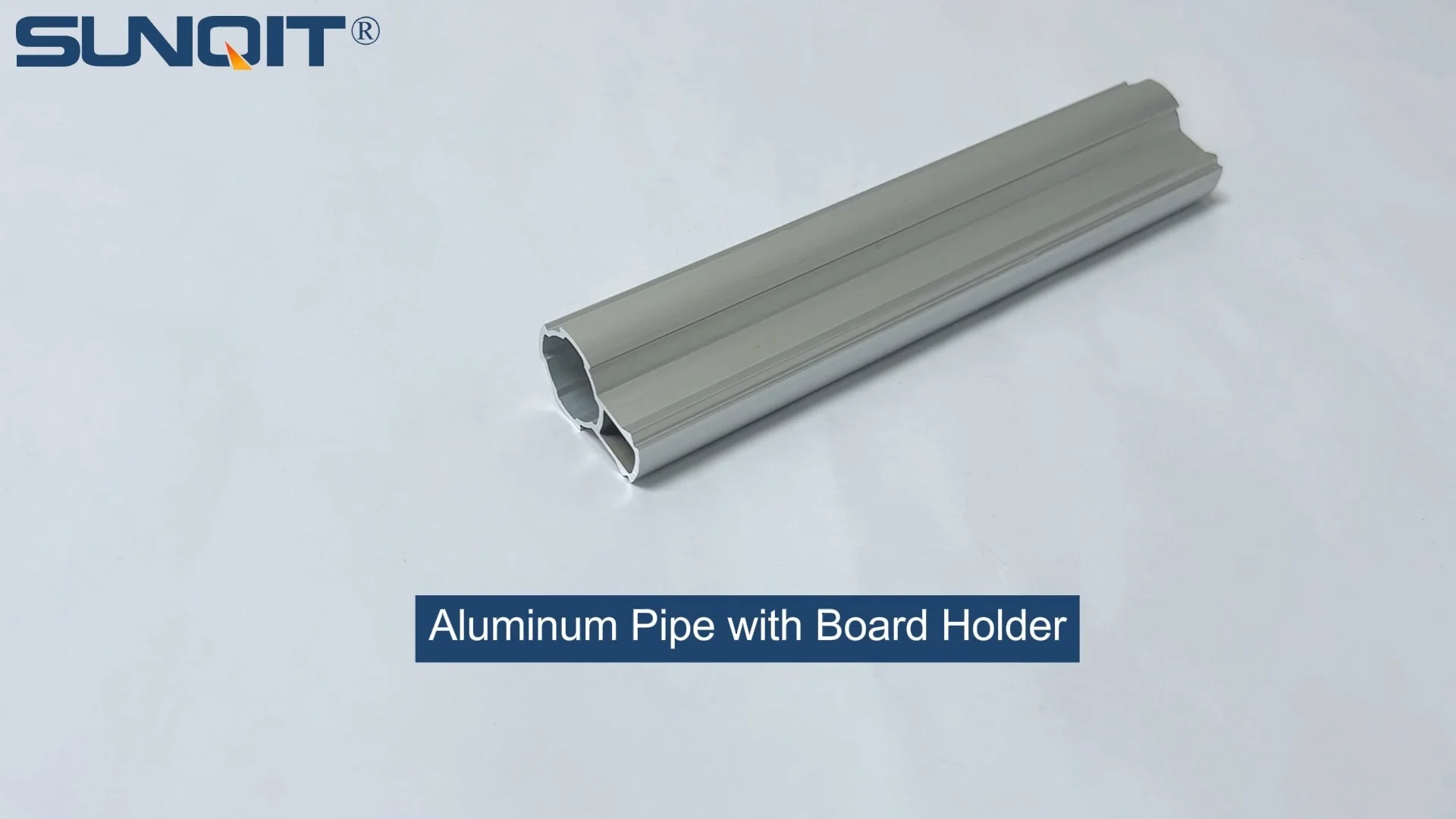
Step into a modern manufacturing facility, and you'll likely notice a quiet revolution unfolding on the factory floor. The heavy, rust-streaked steel workbenches of yesteryear are being replaced by sleek, silver structures that glint under overhead lights—lightweight yet surprisingly sturdy, modular yet built to last. These are aluminum pipe systems, and at their heart lies a solution that's reshaping how businesses balance efficiency with environmental responsibility: the Aluminum Pipe with Board Holder. More than just a tool for organizing workflows, it's a statement about the future of sustainable manufacturing. Let's dive into why this unassuming product is becoming a cornerstone for eco-conscious teams, and how it's redefining what it means to "build better" in today's world.
Why Aluminum? The Sustainability Story Behind the Material
To understand the appeal of the Aluminum Pipe with Board Holder, we first need to talk about aluminum itself—a material that's quietly become a hero of the green manufacturing movement. Unlike steel, which requires massive amounts of energy to mine and refine, aluminum is infinitely recyclable. In fact, nearly 75% of all aluminum ever produced is still in use today, thanks to a recycling process that uses just 5% of the energy needed to create new aluminum from raw ore. That's a staggering statistic, and it matters for businesses looking to shrink their carbon footprint.
But aluminum isn't just eco-friendly—it's practical. At roughly 1.5 pounds per linear foot, it's significantly lighter than steel (which clocks in at around 4 pounds per foot), making it easier to transport, install, and reconfigure. This lightness doesn't come at the cost of strength, either. Modern aluminum alloys, especially those used in industrial profiles, boast impressive load-bearing capacities, often matching or exceeding steel in applications like workbenches and material racks. And unlike steel, aluminum resists corrosion naturally, so you won't find rust eating away at your equipment after a few years of use—meaning less waste from replacements and repairs.
Compare this to plastic pipe systems, which are often made from non-biodegradable materials like PVC. While plastic is cheap upfront, it degrades under heat and heavy use, leading to frequent replacements. Those old plastic pipes? They'll likely end up in a landfill, where they'll take centuries to break down. Aluminum, by contrast, can be melted down and reused repeatedly, closing the loop on waste.
What Is an Aluminum Pipe with Board Holder, Exactly?
At its core, the Aluminum Pipe with Board Holder is a modular building block for creating custom workspaces. Imagine a set of aluminum pipes—hollow, extruded tubes with precise T-slot grooves along their length—that connect using specialized joints. These pipes form the skeleton of your structure, whether it's a workbench, a shelving unit, or a mobile trolley. The "board holder" part is simple but genius: it's a clamp or bracket designed to attach flat surfaces (like wooden boards, plastic sheets, or metal panels) directly to the aluminum pipes, turning the skeleton into a functional workspace.
What makes this system so versatile is its adaptability. Let's say you run a small electronics assembly line. You might start with a basic workbench: four aluminum pipes as legs, connected by horizontal pipes at the top, with a plywood board held in place by board holders. As your business grows, you add a second tier of shelves using vertical pipes and more board holders. Need to move the workbench to a new location? Swap out the fixed feet for swivel casters (another type of aluminum pipe accessory), and suddenly it's a mobile workstation.
These systems thrive on simplicity. There's no welding, no drilling, no specialized tools required. Most joints twist or snap into place, and board holders secure with a few turns of a hex key. This means your team can assemble, disassemble, and reconfigure the structure in minutes—not days. For businesses that need to pivot quickly (like those in aerospace, automotive, or electronics manufacturing), this flexibility is a game-changer.

Beyond Eco-Friendliness: The Hidden Benefits for Your Team
Sustainability is a big draw, but the Aluminum Pipe with Board Holder offers perks that hit closer to home for your team's day-to-day work. Let's start with ergonomics. Traditional workbenches are often one-size-fits-all, forcing workers to hunch or stretch to reach tools and materials. With aluminum pipe systems, you can adjust the height of the board holder to match each employee's needs—reducing strain on backs, shoulders, and wrists. Happy, comfortable workers are more productive, and they take fewer sick days. It's a win-win.
Then there's the matter of organization. A cluttered workspace is a breeding ground for errors and inefficiency. Aluminum pipe systems, with their T-slot grooves, let you add accessories like tool hooks, bin holders, and monitor mounts directly to the frame. The board holder itself can be fitted with dividers or pegboards, keeping small parts within arm's reach. Walk into a facility using these systems, and you'll notice the difference: everything has a place, and workers spend less time searching for tools and more time building products.
Durability also plays into team morale. Nothing frustrates a worker more than using equipment that feels flimsy or unreliable. Aluminum's sturdiness means no more wobbly workbenches that shake when you tighten a screw, or shelves that sag under the weight of materials. It sends a message: "We care about your tools, and we care about you."

Aluminum vs. Traditional Materials: A Side-by-Side Comparison
| Feature | Aluminum Pipe with Board Holder | Steel Pipe Systems | Plastic Pipe Systems |
|---|---|---|---|
| Recyclability | 95% energy savings vs. new production; infinitely recyclable | Recyclable but energy-intensive; often downcycled | <5% recycled globally; non-biodegradable |
| Weight (per linear foot) | ~1.5 lbs | ~4 lbs | ~0.8 lbs (but less durable) |
| Corrosion Resistance | Excellent (no rust) | Poor (requires painting/coating) | Good, but degrades in UV light/heat |
| Assembly Difficulty | Tool-free/simple (hex key only) | Requires welding/drilling | Simple, but joints loosen over time |
| Lifespan (Industrial Use) | 10–15+ years (with recycling afterward) | 8–12 years (if maintained) | 3–5 years (prone to cracking/warping) |
| Carbon Footprint (Manufacturing) | Low (especially recycled aluminum) | High (coal-intensive production) | Medium (fossil fuel-based plastics) |
Aluminum Pipe Accessories: The Glue That Holds It All Together
A great pipe is only as good as the accessories that bring it to life, and aluminum pipe systems shine here. Aluminum pipe accessories are the unsung heroes of these setups, turning basic tubes into fully functional workspaces. Let's break down a few essentials:
- Joints & Connectors: These are the building blocks of your structure. Internal rotatary aluminum joints let you pivot pipes at angles, while 90-degree crossing joints create sturdy corners. Need to connect three pipes at once? A three-way aluminum joint does the trick. Most click or twist into place, no tools required.
- Board Holders: The star of the show! These clamps or brackets slide into the T-slot of aluminum pipes and secure boards of various thicknesses. Some even have adjustable grips, so you can switch between plywood, MDF, or metal sheets without changing accessories.
- Casters & Feet: For mobile setups, flat swivel casters with brakes lock into place when you need stability and roll smoothly when you don't. Fixed feet (like anti-slip adjustable leveling feet) keep workbenches steady on uneven floors.
- Tool Hooks & Bin Racks: These attach directly to the T-slot grooves, turning vertical pipes into storage for tools, cables, or small parts bins. No more digging through drawers—everything's visible and within reach.
- Roller Tracks: For material flow, add plastic or aluminum roller tracks to your aluminum frame. These turn shelves into gravity-fed systems, letting parts glide from one workstation to the next with minimal effort.
The beauty of these accessories is that they're universal. A joint from one supplier will likely fit a pipe from another, so you're not locked into a single brand. This interoperability keeps costs low and ensures you can expand your system over time without starting from scratch.
Lean System Principles in Action: How Aluminum Pipes Boost Efficiency
If you've spent any time in manufacturing, you've probably heard of "lean system" methodology—the practice of minimizing waste while maximizing value. Aluminum pipe systems are a lean dream come true. Here's how:
Waste Reduction: Traditional fixed workbenches are a classic example of "overproduction" waste—you build a custom structure for one task, and if that task changes, the bench becomes obsolete. Aluminum systems eliminate this by being reconfigurable. A workbench today can be a shelving unit tomorrow, and a mobile trolley next week. No more scrapping perfectly good equipment because your needs shifted.
Space Optimization: In a busy facility, every square foot counts. Aluminum's lightweight design means you can build vertical structures (like tall material racks) without reinforcing the floor. The T-slot grooves let you mount accessories like tool hooks or monitor arms directly to the frame, freeing up table space for actual work.
Lead Time Reduction: Ordering a custom steel workbench can take weeks (or months) of design, fabrication, and shipping. With aluminum pipe systems, you can assemble a basic workbench in under an hour using off-the-shelf parts. Need to scale up for a rush order? Add more pipes and board holders—no waiting on suppliers.
Even better, lean isn't just for big corporations. Small businesses, too, can benefit from aluminum systems. A local machine shop in Ohio, for example, recently swapped its old steel workbenches for aluminum ones. By reconfiguring the setup to match their new CNC machine layout, they cut material handling time by 30% and reduced their quarterly waste by 150 pounds—all while saving on energy costs from lighter, more efficient equipment.
Real-World Applications: Where Aluminum Pipe with Board Holder Shines
Aluminum pipe systems aren't just theoretical—they're transforming workspaces across industries. Let's look at a few examples:
Electronics Manufacturing
Precision is key in electronics, and aluminum workbenches deliver. ESD (electrostatic discharge) workbenches, made by adding conductive materials to the board holder, protect sensitive components from static damage. Aluminum's non-conductive properties (when anodized) make it ideal here. Workers can customize their benches with tool hooks for soldering irons, bin racks for resistors and capacitors, and monitor mounts for assembly guides—all without drilling holes or welding.
Automotive Repair Shops
Grease, oil, and heavy parts are no match for aluminum. Mobile aluminum trolleys with board holders carry tools and parts directly to the vehicle, reducing trips back to the toolbox. Roller tracks on shelves let mechanics slide heavy components (like transmissions) into place with minimal lifting, cutting down on workplace injuries.
Warehousing & Distribution
Aluminum material racks with board holders organize inventory efficiently. Adjustable shelves accommodate boxes of all sizes, and gravity-fed roller tracks ensure the oldest stock gets picked first (FIFO method). Since aluminum is lightweight, workers can reconfigure racks during peak seasons without heavy machinery.
Small Craft Studios
It's not just industrial settings. Artists and makers love aluminum systems for their flexibility. A woodworker might use an aluminum frame with a board holder to secure a workbench top, then add pegboards for tools and shelves for lumber. When they switch to pottery, they can reconfigure the pipes into a drying rack—no need for separate furniture.
The Future of Manufacturing: Why Aluminum Is Here to Stay
As businesses face increasing pressure to reduce their environmental impact—from customers, regulators, and even their own teams—sustainable solutions like the Aluminum Pipe with Board Holder will only grow in popularity. But it's not just about checking a "green" box. These systems make financial sense, too. Lower energy costs from recycling, reduced maintenance, and faster setup times all add up to a better bottom line.
Innovation is also driving aluminum forward. New alloys are making pipes stronger and lighter, while advanced extrusion techniques are creating more complex T-slot profiles that support even more accessories. We're seeing smart features, too—like embedded sensors in aluminum profiles that track weight loads or alert managers when a shelf is overstocked. The future isn't just sustainable; it's connected.
Perhaps most importantly, aluminum pipe systems empower businesses to take control of their sustainability journey. You don't need a massive budget or a team of engineers to make a difference. Start small: swap one steel workbench for an aluminum one with a board holder. See how it transforms your workflow, then expand. Every pipe recycled, every pound of carbon saved, adds up.
Building a Better Tomorrow, One Pipe at a Time
The Aluminum Pipe with Board Holder is more than a tool—it's a commitment to progress. It's choosing durability over disposability, flexibility over rigidity, and sustainability over short-term gains. In a world where every business decision ripples outward, this simple system proves that going green and growing your bottom line don't have to be opposites. So the next time you look at your workspace, ask: is it built for the planet, your team, and the future? With aluminum, the answer is yes.