- Company Articles
- Products and Technology
- Product knowledge
- Aluminum Pipe with Board Holder for Educational Workshops

Aluminum Pipe with Board Holder for Educational Workshops
Related Product
Aluminum Pipe with Board Holder
The linear rolling assembly can be arbitrarily connected in the protruding part of the card slot to increase the rigidity of the track.
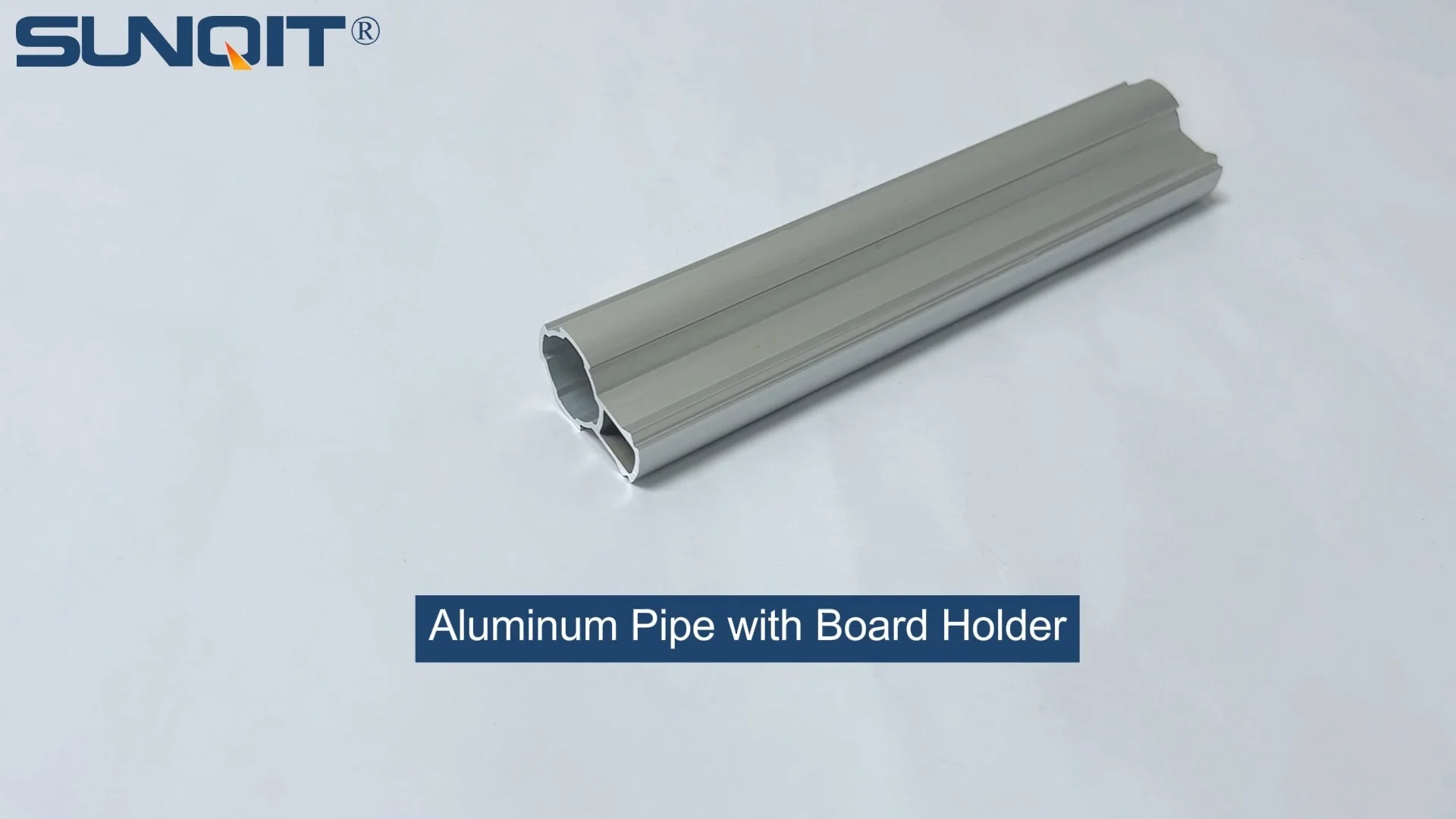
Walk into any educational workshop—whether it's a high school art studio, a college engineering lab, or a community maker space—and you'll likely see the same challenge: static, one-size-fits-all furniture struggling to keep up with dynamic, hands-on learning. Students sprawl across clunky wooden tables, tools get lost in disorganized corners, and rearranging for group projects becomes a Herculean task involving heavy lifting and scratched floors. But what if there was a solution that adapts as quickly as students' ideas? Enter the aluminum pipe with board holder —a simple yet revolutionary tool that's transforming workshops from rigid spaces into flexible hubs of innovation. In this article, we'll explore how this unassuming system, paired with the right aluminum profile accessories , is redefining what educational workspaces can be.
Why Educational Workshops Need More Than Just "Tables and Chairs"
Traditional workshop setups are stuck in the past. Heavy wooden workbenches, fixed shelving, and immovable storage units might feel sturdy, but they fail to support the way students learn today. Think about a typical day in a STEM classroom: morning sessions might involve individual coding on laptops, followed by afternoon group projects building robotic prototypes, and evening workshops where students present their work to peers. A single workspace needs to morph from a quiet study area to a collaborative construction zone to a presentation stage—all without breaking a sweat. Rigid furniture can't keep up, leading to wasted time, frustrated students, and missed opportunities for creativity.
Safety is another concern. Many older workbenches have sharp edges, splintered wood, or wobbly legs—hazards when students are focused on soldering circuits or carving sculptures. And let's not forget about longevity: paint splatters, glue spills, and the general wear and tear of busy workshops can leave traditional furniture looking worn out within a year, forcing schools to spend more on replacements. What educators need is a system that's durable, adaptable, and safe—qualities that aluminum pipe brings to the table (pun intended).
The Aluminum Pipe with Board Holder: A Toolkit for Flexibility
At first glance, an aluminum pipe with board holder might seem like little more than a metal tube with a clip. But its magic lies in its simplicity and versatility. Here's how it works: lightweight, corrosion-resistant aluminum pipes form the "backbone" of the system, connected by modular joints and brackets (part of the aluminum profile accessories family). Attached to this frame is a board holder—a sleek, adjustable bracket that can secure everything from whiteboards and project blueprints to tool organizers and material storage bins. The result? A setup that can be reconfigured in minutes, without tools, to fit any project.
Let's break down the key features that make this system a game-changer for educational workshops:
- Lightweight but Durable: Aluminum is 1/3 the weight of steel, meaning students and teachers can rearrange the setup without straining their backs. Yet it's tough enough to withstand daily use—scratch-resistant, rust-proof, and able to support heavy materials like power tools or stacks of lumber.
- Tool-Free Assembly: No drills, screws, or hammers required. The system uses snap-on joints and clamp-style brackets, so even a group of middle schoolers can assemble a basic workbench in under 15 minutes. This not only saves time but also turns setup into a learning activity—teaching students about spatial reasoning and teamwork.
- Endless Customization: With aluminum profile accessories like hooks, shelves, and caster wheels, the system adapts to any need. Need a standing desk for a tall student? Raise the aluminum pipes. Want to add a shelf for paint cans? Clip on a bracket. Hosting a workshop with 20 people? Link multiple setups together to form a long collaborative table.
- Safe by Design: Aluminum pipes have smooth, rounded edges, eliminating the risk of splinters or cuts. The board holder's clamp mechanism is secure but gentle, so it won't damage whiteboards or student artwork. Plus, the system's stability—even when loaded with supplies—reduces the risk of tipping or accidents.

From Chaos to Collaboration: Real-World Impact in Workshops
To understand the difference the aluminum pipe with board holder makes, let's step into a few real-world scenarios:
The High School Art Studio: Ms. Rodriguez, an art teacher, used to dread Fridays—"cleanup day"—when students would struggle to store large canvases and messy paint supplies. Now, her studio uses aluminum pipe systems with board holders. Each student has a personalized setup: the board holder secures their current canvas, while hooks on the pipes hold paintbrushes and palettes. When the class switches to pottery, the boards come down, and the pipes reconfigure into sturdy tables for clay work. "Last month, we hosted a mural project with 30 students," Ms. Rodriguez says. "We linked 10 setups into a giant U-shape, and everyone had space to paint. Cleanup took 20 minutes instead of 2 hours. It's like night and day."
The College Engineering Lab: Professor Chen's mechanical engineering students work on projects ranging from small drone parts to full-scale robot prototypes. Before using aluminum pipes, his lab had fixed workbenches that limited group size. Now, students design their own workspaces using the system: one team built a tilted board holder to display circuit diagrams, while another added caster wheels to their setup so they could roll their project to the testing area. "The flexibility encourages experimentation," Professor Chen notes. "If a student has an idea for rearranging their tools, they don't need to ask permission—they just do it. That's how innovation happens."
The Community Maker Space: The Greenpoint Maker Hub, a nonprofit workshop in Brooklyn, serves everyone from 8-year-olds learning woodworking to retirees building custom furniture. Director Maria Gonzalez needed a setup that could handle this diversity. "We used to have a mix of old tables and rickety shelves," she says. "Now, with aluminum pipes and board holders, we can switch from a kids' craft day in the morning to a furniture-building workshop in the afternoon. The board holders even double as display space for finished projects—visitors can see what we're creating without cluttering the floor."

Traditional vs. Aluminum: A Side-by-Side Comparison
Still not convinced the aluminum pipe with board holder is worth the switch? Let's put it head-to-head with traditional workshop setups. The table below compares key aspects of both, from cost to adaptability:
| Aspect | Traditional Workspace (Wooden Tables/Shelves) | Aluminum Pipe with Board Holder Setup |
|---|---|---|
| Customization | Fixed design; impossible to adjust height, shape, or features without rebuilding. | Fully adjustable: change height, add/remove shelves, or reconfigure shape in minutes. |
| Durability | Prone to scratches, water damage, and warping; typically lasts 2–3 years with heavy use. | Corrosion-resistant aluminum; withstands spills, heavy loads, and daily reconfiguration; lasts 10+ years. |
| Safety | Risk of splinters, sharp edges, and instability when moved; heavy lifting causes strain injuries. | Smooth edges, lightweight design, and stable joints; no heavy lifting required. |
| Cost Over Time | Low upfront cost ($200–$500 per workbench), but frequent replacements add up ($1,000–$2,000 over 5 years). | Higher upfront cost ($300–$700 per setup), but no replacement needed for a decade; lower long-term cost. |
| Assembly Time | Requires tools and 2–3 people; takes 1–2 hours per workbench. | Tool-free; 1 person can assemble a basic setup in 15–30 minutes. |
Beyond the Workbench: Building a Lean System for Learning
The aluminum pipe with board holder isn't just about furniture—it's about embracing a lean system mindset in education. "Lean" principles, originally from manufacturing, focus on reducing waste and maximizing value. In workshops, this means cutting down on time wasted moving furniture, searching for tools, or fixing broken equipment—so students can focus on what matters: creating, experimenting, and learning. The aluminum system embodies this: its flexibility eliminates the "waste" of rigid spaces, while its durability ensures resources are invested in tools that last.
For example, in a traditional workshop, a teacher might spend $500 on a wooden workbench that works for painting but not for 3D printing. With the aluminum system, that same $500 setup adapts to both activities—no need to buy a second bench. Over time, schools save money, reduce waste, and free up budgets for other essentials like art supplies or science kits.
Choosing the Right Setup: A Guide for Educators
Ready to bring aluminum pipe with board holder systems to your workshop? Here's what to consider:
Start Small, Then Scale: Begin with 2–3 basic setups to test how they work in your space. Most suppliers offer starter kits with aluminum pipes, a board holder, and essential accessories like shelves and hooks. Once you see how students use them, you can expand.
Think About Your Students: Younger kids might need lower setups with rounded edges, while college students may prefer standing-height workbenches. If your workshop hosts mixed-age groups, look for adjustable-height pipes.
Don't Forget the Extras: Aluminum profile accessories are where the system truly shines. Invest in caster wheels for easy movement, magnetic hooks for metal tools, and extra board holders for storing student projects between sessions.
The Future of Workshops: Growing with Creativity
Educational workshops are no longer just places to "make things"—they're spaces where students learn to collaborate, problem-solve, and think outside the box. The aluminum pipe with board holder system doesn't just support these goals; it amplifies them. By removing the barriers of rigid furniture, it lets students focus on what matters: their ideas. Whether it's a group of kindergartners building a cardboard castle or graduate students prototyping a renewable energy device, the system grows with them—adapting, evolving, and inspiring.
As one student put it after using the system in her engineering class: "It's like having a workspace that thinks the way I do—fast, flexible, and ready for anything." In a world where creativity and adaptability are the most valuable skills, isn't that exactly what our educational spaces should be?