- Company Articles
- Products and Technology
- Product knowledge
- Aluminum Pipe with Board Holder: Future of Workshop Tools

Aluminum Pipe with Board Holder: Future of Workshop Tools
Related Product
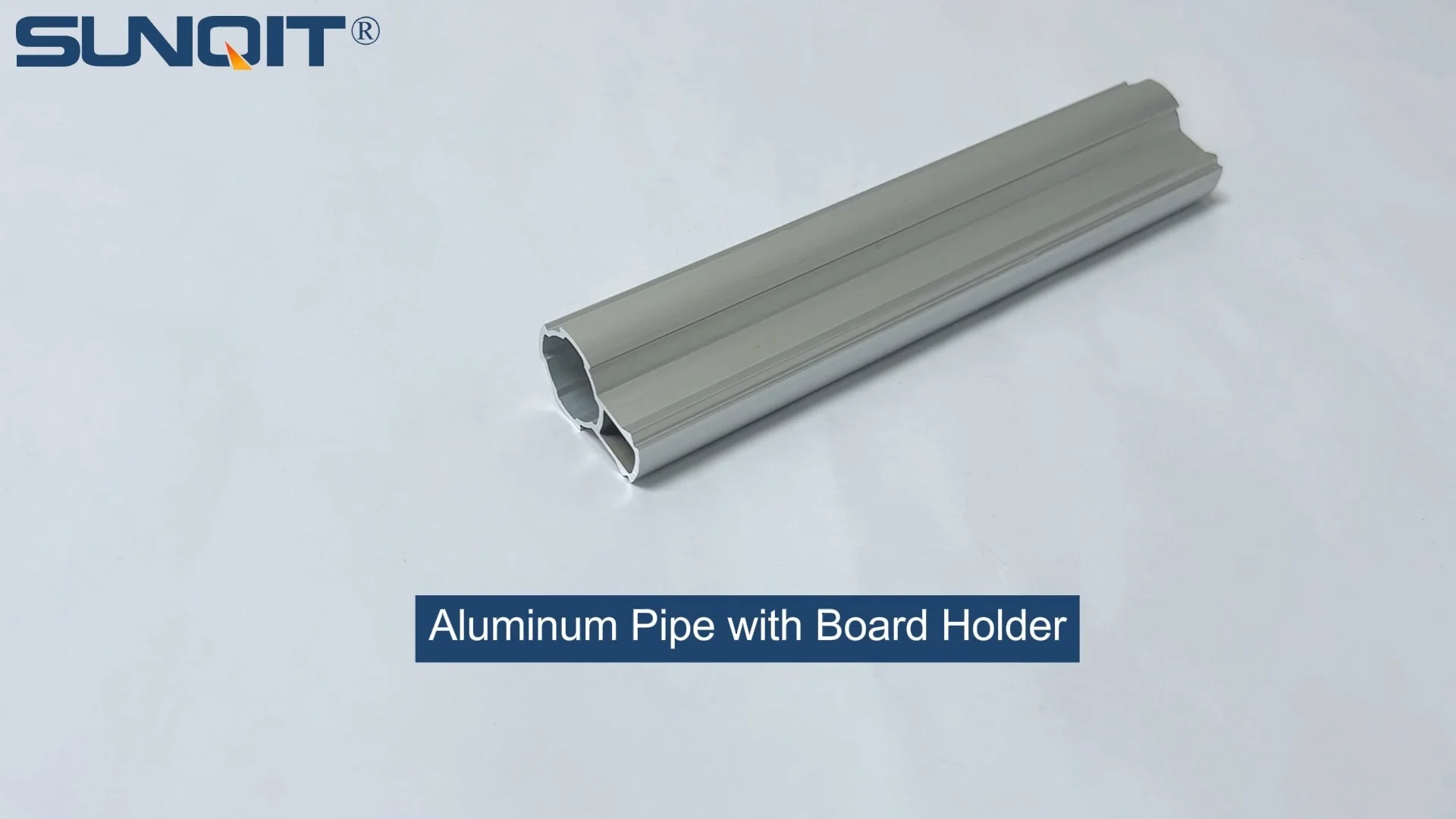
Aluminum Pipe with Board Holder
The linear rolling assembly can be arbitrarily connected in the protruding part of the card slot to increase the rigidity of the track.
Walk into any modern workshop today, and you'll notice something different. Gone are the days of clunky, fixed workbenches bolted to the floor, or material racks that can't be adjusted when a new project comes in. Today's workshops—whether they're churning out electronics, assembling car parts, or crafting custom furniture—are alive with movement. Teams rearrange stations to fit new orders, tools shift positions to reduce worker strain, and every square inch of space is optimized for efficiency. At the heart of this transformation? A quiet revolution in workshop design, led by tools that are as adaptable as the teams using them. And leading that revolution is the aluminum pipe with board holder —a simple yet powerful solution that's redefining what workshop tools can do.
The Hidden Cost of Rigid Workshop Tools
To understand why aluminum pipe with board holder is becoming indispensable, let's first talk about the problem it solves: rigidity. For decades, workshops relied on tools built for permanence. Steel workbenches, wooden shelves, and fixed conveyor systems were designed to "last forever"—but in a world where production cycles change overnight, "forever" can feel like a prison. Imagine a small electronics manufacturer that suddenly lands a big order for a new gadget. Their existing workbenches, built for a previous product, are too low, too narrow, and lack space for the new testing equipment. So they do what workshops have always done: they buy new workbenches. Then, six months later, the product line shifts again, and those "new" benches are obsolete. The cost? Not just the price tag of the benches, but the downtime spent installing them, the storage space wasted on the old ones, and the frustration of a team that can't keep up with the tools.
Or consider the automotive repair shop with a fixed material rack. When a customer brings in a larger vehicle, the rack's shelves—spaced perfectly for smaller parts—can't hold the new components. Mechanics end up stacking parts on the floor, slowing down workflow and increasing the risk of errors. Rigid tools don't just limit space; they limit potential . They force workshops to work around the tools, instead of the tools working around the workshop.
The $10,000 Mistake: A Small Manufacturer's Wake-Up Call
A family-run furniture workshop in Ohio once shared their story with us. They specialized in custom wooden tables, and business was booming—until a client requested a line of standing desks. Their existing workbenches were 30 inches high, ideal for sitting workers, but standing desks required a 42-inch work surface. Rather than modifying their tools, they invested $10,000 in new, taller workbenches. Six months later, demand shifted to children's desks, which needed a 24-inch height. The "tall" benches became useless. "We spent more on workbenches than we did on the materials for the desks," the owner laughed bitterly. "That's when we started looking for something… different."
Enter Aluminum Pipe with Board Holder: A New Era of Flexibility
Aluminum pipe with board holder isn't just a tool—it's a system built on one radical idea: workshop tools should adapt to you , not the other way around. At its core, it's a set of lightweight aluminum pipes (often made from aluminum extrusion profile ), connecting joints, and a specialized board holder that clamps onto the pipes to support work surfaces, shelves, or bins. But don't let the simplicity fool you. This combination turns ordinary pipes into anything you need: a workbench that adjusts from 24 to 48 inches in height, a material rack that grows from 2 shelves to 5 in 10 minutes, or a mobile trolley that transforms into a packing station at the end of the day.
What makes it work? Let's break it down. The aluminum pipes are no ordinary tubes. They're aluminum extrusion profiles —shaped by forcing heated aluminum through a die to create precise, consistent cross-sections, often with T-slots running along their length. These slots act like built-in tracks, allowing accessories (like the board holder, connectors, or casters) to slide into place and lock securely with a simple bolt or lever. No drilling, no welding, no waiting for a technician. A single person with a hex key can assemble a basic workbench in under an hour. And when needs change? Disassemble it, rearrange the pipes, and rebuild—all without damaging the components.

Breaking Down the Components: Why It Works
1. The Backbone: Aluminum Extrusion Profile
Aluminum extrusion profile is the unsung hero here. Unlike steel, which is heavy and prone to rust, or plastic, which lacks strength, aluminum strikes the perfect balance: it's lightweight (about 1/3 the weight of steel), yet surprisingly strong (able to support hundreds of pounds when properly assembled). Its natural corrosion resistance means it holds up in damp workshops or outdoor settings, and it's easy to clean—critical for industries like food processing or electronics, where hygiene matters.
But the real magic is in the extrusion process. By shaping the aluminum into profiles with T-slots, manufacturers create a tool that's inherently modular. Need to add a shelf? Slide a bracket into the T-slot. Want to attach a lamp? Lock a holder into place. The profiles come in standard sizes (like 20x20mm, 30x30mm, or 40x40mm), so accessories from different suppliers work together seamlessly. It's like building with a set of giant, industrial Legos—only these Legos can support the weight of a car engine.
2. The Board Holder: Where Function Meets Versatility
The board holder is what turns a collection of pipes into a functional workspace. Designed to clamp onto aluminum pipes, it supports everything from plywood boards for work surfaces to metal sheets for heavy-duty tasks, or even ESD-safe panels for electronics assembly (making it a key part of ESD workstation setups). What makes it special? Adjustability. Most board holders can slide up and down the pipes, tilt to different angles, or even rotate, letting workers set the perfect height or slope for their task. A woodworker sanding a tabletop might tilt the board at 15 degrees to let dust fall away; an electronics technician might keep it flat to protect delicate components. And because the holder clamps on without drilling, you can swap boards in seconds—hardwood for cutting, rubber matting for anti-slip, or pegboard for tool storage.
3. Accessories: The Glue That Holds It All Together
A system is only as good as its accessories, and aluminum pipe with board holder systems come with a toolkit of add-ons that turn basic pipes into custom solutions. Think of aluminum pipe accessories as the "swiss army knife" of workshop design:
- Joints and Connectors: 90-degree elbows, T-joints, and 135-degree angles let you build frames, shelves, or corners without cutting pipes. Many are "internal rotary" or "swivel" designs, allowing parts of the structure to rotate or fold for even more flexibility.
- Casters and Wheels: Add locking casters to a workbench, and suddenly it's a mobile station that can roll to the project, instead of the project rolling to the bench. Perfect for large items or teams that need to collaborate.
- Side Guards and Railings: Attach aluminum side guards to a material rack to prevent parts from falling off, or add guide rails to create a simple conveyor system using roller tracks.
- Tool Hooks and Holders: Slide hooks into the T-slots to hang wrenches, drills, or cables, keeping tools within arm's reach and work surfaces clutter-free.
These accessories aren't afterthoughts—they're designed to work together. A single aluminum pipe can support a board holder, a tool hook, and a caster, all at once, turning it into a complete, mobile workstation in minutes.

The Benefits That Transform Workshops
So, what happens when you replace rigid tools with a modular aluminum pipe system? Workshops don't just look different—they perform differently. Let's dive into the benefits that are making aluminum pipe with board holder a must-have:
Modularity: Build, Rebuild, Repeat (No Experience Needed)
The biggest advantage is modularity. Traditional workbenches require tools, time, and often professional help to modify. With aluminum pipe systems, anyone on the team can do it. A shift supervisor might rearrange a workbench at the start of a shift to fit a new order; a worker with a bad back can adjust their station's height in 2 minutes. There's no "right" way to build—just the way that works for today's task. And when the task changes? Take it apart and start over. We've seen workshops repurpose 70% of their aluminum pipe components when moving to a new location, saving thousands in new tool costs.
Lightweight Yet Strong: The Best of Both Worlds
Aluminum's strength-to-weight ratio is a game-changer. A 4-foot aluminum pipe weighs about 2 pounds, compared to 10 pounds for a steel pipe of the same size. That means workers can move components without help, reducing the risk of strains and injuries. But don't let the lightness fool you—aluminum extrusion profiles are surprisingly strong. A properly built workbench can hold up to 500 pounds, enough for heavy machinery or stacks of materials. It's the reason warehouses are swapping steel racks for aluminum pipe material racks: they're easier to move, just as durable, and won't rust in humid environments.
Cost-Effective: Invest Once, Use Forever
At first glance, aluminum pipe systems might seem pricier than basic wooden workbenches. But that's a short-term view. A $200 wooden bench might last 2-3 years before warping or breaking; an aluminum pipe workbench, with replaceable parts, can last decades. And because it's modular, you never pay for features you don't need. Need a longer shelf? Add a pipe. Need to downsize? Remove a section. There's no waste, no "overbuying" to future-proof. One manufacturer we worked with calculated that they saved $15,000 in the first year by reusing their aluminum system instead of buying new tools for each product line.
Ergonomics: Tools That Protect Your Team
Workplace injuries cost U.S. businesses over $60 billion annually, according to the Bureau of Labor Statistics, and many stem from poor ergonomics—workers hunching over low workbenches, reaching for tools, or lifting heavy items. Aluminum pipe with board holder systems let teams design workspaces around people , not the other way around. A 5'2" worker can set their bench at 36 inches; a 6'4" colleague can raise theirs to 44 inches. Tilted boards reduce neck strain; mobile stations eliminate walking to retrieve materials. It's not just about comfort—it's about keeping teams healthy and productive.
Sustainability: Tools That Respect the Planet
In an era of growing environmental awareness, sustainability matters. Aluminum is 100% recyclable, and recycling it uses 95% less energy than producing new aluminum. Unlike wooden benches that end up in landfills or steel that's hard to repurpose, aluminum pipe systems can be disassembled, melted down, and turned into new pipes at the end of their life. And because they're modular, there's less waste in production—no custom-cutting wood or steel for one-off projects. It's a small step, but for workshops aiming to reduce their carbon footprint, it adds up.
From Blueprint to Bench: How It's Used in Real Workshops
Aluminum pipe with board holder systems aren't just theoretical—they're transforming workshops across industries. Let's look at how different teams are using them:
Electronics Manufacturing: Precision and ESD Safety
Electronics workshops handle delicate components that are sensitive to static electricity, making ESD workstation setups critical. Aluminum pipe with board holder systems shine here because they can integrate ESD-safe boards and conductive materials, grounding static to protect chips and circuits. One electronics manufacturer in California replaced their fixed ESD workbenches with aluminum systems, allowing them to adjust the height of each station for workers in chairs or standing, and swap out ESD panels for testing equipment when needed. The result? A 20% reduction in static-related component failures and a happier team.
Automotive Repair: Mobile Workstations for Big Jobs
Car repair shops deal with vehicles of all sizes, from compact cars to trucks, and need tools that can move. Aluminum pipe workbenches with casters become mobile tool stations, rolling right to the vehicle instead of mechanics carrying tools back and forth. A shop in Texas even built a custom aluminum pipe rack that attaches to their lift, holding parts at eye level while mechanics work under the car. "No more bending down to grab a wrench from the floor," one mechanic noted. "My back hasn't felt this good in years."
Small-Batch Production: Flexibility for the Little Guys
Small workshops and startups often can't afford specialized tools for every project. That's where aluminum pipe systems level the playing field. A craft brewery in Colorado uses aluminum pipe with board holder to build custom fermentation racks—adjusting the height to fit different barrel sizes, then reusing the pipes to build a packing station when it's time to ship. A jewelry maker in New York uses a small aluminum workbench that collapses for storage, letting her work out of a tiny apartment. For small businesses, modular tools mean big-business flexibility without the big-business price tag.
Warehousing and Logistics: Material Racks That Grow with Inventory
Warehouses face constant changes in inventory—holiday seasons, new product lines, or shifting demand. Fixed steel racks can't keep up, but aluminum pipe material racks can. A fulfillment center in Florida uses aluminum pipe with board holder to build adjustable shelving: when they stock small items, they add more shelves; when large items come in, they remove shelves to make space. And because the racks are lightweight, they can be moved to different parts of the warehouse as needed, reducing the time workers spend walking to retrieve goods.
Comparing the Old and the New: Traditional Tools vs. Aluminum Pipe Systems
Still not convinced? Let's put it head-to-head. Below is a comparison of traditional workshop tools and aluminum pipe with board holder systems, based on feedback from real workshops:
| Feature | Traditional Workbenches/Racks | Aluminum Pipe with Board Holder Systems |
|---|---|---|
| Setup Time | 4-8 hours (requires tools, installation help) | 30-60 minutes (one person, hex key only) |
| Adjustability | Fixed height/width; modifications require cutting/welding | Adjustable height, width, angle; reconfigurable in minutes |
| Weight Capacity | High (steel), but heavy to move | High (up to 500 lbs), lightweight to move |
| Durability | Wood: 2-3 years (warping, rot); Steel: 10+ years (rusts, hard to repair) | 20+ years (aluminum resists corrosion; parts replaceable) |
| Cost Over 5 Years | $500-$1,000 (buying new tools as needs change) | $300-$600 (one system, reconfigured repeatedly) |
| Ergonomics | One-size-fits-all; no adjustment for worker height/needs | Customizable height, tilt, and position to reduce strain |
| Sustainability | Often ends up in landfill when obsolete | 100% recyclable; components reusable for decades |
The Lean System Connection: Tools That Support Continuous Improvement
Aluminum pipe with board holder systems aren't just flexible—they're a natural fit for lean system principles, which focus on eliminating waste, optimizing flow, and continuous improvement. Lean manufacturing teaches that the best processes are those that adapt to change, and aluminum systems embody that. Take 5S, a lean methodology for organizing workspaces (Sort, Set in Order, Shine, Standardize, Sustain). With aluminum pipe systems, "Set in Order" becomes a daily practice: teams can rearrange tools and materials to their most efficient positions, then standardize that setup for future shifts. When a better way is found? Rearrange again. It's lean in action—no waste, no stagnation, just constant progress.
One automotive parts manufacturer we worked with used aluminum pipe systems to implement "cellular manufacturing," where teams work in small, self-contained cells instead of assembly lines. Each cell has its own aluminum workbench, material rack, and tools, all built to the team's specific needs. The result? A 35% reduction in production time and a 50% drop in errors, because each team owns their workspace and can tweak it for maximum efficiency.
The Future of Workshop Tools: Where Aluminum Pipe Systems Are Headed
So, what's next for aluminum pipe with board holder? The future looks even more adaptable. Manufacturers are already experimenting with smart accessories: sensors that track how often a workbench is adjusted, to identify workflow bottlenecks; LED lights that clip into T-slots and adjust brightness based on the task; and even app-controlled casters that let workers move heavy stations with the push of a button. There's also a trend toward more sustainable materials, like recycled aluminum extrusion profiles, and "closed-loop" systems where old components are collected, recycled, and turned into new pipes—further reducing environmental impact.
Another exciting development is the integration of aluminum pipe systems with digital tools. Imagine designing your ideal workbench in a 3D app, then ordering pre-cut pipes and accessories that arrive with step-by-step assembly instructions. No more guesswork, no more wasted materials. Small workshops will soon have access to the same customization tools as large manufacturers, leveling the playing field even further.
Conclusion: Building Workshops That Grow with You
Workshops are more than just places to make things—they're places where ideas become reality, where teams collaborate, and where innovation happens. But innovation can't thrive in a space constrained by rigid tools. Aluminum pipe with board holder systems don't just solve the problem of inflexibility; they unlock possibility. They let workshops be responsive —to customers, to workers, to change. They turn "we can't" into "we can, and we'll do it tomorrow."
Whether you're running a large manufacturing plant or a small garage workshop, the message is clear: the future of workshop tools isn't about being bigger or stronger. It's about being smarter —about tools that adapt, evolve, and grow with you. And in that future, aluminum pipe with board holder isn't just a tool. It's the foundation.
Ready to build a workshop that works for you ? Start with the system that's changing the game: aluminum pipe with board holder. Your team, your workflow, and your bottom line will thank you.