- Company Articles
- Products and Technology
- Product knowledge
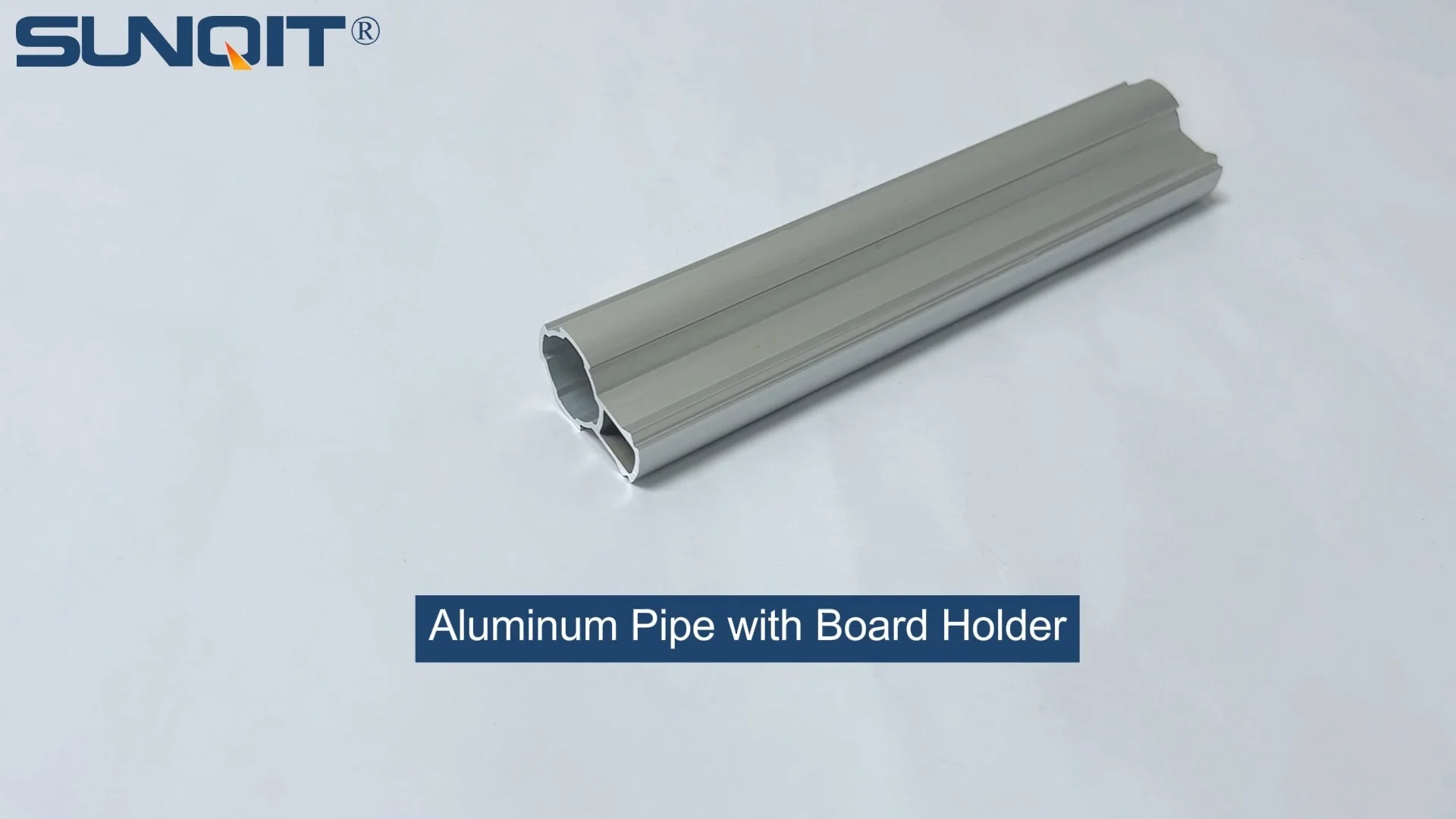
- Aluminum Pipe with Board Holder in 3C Product Assembly

Aluminum Pipe with Board Holder in 3C Product Assembly
Related Product
Aluminum Pipe with Board Holder
The linear rolling assembly can be arbitrarily connected in the protruding part of the card slot to increase the rigidity of the track.
Introduction: The Demands of Modern 3C Assembly
Walk into any electronics manufacturing plant today, and you'll be met with a symphony of precision: robots placing microchips smaller than a grain of rice, technicians soldering wires thinner than human hair, and conveyor belts humming as half-assembled smartphones, laptops, and smartwatches glide from station to station. The 3C industry—covering computers, communications, and consumer electronics—thrives on speed, accuracy, and adaptability. With new models launching every few months and consumer expectations for flawlessness higher than ever, assembly lines can't afford to lag. Yet behind this high-tech dance of machinery lies a quiet hero: the humble tools and structures that organize, protect, and streamline the chaos. Among these, the aluminum pipe with board holder has emerged as a cornerstone, quietly revolutionizing how 3C products go from blueprints to finished goods.
3C assembly isn't just about putting parts together. It's about doing so efficiently, without waste, while safeguarding delicate components from static, damage, and human error. Traditional assembly setups—think clunky steel workbenches, rigid wooden shelves, or one-size-fits-all plastic racks—often fall short. They're heavy, hard to reconfigure when product lines change, and prone to wear that can throw off precision. Enter aluminum pipe with board holder systems: lightweight, modular, and built to adapt. These systems, often paired with aluminum profile accessories and integrated into lean system frameworks, are redefining what's possible on the factory floor. Let's dive into how they work, why they matter, and the impact they're having on 3C manufacturing.
The Role of Aluminum Pipe with Board Holder: More Than Just a "Holder"
At first glance, an aluminum pipe with board holder might seem simple: a metal tube with a bracket to hold a board or panel. But in reality, it's a masterclass in functional design. These systems are the backbone of modern assembly stations, providing a flexible framework to mount tools, secure components, organize workspaces, and even guide materials through the production line. The "board holder" itself is deceptively versatile—whether it's holding a PCB (printed circuit board) steady during soldering, keeping a batch of screws within arm's reach, or displaying assembly instructions for quick reference, it turns a bare pipe into a purpose-built workstation.
What makes aluminum the material of choice? Unlike steel, which adds unnecessary weight and rusts over time, aluminum is lightweight enough to reposition without heavy machinery but strong enough to support the tools, components, and even small equipment that populate 3C assembly lines. Its natural resistance to corrosion means it holds up in factory environments, where humidity and occasional spills are par for the course. And when paired with aluminum profile accessories—like joints, clamps, and casters—it becomes a modular system that can be disassembled, reconfigured, and repurposed in hours, not days. For 3C manufacturers churning out everything from tiny smartwatch components to large laptop casings, this adaptability isn't just convenient; it's critical.

Aluminum Profile: The Backbone of Durability and Flexibility
To understand the magic of aluminum pipe with board holder systems, you first need to appreciate aluminum profile —the building block that makes it all possible. Aluminum profiles are extruded, meaning they're shaped by forcing heated aluminum through a die to create consistent, precise cross-sections. This process allows for intricate designs: channels, slots, and ridges that serve as built-in connection points for accessories. For 3C assembly, common profiles include T-slot designs, which let users slide in bolts, brackets, or board holders without drilling or welding. It's like a grown-up version of building blocks, but for industrial use.
Take, for example, the 2020 or 3030 aluminum profiles—named for their 20x20mm or 30x30mm cross-sections—often used in workbench frames. These profiles aren't just strong; they're smart. A single profile can host a board holder for PCBs on one side, a tool hook on another, and a caster wheel at the bottom for mobility. And because they're extruded, profiles can be cut to custom lengths, ensuring a perfect fit for any assembly station, whether it's a compact cell phone line or a sprawling laptop production area. This modularity is a game-changer for manufacturers who need to switch between assembling a 6-inch smartphone today and a 15-inch tablet tomorrow—no need to invest in entirely new workstations; just reconfigure the existing aluminum pipes and profiles.
Accessories take this flexibility further. Joints, for instance, let users connect pipes at 90°, 45°, or even 135° angles, creating L-shaped workbenches, U-shaped assembly cells, or overhead racks to maximize vertical space. Clamps secure board holders in place, but can be loosened and moved when a new task requires a different setup. Even the board holders themselves come in varieties: some with rubberized grips to protect delicate components, others with adjustable angles to reduce technician strain during long shifts. It's this attention to detail—this understanding that 3C assembly is as much about the human element as the mechanical—that sets aluminum profile systems apart.

Lean System Integration: Streamlining Workflow from Design to Delivery
In the world of manufacturing, "lean" isn't just a buzzword—it's a philosophy. Lean manufacturing focuses on minimizing waste (whether of time, materials, or space) while maximizing value for the customer. Aluminum pipe with board holder systems are tailor-made for this approach, acting as the physical embodiment of lean principles on the factory floor. Let's break down how:
First, they eliminate "motion waste"—the unnecessary movement of technicians as they reach for tools or components. A well-designed aluminum workbench, with board holders positioned at chest height and tools organized in reachable board slots, cuts down on stretching, bending, and walking. Studies have shown this can reduce assembly time by up to 15% in high-volume lines—time that adds up when you're producing thousands of units daily. Second, they reduce "inventory waste" by keeping only the necessary components at each station. Board holders can be sized to hold exactly the number of screws, connectors, or PCBs needed for the current batch, preventing overstocking and freeing up space for other materials.
Modularity is another lean win. Traditional steel workstations are fixed; if a new product requires a wider workspace or a different tool layout, the entire station might need to be replaced. Aluminum pipe systems, by contrast, can be disassembled and reconfigured in hours. A workstation used for assembling smartwatch screens last month can become a testing station for wireless earbuds this month, with nothing more than a few new joints and a repositioned board holder. This agility reduces "waiting waste"—the time assembly lines sit idle during retooling—keeping production on track even as product designs evolve.
Perhaps most importantly, aluminum systems support "continuous improvement," a core lean principle. Technicians and supervisors can experiment with layouts: move a board holder an inch to the left, add a second tier to a rack, or angle a workbench slightly to improve lighting. If a change doesn't work, it's easy to revert. Over time, these small adjustments lead to major gains in efficiency. One electronics manufacturer in Shenzhen, for example, reported a 22% reduction in errors after reconfiguring their assembly lines with aluminum pipe and board holders—simply because components were better organized and easier to access.
Workbench Design: Crafting the Perfect Assembly Station
A 3C assembly line is only as good as its workstations, and aluminum pipe with board holder systems are transforming what these workstations can do. Let's step into the shoes of a technician assembling a smartphone motherboard—a task that requires steady hands, precise tools, and zero distractions. Their workstation, built around aluminum pipes and profiles, is a study in ergonomics and efficiency.
At the center is a workbench frame made of 4040 aluminum profiles, sturdy enough to support the weight of a microscope, a soldering iron, and a batch of PCBs, but light enough that casters (another aluminum accessory) let it be moved if the line needs rebalancing. The desktop itself is an aluminum honeycomb panel—lightweight, flat, and (if ESD-treated) static-resistant. Above the desktop, an overhead rack of aluminum pipes holds task lights and a small monitor displaying assembly instructions, freeing up surface space. To the left, a vertical aluminum pipe with adjustable board holders keeps soldering tools, flux, and spare wires organized; each holder is labeled, so the technician never fumbles for the right tool. To the right, a horizontal pipe with slotted board holders cradles PCBs, each in its own slot to prevent scratching or bending.
What makes this setup special is its adaptability. If the next model of smartphone has a larger motherboard, the board holders can be adjusted to accommodate the new size. If the technician prefers to stand instead of sit, the workbench height can be raised by swapping out a few aluminum pipes for longer ones. Even the angle of the board holders can be tweaked to reduce neck strain during long shifts. This isn't just about tools—it's about respecting the people behind the production, creating spaces that work with them, not against them.
And it's not just about individual workstations. Aluminum pipe systems can be scaled to create entire assembly cells. Imagine a U-shaped arrangement of workbenches, each with specialized board holders: one for component placement, one for soldering, one for testing. Between them, flow racks built from aluminum pipes and roller tracks move partially assembled units from station to station, gravity-assisted and gentle enough to avoid jostling delicate parts. It's a seamless flow, powered by the quiet versatility of aluminum.
Conveyor Systems and Material Flow: Keeping Production Moving
In 3C assembly, time is money—and nothing kills time like bottlenecks. A single station falling behind can back up an entire line, costing thousands in lost production. That's where aluminum pipe with board holder systems intersect with conveyor systems, ensuring materials move smoothly from one step to the next. While conveyors themselves are often complex machines, their integration with assembly stations relies heavily on aluminum's adaptability.
Consider a typical smartphone assembly line. After components are placed on a PCB, the board needs to move to the soldering station, then to testing, then to casing. A roller conveyor might handle the bulk of this movement, but at each station, the PCB needs to be gently transferred from the conveyor to the workstation. Aluminum pipe with board holders can bridge this gap: a small, angled ramp made of aluminum profiles and roller tracks, with board holders at the end to catch the PCB and hold it steady for the technician. The ramp is lightweight enough to adjust if the conveyor height changes, and the board holders prevent the PCB from sliding off or getting scratched during transfer.
Flow racks, another staple of material flow, also benefit from aluminum pipes. These racks, which use gravity to feed components to assembly stations, are often built with aluminum profiles for their strength-to-weight ratio. Board holders can be added to the racks to separate different component types—say, charging ports in one holder, camera modules in another—so technicians can grab what they need without rummaging. This not only speeds up assembly but reduces the risk of picking the wrong part, a common source of defects in 3C manufacturing.
Even mobile carts, used to transport materials between lines, are getting an aluminum upgrade. Carts built with aluminum pipes and profiles are lighter than steel alternatives, making them easier for technicians to push, while board holders keep components secure during transit. Some even include fold-down shelves or adjustable dividers, all made possible by aluminum's modular design. It's a small detail, but in a factory with hundreds of carts moving daily, those small efficiencies add up.
ESD Workstation Compatibility: Protecting Sensitive Electronics
Static electricity is the silent enemy of 3C assembly. A single electrostatic discharge—something as simple as a technician reaching for a PCB after walking across a carpet—can fry a microchip, rendering an entire device useless. That's why esd workstation setups are non-negotiable, and aluminum pipe with board holder systems play a key role in keeping static at bay.
Aluminum, by nature, is conductive, which makes it ideal for grounding. When integrated into an ESD workstation, aluminum pipes can be connected to the factory's grounding system, channeling any static charge away from sensitive components. Board holders, too, can be ESD-treated—coated with a conductive material that prevents static buildup. Even the casters on mobile workstations often have conductive wheels to ensure the entire setup remains grounded, no matter where it's moved.
Consider a PCB testing station. The workbench, built from aluminum profiles, is grounded via a wire connected to the factory's ESD system. The board holder, lined with conductive rubber, holds the PCB in place, ensuring any static from the technician's hands or the environment is safely dissipated. Nearby, a vertical aluminum pipe with ESD-safe board holders keeps testing tools—multimeters, probes, anti-static wristbands—organized and grounded. It's a holistic approach to static protection, one that turns the workstation itself into a shield.
But ESD protection isn't just about materials; it's about consistency. Traditional wooden workbenches might be treated with anti-static sprays, but the protection wears off over time, leaving gaps. Aluminum systems, by contrast, maintain their conductivity for years, requiring only occasional checks to ensure grounding connections are secure. For 3C manufacturers, where a single static-related defect can cost hundreds of dollars in rework, this reliability is priceless.
Case Study: Transforming a Mid-Sized 3C Factory in Dongguan
To see the impact of aluminum pipe with board holder systems in action, let's look at a mid-sized electronics manufacturer in Dongguan, China, that specializes in assembling smart home devices. Before adopting aluminum systems, their assembly line relied on steel workbenches and wooden shelves. The steel benches were heavy and hard to reconfigure, so switching between assembling a smart speaker and a smart thermostat took hours of downtime. Wooden shelves warped over time, leading to uneven work surfaces that increased component damage. And static-related defects were common, with an average of 8% of PCBs failing testing due to electrostatic discharge.
The manufacturer invested in aluminum pipe with board holder systems, retrofitting 12 workstations with 4040 aluminum profiles, adjustable board holders, ESD-treated surfaces, and caster wheels. The results were striking: reconfiguring between product lines dropped from 4 hours to just 45 minutes, thanks to modular joints and easy-to-adjust board holders. Component damage fell by 60% as rubberized board holders and stable aluminum work surfaces protected fragile parts. Static-related defects plummeted to 1.2%, as the grounded aluminum frames and ESD accessories created a consistent protective barrier.
Perhaps most telling was the feedback from technicians. "I used to spend 10 minutes a day just looking for tools," said one assembly line worker. "Now, everything's in its board holder, right where I need it. My hands don't ache as much at the end of the shift, too—the workbench height is finally right for me." For the manufacturer, these changes translated to a 15% increase in daily production and a 22% reduction in rework costs—an ROI that paid for the aluminum systems in just three months.
Technical Specifications and Customization: Built for 3C's Unique Needs
Aluminum pipe with board holder systems aren't one-size-fits-all—and that's by design. 3C assembly lines vary wildly, from the tiny components of a smartwatch to the larger casings of a gaming laptop, and aluminum systems can be tailored to fit. Let's break down the key specs that matter:
Pipe and Profile Sizes
Aluminum pipes for 3C assembly typically range from 20mm to 40mm in diameter, while profiles (which have square or rectangular cross-sections) start at 20x20mm and go up to 80x80mm for heavier applications. A 20x20mm profile might support a small board holder for screws, while a 40x40mm profile could form the frame of a workbench holding a 50kg testing machine.
Load Capacity
Load capacity depends on the pipe diameter, wall thickness, and support spacing. A 30mm aluminum pipe with a 2mm wall thickness, supported every 50cm, can typically hold 20-30kg—more than enough for most 3C components. Heavier-duty profiles, like 60x60mm, can handle over 100kg, making them ideal for workstations with heavy equipment.
Board Holder Options
Board holders come in materials like aluminum, plastic, or rubberized plastic (for ESD protection). They can be fixed or adjustable, with slots, clips, or clamps to secure everything from PCBs to tool trays. Some are even magnetic, holding metal components in place during assembly.
Customization
Manufacturers can order aluminum pipes and profiles cut to specific lengths, with pre-drilled holes or slots for accessories. Board holders can be custom-shaped to fit unique components—say, a curved holder for smartwatch screens or a multi-tiered holder for laptop hinges. Even colors are customizable, with anodized finishes in blue, black, or silver to match factory aesthetics or color-code workstations by product line.
Benefits Over Traditional Assembly Solutions
Why choose aluminum pipe with board holder systems over traditional options like steel, wood, or plastic? The answer lies in how they address the unique challenges of 3C assembly. Here's a side-by-side comparison:
| Feature | Aluminum Pipe with Board Holder | Steel Workstations | Wooden Shelves | Plastic Racks |
|---|---|---|---|---|
| Weight | Lightweight (easy to reconfigure/move) | Heavy (requires machinery to reposition) | Moderate (but bulky) | Light (but flimsy for heavy loads) |
| Modularity | High (easily disassembled/reconfigured with joints) | Low (welded or bolted, hard to modify) | Low (fixed shape, can't be adjusted) | Medium (some snap-together options, but limited) |
| ESD Compatibility | High (conductive, can be grounded; ESD accessories available) | Medium (conductive, but heavy and not modular) | Low (insulative, prone to static buildup) | Low (insulative, even with anti-static coatings) |
| Durability | High (corrosion-resistant, no warping) | High (but prone to rust if not painted) | Low (warps, scratches, absorbs moisture) | Medium (can crack or bend under heavy loads) |
| Cost (Long-Term) | Cost-effective (reusable, low maintenance) | High (expensive to replace when reconfiguring) | Low upfront, but high replacement cost | Low upfront, but frequent replacement needed |
The verdict is clear: for 3C manufacturers prioritizing flexibility, efficiency, and component protection, aluminum pipe with board holder systems offer unmatched value. They're an investment that pays dividends in reduced downtime, fewer defects, and happier, more productive technicians.
Future Outlook: Innovations in Aluminum Assembly Solutions
As 3C manufacturing continues to evolve—with trends like miniaturization, smart factories, and sustainability driving change—aluminum pipe with board holder systems are evolving too. Here's what to watch for:
Smart Integration: Imagine aluminum profiles embedded with RFID tags or sensors that track tool usage, monitor workstation occupancy, or alert maintenance when a board holder is loose. This data can help manufacturers optimize workflows further, identifying bottlenecks or underused tools in real time.
Sustainability: Aluminum is 100% recyclable, and manufacturers are increasingly using recycled aluminum in profiles and pipes, reducing the carbon footprint of assembly systems. Some are even developing plant-based lubricants for aluminum extrusion, making the production process greener.
Advanced ESD Protection: New coatings and treatments are making aluminum systems even more effective at dissipating static, protecting the next generation of ultra-sensitive 3C components, like quantum computing chips or flexible displays.
AI-Designed Workstations: Using AI algorithms to optimize workstation layouts, ensuring board holders, tools, and materials are positioned for maximum efficiency based on technician movement patterns and assembly tasks.
Conclusion: The Quiet Revolution in 3C Assembly
In the fast-paced world of 3C manufacturing, where innovation is measured in nanometers and production targets in millions, it's easy to overlook the tools that make it all possible. But aluminum pipe with board holder systems are more than tools—they're enablers. They enable manufacturers to adapt to changing product lines, protect delicate components, reduce waste, and empower technicians to do their best work.
From the smartwatch on your wrist to the laptop on your desk, chances are good that an aluminum pipe with a board holder played a role in bringing it to life. As 3C technology continues to push boundaries, these quiet workhorses will be right there with them, evolving, adapting, and proving that sometimes, the most impactful innovations are the ones that keep the focus where it belongs: on creating better products, faster, and with care for both the people making them and the planet we all share.