- Company Articles
- Products and Technology
- Product knowledge
- Aluminum Pipe with Board Holder in Aerospace Manufacturing

Aluminum Pipe with Board Holder in Aerospace Manufacturing
Related Product
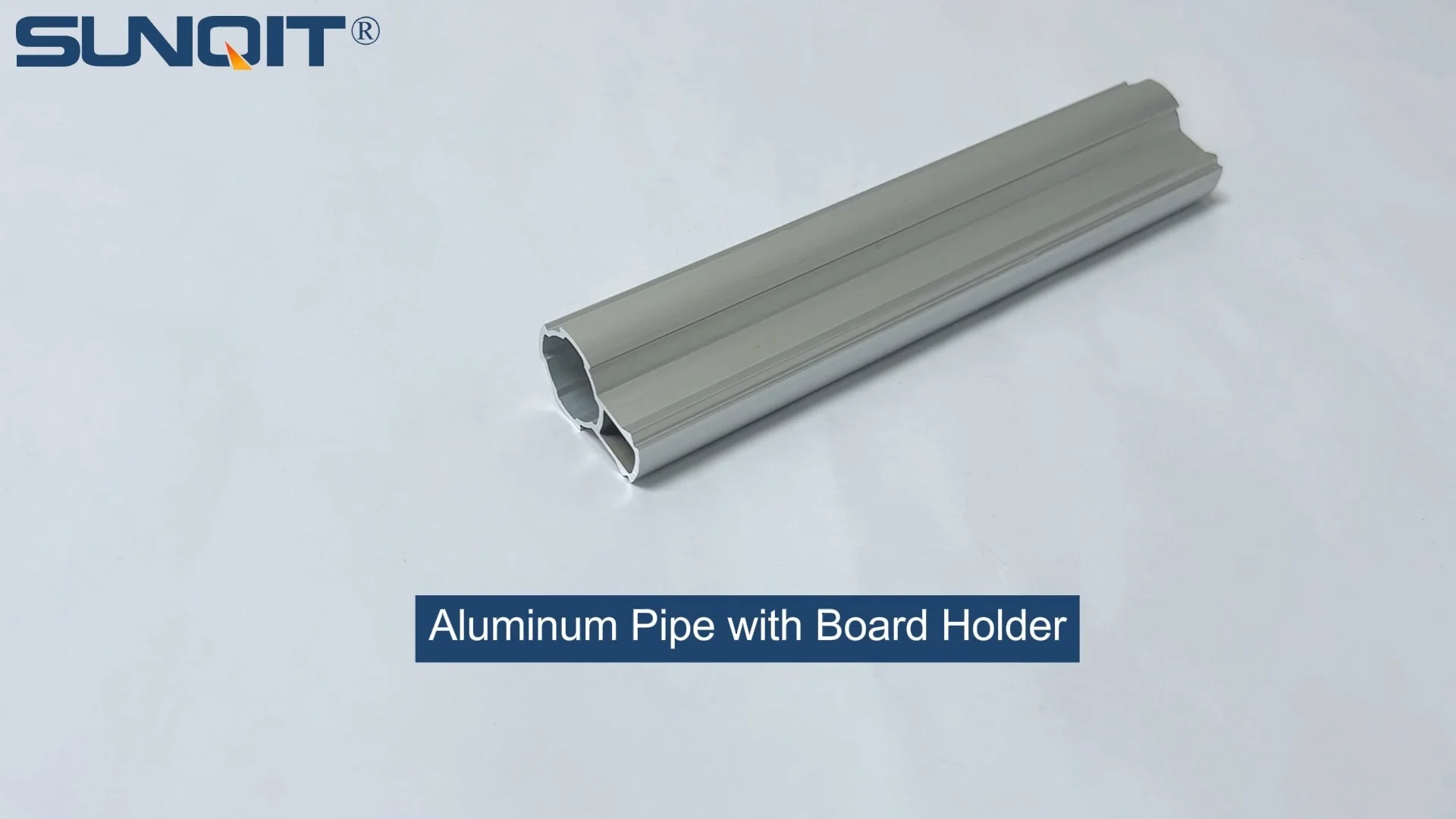
Aluminum Pipe with Board Holder
The linear rolling assembly can be arbitrarily connected in the protruding part of the card slot to increase the rigidity of the track.
Aerospace manufacturing is a world where precision isn't just a goal—it's a necessity. Every component, every assembly line, and every workflow must align with standards that leave no room for error. In this high-stakes environment, the tools and systems that support production play a critical role in determining success. One such tool that's quietly revolutionizing the industry is the aluminum pipe with board holder . Far more than a simple piece of hardware, this unassuming system is redefining how aerospace teams approach everything from workbench setups to material handling, all while keeping an unwavering focus on lean principles and operational excellence.
In this article, we'll dive deep into why aluminum pipe with board holder has become a cornerstone in modern aerospace manufacturing. We'll explore its design, its integration with lean systems , and how it outperforms traditional alternatives. We'll also look at real-world applications, key accessories that enhance its functionality, and what the future holds for this versatile solution. Whether you're a production manager looking to optimize your line or simply curious about the innovations driving aerospace forward, this is your guide to understanding why aluminum pipe with board holder is more than a trend—it's a transformation.
Why Aluminum? The Material Behind the Revolution
Before we delve into the specifics of the board holder, let's start with the foundation: aluminum itself. In aerospace, where every ounce matters and corrosion resistance can mean the difference between a successful mission and a costly failure, material choice is paramount. Aluminum checks every box, and then some.
First, there's its strength-to-weight ratio . Aluminum is significantly lighter than steel—about one-third the weight—yet it boasts impressive structural integrity. For aerospace manufacturing, where components are often delicate and assembly lines require frequent adjustments, this lightweight nature translates to easier maneuverability. A workbench built with aluminum pipe can be reconfigured by a single operator, whereas a steel equivalent might require a team and heavy lifting equipment. This flexibility isn't just convenient; it's a productivity booster, allowing teams to adapt to changing production needs in minutes, not hours.
Then there's corrosion resistance . Aerospace facilities are tightly controlled environments, but they're not immune to moisture, chemicals, or humidity. Aluminum naturally forms a protective oxide layer, shielding it from rust and degradation. Unlike steel, which requires regular painting or coating to prevent corrosion, aluminum pipe maintains its integrity with minimal maintenance. This is especially critical in cleanrooms or areas where precision tools and sensitive components are handled—no one wants a rust flake compromising a circuit board or a critical aircraft part.
Finally, aluminum's malleability makes it ideal for extrusion. Aluminum extrusion profiles —the process of shaping aluminum by forcing it through a die—allow for the creation of custom cross-sections tailored to specific needs. This means aluminum pipes can be designed with built-in slots, grooves, or mounting points (like those needed for board holders) right from the start, eliminating the need for secondary machining. For aerospace, where customization is often the norm, this ability to create purpose-built components is a game-changer.
Aluminum Pipe with Board Holder: Design That Puts Function First
At first glance, an aluminum pipe with a board holder might seem simple: a metal tube with a bracket to hold a board. But look closer, and you'll see a design that's been refined with aerospace's unique challenges in mind. Let's break down its key components and how they work together.
The Pipe: More Than Just a Tube
The "pipe" in aluminum pipe with board holder is typically an aluminum profile —not a solid tube, but a hollow extrusion with a specific cross-section. Most commonly, these profiles feature T-slots along their length. These slots are the secret to the system's versatility. They allow for quick attachment of accessories—like board holders, shelves, or tool hooks—without drilling or welding. A simple bolt or clamp slides into the slot, tightens, and holds firm, creating a secure connection that can be adjusted or removed in seconds.
In aerospace, where workbenches and material racks often need to be reconfigured for different projects (e.g., switching from assembling avionics to engine components), this adjustability is invaluable. Imagine a workbench where the board holder can be moved up or down to accommodate a taller technician one day and a shorter one the next, or repositioned to angle a blueprint closer to the assembly area. With aluminum profiles, it's as easy as loosening a few bolts and sliding the holder into place.
The Board Holder: A Small Detail with Big Impact
The board holder itself is a study in practicality. Designed to securely hold everything from blueprints and work instructions to digital tablets or quality checklists, it's positioned to keep critical information within arm's reach of the operator. No more fumbling with papers on a cluttered desk or walking to a wall-mounted display to check a spec—everything needed for the task is right there, at eye level.
But the best board holders go beyond just holding. Many are adjustable, tilting or rotating to reduce glare (a must when working with digital screens) or folding down when not in use to save space. Some even feature integrated cable management, keeping charging wires for tablets or barcode scanners neat and out of the way. In aerospace, where distractions can lead to mistakes, this level of organization is priceless.
Modularity: Building Systems That Grow With You
Perhaps the most powerful aspect of aluminum pipe with board holder is its modularity. These systems aren't standalone units—they're part of a larger ecosystem of aluminum profile accessories . Need a shelf above the board holder to store tools? Add an aluminum bracket and a panel. Want to mount a light to illuminate the workspace? Slide a lamp holder into the T-slot. Need to wheel the entire setup to a different part of the factory? Attach caster wheels to the base. This modularity means a single aluminum pipe frame can evolve from a simple workbench to a fully equipped mobile workstation with minimal effort.
For example, consider an aerospace facility producing both small satellite components and larger aircraft interior panels. The same base aluminum pipe frame can be configured with a narrow board holder and tool hooks for the satellite work, then retooled with a wider board, additional shelves, and a material rack for the interior panels. There's no need to invest in separate workstations for each project—just swap out the accessories and adjust the layout. This not only saves money but also reduces waste, aligning perfectly with lean manufacturing principles.

Integration with Lean Systems: Streamlining Workflows, Eliminating Waste
Aerospace manufacturing has long embraced lean systems —the philosophy of maximizing value while minimizing waste. From reducing inventory to optimizing workflow, lean principles are about making every action count. Aluminum pipe with board holder fits seamlessly into this mindset, acting as a physical manifestation of lean ideals.
Waste Reduction: From Overproduction to Excess Inventory
One of the core tenets of lean is eliminating "muda" (waste). Aluminum pipe with board holder attacks waste in several ways. First, its modularity reduces overproduction of custom furniture. Instead of ordering a one-off workbench for a specific project, teams can build exactly what they need using standard aluminum pipes and accessories. When the project ends, the components are disassembled and reused elsewhere, eliminating the need to store or discard unused equipment.
Then there's excess inventory . Traditional manufacturing setups often require keeping spare parts, replacement tools, and backup equipment on hand "just in case." With aluminum pipe systems, many accessories are interchangeable. A board holder that fits a 40mm aluminum profile will work on any other 40mm profile in the facility, reducing the need to stock multiple sizes or types. This not only frees up storage space but also cuts down on procurement costs and lead times.
Optimizing Workflow: The "5S" Connection
The 5S methodology—Sort, Set in Order, Shine, Standardize, Sustain—is a cornerstone of lean, and aluminum pipe with board holder excels at supporting each step:
- Sort : The board holder itself helps here. By providing a designated spot for work instructions, checklists, or digital displays, it reduces clutter on the workbench. No more loose papers or misplaced documents—everything has a home.
- Set in Order : T-slots and modular accessories let teams arrange tools, materials, and equipment in the most efficient sequence. For example, a board holder can be positioned next to a material rack, so the operator reads the instruction, grabs the part, and assembles—all without unnecessary movement.
- Shine : Aluminum's smooth, non-porous surface is easy to clean. Unlike wood or plastic workbenches that can harbor bacteria or stains, aluminum wipes down quickly, supporting a hygienic workspace—critical in aerospace where contamination risks are high.
- Standardize : With aluminum pipe systems, workstations can be replicated across the facility. Every operator works with the same setup, reducing training time and ensuring consistency in quality. A board holder in Bay A is positioned the same way as in Bay B, so there's no learning curve when shifting teams.
- Sustain : The durability of aluminum ensures that the system lasts for years, even with heavy use. This longevity means the 5S improvements aren't temporary—they're built to stay.

Aluminum Pipe vs. Traditional Materials: A Clear Winner for Aerospace
To truly appreciate the impact of aluminum pipe with board holder, it helps to compare it to the alternatives that have long dominated aerospace manufacturing: steel, wood, and plastic. Let's break down how they stack up in key areas.
| Feature | Aluminum Pipe with Board Holder | Traditional Steel Systems | Wooden Workbenches | Plastic Alternatives |
|---|---|---|---|---|
| Weight | Lightweight (1/3 the weight of steel) | Heavy; requires tools/team to move | Moderate weight, but prone to warping | Light, but less rigid |
| Strength-to-Weight Ratio | High; strong enough for aerospace components | High, but at the cost of weight | Low; can crack under heavy loads | Low; deforms under stress |
| Corrosion Resistance | Excellent (natural oxide layer) | Poor; requires painting/coating | Poor; absorbs moisture, warps, rots | Good, but prone to UV damage/yellowing |
| Customization | High; T-slots and modular accessories | Low; requires welding/drilling to modify | Moderate; can be cut, but not easily reconfigured | Low; limited to molded shapes |
| Cost Over Time | Initial investment higher, but low maintenance and reusable | Low initial cost, but high maintenance (painting, repairs) | Low initial cost, but frequent replacement needed | Low initial cost, but short lifespan (5-7 years) |
The table tells a clear story: aluminum pipe with board holder offers a balance of strength, flexibility, and durability that traditional materials can't match. For aerospace, where precision, adaptability, and long-term reliability are non-negotiable, this balance is invaluable.
Case Study: How a Leading Aerospace Supplier Cut Setup Time by 60% with Aluminum Pipe Systems
Consider the example of AeroTech Solutions, a mid-sized aerospace supplier specializing in avionics components. A few years ago, their production floor was a patchwork of steel workbenches, wooden shelves, and plastic bins. Each time they switched between manufacturing circuit boards for commercial jets and military drones, the setup process was arduous: steel benches were bolted to the floor, so reconfiguring required tools and hours of labor. Wooden shelves warped under the weight of components, leading to misaligned material racks. And plastic bins cracked, spilling small parts and causing delays.
In 2022, AeroTech invested in aluminum pipe with board holder systems, along with aluminum profile accessories like material racks and mobile trolleys. The results were immediate. Setup time between projects dropped from 8 hours to just 3 hours—operators could reposition board holders, adjust shelves, and reconfigure workbenches in minutes using T-slot bolts. The lightweight aluminum workstations were easy to move, so they could rearrange the entire line to match the flow of the new project. Corrosion-resistant surfaces meant less time spent cleaning and maintaining equipment, freeing up technicians to focus on production.
Perhaps most notably, error rates decreased by 15%. With board holders keeping work instructions visible and organized, operators were less likely to misread specs or skip steps. The standardized setup across workstations also reduced variability in assembly, leading to more consistent quality checks. For AeroTech, the investment in aluminum pipe systems wasn't just about equipment—it was about transforming their entire approach to manufacturing.
Key Accessories: Elevating the Aluminum Pipe System
A aluminum pipe with board holder is only as good as the accessories that complement it. Fortunately, the ecosystem of aluminum profile accessories is vast, designed to address nearly every need in aerospace manufacturing. Let's highlight a few that are particularly impactful:
Casters and Mobile Bases: Mobility Meets Stability
Add caster wheels to an aluminum pipe frame, and suddenly your stationary workbench becomes a mobile workstation. This is a game-changer for aerospace, where components often need to move from one station to the next. For example, a board holder-equipped trolley can carry a partially assembled aircraft part, with instructions right on the board, as it moves from the soldering station to the testing area. Lockable casters ensure stability when in use, so the trolley stays put during precision work.
Material Racks and Flow Rails: Streamlining Material Handling
Pair aluminum pipe with roller track or flow rails, and you've got a material rack that allows components to glide smoothly from storage to the workbench. This is especially useful for kanban systems, where materials are pulled just-in-time. Imagine a board holder mounted above a flow rail: the operator reads the instruction, grabs the next part from the rail, and assembles—no bending, reaching, or searching. It's a small change that adds up to significant time savings over a shift.
Aluminum Honeycomb Panels: Lightweight Work Surfaces
For workbenches, aluminum honeycomb panels are a popular choice. These panels feature a honeycomb core sandwiched between aluminum sheets, offering strength and rigidity with minimal weight. When paired with a board holder, they create a durable, flat surface that's ideal for assembling delicate components. The panels are also non-conductive, making them safe for use with electronics—a critical feature in avionics manufacturing.
ESD-Safe Components: Protecting Sensitive Electronics
Electrostatic discharge (ESD) is a constant threat in aerospace, where a single spark can damage sensitive electronics. Many aluminum pipe systems now offer ESD-safe accessories, including board holders with conductive coatings and ESD workbench surfaces. These components dissipate static electricity, protecting everything from circuit boards to sensor arrays during assembly.
The Future of Aluminum Pipe with Board Holder in Aerospace
As aerospace manufacturing continues to evolve—driven by advancements in automation, 3D printing, and smart factories—the role of aluminum pipe with board holder is only set to grow. Here are a few trends to watch:
Smart Integration with Industry 4.0
Imagine a board holder that's not just a physical bracket, but a digital hub. Future systems could integrate small screens or RFID readers into the board holder, displaying real-time production data, maintenance alerts, or step-by-step animations for complex assemblies. Aluminum profiles with built-in cable management could hide wiring for sensors or IoT devices, turning the workstation into a connected node in the factory's digital ecosystem.
Sustainability and Recyclability
Aerospace is increasingly focused on sustainability, and aluminum aligns perfectly with this goal. Aluminum is 100% recyclable, with no loss in quality during the recycling process. As manufacturers look to reduce their carbon footprint, aluminum pipe systems offer a way to build durable, long-lasting equipment that can be recycled at the end of its life—unlike plastic, which often ends up in landfills, or wood, which is not always sustainably sourced.
Advanced Extrusion Techniques
Innovations in aluminum extrusion are leading to even more specialized profiles. For example, aluminum extrusion profiles with integrated cooling channels could help manage heat in workstations where soldering or welding occurs. Or profiles with built-in magnets for holding metal components during assembly. The more tailored the profile, the more efficient the workstation becomes.
Conclusion: Aluminum Pipe with Board Holder—More Than a Tool, a Mindset
In the fast-paced, high-precision world of aerospace manufacturing, success depends on the ability to adapt, optimize, and innovate. Aluminum pipe with board holder embodies all three. It's a tool that's flexible enough to meet the unique needs of every project, efficient enough to streamline workflows and reduce waste, and innovative enough to grow with the industry's evolving demands.
From its lightweight, corrosion-resistant design to its seamless integration with lean systems, aluminum pipe with board holder is more than just a piece of equipment—it's a reflection of a manufacturing philosophy that prioritizes people, process, and precision. It's about creating workspaces that empower operators to do their best work, reduce errors, and deliver the quality that aerospace demands.
As we look to the future, one thing is clear: aluminum pipe with board holder won't just keep up with aerospace manufacturing—it will help lead the way. For facilities ready to embrace the next level of efficiency and innovation, the choice is simple: it's time to go aluminum.