- Company Articles
- Products and Technology
- Product knowledge
- Aluminum Pipe with Board Holder in Automotive Assembly Lines

Aluminum Pipe with Board Holder in Automotive Assembly Lines
Related Product
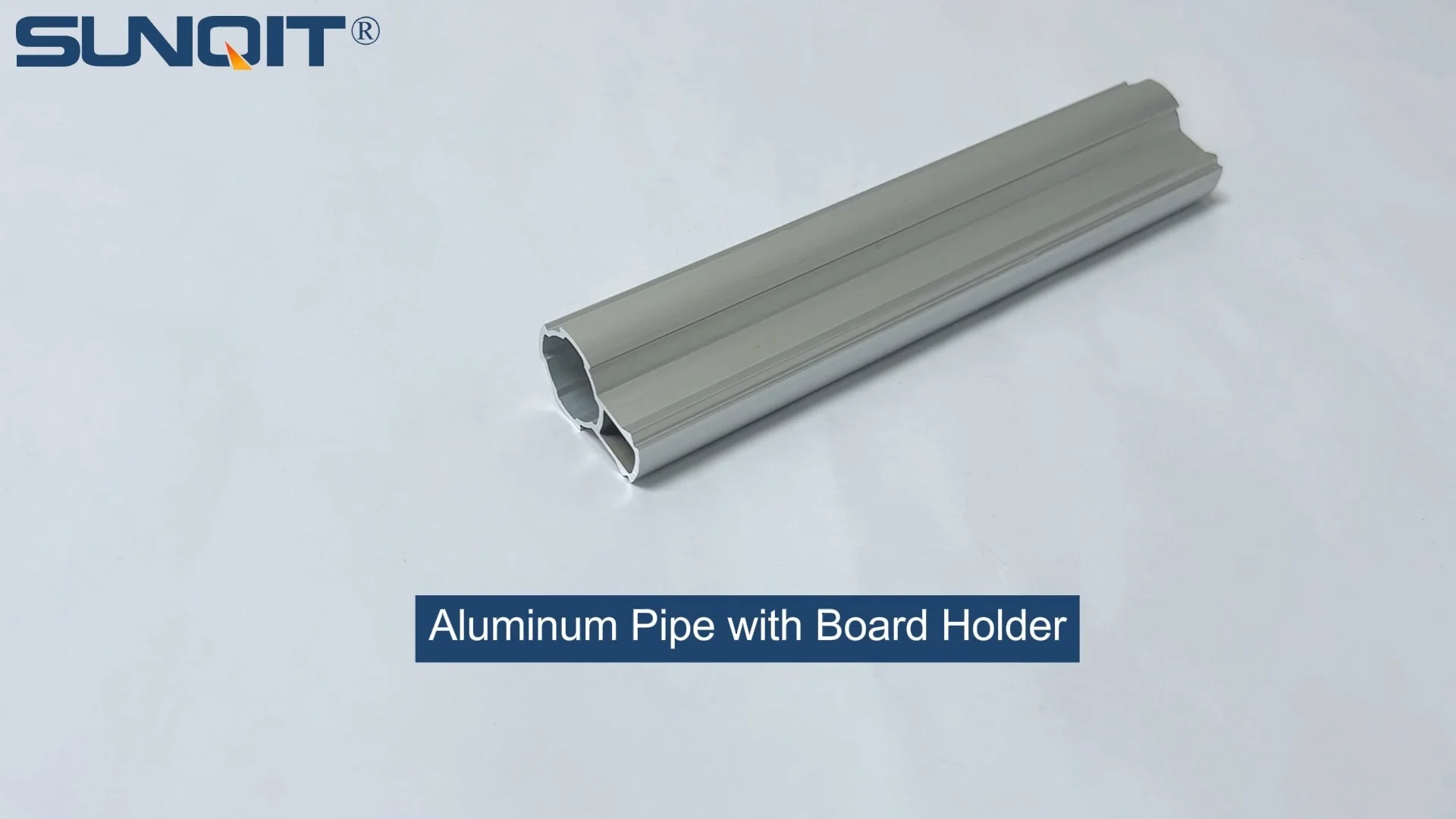
Aluminum Pipe with Board Holder
The linear rolling assembly can be arbitrarily connected in the protruding part of the card slot to increase the rigidity of the track.
Walk into any modern automotive assembly plant, and you'll be met with a symphony of precision: robots welding frames, workers installing intricate electronics, and conveyor belts humming as car parts glide from station to station. But behind this orchestrated chaos lies a constant challenge: how to keep up with evolving production demands, protect sensitive components, and ensure workers can perform their best—day in, day out. In recent years, one solution has emerged as a quiet game-changer: the Aluminum Pipe with Board Holder . More than just a tool or a piece of equipment, it's a modular building block that's redefining what assembly lines can achieve. Let's dive into how this unassuming innovation is solving age-old problems and shaping the future of automotive manufacturing.
The Hidden Struggles of Traditional Assembly Line Setups
For decades, automotive assembly lines relied on rigid, one-size-fits-all workstations. Picture this: a steel workbench bolted to the floor, cluttered with tools, instruction manuals taped to the surface, and parts scattered in plastic bins. When production needs changed—say, shifting from sedans to electric SUVs—reconfiguring these setups meant days (or weeks) of downtime, welding new steel frames, or even building entirely new workstations from scratch. Workers, meanwhile, grappled with ergonomic nightmares: bending to reach tools, straining to read faded instructions, or hauling heavy parts across clunky, immovable benches.
Then there's the risk of static electricity. Modern cars are rolling computers, packed with sensitive electronics—infotainment systems, sensors, and ECUs that can be fried by a single static discharge. Traditional workbenches, often made of wood or uncoated steel, offered little protection against electrostatic discharge (ESD), leading to costly defects and rework. And let's not forget durability: wood warps under heavy use, steel rusts in humid plants, and both are notoriously hard to repair when damaged.
These weren't just minor inconveniences. They translated to slower production times, higher costs, and unhappy workers. Plant managers needed a solution that was flexible enough to adapt to changing models, durable enough to withstand the daily grind, and smart enough to protect critical components. Enter the Aluminum Pipe with Board Holder—a product born from the marriage of aluminum extrusion profile technology and modular design.
What Is an Aluminum Pipe with Board Holder, Anyway?
At its core, an Aluminum Pipe with Board Holder is exactly what it sounds like: a lightweight, durable aluminum pipe (or aluminum profile ) paired with adjustable holders designed to secure tools, documents, parts, or even small screens. But its true magic lies in its simplicity and adaptability. Let's break it down:
The Anatomy of the System
The "backbone" is the aluminum extrusion profile —a long, hollow pipe with a T-slot design running along its length. This slot isn't just for show: it lets you slide in brackets, clips, and holders without drilling or welding. The board holder itself is a flat, often adjustable panel (made of ESD-safe plastic or aluminum) that attaches to the pipe via these T-slot accessories. Need to angle the board for better visibility? Just loosen a knob, adjust, and tighten. Want to add a hook for a power tool? Snap a clip into the T-slot. It's like building with industrial Legos, but for grown-ups.
But the system doesn't stop there. It's part of a broader ecosystem of aluminum profile accessories : joints that let pipes connect at 90°, 45°, or even 135° angles; end caps to smooth rough edges; and casters (yes, caster wheels ) to make the whole setup mobile. This modularity means you're not just buying a workbench—you're buying a toolkit to build, rebuild, and repurpose workstations on the fly.
Why Aluminum? The Material Makes All the Difference
Aluminum was no accident here. Unlike steel, it's lightweight (about 1/3 the weight of steel), so workers can reposition the setup without heavy machinery. It's naturally corrosion-resistant, so it holds up in humid or oily plant environments. And because it's conductive, when properly grounded, it doubles as an ESD protection tool—critical for handling sensitive car electronics. Compare that to wood, which warps, or plastic, which can generate static. Aluminum checks all the boxes: strong, light, safe, and long-lasting.

5 Ways Aluminum Pipe with Board Holder Transforms Assembly Lines
So, what makes this system a must-have for automotive plants? Let's count the ways:
1. Flexibility: Adapt in Hours, Not Weeks
Automotive production lines are no longer static. A plant might build a compact car on Monday and switch to a hybrid SUV by Friday. With traditional steel workstations, that meant calling in welders or carpenters to rebuild benches. With Aluminum Pipe with Board Holder? It's as simple as unclipping the old setup, rearranging the aluminum pipes, and reattaching the board holders. Need a longer board for larger parts? Swap in a new panel. Want to add a second tier for tools? Connect an extra pipe with a parallel aluminum joint . In one Michigan plant, what used to take 2 weeks to reconfigure now takes 2 hours—saving thousands in downtime.
2. Ergonomics: Putting Workers First
An assembly line is only as good as its workers, and workers perform best when they're comfortable. Aluminum Pipe with Board Holder systems are (highly adjustable). The board holder can be tilted, raised, or lowered to match a worker's height, reducing neck and back strain. The lightweight aluminum means even fully loaded setups can be moved with caster wheels , so workers can position their workstation exactly where they need it—no more walking 10 feet to grab a tool. One plant in Ohio reported a 30% drop in worker compensation claims after switching to these systems, with employees citing "less fatigue" and "easier access to tools" as key improvements.
3. ESD Protection: Safeguarding the "Brains" of the Car
Modern cars rely on hundreds of electronic components, from touchscreens to autonomous driving sensors. A single static discharge can ruin a $500 ECU, costing plants thousands in scrap and rework. Aluminum Pipe with Board Holder systems, when paired with ESD-safe board materials and grounded via the aluminum frame, act as a shield. Unlike plastic boards, which can generate static, aluminum dissipates electricity, keeping sensitive parts safe. One electric vehicle manufacturer in California cut ESD-related defects by 85% after integrating these systems into their ESD workstations .
4. Durability: Built to Outlast the Assembly Line
Assembly lines are tough places—oils, greases, and constant use take a toll. Aluminum holds up. Unlike wood, it doesn't warp or rot. Unlike steel, it doesn't rust. Even after years of heavy use, the aluminum pipes and joints remain strong, and damaged parts (like a cracked board holder) can be swapped out in minutes using aluminum profile accessories . One plant manager in Texas put it this way: "We've had the same aluminum frames for 7 years. They look as good as new, and we've reconfigured them at least 12 times. Try that with a wooden bench."
5. Cost-Effectiveness: Save Now, Save Later
At first glance, aluminum systems might cost more than basic wooden workbenches. But consider the long-term: no need to replace warped wood every 2 years, no welding bills for steel reconfigurations, and fewer defects from ESD damage. Plus, when a plant upgrades or moves, the aluminum components can be disassembled and reused. A study by the Automotive Manufacturing Solutions Association found that plants using modular aluminum systems saved 22% on workstation costs over 5 years compared to traditional setups.

Beyond the Pipe: Integrating with Workbenches, Conveyors, and More
The Aluminum Pipe with Board Holder doesn't work in isolation. It's part of a larger ecosystem of modular tools that turn assembly lines into adaptable, interconnected hubs. Let's look at how it plays well with others:
Pairing with Workbenches: The Ultimate Workstation
Imagine a workbench where the Aluminum Pipe with Board Holder is built right into the frame. The bench top holds the main assembly area, while the pipe-and-board system above keeps tools, instructions, and small parts within arm's reach. Need to add a shelf for bins? Use aluminum profile accessories to clip it onto the pipe. Want to mount a small monitor showing assembly steps? The board holder can double as a screen mount. This integration turns a basic bench into a personalized command center for workers.
Working with Conveyors: Smooth Material Flow
Conveyor lines are the arteries of assembly plants, moving parts from station to station. Aluminum Pipe with Board Holder systems can be mounted alongside conveyor belts, with board holders positioned to catch parts as they arrive. For example, at a battery assembly station, the board holder might have slots for battery cells, so workers can grab them without leaning over the conveyor. The lightweight aluminum ensures the setup doesn't add extra weight to the conveyor frame, and adjustable heights mean it can align with any belt level.
ESD Workstations: A Safe Haven for Electronics
When paired with ESD-safe mats, grounded casters, and conductive board holders, the Aluminum Pipe with Board Holder becomes the centerpiece of an ESD workstation . In plants assembling electric vehicle batteries or ADAS (Advanced Driver Assistance Systems) components, this is non-negotiable. The aluminum frame acts as a ground path, dissipating static charges before they reach sensitive parts—a critical layer of protection that traditional workstations often lack.
Aluminum vs. the Rest: How It Stacks Up
Still on the fence? Let's compare the Aluminum Pipe with Board Holder to traditional workstation materials. The table below breaks down key factors like weight, durability, and cost:
| Feature | Aluminum Pipe with Board Holder | Traditional Steel Workbench | Wooden Workbench |
|---|---|---|---|
| Material | Aluminum extrusion profile | Mild steel | Plywood/particleboard |
| Weight (per linear foot) | 2.5 lbs | 8 lbs | 4 lbs |
| Load Capacity | Up to 200 lbs per linear foot | Up to 300 lbs per linear foot | Up to 100 lbs per linear foot |
| Customization Ease | Tool-free reconfiguration with accessories | Requires welding/cutting | Requires sawing/nailing |
| ESD Safe | Yes (when grounded) | Yes (with coating) | No |
| Corrosion Resistance | High (naturally resistant) | Low (prone to rust without coating) | Low (warps in moisture) |
| Typical Lifespan | 10–15 years | 7–10 years (with maintenance) | 2–3 years |
| Initial Cost (per workstation) | $300–$500 | $400–$600 | $150–$250 |
| Long-Term Cost (5-year projection) | $300–$500 (reusable, minimal replacement) | $600–$800 (maintenance, reconfiguration) | $750–$1,250 (frequent replacement) |
As the table shows, aluminum strikes the perfect balance: lighter than steel, stronger than wood, and infinitely more adaptable than both. And when you factor in long-term savings, it's hard to beat.
Real Results: How One Plant Transformed Production
Let's zoom in on a real-world example. Greenfield Motors, a mid-sized automotive plant in Indiana, was struggling with outdated workstations. Their main challenges: slow reconfiguration times when switching models, high ESD-related defects in their EV battery line, and worker complaints about back pain.
In 2023, they replaced 80% of their traditional workstations with Aluminum Pipe with Board Holder systems, paired with ESD workstations in the battery assembly area. The results were staggering:
- Reconfiguration time: From 14 days to 2 days when switching from gas to electric models.
- ESD defects: From 4.2% to 0.8% in the battery line.
- Worker absenteeism: Down 18% due to reduced ergonomic strain.
- Production output: Up 12% in the first 6 months.
Plant manager Sarah Lopez summed it up: "We didn't just buy workstations—we bought a way to keep up with the future. The aluminum systems grow with us, and the workers love how easy they are to use. It's been a game-changer."
The Future: Smart, Connected, and Even More Adaptable
The Aluminum Pipe with Board Holder isn't standing still. As automotive manufacturing moves toward Industry 4.0, these systems are getting smarter, too. Here's what's on the horizon:
Smart Board Holders with IoT Integration
Imagine board holders embedded with sensors that track tool usage, alerting managers when supplies run low. Or digital displays built into the board that sync with production software, showing real-time assembly instructions or quality checklists. Some manufacturers are already testing "smart" aluminum pipes with built-in wiring channels, making it easy to add lights, sensors, or even small robots to the setup.
Sustainable Materials and Circular Design
Aluminum is already 100% recyclable, but future systems will take sustainability further. Look for pipes made from recycled aluminum, or board holders crafted from plant-based plastics. And with modular design, components will be even easier to repair or repurpose, cutting down on waste.
AI-Powered Workstation Optimization
AI algorithms could soon analyze production data to suggest the optimal layout for Aluminum Pipe with Board Holder systems. For example, if workers at a station spend 15% of their time reaching for a specific tool, the AI might recommend repositioning the board holder to cut that time in half. It's workstation design, but smarter.
The Assembly Line of Tomorrow, Built Today
At the end of the day, the Aluminum Pipe with Board Holder is more than a piece of equipment. It's a symbol of how automotive manufacturing is evolving—away from rigid, one-time solutions and toward flexible, human-centered systems that adapt as quickly as the industry itself. It's about protecting sensitive electronics, reducing worker strain, and saving time and money. It's about building cars better, faster, and smarter.
So, whether you're a plant manager struggling with downtime, a worker tired of wrestling with clunky workstations, or an innovator looking to future-proof your production line, the message is clear: modular aluminum systems aren't just the future of automotive assembly—they're the present. And they're here to stay.