- Company Articles
- Products and Technology
- Product knowledge
- Aluminum Pipe with Board Holder in Furniture Manufacturing

Aluminum Pipe with Board Holder in Furniture Manufacturing
Related Product
Aluminum Pipe with Board Holder
The linear rolling assembly can be arbitrarily connected in the protruding part of the card slot to increase the rigidity of the track.
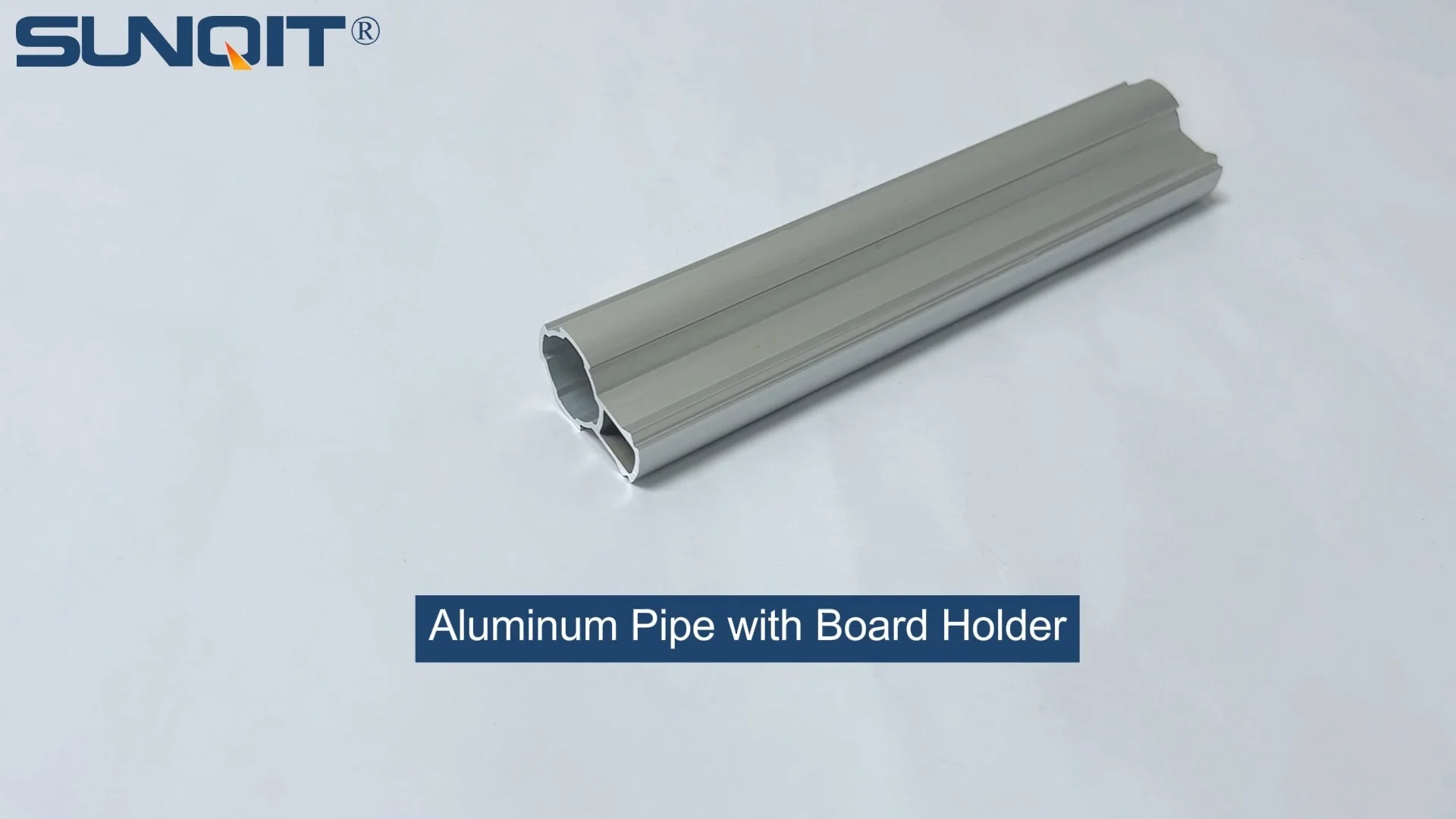
In the fast-paced world of furniture manufacturing, where consumer demands for customization, durability, and eco-friendliness are higher than ever, the industry is constantly seeking innovative materials and solutions to stay ahead. One such solution that has quietly revolutionized production floors, workshops, and design studios is the aluminum pipe with board holder . Far more than just a functional component, this versatile system bridges the gap between structural reliability and creative freedom, offering manufacturers a tool to build everything from workbenches and shelving units to custom furniture pieces that adapt to evolving needs. In this article, we'll explore how aluminum pipe with board holder is transforming furniture manufacturing, diving into its material benefits, applications, manufacturing process, and the future trends shaping its use.
The Rise of Aluminum: A Material Built for Modern Manufacturing
Before delving into the specifics of aluminum pipe with board holder, it's essential to understand why aluminum has become a cornerstone of modern manufacturing. For decades, furniture makers relied heavily on wood, steel, and plastic—each with its own set of limitations. Wood, while timeless, is prone to warping, termite damage, and requires intensive processing. Steel, though strong, is heavy, difficult to modify, and prone to rust without proper coating. Plastic, lightweight and cheap, often lacks the structural integrity needed for heavy-duty applications. Aluminum, however, brings a unique blend of properties that address these pain points.
Aluminum is inherently lightweight, with a density roughly one-third that of steel, making it easy to handle, transport, and assemble—critical factors in reducing labor costs and streamlining production. Yet, despite its lightness, it boasts impressive strength, especially when formed into aluminum extrusion profiles —shapes created by forcing heated aluminum through a die, which enhances structural rigidity. This combination of strength and lightness makes aluminum ideal for everything from load-bearing frames to delicate design elements.
Sustainability is another key driver. Aluminum is 100% recyclable, with recycled aluminum requiring just 5% of the energy needed to produce new aluminum from raw bauxite. In an era where consumers and regulators alike prioritize eco-friendly practices, this recyclability gives furniture manufacturers a significant advantage in meeting sustainability goals. Additionally, aluminum's natural resistance to corrosion (thanks to a thin oxide layer that forms on its surface) ensures longevity, reducing the need for frequent replacements and minimizing waste.
Aesthetically, aluminum offers versatility. Its sleek, metallic finish can be left bare for a modern, industrial look, or coated with powders, anodized, or painted to match any color scheme. This flexibility allows designers to create furniture that fits seamlessly into diverse settings, from minimalist home offices to vibrant retail spaces. When paired with board holders—components that secure wooden, laminate, or composite boards—aluminum pipes add warmth and texture, balancing industrial strength with organic appeal.
Aluminum Pipe with Board Holder: What It Is and How It Works
At its core, an aluminum pipe with board holder system is a modular framework composed of three main elements: aluminum pipe (or tubing), board holders, and accessories. Let's break down each component to understand how they work together to create functional, adaptable furniture.
Aluminum Pipe: The Backbone of the System
The aluminum pipe itself is typically made from aluminum lean pipe or standard aluminum tubing, available in various diameters (common sizes range from 20mm to 40mm) and wall thicknesses. These pipes are often part of a broader system of aluminum profile s, which include extruded shapes like square, round, or rectangular tubes. For furniture manufacturing, round or square aluminum pipes are preferred for their combination of strength and ease of connection—round pipes, for example, pair well with rotational joints, while square pipes offer flat surfaces for attaching accessories.
Many aluminum pipes used in furniture systems are anodized or powder-coated. Anodizing creates a hard, protective layer on the surface, enhancing corrosion resistance and giving the pipe a matte, uniform finish. Powder coating, on the other hand, involves applying a dry powder (usually polyester) electrostatically and curing it in an oven, resulting in a durable, colorful finish that can be customized to match brand colors or design themes. Both treatments ensure the pipes withstand daily wear and tear, even in high-traffic environments like commercial offices or retail stores.
Board Holders: Merging Pipes with Functional Surfaces
Board holders are the critical link between aluminum pipes and the work surfaces or shelves that make furniture functional. These components come in various designs, each tailored to specific applications. Some common types include:
- Clip-on brackets : Simple, cost-effective holders that clamp onto the aluminum pipe, allowing quick installation and removal of boards. Ideal for temporary setups or frequently reconfigured workspaces.
- Integrated channel holders : Built into the aluminum pipe or profile, these holders feature grooves or slots where boards can slide in and be secured with screws or bolts. This design offers a cleaner look and stronger hold, making it suitable for permanent furniture like desks or shelves.
- Adjustable angle holders : These allow boards to be positioned at different angles (e.g., 30°, 45°, 90°), adding versatility for applications like sloped shelves, drafting tables, or display racks.
- Heavy-duty plate holders : Thick metal plates welded or bolted to the aluminum pipe, designed to support large, heavy boards (e.g., solid wood countertops or industrial workbench tops).
The beauty of board holders lies in their adaptability. They can accommodate a wide range of board materials, including plywood, MDF, particleboard, laminate, and even glass or acrylic, allowing manufacturers to tailor the furniture's appearance and functionality to the end user's needs. For example, a home office desk might use a laminate board for a smooth, easy-to-clean surface, while a workshop workbench could feature a thick plywood board for durability.
Accessories: Completing the System
No modular system is complete without accessories, and aluminum pipe with board holder systems are no exception. Aluminum pipe accessories include joints, connectors, casters, end caps, and brackets, all designed to enhance the system's flexibility and functionality. Joints, for instance, allow pipes to be connected at various angles (90°, 45°, 135°), enabling the creation of complex structures like L-shaped desks or multi-tiered shelving. Casters (wheels) transform static furniture into mobile units—think rolling workbenches or movable storage racks—adding convenience in dynamic work environments. End caps, often made of plastic or rubber, cover the ends of pipes, preventing dust accumulation and adding a finished look.
These accessories are typically designed to be compatible with standard aluminum pipe sizes, ensuring interoperability across different manufacturers and systems. This standardization is a boon for furniture makers, as it reduces the need for custom parts and simplifies inventory management.

Applications in Furniture Manufacturing: From Workbenches to Custom Designs
Aluminum pipe with board holder systems are incredibly versatile, finding applications across nearly every segment of furniture manufacturing. Let's explore some of the most common uses and how they benefit both manufacturers and end users.
Workbenches: The Heart of Production and Workspaces
Workbenches are a staple in workshops, factories, laboratories, and home garages, and aluminum pipe with board holder systems excel in this role. A typical workbench built with aluminum pipes features a sturdy frame made from square or round aluminum pipes, connected by joints, with a wooden or composite board secured to the top via heavy-duty board holders. The result is a workbench that is lightweight enough to move (with optional casters) but strong enough to support tools, materials, and equipment.
What sets these workbenches apart is their customizability. Manufacturers can adjust the height, width, and depth to suit specific tasks—for example, a taller bench for standing work or a shorter one for seated assembly. Accessories like pegboards, tool rails, or overhead shelves can be added using the same aluminum pipe system, keeping tools within easy reach. In industrial settings, ESD (electrostatic discharge) workbenches—equipped with conductive board holders and ESD-safe materials—are critical for handling sensitive electronics, and aluminum's conductivity (when properly treated) makes it an ideal base for such applications.
Shelving and Storage Units: Adapting to Changing Needs
Traditional shelving units are often fixed in size, making them impractical when storage needs change. Aluminum pipe with board holder systems solve this problem with modular shelving that can be easily reconfigured. For example, a retail store might start with a 3-tier shelving unit for small products, then add more tiers or widen the shelves using additional aluminum pipes and board holders when inventory expands. In homes, adjustable shelving allows users to accommodate taller items like books or decorative pieces without replacing the entire unit.
Material racks, a type of specialized shelving used in warehouses and factories, also benefit from aluminum pipe systems. These racks, designed to hold raw materials like lumber, metal sheets, or fabric rolls, require strength and durability. Aluminum pipes, paired with heavy-duty board holders and cross-bracing, provide the necessary support while remaining lightweight enough to reposition as production lines change.
Office and Commercial Furniture: Balancing Style and Function
In office environments, aluminum pipe with board holder systems are used to create desks, cubicle partitions, conference tables, and storage cabinets. The sleek, modern look of aluminum complements contemporary office design, while the modular nature allows for easy customization. For example, an open-plan office might use aluminum pipe frames with glass boards for partitions, creating a bright, collaborative space. In contrast, a private office could feature a wooden-topped desk with aluminum pipe legs, blending warmth with industrial chic.
Commercial settings like restaurants, cafes, and retail stores also leverage these systems for customer-facing furniture. Display racks for clothing or accessories, for instance, can be built with aluminum pipes and wooden board holders, creating a rustic yet modern aesthetic. Countertops in cafes often use aluminum pipe frames with laminate or marble boards, combining durability (to withstand spills and heavy use) with visual appeal.
Custom and Artisanal Furniture: Unleashing Creativity
For artisanal furniture makers and designers, aluminum pipe with board holder systems offer a canvas for creativity. Unlike traditional materials that require specialized tools to shape, aluminum pipes are easy to cut, bend (with the right equipment), and connect, allowing for unique, one-of-a-kind designs. A designer might create a sculptural chair frame using curved aluminum pipes, with a woven fabric seat secured via custom board holders, or a coffee table with an asymmetrical base made from interconnected aluminum pipes and a reclaimed wood top.
This flexibility is particularly valuable for small-batch or custom furniture businesses, which often operate on tight budgets and need to minimize waste. By using modular aluminum components, designers can prototype new ideas quickly, make adjustments on the fly, and scale production only when a design is finalized—reducing upfront costs and material waste.

Comparing Aluminum Pipe with Board Holder to Traditional Materials
To better understand the advantages of aluminum pipe with board holder systems, let's compare them to traditional furniture materials in a side-by-side analysis:
| Criteria | Aluminum Pipe with Board Holder | Wood | Steel | Plastic |
|---|---|---|---|---|
| Weight | Lightweight (easy to move/assemble) | Heavy (varies by species) | Very heavy (difficult to reposition) | Lightweight (but low strength) |
| Durability | High (corrosion-resistant, impact-resistant) | Moderate (prone to warping, scratches, termites) | High (but prone to rust without coating) | Low (prone to cracking, melting in heat) |
| Customization | High (modular, easy to reconfigure with accessories) | Moderate (requires cutting/sanding for modifications) | Low (difficult to cut/bend without specialized tools) | Moderate (moldable but limited to simple shapes) |
| Sustainability | High (100% recyclable, low energy to recycle) | Moderate (renewable but slow-growing; deforestation risks) | Moderate (recyclable but high energy to produce) | Low (non-biodegradable, limited recyclability) |
| Cost (Initial) | Moderate (higher than plastic/wood, lower than steel) | Low to High (varies by species/quality) | High (material + coating costs) | Low |
| Cost (Long-term) | Low (durable, low maintenance, recyclable) | High (needs refinishing, replacement due to damage) | Moderate (durable but may require re-coating) | High (frequent replacement needed) |
| Aesthetic Versatility | High (anodized, powder-coated, or paired with wood/glass) | High (natural grain, stains, paints) | Low (limited to industrial/modern looks) | Moderate (colorful but artificial appearance) |
Outdoor Furniture: Withstanding the Elements
Outdoor furniture faces unique challenges, including rain, UV radiation, and temperature fluctuations. Aluminum pipe with board holder systems are well-suited to this environment, thanks to aluminum's natural corrosion resistance. Unlike steel, which rusts when exposed to moisture, aluminum pipes require minimal maintenance—often just an occasional wipe-down to remove dirt. Board holders designed for outdoor use, paired with weather-resistant boards (like teak, composite decking, or HDPE plastic), create outdoor dining sets, patio chairs, and garden benches that last for years without fading or warping.
The Manufacturing Process: From Raw Aluminum to Finished Furniture
Creating furniture with aluminum pipe and board holder systems involves several key steps, each critical to ensuring quality, durability, and functionality. Let's walk through the process from start to finish.
Step 1: Aluminum Extrusion – Shaping the Pipes
The journey begins with aluminum extrusion, the process of creating aluminum extrusion profiles . Raw aluminum, in the form of billets (cylindrical blocks), is heated to around 400–500°C (750–930°F) until it becomes malleable. The heated billet is then placed in a press and forced through a die—a steel tool with a specific cross-sectional shape (e.g., round, square, rectangular). As the aluminum exits the die, it cools and hardens into the desired profile. For furniture applications, dies are often designed to include channels or grooves that facilitate the attachment of board holders and accessories, reducing the need for secondary machining.
After extrusion, the profiles are cut to standard lengths (e.g., 2m, 3m) using saws or cutting machines. Some manufacturers also offer custom cutting services, allowing furniture makers to order pipes pre-cut to their exact specifications, saving time on the production floor.
Step 2: Surface Treatment – Enhancing Durability and Appearance
Once the aluminum pipes are cut, they undergo surface treatment to improve corrosion resistance and appearance. The most common treatments are:
- Anodizing : An electrochemical process that thickens the natural oxide layer on the aluminum surface, creating a hard, scratch-resistant finish. Anodized aluminum can be dyed in various colors, offering a range of aesthetic options.
- Powder coating : A dry powder (usually polyester) is electrostatically applied to the aluminum pipe, which is then cured in an oven. The powder melts and forms a durable, uniform coating that is resistant to chipping, fading, and corrosion. Powder coating is ideal for achieving bold colors or textured finishes.
- Polishing : For a high-gloss, mirror-like finish, aluminum pipes are polished using abrasive materials. This treatment is popular for decorative furniture pieces where appearance is a priority.
Step 3: Manufacturing Board Holders and Accessories
While some furniture manufacturers source pre-made board holders and accessories, others produce custom components in-house. Board holders are typically made from steel, aluminum, or plastic. Steel holders are used for heavy-duty applications, while aluminum holders offer a lightweight, corrosion-resistant alternative. Plastic holders are cost-effective for light-use furniture like shelving in residential settings.
Accessories like joints and connectors are often die-cast or machined from aluminum or steel. Die casting involves melting metal and pouring it into a mold, allowing for complex shapes with tight tolerances. Machining, using CNC (computer numerical control) machines, is used for high-precision parts that require exact dimensions to ensure compatibility with aluminum pipes.
Step 4: Assembly – Bringing It All Together
The final step is assembling the aluminum pipes, board holders, and accessories into finished furniture. This process is typically done using simple hand tools (e.g., wrenches, screwdrivers) or pneumatic tools for faster production. For modular systems, assembly is often designed to be tool-free, with snap-fit or twist-lock joints that allow for quick setup and reconfiguration.
During assembly, manufacturers must ensure that board holders are securely attached to the aluminum pipes to prevent wobbling or failure under load. This may involve welding (for permanent connections), bolting, or clamping, depending on the application. For example, a commercial workbench might use welded board holders for maximum strength, while a home shelving unit could use bolt-on holders for easy disassembly and transport.
Challenges and Solutions: Overcoming Hurdles in Aluminum Pipe Furniture Manufacturing
While aluminum pipe with board holder systems offer numerous advantages, manufacturers face several challenges in working with these materials. Let's explore common hurdles and how they can be addressed.
Challenge 1: Ensuring Compatibility Across Components
With multiple manufacturers producing aluminum pipes, board holders, and accessories, compatibility can be an issue. A board holder designed for a 30mm pipe may not fit a 28mm pipe from a different supplier, leading to delays and wasted materials.
Solution : Adopting industry standards is key. Many manufacturers follow international standards for pipe diameters, wall thicknesses, and accessory dimensions, ensuring interoperability. Furniture makers can also source components from a single supplier or a network of suppliers that guarantee compatibility, reducing the risk of mismatched parts.
Challenge 2: Managing Costs for Small-Scale Production
While aluminum pipe systems are cost-effective for large-scale production, small furniture makers may struggle with higher per-unit costs due to minimum order quantities (MOQs) from aluminum suppliers.
Solution : Partnering with suppliers that offer low MOQs or working with distributors that stock a wide range of standard components can help small manufacturers access materials without over-ordering. Additionally, modular design allows small batches to be produced efficiently, as the same aluminum pipes and board holders can be used across multiple furniture models.
Challenge 3: Achieving Structural Integrity for Heavy Loads
While aluminum is strong, improper design can lead to furniture that sags or fails under heavy loads. This is particularly true for large shelving units or workbenches used in industrial settings.
Solution : Engineering calculations are critical. Manufacturers should use structural analysis software to determine the optimal pipe diameter, wall thickness, and board holder spacing for specific load requirements. Adding cross-bracing, gussets, or reinforced joints can also enhance stability. Testing prototypes under realistic load conditions ensures the final product meets safety standards.
Challenge 4: Addressing Environmental Concerns in Coating Processes
While aluminum itself is sustainable, some surface treatments (e.g., powder coating) use chemicals that can be harmful to the environment if not properly managed.
Solution : Choosing eco-friendly coating options, such as water-based powders or low-VOC (volatile organic compound) paints, reduces environmental impact. Additionally, recycling waste from coating processes (e.g., excess powder, wastewater) minimizes pollution and aligns with sustainability goals.
Future Trends: What's Next for Aluminum Pipe with Board Holder Systems?
As furniture manufacturing continues to evolve, aluminum pipe with board holder systems are poised to adapt and innovate. Here are some emerging trends to watch:
Smart Furniture Integration
The rise of smart homes and IoT (Internet of Things) is driving demand for furniture that integrates technology. Aluminum pipe systems, with their hollow pipes, provide an ideal conduit for wiring sensors, LED lights, or charging ports. For example, a smart desk could feature built-in wireless charging pads, with the aluminum frame housing the necessary electronics. Board holders with integrated USB ports or cable management channels are also becoming popular, reducing clutter in modern workspaces.
Advanced Materials and Coatings
Research into new aluminum alloys is yielding materials with even higher strength-to-weight ratios, opening up possibilities for lighter, more durable furniture. Nanocoatings, which use tiny particles to create superhydrophobic (water-repellent) or self-cleaning surfaces, are being applied to aluminum pipes, reducing maintenance needs in high-moisture environments like bathrooms or outdoor spaces.
3D Printing for Custom Accessories
3D printing is revolutionizing accessory production, allowing manufacturers to create highly customized board holders, joints, and brackets on-demand. This is particularly valuable for small-batch or artisanal furniture, where unique designs are a selling point. 3D-printed accessories can also be made from recycled plastics, further enhancing sustainability.
Circular Economy Practices
As sustainability becomes a competitive differentiator, furniture manufacturers are embracing circular economy models, where products are designed for reuse, repair, or recycling. Aluminum pipe systems, with their modular design and recyclable materials, are well-suited to this approach. Some companies now offer take-back programs, where old aluminum furniture is disassembled, and the pipes are recycled into new products, closing the loop and reducing waste.
Conclusion: Aluminum Pipe with Board Holder – Shaping the Future of Furniture Manufacturing
Aluminum pipe with board holder systems have come a long way from their industrial roots, evolving into a cornerstone of modern furniture manufacturing. By combining the strength and sustainability of aluminum with the flexibility of modular design, these systems empower manufacturers to create furniture that is durable, customizable, and eco-friendly. From workbenches that adapt to changing production needs to shelving units that grow with families, and from sleek office desks to weather-resistant outdoor furniture, the applications are endless.
As technology advances and consumer demands for sustainability and customization continue to rise, aluminum pipe with board holder systems will only become more integral to the industry. By embracing modularity, investing in compatible components, and staying ahead of material science trends, furniture manufacturers can leverage these systems to not only meet today's needs but also shape the furniture of tomorrow—furniture that is not just functional, but also adaptable, beautiful, and kind to the planet.
In the end, the true power of aluminum pipe with board holder systems lies in their ability to balance form and function, rigidity and flexibility, and tradition and innovation. For furniture manufacturers willing to explore their potential, the possibilities are limited only by imagination.