- Company Articles
- Products and Technology
- Application Cases
- Aluminum Pipe with Board Holder in Lean Production: Benefits

Aluminum Pipe with Board Holder in Lean Production: Benefits
Related Product
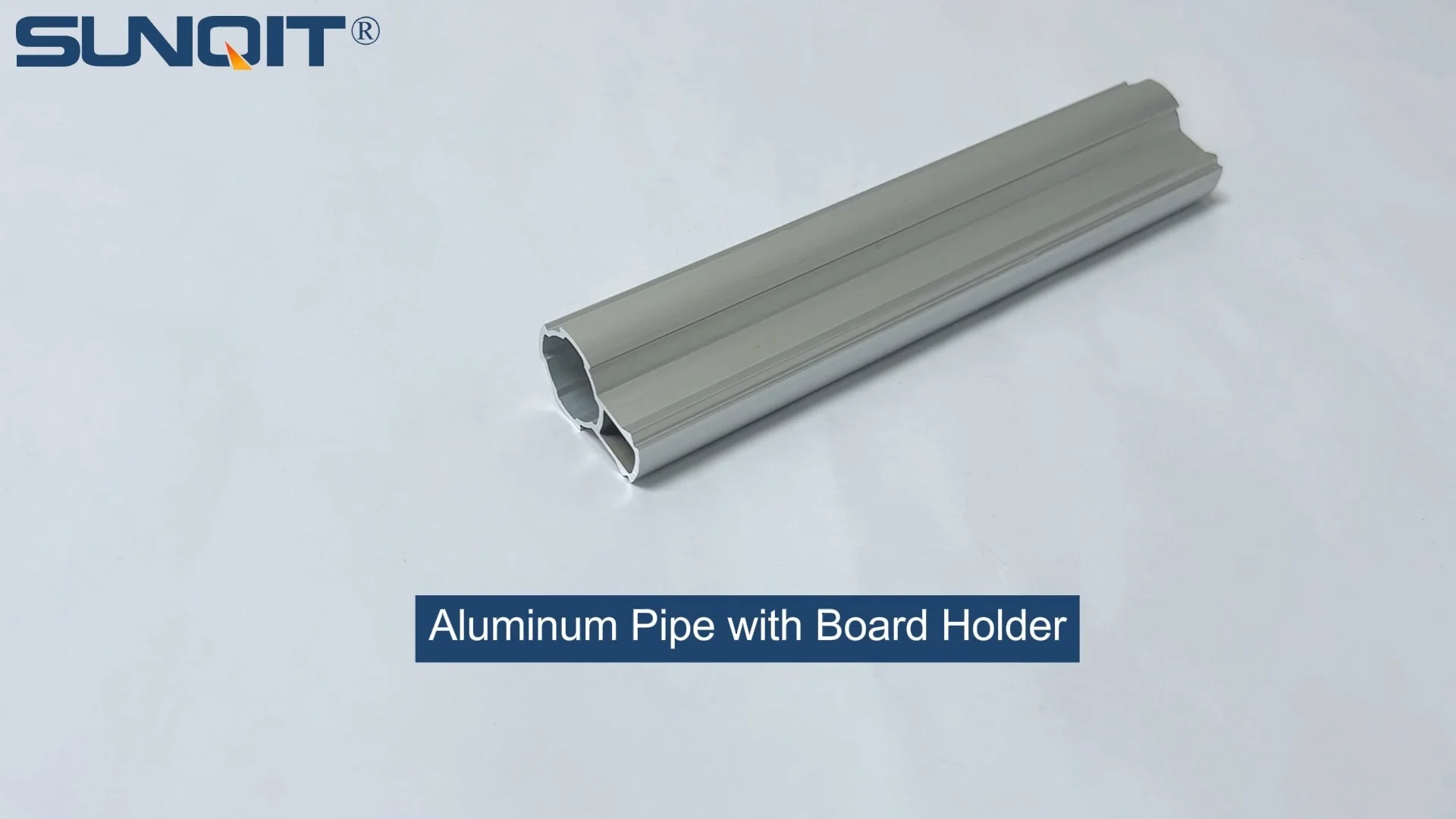
Aluminum Pipe with Board Holder
The linear rolling assembly can be arbitrarily connected in the protruding part of the card slot to increase the rigidity of the track.
Walk into any manufacturing facility, and you'll likely spot the same silent battles: workstations that feel stuck in time, tools scattered across cluttered surfaces, and teams wasting precious minutes hunting for materials or adjusting to rigid setups. For production managers, these aren't just daily headaches—they're roadblocks to the lean production promise of efficiency, waste reduction, and continuous improvement. In a world where customer demands shift overnight and product lifecycles grow shorter, flexibility and adaptability have become make-or-break factors. This is where the unassuming yet powerful combination of aluminum pipe and board holder steps in. More than just a workstation accessory, it's a tool that aligns with the very heart of lean philosophy, turning static lines into dynamic, responsive ecosystems. Let's dive into how this simple yet innovative solution is redefining what's possible in lean production.
Understanding Aluminum Pipe with Board Holder: A Lean-Focused Solution
Before we explore its benefits, let's clarify what we mean by "aluminum pipe with board holder." At its core, this system revolves around aluminum lean pipe —lightweight yet surprisingly strong aluminum tubing designed for modular assembly. Unlike traditional steel pipes, aluminum lean pipe offers the perfect balance of durability and maneuverability, making it easy to handle without sacrificing structural integrity. Attached to this pipe is the "board holder": a versatile accessory that can hold tools, assembly guides, material bins, or even digital tablets, keeping essential items within arm's reach of operators.
What truly sets this system apart is its modularity. Thanks to aluminum profile accessories like joints, clamps, and brackets, the aluminum pipe and board holder can be assembled, disassembled, and reconfigured in minutes—no welding, drilling, or specialized tools required. This isn't just a workstation component; it's part of a larger lean ecosystem, often supplied by lean system suppliers who understand that production lines need to evolve, not just exist. Whether you're building a simple workbench or a complex material flow system, the aluminum pipe with board holder adapts to your needs, not the other way around.
Core Benefits: How Aluminum Pipe with Board Holder Drives Lean Success
Lean production is built on five key principles: value, value stream, flow, pull, and perfection. Aluminum pipe with board holder doesn't just check one of these boxes—it amplifies all of them. Let's break down its most impactful benefits.
1. Flexibility and Adaptability: The Cornerstone of Lean Agility
In lean production, rigidity is the enemy of progress. A workstation that works perfectly for Product A may become a bottleneck when Product B hits the line. Traditional workstations—built from wood, steel, or fixed plastic—lock teams into one configuration, requiring costly overhauls or replacements when change is needed. Aluminum pipe with board holder, by contrast, is designed for constant evolution .
Consider a scenario where a small electronics manufacturer needs to shift from assembling smartwatches to fitness trackers. With traditional steel workstations, this might involve days of (dismantling), welding new brackets, or even purchasing entirely new tables. With aluminum lean pipe, the process is drastically simpler: loosen a few joints, reposition the pipes to accommodate the smaller tracker components, adjust the board holder to hold new assembly guides, and you're back in production—often in hours, not days. The board holder itself can be moved up, down, left, or right along the pipe, ensuring tools and materials stay within the operator's "golden zone" (the area within easy reach that minimizes stretching or bending).
This flexibility extends beyond product changes. Seasonal demand spikes, process improvements identified during kaizen events, or even operator feedback can trigger quick adjustments. A team might realize that moving the board holder from the left to the right side of the workstation reduces errors for right-handed operators—or that adding a second board holder doubles storage for high-volume days. In lean terms, this means less time spent on " muda " (waste) and more time adding value to the product.
| Feature | Traditional Workstations (Wood/Steel) | Aluminum Pipe with Board Holder |
|---|---|---|
| Flexibility | Low: Fixed design requires major overhauls for changes. | High: Modular components allow reconfiguration in hours. |
| Setup Time | Long: Requires tools, welding, or custom fabrication. | Short: Assembled by hand with basic tools; no specialized skills needed. |
| Durability | Moderate: Steel rusts, wood warps, and plastic cracks over time. | High: Aluminum resists corrosion and wear; lasts 5–10+ years with minimal upkeep. |
| Cost Over Time | High: Frequent replacements and overhauls add up. | Low: One-time investment with endless reusability; minimal maintenance costs. |
| Ergonomic Adjustability | Limited: Height and layout are fixed post-installation. | High: Board holder and pipe positions adjust to operator height and workflow needs. |
2. Durability and Longevity: Lean's Anti-Waste Ally
Lean production isn't just about cutting costs today—it's about building sustainable systems that deliver value for years to come. Aluminum pipe with board holder excels here, thanks to aluminum's inherent properties. Unlike steel, which rusts when exposed to moisture or coolants, aluminum is naturally corrosion-resistant, making it ideal for factories with humid environments or frequent cleaning. It's also dent-resistant and won't warp, crack, or splinter like wood, even under heavy use.
This durability translates to tangible lean wins. For starters, it reduces "waste of defects" (one of the seven wastes of lean) by minimizing workstation failures. A warped wooden table or a rusted steel bracket can throw off assembly precision, leading to errors and rework. Aluminum's stability ensures consistency, even in high-traffic areas. Additionally, the long lifespan of aluminum pipe means fewer replacements, lowering both procurement costs and the environmental impact of constant disposal—a win for both the bottom line and sustainability goals.
Consider this: A manufacturer using steel pipe workstations might need to replace rusted components every 2–3 years. With aluminum lean pipe, that timeline stretches to 7–10 years or more, even in harsh conditions. Over a decade, that's a 70% reduction in replacement costs—a significant saving that frees up resources for other lean initiatives like training or process optimization.
3. Ergonomics: Respecting People, Boosting Performance
Lean production isn't just about machines and processes—it's about people. The "respect for people" principle emphasizes that engaged, healthy workers are the engine of improvement. Unfortunately, traditional workstations often prioritize function over comfort, leading to fatigue, musculoskeletal disorders (MSDs), and high turnover. Aluminum pipe with board holder flips this script by putting ergonomics at the forefront.
The adjustable board holder is a game-changer here. Operators can position tools and materials at eye level (to avoid neck strain), waist height (to reduce bending), or within arm's reach (to minimize stretching). For example, an assembly line worker attaching small components no longer has to hunch over a fixed table; the board holder can be raised to a comfortable height, reducing lower back pressure. Similarly, a quality inspector can angle a digital tablet (held by the board holder) to avoid glare, cutting down on eye strain during long shifts.
The results speak for themselves: Studies show that ergonomic workstations reduce MSDs by up to 35% and increase productivity by 15–20% by keeping workers focused and energized. In lean terms, this means less "waste of waiting" (due to worker fatigue) and more time spent on value-adding tasks. It's a reminder that lean success isn't just about efficiency—it's about creating environments where people can do their best work.
4. Seamless Integration with Lean Systems: From Workbench to Roller Track
A truly lean system is more than the sum of its parts—it's a network where every component works in harmony. Aluminum pipe with board holder isn't an isolated tool; it's designed to integrate with other lean staples like roller track , conveyors, and material racks. This interoperability turns individual workstations into connected, flowing value streams.
Imagine a production line where materials arrive via roller track, gliding smoothly to the workstation. The aluminum pipe frame holds the board holder, which keeps assembly tools and guides right next to the incoming parts. Once assembled, the finished product slides back onto the roller track, minimizing handling and delays. This seamless flow eliminates "waste of transportation" (unnecessary movement of materials) and "waste of inventory" (excess stock piling up at bottlenecks).
Lean system suppliers often offer pre-designed kits that pair aluminum pipe workstations with roller track and other accessories, ensuring compatibility from day one. This reduces the "waste of overprocessing" (spending time custom-fitting incompatible components) and lets teams focus on optimizing flow rather than troubleshooting integration issues.
5. Cost-Effectiveness: Lean's Budget-Friendly Partner
At first glance, aluminum pipe with board holder might seem pricier than basic wooden workbenches. But lean thinking demands looking beyond upfront costs to the total cost of ownership (TCO). When you factor in reconfiguration, replacement, and maintenance, aluminum quickly becomes the more economical choice.
Let's break it down: Traditional workstations often require custom fabrication. A wooden table might cost $200 upfront, but if you need to add a shelf or adjust the height, you'll pay a carpenter $150–$300 for modifications. With aluminum pipe, those changes take 30 minutes and cost $20 in accessories. Over time, these savings compound. Add in the reduced replacement costs (as discussed earlier) and the productivity gains from faster reconfigurations, and aluminum pipe with board holder often pays for itself within the first year.
For small and medium-sized manufacturers, this affordability is a game-changer. It means lean transformation doesn't require a massive capital investment—teams can start small, with a single workstation, and scale as they see results. This aligns with the lean principle of "kaizen" (continuous improvement), allowing for incremental changes rather than risky overhauls.

Real-World Impact: How Manufacturers Are Leveraging Aluminum Pipe with Board Holder
To put these benefits into context, let's look at a hypothetical but realistic example: a mid-sized automotive parts supplier. Before adopting aluminum pipe with board holder, their assembly line relied on fixed steel workstations. When a major client requested a new part design, the team spent three days reconfiguring the line—welding new brackets, cutting plywood shelves, and adjusting tool positions. During this time, production slowed to a crawl, and deadlines were missed.
After switching to aluminum lean pipe workstations with board holders, the next product change took just four hours. The team loosened the joints, repositioned the pipes to accommodate the new part's dimensions, and adjusted the board holders to hold updated assembly guides. Downtime dropped by 90%, and the client was impressed by the quick turnaround. Over six months, the company reported a 22% reduction in material handling time, a 15% decrease in errors, and a 30% boost in operator satisfaction—all directly tied to the new workstation system.
Another example comes from a medical device manufacturer struggling with ergonomic complaints. Workers assembling small, precision parts were hunched over fixed tables, leading to chronic neck pain and high absenteeism. By installing aluminum pipe workstations with adjustable board holders, they raised materials and tools to eye level, reducing neck strain by 60%. Absenteeism dropped by 25%, and the team even saw a 10% increase in output as focus improved.

Choosing the Right Partner: The Role of Lean System Suppliers
While aluminum pipe with board holder is a powerful tool on its own, its full potential is unlocked when paired with a knowledgeable lean system supplier . These aren't just vendors—they're partners who understand your workflow, challenges, and goals. A good supplier will do more than sell you parts; they'll conduct a workflow analysis, recommend configurations tailored to your processes, and provide training on reconfiguring the system as needs change.
When selecting a supplier, look for those who offer a full range of aluminum profile accessories —joints, clamps, casters, and specialized holders—to ensure you can customize your setup. They should also provide responsive support, as quick access to replacement parts or technical advice is critical during tight deadlines. Remember, the best lean system suppliers view themselves as an extension of your team, invested in your long-term success.
Conclusion: More Than a Workstation—A Lean Mindset in Action
Aluminum pipe with board holder is more than a collection of parts; it's a physical manifestation of lean thinking. It embodies flexibility, respect for people, and the relentless pursuit of waste reduction. In a world where adaptability is non-negotiable, it turns static production lines into dynamic ecosystems that grow and evolve with your business. Whether you're a small manufacturer just starting your lean journey or a large enterprise looking to refine existing processes, this simple yet innovative solution offers a path to greater efficiency, happier workers, and a stronger bottom line.
At the end of the day, lean production is about empowering teams to do their best work—removing obstacles, reducing friction, and creating space for innovation. Aluminum pipe with board holder does exactly that. It's not just a workstation upgrade; it's a step toward the lean ideal: a system where every action adds value, every resource is used wisely, and every person has the tools to succeed. And in today's fast-paced manufacturing landscape, that's not just an advantage—it's essential.