- Company Articles
- Products and Technology
- Product knowledge
- Aluminum Pipe with Board Holder: Just-In-Time Production Aid

Aluminum Pipe with Board Holder: Just-In-Time Production Aid
Related Product
Aluminum Pipe with Board Holder
The linear rolling assembly can be arbitrarily connected in the protruding part of the card slot to increase the rigidity of the track.
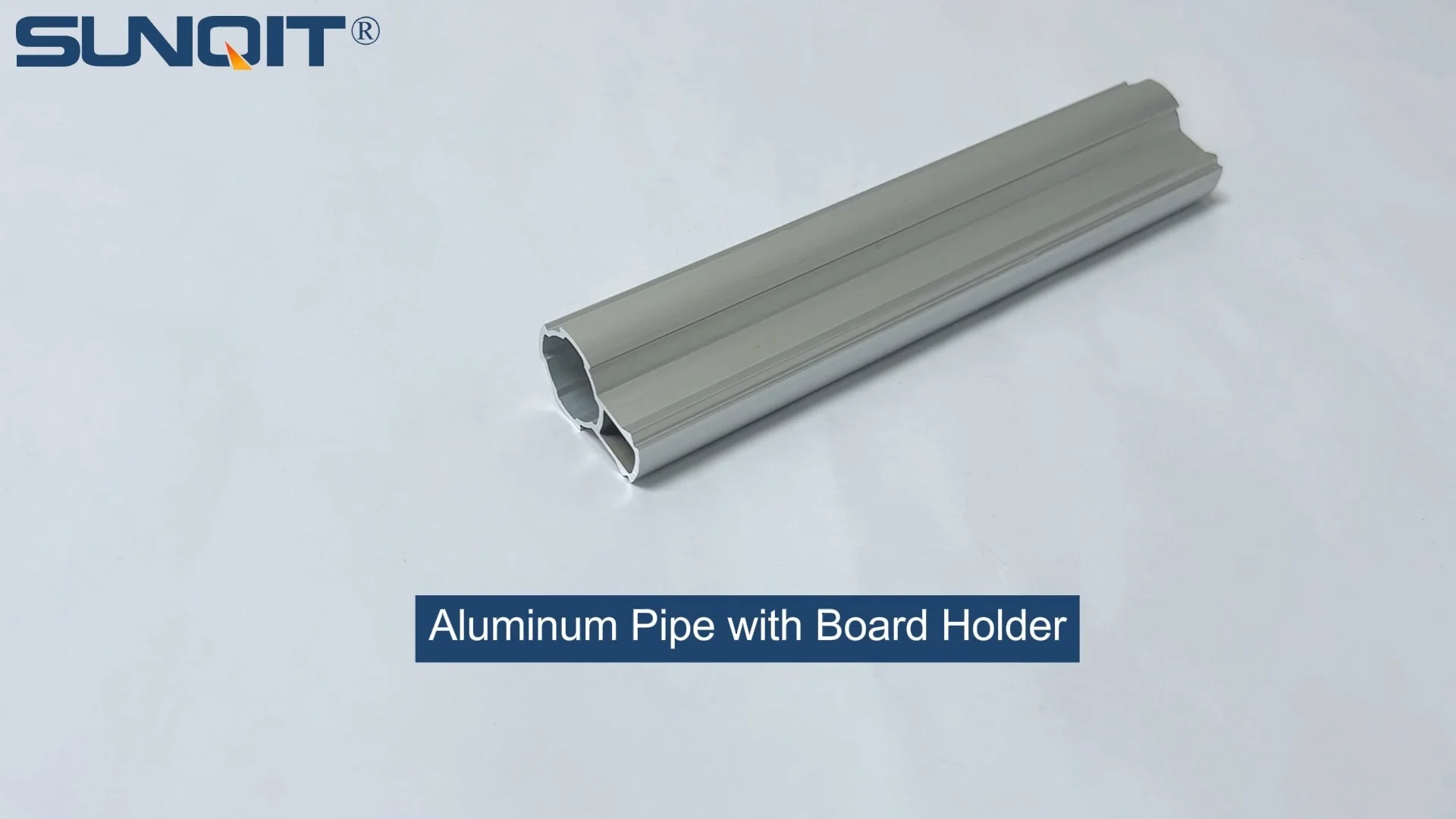
In today's fast-paced manufacturing world, where customer demands shift overnight and production lines must adapt in real time, the difference between success and stagnation often lies in the tools on the factory floor. Just-In-Time (JIT) production—with its focus on minimizing waste, reducing inventory, and responding swiftly to change—has become the gold standard for efficient operations. Yet, for many manufacturers, the leap to JIT remains elusive, held back by rigid, one-size-fits-all equipment that can't keep up with evolving needs. Enter the unsung hero of flexible manufacturing: the aluminum pipe with board holder. More than just a piece of hardware, this simple yet ingenious tool is redefining how production teams assemble, adapt, and excel in the age of JIT.
The JIT Revolution: Why Flexibility Matters More Than Ever
JIT production isn't just a buzzword—it's a philosophy that puts "right-sized" efficiency at the heart of manufacturing. By delivering materials exactly when they're needed, eliminating excess stock, and streamlining workflows, JIT cuts costs, reduces lead times, and boosts product quality. But here's the catch: JIT thrives on adaptability. A production line that can't reconfigure quickly for a new product, a sudden order surge, or a design tweak becomes a bottleneck, turning JIT's promise of efficiency into a frustrating game of catch-up.
Consider a mid-sized electronics manufacturer I worked with last year. Their assembly line relied on heavy, wooden workbenches bolted to the floor. When a client requested a last-minute design change for a smartphone component, the team spent three days dismantling and rebuilding workstations—wasting labor hours, delaying shipments, and eroding the client's trust. "We were stuck in the Stone Age," the production manager told me. "Our tools were holding us back from being the agile partner our clients needed."
This scenario is all too common. Traditional production setups—think fixed steel racks, bulky conveyor systems, and static workbenches—are built for stability, not speed. They work well for mass-produced, unchanging products, but in a market where 73% of manufacturers report frequent product design changes (per a 2024 Industry Week survey), rigidity is a liability. What's needed is a system that bends without breaking, adapts without delay, and grows with your production demands. That's where aluminum pipe systems come in.
Aluminum Pipe Systems: The Backbone of Flexible Manufacturing
Aluminum pipe—lightweight, strong, and infinitely customizable—has quietly revolutionized factory floors worldwide. Unlike stainless steel or wood, aluminum offers the perfect balance of durability and flexibility. It's resistant to corrosion, easy to clean, and, most importantly, compatible with a wide range of accessories that turn basic pipes into fully functional workstations, material racks, and assembly lines. And when paired with components like the aluminum pipe with board holder, it becomes a cornerstone of JIT success.
What makes aluminum pipe so special? Let's break it down. First, its modular design. Aluminum pipes connect using simple joints—no welding, no heavy tools, no specialized labor. A single worker can assemble a basic workstation in under an hour, and reconfigure it just as quickly when needs change. Second, its weight-to-strength ratio. Aluminum is 30% lighter than steel but can still support heavy loads, making it ideal for everything from small parts storage to full-scale assembly benches. Third, its compatibility with accessories. From casters for mobility to roller tracks for material flow, aluminum pipe systems play well with others, letting you build exactly what your production line needs—no more, no less.

Aluminum Pipe with Board Holder: A JIT Game-Changer
At the heart of this flexible ecosystem is the aluminum pipe with board holder—a deceptively simple tool that solves a critical JIT challenge: keeping essential information and tools within arm's reach, exactly where workers need them. Picture this: a production line assembling medical devices, where precision is non-negotiable. Each worker needs quick access to assembly instructions, quality checklists, and small tools like screwdrivers or tweezers. With a traditional setup, instructions might be taped to a wall (too far), tools scattered in a drawer (wasting time), and the workstation itself fixed in place (no room for adjustments).
Now imagine replacing that with an aluminum pipe workstation. The frame is built from lightweight aluminum pipe, sturdy enough to support a work surface but easy to move with casters if needed. Attached to the pipe is a board holder—adjustable, angle-tiltable, and positioned at eye level. On the board: a clear, laminated assembly guide. Below the board, a small tray (another aluminum pipe accessory) holds tools. The worker doesn't waste 2 minutes hunting for a manual or a misplaced tool; they focus on the task, boosting throughput and reducing errors.
But the real magic is in the "just-in-time" adaptability. When the product design changes, the board holder swivels to display the new instructions. If a taller worker takes over the station, the holder adjusts up; if a shorter worker steps in, it lowers—no tools required. If the line needs to expand to meet a sudden order, the entire workstation disassembles in 15 minutes, moves to a new location, and reassembles with the addition of a few extra aluminum pipes and joints. This isn't just efficiency—it's JIT in action.

Aluminum Pipe Accessories: Turning Pipes into Productivity Powerhouses
A single aluminum pipe with board holder is useful, but when paired with the right accessories, it becomes part of a fully integrated lean system. Let's dive into the unsung heroes that make this possible:
- Aluminum pipe joints: These are the "glue" of the system. From 90° aluminum pipe joints for right-angle connections to internal straight aluminum joints for extending pipes, they lock securely with a simple twist, no bolts needed. A production team in Texas I visited last month used 45° aluminum pipe joints to build a sloped material rack, letting components slide gently to workers—eliminating the need for manual lifting and cutting part transfer time by 40%.
- Roller tracks: When paired with aluminum pipes, roller tracks turn static workstations into dynamic material flow systems. Plastic roller track guide rails (yellow or grey, depending on your line's color-coding) mount easily to aluminum profiles, creating gravity-fed lanes for parts. One automotive parts supplier I consulted replaced their manual conveyor belt with aluminum pipe-and-roller-track setups, cutting energy costs by 25% and reducing maintenance headaches (no motors to repair!).
- Casters and wheels: Mobility is key in JIT, and aluminum pipe systems deliver with caster accessories. Heavy-duty casters with brake locks let workers move entire workstations—complete with board holders, tools, and materials—to wherever they're needed most. A furniture manufacturer in North Carolina told me this feature alone reduced their "dead time" (when workers wait for materials to arrive) by 30%.
- Aluminum profiles: For heavier-duty applications, aluminum extrusion profiles add rigidity without sacrificing flexibility. These grooved, anodized aluminum beams work with T-slot accessories—like the aluminum pipe with board holder—to create custom work surfaces, shelving, or machine guards. A food packaging plant used aluminum profiles to build adjustable height workbenches, ensuring workers of all sizes could operate comfortably, cutting ergonomic injuries by 50%.
| Feature | Aluminum Pipe with Board Holder | Traditional Wooden Workbench | Fixed Steel Rack |
|---|---|---|---|
| Setup Time | 1 hour (no tools needed) | 4–6 hours (requires sawing, drilling) | 8+ hours (welding, bolting to floor) |
| Reconfigurability | Full (adjust height, add/remove components in minutes) | Limited (requires rebuilding) | None (permanently fixed) |
| Weight | Light (easily moved with casters) | Heavy (immobile) | Very heavy (requires machinery to move) |
| JIT Alignment | Excellent (adapts to demand changes in real time) | Poor (locks into one workflow) | Very poor (stagnates production flow) |
| Long-Term Cost | Low (reusable components, minimal maintenance) | High (frequent replacement, labor for rebuilds) | Very high (fixed cost, no ROI on adaptability) |
Real-World Impact: How One Manufacturer Cut Lead Times by 35%
Let's put this into perspective with a real example (names changed for privacy). Precision Parts Co., a mid-sized manufacturer of aerospace components, was struggling with JIT adoption. Their biggest pain point? A rigid assembly line for circuit board components. Each time a client modified a design (which happened monthly), the team spent 2 full shifts reconfiguring workstations, leading to delayed shipments and overtime costs.
In 2023, they switched to an aluminum pipe system, centered around aluminum pipe with board holder workstations. Here's what happened:
- Setup time plummeted: Reconfiguring a workstation for a new design went from 16 hours to 1 hour. "We used to need a team of 4 to rebuild a bench," said their production lead, Mike. "Now, one person with a hex key can do it during a lunch break."
- Tool search time dropped by 60%: With board holders keeping instructions at eye level and accessory trays holding tools, workers spent less time hunting and more time assembling. "Our error rate on soldering dropped from 5% to 1.2%," Mike noted.
- Space utilization improved: Aluminum's lightweight design let them add mobile workstations that tuck away when not in use, freeing up 20% of floor space for a new testing area.
- Lead times shrank by 35%: What once took 10 days to produce now takes 6.5 days, making Precision Parts Co. the go-to supplier for clients with tight deadlines.
"It's not just about the pipes and holders," Mike told me. "It's about empowering our team to be agile. When workers see they can adapt the line themselves, they take ownership. Morale's up, and so is productivity. That's the real win."
Aluminum vs. the Alternatives: Why It's the Smart Choice for JIT
You might be wondering: Why aluminum? What about stainless steel, plastic, or wood? Let's break down the pros and cons:
Stainless steel: Durable, but heavy and expensive. Stainless steel pipes require welding or specialized tools to assemble, making reconfiguration slow and costly. For JIT, where speed is critical, steel is overkill—and overpriced.
Plastic: Lightweight and cheap, but not built for heavy use. Plastic pipes warp under heat, crack under weight, and don't hold up to frequent reconfigurations. They're fine for temporary setups but not for the daily grind of manufacturing.
Wood: Familiar and low-cost upfront, but high-maintenance. Wood splinters, warps with moisture, and needs constant refinishing. And once you cut it, you can't un-cut it—making it useless for JIT's need to adapt.
Aluminum, by contrast, hits the sweet spot: strong enough for daily use, light enough for easy movement, and affordable enough to scale. Its resistance to corrosion makes it ideal for cleanrooms or food-grade environments, and its compatibility with aluminum pipe accessories ensures it grows with your needs. As Mike put it: "Aluminum isn't the cheapest option, but it's the only one that pays for itself in the long run."
Choosing the Right Aluminum Pipe Supplier: What to Look For
Not all aluminum pipe systems are created equal. To maximize your JIT success, you need a supplier that understands your needs. Here's what to prioritize:
- Range of accessories: Look for a supplier that offers more than just pipes—board holders, joints, roller tracks, casters, and aluminum profiles. The best suppliers curate kits for common setups (like workbench E or material rack B) to save you time.
- Customization options: Your production line is unique. A good supplier will help you design custom solutions, whether it's a specialized board holder angle or a one-of-a-kind roller track configuration.
- Technical support: Even the most modular system needs guidance. Choose a supplier with responsive customer service—someone who can walk your team through assembly, troubleshooting, or design tweaks.
- Quality materials: Not all aluminum is the same. Look for suppliers that use high-grade aluminum extrusion profiles (like 6063-T5, the industry standard) and corrosion-resistant finishes. Cheap aluminum bends or cracks, undoing all your JIT gains.
The Future of JIT: Tools That Grow With Your Business
JIT production isn't going anywhere. If anything, it's becoming more critical as markets grow more competitive and customers demand faster, more personalized products. The manufacturers that thrive will be those that invest in tools that don't just meet today's needs but anticipate tomorrow's challenges.
Aluminum pipe with board holder systems are more than just tools—they're investments in your team's ability to adapt, innovate, and excel. They turn rigid factories into flexible ecosystems where change is met with confidence, not chaos. They turn workers into problem-solvers, not just operators. And in the end, they turn JIT from a lofty goal into a daily reality.
So, if you're still struggling with a production line that feels stuck in the past, maybe it's time to take a closer look at aluminum. It's not just a pipe and a board holder—it's the key to unlocking the full potential of JIT. And in manufacturing, potential unlocked is success delivered.