- Company Articles
- Products and Technology
- Product knowledge
- Aluminum Pipe with Board Holder: Reducing Carbon Footprint

Aluminum Pipe with Board Holder: Reducing Carbon Footprint
Related Product
Aluminum Pipe with Board Holder
The linear rolling assembly can be arbitrarily connected in the protruding part of the card slot to increase the rigidity of the track.
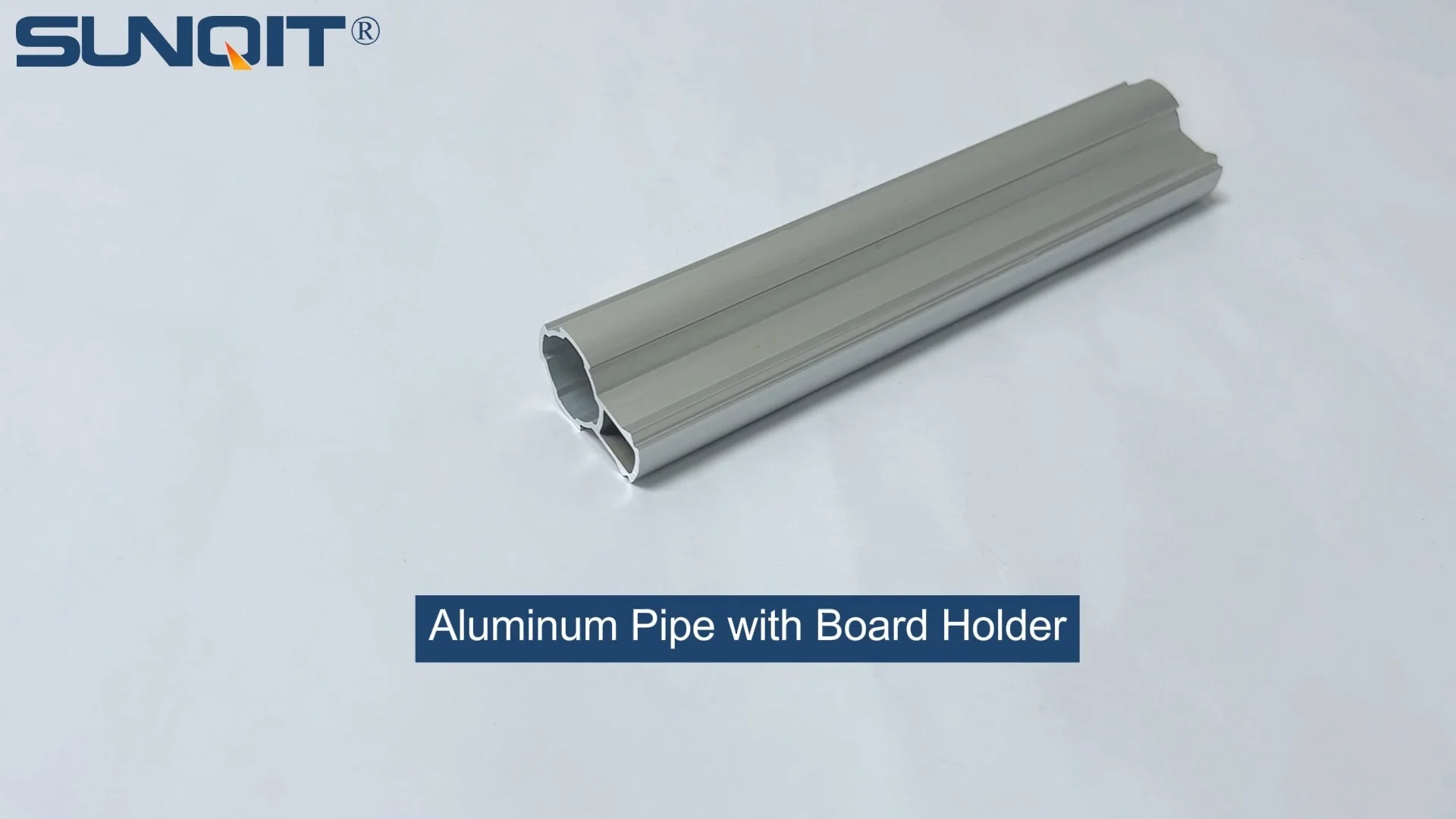
Walk into any modern manufacturing facility today, and you'll notice a quiet revolution unfolding on the shop floor. Beyond the hum of machinery and the rhythm of assembly lines, there's a growing focus on a different kind of metric: the carbon footprint. As industries worldwide grapple with the urgency of sustainability, even the tools and systems that power production are being reimagined. One such innovation making waves is the aluminum pipe with board holder —a deceptively simple solution that's proving to be a heavyweight in the fight against carbon emissions. In this article, we'll explore how this unassuming system is reshaping manufacturing, one lightweight, recyclable pipe at a time.
The Rise of Aluminum: A Sustainable Material Choice
To understand why aluminum pipe with board holder systems are gaining traction, we first need to appreciate aluminum itself—a material that's quietly become a poster child for sustainability. Unlike steel, which requires intensive mining and high-temperature processing, or plastic, which lingers in landfills for centuries, aluminum brings a unique set of environmental credentials to the table. For starters, it's infinitely recyclable. According to the Aluminum Association, nearly 75% of all aluminum ever produced is still in use today. That's because recycling aluminum uses just 5% of the energy required to produce it from raw bauxite ore—a staggering reduction that directly translates to lower carbon emissions.
But aluminum's sustainability story doesn't end with recyclability. It's also inherently lightweight, yet surprisingly strong. This combination makes it ideal for manufacturing applications where durability and mobility matter—think workbenches, material racks, and conveyor systems. When you factor in its resistance to corrosion (no need for energy-intensive coatings) and low maintenance requirements, it's clear why aluminum is becoming the go-to choice for eco-conscious manufacturers. And at the heart of this aluminum revolution? Components like aluminum extrusion profiles —precision-engineered shapes that form the building blocks of modular systems, including the aluminum pipe with board holder.
What is Aluminum Pipe with Board Holder?
At its core, an aluminum pipe with board holder is a modular system designed to create flexible, customizable structures for the shop floor. Picture this: sleek, lightweight aluminum pipes (often made from aluminum extrusion profiles ) connected by sturdy joints, with integrated holders that secure boards, panels, or shelves. These systems can be configured into everything from workbenches and material racks to assembly stations and packaging lines. What sets them apart is their adaptability—unlike fixed, custom-built furniture, they can be easily reconfigured, expanded, or repurposed as production needs change.
Take, for example, a basic setup: aluminum pipes form the frame, while board holders attach to these pipes to support wooden, plastic, or metal boards. This creates a work surface (like a simplified version of Workbench E, a single-deck workbench) that can be adjusted in height, length, or even converted into a double-deck setup by adding more pipes and holders. The magic lies in the simplicity of the design—no welding, no specialized tools, just a few hand-tightened joints and clips. This modularity is key to its sustainability, but more on that later.

How Aluminum Pipe with Board Holder Reduces Carbon Footprint
Now, let's dive into the heart of the matter: how exactly does this system cut down on carbon emissions? It's not just about using aluminum—it's about how the design and functionality of aluminum pipe with board holder systems amplify the material's natural sustainability.
Lightweight and Energy-Efficient Transportation
Aluminum is about one-third the weight of steel. When you scale that up to a full manufacturing setup—say, a series of material racks or a long conveyor system—the weight difference becomes significant. Lighter systems require less fuel to transport, whether they're being shipped from the supplier to the factory or moved around the shop floor. A study by the International Aluminum Institute found that switching from steel to aluminum components can reduce transportation-related carbon emissions by up to 40% for the same load. For companies with global supply chains, this adds up to substantial savings in both fuel costs and carbon output.
Unmatched Recyclability
We touched on aluminum's recyclability earlier, but it's worth emphasizing how this plays out in practice. When an aluminum pipe with board holder system reaches the end of its initial life (which, given aluminum's durability, could be decades), it doesn't end up in a landfill. Instead, the pipes, joints, and holders can be melted down and reformed into new components with zero loss of quality. Compare that to traditional steel systems, which often rust or degrade over time, making recycling less efficient, or plastic setups, which are rarely recycled and release harmful microplastics as they break down. With aluminum, every component is a potential building block for the next generation of shop floor systems.
Modularity: Waste Reduction Through Adaptability
Here's where the design of aluminum pipe with board holder systems truly shines: modularity. In manufacturing, production lines and workflows are rarely static. A factory might shift from assembling small electronics to larger appliances, or a workbench might need to be repositioned to accommodate a new conveyor. With traditional fixed systems, this often means tearing down the old setup and building a new one from scratch—generating waste, requiring new materials, and driving up carbon emissions.
Aluminum pipe systems eliminate this waste. Need to expand a material rack? Add a few more pipes and board holders. Want to convert a single-deck workbench into a double-deck? Just reconfigure the joints and adjust the holders. Even better, if a facility moves or shuts down, the entire system can be disassembled and reused elsewhere. This "circular" approach to design aligns perfectly with the principles of a lean system —reducing waste, maximizing resource use, and minimizing environmental impact.
Durability: Longevity Means Less Replacement
Sustainability isn't just about recycling—it's about making products that last. Aluminum's resistance to rust, corrosion, and wear means that an aluminum pipe with board holder system can withstand the daily grind of a manufacturing environment for years, if not decades. Unlike plastic systems that crack under heavy loads or wooden workbenches that warp or rot, aluminum holds up, reducing the need for frequent replacements. Fewer replacements mean less demand for new materials, lower manufacturing energy, and fewer carbon emissions over the lifecycle of the product.

Integrating with Lean Systems: A Match Made for Sustainability
For manufacturers familiar with lean system principles—think Toyota Production System, with its focus on eliminating waste (muda)—aluminum pipe with board holder systems are a natural fit. Lean manufacturing aims to streamline processes, reduce inefficiencies, and minimize waste in all forms: time, materials, and energy. Aluminum's modularity and adaptability align seamlessly with these goals, creating a synergy that boosts both productivity and sustainability.
Consider one of the core tenets of lean: "just-in-time" production, which requires flexible setups that can quickly adapt to changing demand. An aluminum pipe workbench, for example, can be reconfigured in minutes to accommodate a new product line—no waiting for custom-built furniture, no downtime, and no waste from discarded old setups. This agility reduces lead times and keeps production running smoothly, all while cutting down on the carbon emissions associated with manufacturing new equipment.
Another lean principle is "kaizen" or continuous improvement. Shop floor teams are constantly looking for ways to optimize workflows, and aluminum systems empower them to experiment. Maybe a material rack (like Material Rack B, a 3-row, 3-floor setup) is causing bottlenecks because it's too tall. With aluminum pipes and board holders, the team can simply adjust the height of the shelves or add a fourth row—no need to buy a new rack. This culture of adaptability not only drives efficiency but also fosters a mindset of sustainability, where waste is seen as avoidable rather than inevitable.
Real-World Applications: From Workbenches to Material Racks
To truly grasp the impact of aluminum pipe with board holder systems, let's look at some common applications and how they contribute to lower carbon footprints.
Workbenches: The Backbone of the Shop Floor
Workbenches are everywhere in manufacturing—assembly, packaging, quality control, you name it. Traditional workbenches are often made from solid wood or steel, heavy and fixed in place. When they wear out or become obsolete, they're typically thrown away, contributing to landfill waste and the need for new production. Aluminum pipe workbenches, by contrast, are built to evolve. A basic single-deck workbench (Workbench E) can start as a simple surface, then grow with the team: add a second deck for tools, attach a side rack for materials, or even mount casters (using caster accessories) to make it mobile. When the bench is no longer needed in one area, it can be disassembled and rebuilt as a packing station or a storage shelf elsewhere. This lifecycle extension drastically reduces the carbon impact compared to disposable alternatives.
Material Racks: Streamlining Flow, Cutting Waste
Material racks (like Material Rack B) are another staple, used to store everything from raw materials to finished products. Traditional steel racks are heavy, difficult to adjust, and often overbuilt for the task. Aluminum pipe racks, with their lightweight frames and adjustable board holders, are designed to hold exactly what's needed—no excess material, no wasted space. For example, if a rack is used to store small components, the board holders can be positioned closer together to maximize vertical space; for larger items, they can be spread out. This efficiency reduces the number of racks needed, saving floor space and lowering transportation costs (fewer racks mean fewer shipments). Plus, when product sizes change, the rack can be reconfigured instead of replaced, keeping old steel racks out of landfills.
Comparing Materials: Aluminum vs. Traditional Options
To put the sustainability of aluminum pipe with board holder systems into perspective, let's compare aluminum to two common alternatives: steel and plastic. The table below breaks down their environmental impact across key metrics:
| Metric | Aluminum (Aluminum Pipe with Board Holder) | Steel (Traditional Steel Racks/Workbenches) | Plastic (Plastic Pipe Systems) |
|---|---|---|---|
| Carbon Footprint (kg CO₂ per kg produced) | 8-10 (primary production); 0.5 (recycled) | 1.8-2.2 (primary production); 1.5 (recycled) | 2-3 (from fossil fuels); minimal recycling value |
| Recyclability | 100% recyclable, infinitely; retains 95% of original quality | Recyclable, but quality degrades with each cycle; 40% of steel is recycled | Mostly non-recyclable; only 9% of plastic globally is recycled |
| Weight (kg per meter, 20mm diameter) | 0.8-1.2 | 2.4-3.0 | 0.6-0.9 (but less durable) |
| Typical Lifespan (in manufacturing use) | 15-20 years | 10-15 years (prone to rust without coating) | 3-5 years (prone to cracking, warping) |
| Modularity/Waste Reduction | Highly modular; 80-90% of components reusable in reconfigurations | Low modularity; 10-20% reusable components | Moderate modularity, but low durability limits reuse |
As the table shows, aluminum outperforms steel and plastic across most sustainability metrics, especially when considering recyclability and modularity. Even when accounting for primary production emissions, aluminum's long lifespan and recyclability make it the clear choice for reducing carbon footprints.
The Future of Sustainable Manufacturing: Aluminum Extrusion Profile and Beyond
As manufacturers set increasingly ambitious sustainability goals—net-zero by 2030, carbon-neutral supply chains—tools like aluminum pipe with board holder systems will only grow in importance. But the innovation doesn't stop here. Advances in aluminum extrusion profile technology are making pipes even lighter, stronger, and more energy-efficient to produce. New joint designs and accessories (like internal rotary aluminum joints or aluminum guide rails) are expanding the system's capabilities, allowing for even more complex, yet still sustainable, configurations.
Looking ahead, we'll likely see tighter integration between aluminum systems and smart manufacturing technologies. Imagine workbenches with built-in sensors that track usage and suggest optimizations, or material racks that automatically adjust their layout based on real-time production data—all while retaining the modular, recyclable core of aluminum. The goal? A shop floor that's not just efficient, but intelligently sustainable, where every component contributes to a lower carbon footprint.
Conclusion: Small Changes, Big Impact
In the grand scheme of sustainability, aluminum pipe with board holder systems might seem like a small piece of the puzzle. But as any lean practitioner will tell you, small changes add up. By choosing lightweight, recyclable aluminum over steel or plastic; by embracing modularity to reduce waste; by integrating with lean systems to boost efficiency—manufacturers are not just improving their bottom line, they're taking meaningful steps toward a greener future.
So the next time you walk through a factory and spot a sleek aluminum workbench or a reconfigurable material rack, take a closer look. That's not just a tool—it's a statement. A statement that sustainability and productivity can go hand in hand, and that even the most ordinary components can play an extraordinary role in reducing our carbon footprint. After all, the future of manufacturing isn't just about making things—it's about making things better, for people and the planet.