- Company Articles
- Products and Technology
- Application Cases
- Aluminum Pipe with Board Holder: Success Stories in Manufacturing

Aluminum Pipe with Board Holder: Success Stories in Manufacturing
Related Product
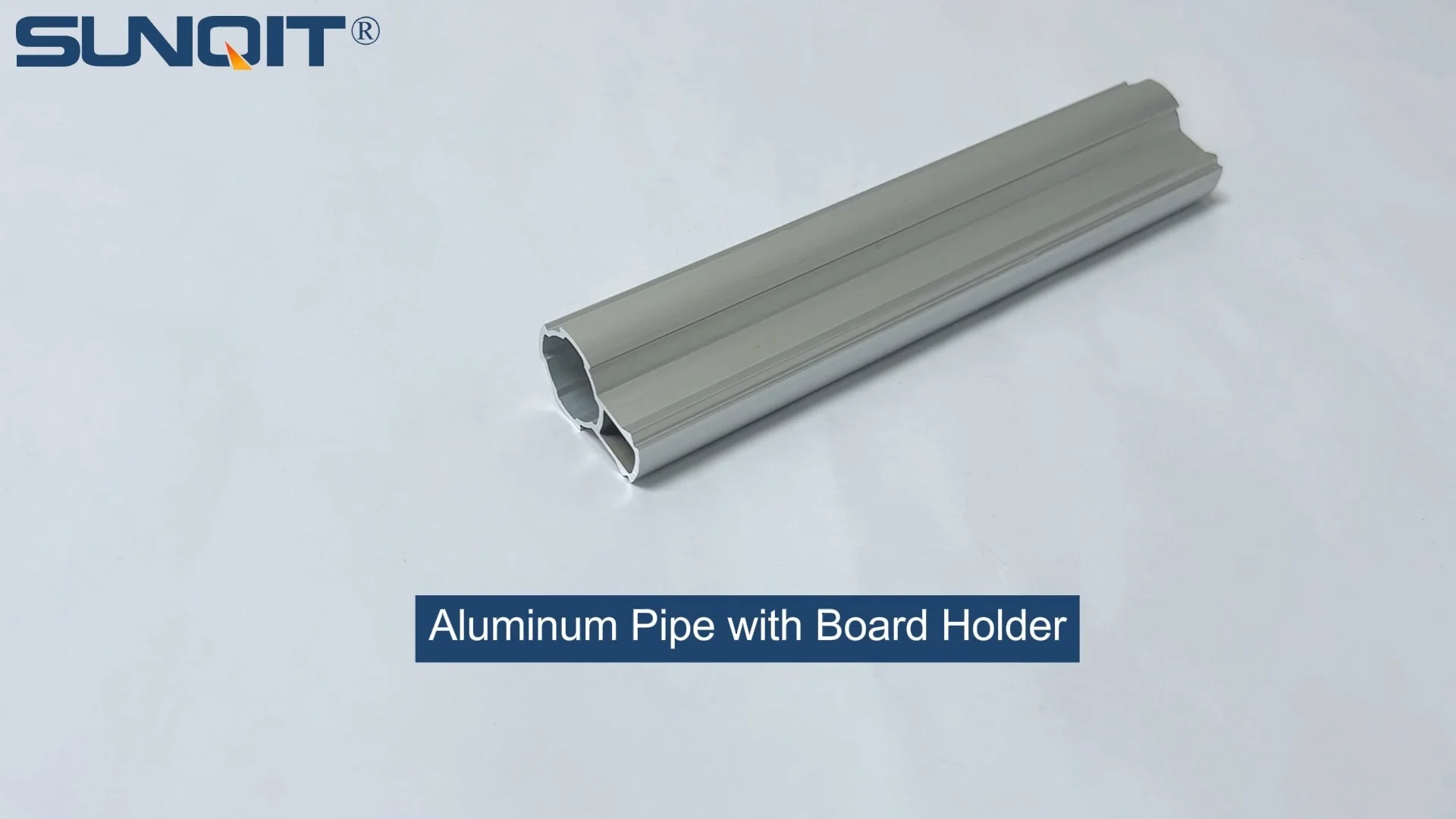
Aluminum Pipe with Board Holder
The linear rolling assembly can be arbitrarily connected in the protruding part of the card slot to increase the rigidity of the track.
In the world of manufacturing, where every second counts and every workspace tells a story of productivity, there's a quiet revolution happening. It's not about flashy robots or overhyped software—it's about the tools and systems that workers interact with daily: the benches they stand at, the racks that hold their parts, the structures that shape how work flows. For decades, many factories relied on rigid, one-size-fits-nothing steel setups that fought against change and left workers struggling to adapt. But today, a new hero has emerged: the aluminum pipe with board holder. Lightweight, modular, and designed with people in mind, it's transforming (workshops) into spaces where efficiency feels effortless and innovation thrives. Let's dive into how this unassuming solution is writing success stories across industries.
What Makes Aluminum Pipe with Board Holder a Game-Changer?
Before we jump into the stories, let's get to know the star of the show. Aluminum pipe with board holder isn't just a "pipe with a shelf"—it's a modular building block for manufacturing excellence. The aluminum pipe itself is lightweight yet surprisingly strong, resistant to rust, and easy to handle. The board holder, often a simple but clever attachment, turns that pipe into a command center: it holds tools, work instructions, barcode scanners, or even small parts bins, keeping everything within arm's reach. Pair it with aluminum profile accessories—like joints, brackets, or casters—and you've got a system that can be built, taken apart, and rebuilt in hours, not days. Unlike steel, which demands welding or heavy tools, aluminum pipe systems click together with hand-tightened joints, giving teams the power to redesign their workspace on the fly. It's lean manufacturing in its purest form: no waste, no waiting, just solutions that adapt as fast as your needs do.
Success Story 1: Automotive Assembly Lines – From Chaos to Clockwork at ABC Motors
Walk into the ABC Motors assembly plant five years ago, and you'd find a floor stuck in the past. Workers on the dashboard assembly line hunched over clunky steel workbenches, their tools scattered across surfaces or jammed into overstuffed drawers. "Every time we switched models—which was every two weeks—we'd spend half a day just moving benches and rerouting tool storage," recalls Maria Gonzalez, the plant's production supervisor. "Guys were wasting 10 minutes an hour just hunting for wrenches or chasing down work orders that had fallen on the floor. Morale was low, and error rates were creeping up."
The breaking point came when ABC landed a contract for a new electric vehicle model, requiring even more frequent line reconfigurations. Maria's team needed a solution that could keep up. That's when they discovered aluminum pipe with board holder systems. "At first, I was skeptical," Maria admits. "Steel had been 'the standard' for so long. But when the supplier brought in a demo workbench—light enough that two people could carry it, with a board holder that kept instructions at eye level and tool hooks right where hands rested—I knew we had to try it."
They started small: 10 workstations on the dashboard line. Within a week, the difference was night and day. Workers no longer bent over to grab tools—they hung from the board holder's hooks, color-coded by task. Work orders stayed clipped to the board, visible at a glance. When model changes rolled around, the team disassembled the old setup in 45 minutes and rebuilt the new one in under two hours. "One of our veteran assemblers, Juan, came up to me and said, 'This is the first time I've felt like the workspace works for me, not against me,'" Maria says with a smile. Within six months, error rates dropped by 18%, and the plant expanded the system to three more lines. Today, ABC Motors' assembly floor is a testament to adaptability—all thanks to a simple idea: aluminum pipe, a board holder, and the belief that workspaces should serve people, not the other way around.
"We used to dread model changes. Now? We barely notice them. The aluminum workbenches with board holders turned chaos into a rhythm. Our guys don't just work faster—they work happier." – Maria Gonzalez, Production Supervisor, ABC Motors

Success Story 2: Electronics Manufacturing – Static-Free and Smooth at TechNova Inc.
In the precision-driven world of electronics manufacturing, static electricity is the enemy. A single spark can fry a microchip, turning a $50 component into trash. At TechNova Inc., which makes circuit boards for medical devices, ESD (electrostatic discharge) safety is non-negotiable. But five years ago, their ESD workbench setup was a nightmare. "We were using old steel benches with rubber mats that cracked easily, and ESD wristbands that tangled with tools," says Raj Patel, TechNova's Quality Manager. "The bigger problem? The benches were bolted to the floor. When we needed to add a new test station or rearrange for a higher-volume order, we had to call in electricians to reroute grounding wires and maintenance to unbolt the benches. It took days, and we'd often have to shut down a line entirely."
Raj's team had heard about lean system principles—eliminating waste, continuous improvement—but their rigid setup made it impossible to put them into practice. "Lean is about being agile," Raj explains. "But our workspace was stuck in concrete." Then, at a manufacturing expo, they discovered aluminum pipe ESD workstations with integrated board holders. The pipes were conductive, grounding static safely, and the board holders? They doubled as storage for ESD-safe tools and anti-static bins. "It was like someone had read our minds," Raj says. "The aluminum frame was lightweight enough to move, but the ESD properties were just as good as steel—if not better. And the board holder? We could attach ESD wristband hooks, tool trays, and even small part bins right where operators needed them."
TechNova (piloted) the system in their high-mix, low-volume medical board line. The results were staggering. Rerouting a line that used to take 3 days now took 4 hours—no electricians, no maintenance crew. Operators reported fewer tangled wristbands and less time hunting for ESD-safe tweezers, which stayed clipped to the board holder. Most importantly, static-related defects plummeted by 27%. "We used to have a 'static corner' where we'd set aside boards that might have been damaged," Raj says. "Now, that corner's empty. The aluminum pipe system doesn't just prevent static—it makes compliance easy." Today, TechNova has rolled out the aluminum ESD workstations across all lines, and Raj credits them with helping the company land a contract with a major medical device manufacturer. "They audited our facility and were blown away by how clean and adaptable our setup was. The aluminum pipe with board holder wasn't just a tool—it was a selling point."

Success Story 3: Logistics & Material Handling – Rolling Toward Efficiency at GlobalFulfill
GlobalFulfill's warehouse in Chicago handles over 50,000 packages a day, from small electronics to bulky home goods. Five years ago, their conveyor system was a hodgepodge of steel rollers and fixed chutes that fought against the chaos of e-commerce. "We'd get a surge in small packages one week, then oversized boxes the next, and the conveyors just couldn't keep up," says Derek Williams, Warehouse Operations Manager. "If a roller jammed, we'd have to shut down a whole section to fix it. And reconfiguring the chutes for different package sizes? Forget it—we'd have to cut steel and weld new supports. It was like trying to fit a square peg into a round hole, every single day."
Derek's team needed a conveyor system that could bend, not break. They found their answer in aluminum roller track paired with aluminum pipe frames and board holders. "The aluminum roller track was a revelation," Derek says. "Lightweight, but tough enough to handle 50-pound boxes. And the aluminum pipe frames? We could build supports, side rails, even guide arms using those pipes and simple joints. The board holders? We mounted them above the tracks to hold scanners, labels, and package manifests—so workers didn't have to carry clipboards around."
The first test was during the holiday rush, when package volumes spiked by 40%. GlobalFulfill added three new aluminum roller track lines in a weekend, using the aluminum pipe frames to build adjustable side rails that could widen or narrow with a few twists of a knob. "On our old steel conveyors, that would have taken two weeks and a crew of welders," Derek says. "With aluminum, two guys did it in 12 hours." The board holders proved equally valuable: scanners stayed mounted at waist height, labels were printed and attached without setting packages down, and manifests stayed dry and visible even when the warehouse got busy. Jams? They dropped by 60% because the aluminum roller track was smoother, and if a roller did stick, workers could pop it out and replace it in 5 minutes—no tools needed.
Today, GlobalFulfill's warehouse is a model of flexibility. "Last month, we had a client who needed to ship 10,000 small drone parts—tiny boxes, only 3x3 inches," Derek recalls. "We adjusted the aluminum pipe side rails to narrow the track, added a board holder with mini label dispensers, and were up and running in an hour. On the old system, that would have been impossible. Aluminum didn't just fix our conveyor problem—it turned our warehouse into a place that can say 'yes' to any challenge."
Why These Stories Matter: The Numbers Behind the Wins
Aluminum pipe with board holder systems aren't just feel-good stories—they deliver tangible results. Let's break down how they stack up against traditional steel setups:
| Aspect | Traditional Steel Systems | Aluminum Pipe with Board Holder Systems |
|---|---|---|
| Weight (per workstation) | 50–70 kg (hard to move without equipment) | 15–20 kg (movable by 2 people) |
| Installation Time | 4–8 hours (requires welding/bolting) | 1–2 hours (tool-free assembly) |
| Reconfiguration Ease | Requires cutting/welding; 2–3 days for major changes | Tool-free disassembly/reassembly; 1–2 hours for major changes |
| Worker Productivity | 10–15% time lost to tool/part hunting | 2–5% time lost (tools/parts within arm's reach via board holder) |
| Defect/Error Rates | Higher (due to clutter, static, or misalignment) | 15–30% lower (cleaner, more organized workspace) |
| Long-Term Cost | Higher (maintenance, replacement, downtime) | 30–40% lower (durable, low maintenance, adaptable) |
Beyond the Pipe: Building a Leaner, People-First Future
The success stories at ABC Motors, TechNova, and GlobalFulfill share a common thread: aluminum pipe with board holder systems aren't just about equipment—they're about putting people at the center of manufacturing. When workers don't have to fight their tools, bend over awkwardly, or wait for rigid systems to change, they don't just work faster—they work with pride. They see that their employer cares about their comfort and efficiency, and that translates to better quality, lower turnover, and a culture of innovation.
And it's not just about the pipe and board holder alone. It's the ecosystem of aluminum profile accessories—joints that click into place, casters that roll smoothly, ESD components that protect sensitive parts—that makes the system sing. It's lean system thinking made tangible: no waste, no overcomplication, just solutions that grow with your needs.
So, what's next? As manufacturing continues to evolve—with smaller batches, faster changes, and a focus on sustainability—aluminum pipe with board holder systems are poised to lead the way. They're recyclable, energy-efficient to produce, and built to last. But most importantly, they remind us that the best manufacturing solutions aren't found in fancy machines—they're found in listening to the people on the floor, understanding their struggles, and giving them tools that make work feel less like a chore and more like a craft.
In the end, aluminum pipe with board holder systems aren't just building better workspaces—they're building better stories. Stories of workers who go home less tired, of plants that meet impossible deadlines, of companies that thrive because they chose to adapt. And isn't that what manufacturing is all about? Creating something lasting, one small, smart change at a time.