- Company Articles
- Products and Technology
- Product knowledge
- Aluminum Pipe with Board Holder: Sustainable Manufacturing Tool

Aluminum Pipe with Board Holder: Sustainable Manufacturing Tool
Related Product
Aluminum Pipe with Board Holder
The linear rolling assembly can be arbitrarily connected in the protruding part of the card slot to increase the rigidity of the track.
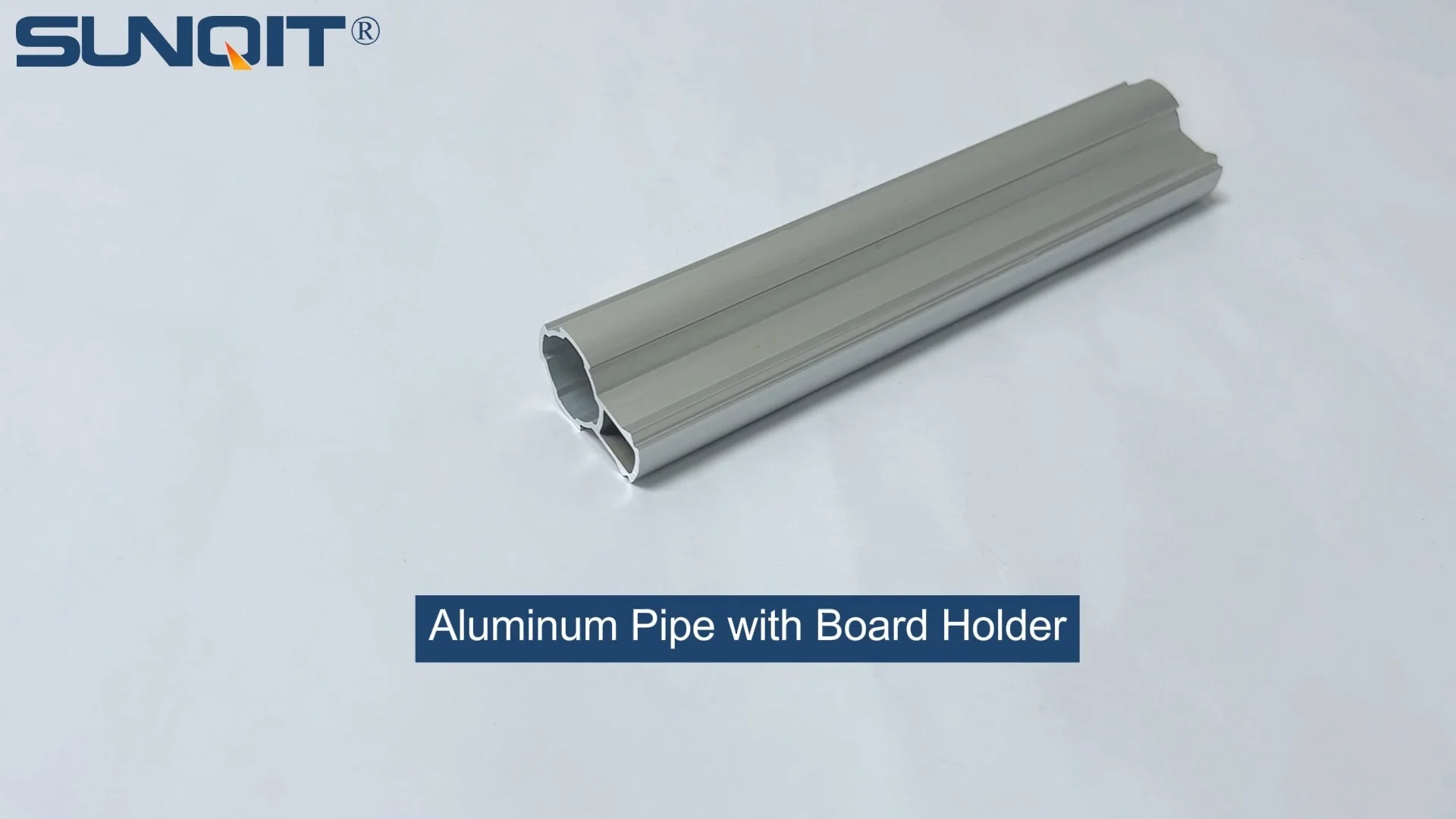
In today's fast-paced manufacturing world, the push for sustainability isn't just a trend—it's a necessity. Factories and production facilities are rethinking every tool, process, and material to reduce waste, cut carbon footprints, and build systems that stand the test of time. Among the unsung heroes of this shift is a humble yet versatile component: the aluminum pipe with board holder . More than just a piece of hardware, it's a bridge between efficiency, durability, and eco-consciousness, perfectly aligning with the principles of modern lean manufacturing and sustainable production.
Why Sustainability Matters in Modern Manufacturing
Manufacturing has long been a cornerstone of global economies, but it's also a sector with significant environmental impact—from energy consumption to material waste. Today, consumers, regulators, and even investors are holding brands accountable for their ecological footprint. A 2023 study by the Manufacturing Sustainability Council found that 78% of manufacturers report sustainability initiatives have improved their operational efficiency, while 65% note stronger customer loyalty. The message is clear: sustainability isn't just good for the planet; it's good for business.
At the heart of this transformation is the search for materials and tools that minimize waste, maximize resource use, and support circular economies. Enter aluminum—a material that's been quietly revolutionizing manufacturing floors worldwide. Its unique properties make it ideal for sustainable systems, and when paired with innovations like board holders, it becomes a game-changer for lean, green production lines.
Aluminum: The Sustainable Foundation
Aluminum isn't new, but its role in sustainable manufacturing is gaining fresh attention. Unlike plastics or even steel, aluminum is infinitely recyclable. According to the Aluminum Association, recycling aluminum saves 95% of the energy required to produce new aluminum from raw materials. That's equivalent to taking 40 cars off the road for a year for every ton of aluminum recycled. For manufacturers, this means that even at the end of a tool's life, the aluminum components can be melted down and repurposed—no waste, no loss of quality.
But recyclability is just the start. Aluminum is lightweight yet surprisingly strong, reducing transportation costs and making it easy to handle on the factory floor. Its resistance to corrosion ensures longevity, so tools built with aluminum last longer, reducing the need for frequent replacements. And when it comes to production, aluminum extrusion—the process used to create aluminum extrusion profiles like pipes and tubes—is inherently efficient. Extrusion shapes aluminum into complex profiles with minimal material waste, a stark contrast to cutting or machining solid blocks of metal.

Aluminum Pipe with Board Holder: What It Is and How It Works
So, what exactly is an aluminum pipe with board holder? At its core, it's a modular system built from lightweight aluminum pipes (often part of an aluminum profile family) paired with accessories designed to securely hold boards, panels, or work surfaces. Think of it as a building block: the pipes form the structure, and the board holders attach to them, creating everything from workbenches to material racks to assembly line stations.
The magic lies in its simplicity and flexibility. Unlike fixed, one-size-fits-all furniture, these systems use standardized aluminum profile accessories —joints, connectors, brackets—to snap together without welding or heavy tools. Need a taller workbench? Add an extra pipe section. Want to reconfigure a material rack for a new product line? Swap out the board holder's position. This modularity is key to reducing waste: instead of discarding an entire workstation when needs change, you simply adapt the existing components.
Take, for example, a typical manufacturing scenario: a small electronics plant needs a temporary assembly station for a new device. With aluminum pipes and board holders, workers can assemble a sturdy table in hours using pre-cut pipes, corner joints, and a wooden or metal board held in place by the holder. When the project ends, the station is disassembled, and the pipes and accessories are stored or repurposed for another task. No excess materials, no landfill-bound waste—just efficient, adaptable tools.

Supporting Lean Systems: Waste Reduction in Action
Lean manufacturing, with its focus on eliminating waste (or "muda"), is all about doing more with less. Aluminum pipe with board holder systems embody this philosophy. Let's break down how they support key lean principles:
1. Minimizing Overproduction: Since the system is modular, you only build what you need, when you need it. No stockpiling extra workbenches "just in case."
2. Reducing Transportation Waste: Aluminum's lightweight nature makes moving components around the factory floor easy, cutting down on energy use for lifting and transporting heavy equipment.
3. Eliminating Defects: High-quality aluminum profiles and accessories are precision-manufactured, so the systems are stable and reliable, reducing errors caused by wobbly or poorly built work surfaces.
4. Optimizing Inventory: A small set of standardized pipes and accessories can create endless configurations, so you don't need to stock dozens of different tools—just the basics.
Consider a automotive parts supplier that switched from wooden workbenches to aluminum pipe with board holder stations. Previously, when a new part design required a wider workspace, they'd build a new wooden bench, leaving the old one to collect dust. Now, they reconfigure the aluminum pipes and swap in a larger board, saving time, money, and materials. Over a year, they reduced workspace waste by 40% and cut tooling costs by 25%—all while keeping their production lines agile.
Comparing Materials: Why Aluminum Pipe with Board Holder Stands Out
To truly appreciate the value of aluminum pipe with board holder, it helps to compare it to traditional materials like wood or steel. Here's how they stack up:
| Feature | Aluminum Pipe with Board Holder | Wooden Workstations | Steel Pipe Systems |
|---|---|---|---|
| Sustainability | Infinitely recyclable; 95% energy savings in recycling | Limited recyclability; requires tree harvesting | Recyclable but high energy use in production/recycling |
| Durability | Corrosion-resistant; lasts 10+ years with minimal maintenance | Prone to warping, scratches, and water damage; 2–3 year lifespan | Durable but heavy; prone to rust without coating |
| Flexibility | Modular; easy to reconfigure with basic tools | Fixed design; cannot be reconfigured | Heavy and rigid; reconfiguration requires cutting/welding |
| Weight | Lightweight (1/3 the weight of steel) | Heavy; hard to move | Very heavy; requires machinery to reposition |
| Long-Term Cost | Higher upfront cost, but lower over time (no replacements) | Low upfront cost, but high replacement costs | High upfront and maintenance costs (coating, welding) |
Real-World Applications: Beyond the Workbench
Aluminum pipe with board holder isn't limited to workbenches—it's a versatile tool that adapts to nearly any manufacturing need. Here are just a few ways factories are using it:
Material Racks: Pair aluminum pipes with board holders and you've got a sturdy rack for storing components. Add aluminum profile accessories like dividers or label holders, and it becomes an organized system for tracking inventory. One aerospace supplier uses these racks to store small parts, with color-coded boards indicating part numbers—reducing picking errors by 30%.
Assembly Line Stations: Aluminum pipes form the frame, and board holders attach to hold instruction manuals, tool boards, or even small screens for digital work orders. Workers can adjust the height or angle of the board to reduce strain, improving ergonomics and productivity.
Packaging Stations: Lightweight yet strong, these systems support packaging materials like boxes or bubble wrap. The board holder can be tilted to create a gentle slope, letting packages slide smoothly to the next station—minimizing manual lifting.
Mobile Carts: Add casters to the aluminum pipe base, and suddenly you've got a mobile workstation. Nurses in hospitals use similar carts, but on the factory floor, they're perfect for moving tools between stations or delivering materials to assembly lines—all without the bulk of steel carts.
The Future of Sustainable Manufacturing: Aluminum's Role
As manufacturing continues to evolve, the demand for sustainable, flexible tools will only grow. Aluminum pipe with board holder systems are poised to play a central role, especially as lean system adoption expands. Innovations in aluminum extrusion profiles—like thinner walls with higher strength, or integrated channels for wiring—will make these systems even more versatile. Imagine a pipe that not only holds a board but also conceals power cords, reducing clutter and improving safety. Or accessories made from recycled aluminum, closing the loop on material use.
For small and medium-sized manufacturers, in particular, these systems offer an accessible entry point to sustainability. You don't need a massive budget to start—begin with a few pipes, board holders, and accessories, and scale as needed. Over time, the savings in materials, labor, and energy add up, making sustainability not just a moral choice, but a smart business one.
Final Thoughts: Building a Greener, Leaner Future
In the end, sustainable manufacturing isn't about grand gestures—it's about the small, intentional choices that add up. The aluminum pipe with board holder may seem like a simple tool, but it embodies the principles of this movement: reduce waste, maximize efficiency, and respect the planet's resources. It's a reminder that sustainability and productivity don't have to compete—they can work together, hand in hand.
Whether you're running a small workshop or a large factory, consider this: every time you choose a modular, recyclable tool like aluminum pipe with board holder, you're not just building a better workstation—you're building a better future. And in manufacturing, as in life, the best solutions are often the ones that work for both today and tomorrow.