- Company Articles
- Products and Technology
- Product knowledge
- Aluminum Pipe with Board Holder: Why Aluminum Stands Out as Material

Aluminum Pipe with Board Holder: Why Aluminum Stands Out as Material
Related Product
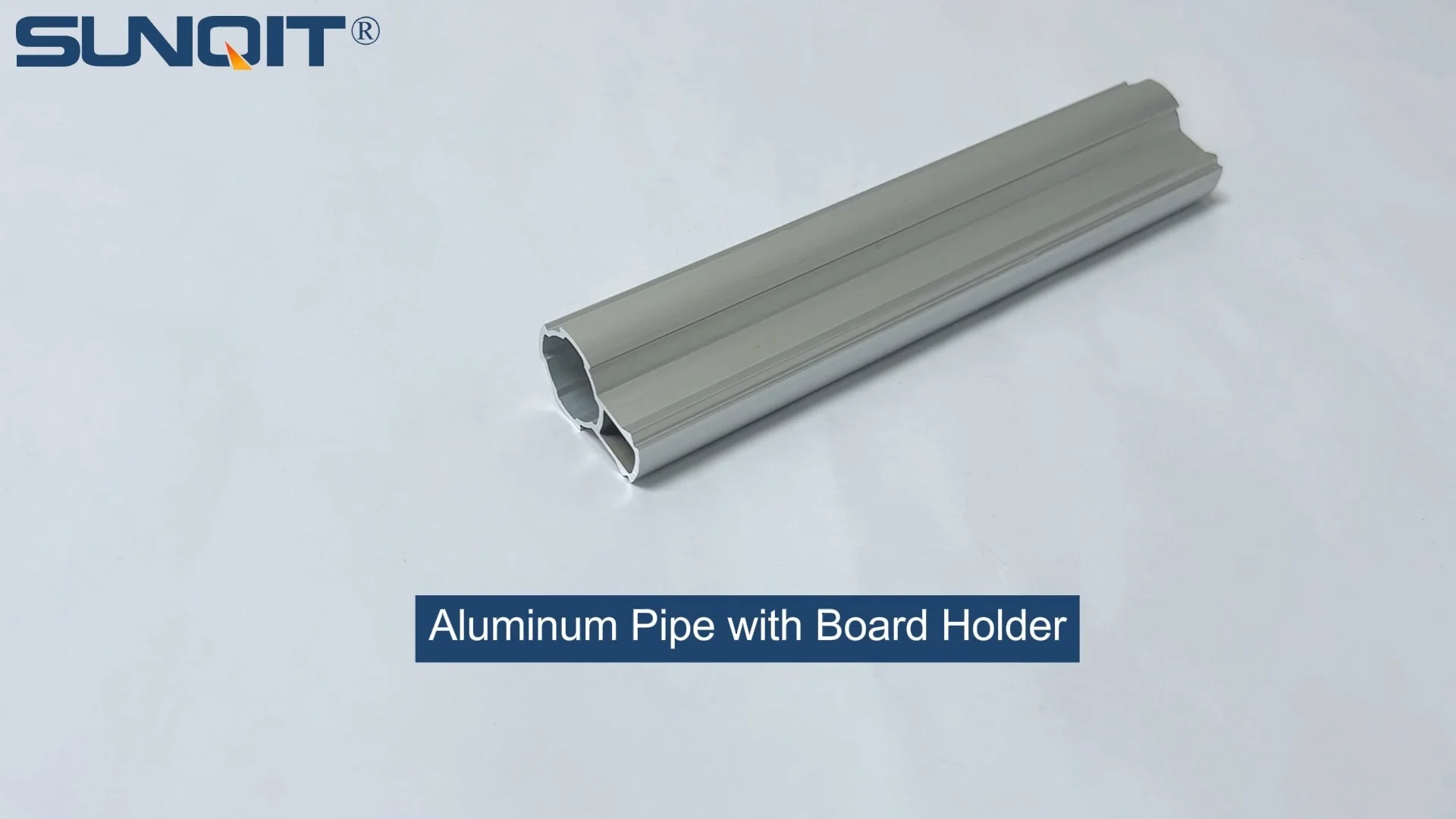
Aluminum Pipe with Board Holder
The linear rolling assembly can be arbitrarily connected in the protruding part of the card slot to increase the rigidity of the track.
Walk into any thriving manufacturing facility, and you'll notice something beyond the hum of machines or the rhythm of assembly lines: the spaces between the action matter just as much. Workstations, material racks, and flow paths aren't just backdrops—they're the unsung heroes of productivity. Yet for too many businesses, these spaces feel like afterthoughts: rigid, clunky, and slow to adapt when production needs shift. If you've ever watched a team struggle to reconfigure a steel workstation or replace a rusted plastic shelf, you know the frustration: time wasted, creativity stifled, and opportunities slipping through the cracks.
Enter the aluminum pipe with board holder—a quiet revolution in how we build and use workspaces. It's not just a piece of equipment; it's a promise of flexibility. But what makes aluminum the star here? Why not stick with steel, plastic, or wood? Let's pull back the curtain and explore why aluminum, in the form of pipes, profiles, and accessories, has become the go-to material for businesses that refuse to be boxed in by static setups. Whether you're running a small workshop or managing a sprawling factory floor, understanding aluminum's unique strengths might just be the key to unlocking your team's full potential.
First Things First: What *Is* an Aluminum Pipe with Board Holder?
Before diving into why aluminum shines, let's get clear on the basics. An aluminum pipe with board holder is exactly what it sounds like—but with a clever twist. Imagine (oops, scratch that— picture ) a lightweight, sturdy frame made from aluminum extrusion profiles, connected by simple yet strong joints, with a flat board (or multiple boards) mounted to it. The board might hold tools, materials, or even a laptop for digital work instructions. The magic? This setup isn't welded or bolted into permanence. It's assembled like a high-stakes puzzle, where every piece can be moved, swapped, or added to as your needs change.
Think of it as the ultimate building block for workspaces. Need a taller shelf? Swap out a shorter aluminum pipe for a longer one. Want to add a side rack for incoming parts? Attach a few aluminum profile accessories, and suddenly your workstation grows. The board holder itself can be adjusted—tilted for better visibility, lowered to reduce strain, or removed entirely if you need an open frame. It's modularity at its most intuitive, and it all starts with the material: aluminum.
Why Aluminum? Let's Count the Ways
Steel is strong, plastic is cheap, wood is familiar—so why choose aluminum? Let's break it down. Aluminum isn't just "good enough"; it's the material that bridges the gap between conflicting needs: strength and lightness, durability and flexibility, cost-effectiveness and sustainability. For anyone who's ever wished their workspace could keep up with their business, aluminum checks every box.
1. Lightweight, but Don't Let That Fool You—It's Strong
Ever tried moving a steel workbench? It's a two-person job, at best. Aluminum changes the game. Pound for pound, aluminum is about a third the weight of steel, but it holds its own in strength. A 1.5mm thick aluminum lean pipe might feel light in your hands, but it can easily support the weight of power tools, heavy parts, or stacked boxes. This lightness isn't just about convenience—it's about empowerment. A single worker can reconfigure a workstation in minutes, no crane or muscle team required. Need to shift your assembly line to accommodate a new product? Disassemble the aluminum frame, carry it to the new spot, and rebuild. No downtime, no back strain, just progress.
And let's talk about mobility. Add a few caster wheels (another aluminum pipe accessory) to your aluminum pipe with board holder, and suddenly you've got a mobile workstation that glides across the floor. Perfect for moving materials from one station to the next, or creating temporary work zones during peak production. Steel? It would turn that "glide" into a clunk, and plastic would warp under the weight. Aluminum? It stays steady, light, and ready to roll.
2. Corrosion Resistance: It Fights Back Against the Elements
Manufacturing floors aren't always gentle environments. Spills, humidity, even the occasional splash of coolant—these things eat away at lesser materials. Steel rusts, wood warps, plastic cracks when exposed to chemicals. Aluminum? It's naturally resistant to corrosion. When aluminum meets air, it forms a thin, invisible layer of oxide that acts like armor, protecting the metal underneath from rust and decay. That means your aluminum pipe with board holder won't start flaking or weakening after a few months in a damp warehouse or a shop with frequent cleaning.
For businesses in coastal areas or those dealing with liquids (like automotive or food processing), this is a game-changer. You won't need to repaint or replace parts every year—aluminum keeps its integrity, even when the going gets messy. It's the kind of durability that saves you money in the long run, not just upfront.
3. Flexibility: Your Workspace Should Grow with You
Here's the hard truth: Most businesses don't stay the same. A small startup making 100 units a day might scale to 1,000 units a month, or pivot to a new product line entirely. Static workspaces—welded steel racks, fixed wooden benches—become anchors, weighing you down instead of lifting you up. Aluminum? It's the opposite. Its modular design, paired with easy-to-use aluminum profile accessories, means your setup can evolve.
Take the aluminum extrusion profile, for example. These pipes have slots (called T-slots) running along their length, which let you attach accessories without drilling or welding. Need to add a tool hook? Slide a bolt into the T-slot, tighten, and done. Want to mount a LED light bar under the board holder? Clip it into place with a few brackets. Even the joints—simple, twist-to-lock connectors—let you angle pipes at 45°, 90°, or 135° without cutting or modifying the material. It's like building with digital blocks, but in real life. One month, your aluminum pipe with board holder is a packing station; the next, it's a testing bench. Your workspace isn't just a place to work—it's a partner in growth.
4. Cost-Effective: Smart Spending, Not Just Saving
Let's address the elephant in the room: Aluminum can cost more upfront than plastic or low-grade steel. But "cost-effective" isn't about the first invoice—it's about total cost of ownership. Aluminum lasts longer, requires less maintenance, and can be reused. A steel workstation might rust after a year, forcing you to replace it. A plastic one might crack under heavy use. Aluminum? It could still be going strong a decade later, with parts that can be repurposed into a new setup when you outgrow the old one.
Then there's labor. Installing a welded steel frame takes skilled workers and hours of time. An aluminum pipe with board holder? A team with no special training can assemble it in an afternoon. Less labor time = lower costs. And if you need to expand, you don't have to buy an entirely new system—just add more aluminum pipes and accessories. It's incremental growth, not overhauls, and that adds up to serious savings over time.
5. Sustainability: Good for Your Business, Good for the Planet
More and more businesses are asking: "What's the impact of our choices?" Aluminum has a clear answer here. It's 100% recyclable, and recycling it uses just 5% of the energy needed to produce new aluminum. That means when your aluminum pipe with board holder finally reaches the end of its life (which, let's be honest, will be long after you've repurposed it a dozen times), it won't end up in a landfill. It'll be melted down and turned into something new—maybe another aluminum lean pipe, or a bike frame, or a window frame. For businesses looking to reduce their carbon footprint, aluminum is a material with a conscience.
And let's not forget energy efficiency. Aluminum's light weight means transporting it uses less fuel than hauling steel. Its corrosion resistance reduces the need for chemical treatments or coatings. Even the production process for aluminum extrusion profiles has become more eco-friendly, with many suppliers using renewable energy to power their plants. Choosing aluminum isn't just good for your bottom line—it's a statement that your business cares about more than profits.

Aluminum vs. the Competition: A Fair Fight
Still on the fence? Let's put aluminum head-to-head with the other common materials for workspaces: steel, plastic, and wood. The table below breaks down how they stack up in key areas that matter for your business.
| Feature | Aluminum | Steel | Plastic | Wood |
|---|---|---|---|---|
| Weight (per linear foot) | 1.2 lbs | 3.5 lbs | 0.8 lbs | 2.0 lbs |
| Strength (supports weight) | High (supports 500+ lbs) | Very High (supports 1000+ lbs) | Low (supports 100-200 lbs) | Medium (supports 300-400 lbs) |
| Corrosion Resistance | Excellent (no rust) | Poor (rusts without coating) | Good (resists moisture) | Poor (warps, rots) |
| Flexibility (ease of modification) | High (modular, tool-free changes) | Low (requires welding/cutting) | Medium (some modularity, but weak joints) | Low (permanent once built) |
| Cost (initial + 5-year upkeep) | Medium (low upkeep) | High (high upkeep for coating) | Low (high replacement cost) | Medium (replacement needed every 2-3 years) |
| Sustainability | Excellent (100% recyclable, low energy to recycle) | Good (recyclable, but high energy use) | Poor (hard to recycle, non-biodegradable) | Medium (renewable, but deforestation concerns) |
Steel might win in raw strength, but for most businesses, the trade-off in weight, flexibility, and upkeep isn't worth it. Plastic is cheap upfront, but it won't stand up to heavy use. Wood feels familiar, but it's prone to damage and hard to modify. Aluminum? It's the sweet spot—strong enough for daily use, light enough to move, flexible enough to grow with you, and sustainable enough to feel good about.

Where Does Aluminum Pipe with Board Holder Shine? Everywhere.
Aluminum's versatility means it's not just for one type of business. From small workshops to large factories, from electronics assembly to food processing, aluminum pipe with board holder setups are making waves. Let's look at a few real-world scenarios where aluminum has made a difference.
Small Batch Manufacturing: Adapt Fast, Stay Competitive
Take Maria, who runs a small shop making custom bike parts. Her production runs are short—sometimes just 10-20 units of a new design—and each requires different tools and setups. Before aluminum, she had a fixed steel workbench that took hours to reconfigure. Now, she uses an aluminum lean pipe frame with a board holder that can be adjusted in minutes. Need to add a drill press? Attach a side arm with aluminum profile accessories. Switching to a smaller part? Lower the board to reduce reaching. "I used to lose half a day between batches," she says. "Now, I can switch setups during lunch and start the next run by 1 PM. Aluminum didn't just save me time—it let me take on more orders."
Warehouse Logistics: Keep the Flow Moving
Warehouses live and die by flow—materials in, products out, with no bottlenecks. A large e-commerce fulfillment center in Texas recently replaced their old wooden material racks with aluminum pipe with board holder systems. The wooden racks were heavy, hard to reposition, and starting to warp from humidity. The new aluminum racks? Light enough to move with a pallet jack, corrosion-resistant, and customizable with roller tracks (another aluminum pipe accessory) to let boxes glide smoothly. "We used to have to rebuild entire sections of racking when we changed our storage layout," says the warehouse manager. "Now, we just adjust the aluminum pipes and reattach the boards. It's cut our layout change time from a weekend to a single shift."
Electronics Assembly: Precision and Protection
Electronics manufacturing demands clean, static-free workspaces. Aluminum's non-conductive properties (when paired with ESD-safe accessories) make it ideal for ESD workstations. A semiconductor plant in California swapped their plastic workbenches for aluminum pipe with board holder setups. The plastic benches were prone to static buildup, risking damage to sensitive chips. Aluminum, combined with ESD mats on the board holders, grounded static safely. Plus, the modular design let them add tool holders and cable management clips (aluminum profile accessories) to reduce clutter. "We've seen a 40% drop in static-related defects since switching to aluminum," reports the plant engineer. "And when we need to add new testing equipment? We just extend the frame. No more buying new workstations."
The Secret Sauce: Aluminum Profile Accessories
A great frame is nothing without the right accessories. Aluminum pipe with board holder systems truly shine because they're paired with a universe of small, clever parts that turn a basic frame into a custom workstation. Let's talk about a few must-haves:
Joints: The Glue That Holds It All Together
Aluminum joints are the unsung heroes of modular setups. Unlike steel bolts or plastic clips, these joints are designed for quick assembly and disassembly. Most use a simple twist-lock mechanism—slide the joint onto the pipe, twist the collar, and it's locked tight. Need to adjust? Twist again, reposition, and lock. No tools, no stripped threads, no frustration. Some joints even allow rotation, so you can angle boards or racks exactly where you need them.
Roller Tracks: Let Gravity Do the Work
For moving materials from one station to the next, roller tracks are a game-changer. These aluminum pipe accessories mount easily to the frame, turning a static board into a dynamic conveyor. Boxes, bins, or parts glide along the rollers with minimal effort, reducing strain on workers and speeding up flow. They're especially useful in assembly lines, where parts need to move from one worker to the next without manual lifting.
Casters: Mobility on Demand
Add a set of locking casters to your aluminum frame, and suddenly your workstation is mobile. Need to move it to a different part of the shop? Unlock the casters, roll it over, and lock again. Perfect for temporary work zones, maintenance, or cleaning. Heavy-duty casters can support hundreds of pounds, so even loaded workstations move smoothly.
Tool Holders and Hooks: Keep Everything at Hand
No more hunting for tools in drawers. Aluminum profile accessories like tool holders, hooks, and bins clip into the T-slots of the aluminum extrusion profile, keeping screwdrivers, wrenches, and parts within arm's reach. Customize the layout to match your workflow—put the most-used tools at eye level, less-used ones below. It's organization that works for you, not against you.
Ready to Let Your Workspace Grow with You?
At the end of the day, a business is only as strong as its ability to adapt. Markets change, products evolve, and customer demands shift—your workspace should keep up. Aluminum pipe with board holder systems aren't just about metal and joints; they're about giving your team the freedom to innovate, the flexibility to pivot, and the confidence to take on new challenges.
Steel will always be strong, plastic will always be cheap, but aluminum? It's the material that understands your business isn't static. It's lightweight enough to move, strong enough to trust, flexible enough to grow, and sustainable enough to feel good about. For anyone who's ever looked at their workspace and thought, "There must be a better way," aluminum is the answer.
So why wait? Start small—a single aluminum lean pipe frame with a board holder. See how easy it is to assemble, how quickly it adapts, how much lighter your workflow feels. Then watch as that single frame grows into a system, and that system grows into a workspace that doesn't just support your business—it drives it forward. Aluminum isn't just a material. It's the foundation of a workspace that works as hard as you do.