- Company Articles
- Products and Technology
- Product knowledge
- Aluminum Pipe with Tray Holder for Computer Peripheral Warehouses: Space-Saving

Aluminum Pipe with Tray Holder for Computer Peripheral Warehouses: Space-Saving
Related Product
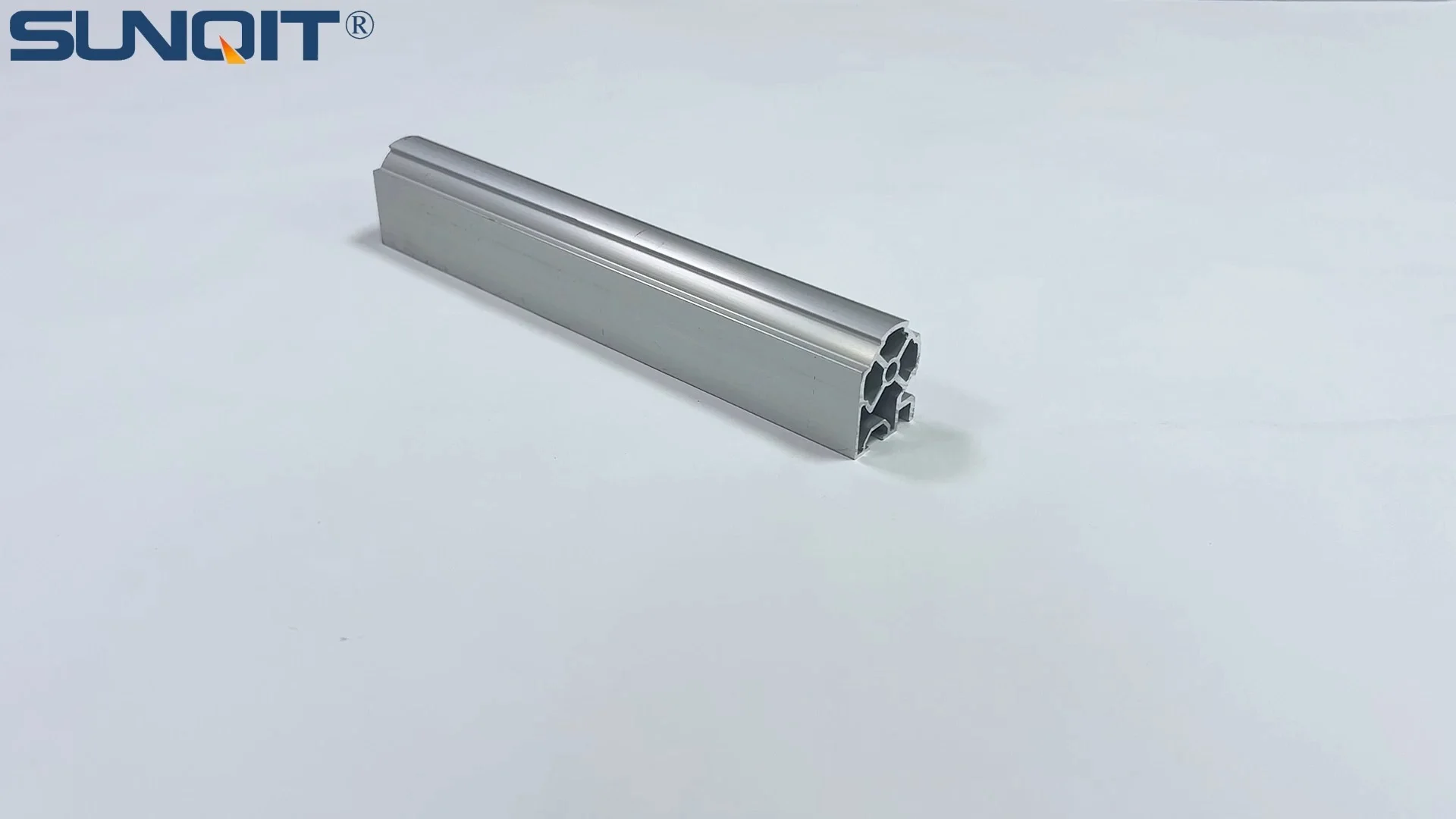
Aluminum Pipe with Tray Holder
Aluminum pipe with tray holder,the pipe one side connected by a joint, the other side with a slot which can hold a tray or a aluminum pannel.
Walk into a typical computer peripheral warehouse, and you might be met with a familiar scene: shelves overflowing with unlabeled boxes, cables tangled like spaghetti across workbenches, and workers spending precious minutes hunting for a single mouse or keyboard. In an industry where speed and precision matter—where a delayed shipment of USB hubs or a misplaced batch of wireless headsets can disrupt production lines or customer deliveries—disorganization isn't just a nuisance. It's a bottleneck. And in warehouses where space is often at a premium, every square foot of wasted area feels like a missed opportunity. But what if there was a way to turn that chaos into calm? To reclaim space, streamline workflows, and make every tool, part, and product feel like it has a purpose? Enter the unsung hero of modern warehouse efficiency: the aluminum pipe with tray holder.
Why Computer Peripheral Warehouses Struggle with Space
Computer peripherals—think keyboards, mice, cables, adapters, monitors, and docking stations—come in endless shapes and sizes. Some are small enough to fit in the palm of your hand; others, like monitors, demand bulk storage. Traditional warehouses often rely on fixed metal shelving or generic racks, which force you to organize by "one size fits all" logic. The result? Tall shelves with unused vertical space, wide aisles that eat up floor area, and parts scattered across multiple locations because there's no easy way to group them by workflow. Add in the need for quick access (peripherals move fast—tech companies restock weekly, if not daily), and you've got a recipe for inefficiency. This is where aluminum lean pipe systems, paired with custom tray holders, step in to rewrite the rulebook.
The Aluminum Lean Pipe Advantage: More Than Just Metal
At first glance, aluminum pipe might seem like just another building material. But in the world of lean manufacturing and warehouse optimization, it's a game-changer. Unlike heavy steel pipes that require specialized tools to cut or reconfigure, or plastic pipes that warp under weight, aluminum lean pipe strikes the perfect balance: lightweight yet durable, corrosion-resistant, and infinitely adaptable. It's the backbone of systems designed to grow, shrink, and evolve with your warehouse's needs—no sledgehammers or welding torches required.
For computer peripheral warehouses, this adaptability is critical. One month, you might need to store 500 wireless mice; the next, a bulk order of 27-inch monitors arrives. With traditional shelving, you'd either cram the monitors into existing racks (risking damage) or invest in new, fixed shelves (wasting space when the monitors ship out). Aluminum lean pipe? You simply adjust the height of the pipes, swap out a few joints, and reconfigure your tray holders to fit the new inventory. It's like having a warehouse that rearranges itself around your needs.
Tray Holders: The Secret to "Every Item Has a Home"
Aluminum pipe is the skeleton, but tray holders are the heart of this system. These simple, often-overlooked accessories turn generic pipes into organized, accessible storage units. Imagine a series of lightweight, durable trays—some shallow for small parts like USB-C adapters, others deeper for bulkier items like keyboard boxes—mounted directly onto aluminum pipes. Each tray can be labeled, color-coded, or even fitted with dividers to separate different models (e.g., gaming keyboards vs. standard office keyboards). Suddenly, that unruly shelf of "miscellaneous cables" becomes a row of labeled trays: HDMI 2.0 here, DisplayPort there, USB-A to USB-C adapters in the blue tray. No more digging. No more guesswork. Just grab and go.
But tray holders aren't just about organization. They're about space efficiency, too. Unlike open shelves, where items can topple over or get lost in the back, tray holders keep everything visible and within arm's reach. They also maximize vertical space: aluminum pipes can be stacked upward (safely, thanks to sturdy aluminum profile accessories like brackets and joints), turning a 5-foot rack into an 8-foot storage system without sacrificing stability. In a 10,000-square-foot warehouse, that vertical gain alone can free up hundreds of square feet of floor space—space that could be used for additional workbenches, packing stations, or even new inventory.
Building a Cohesive System: Workbenches, Roller Tracks, and Material Racks
A single aluminum pipe with a tray holder is useful, but its true power shines when it's part of a larger ecosystem. The best warehouse setups don't just store items—they connect storage to workflow. That means integrating your tray holders with workbenches where peripherals are inspected, packed, or assembled; roller tracks that move trays from storage to packing stations; and material racks that keep bulk inventory organized but accessible. Let's break down how these pieces work together.
Workbenches: Where Organization Meets Productivity
Workbenches are the "command centers" of any warehouse. This is where workers test new peripherals, repackage damaged items, or kit products (e.g., pairing a laptop with a mouse and keyboard for a corporate order). But a cluttered workbench—covered in loose screws, half-opened boxes, and stray cables—slows everything down. By mounting aluminum pipes with tray holders directly above or beside workbenches, you create a "first-touch" storage system. Need a screwdriver to open a monitor box? It's in the tray labeled "Tools" above the bench. Finished testing a batch of wireless mice? Slide them into the "Ready to Ship" tray on the roller track beside you. No more walking 20 feet to a distant shelf. Everything you need is right there, in arm's reach.
Even better, many modern workbenches are designed to integrate seamlessly with aluminum lean pipe systems. Take the workbench e (single deck-without caster) , a popular model in tech warehouses. Its flat, sturdy surface provides ample space for assembly, while pre-drilled holes along the edges make it easy to attach aluminum pipes and tray holders. Workers no longer have to choose between "having space to work" and "having tools nearby"—they get both.
Roller Tracks: Let Gravity Do the Heavy Lifting
Imagine this: A worker at the packing station needs 50 wireless keyboards for an urgent order. Instead of walking to the storage area, picking up a heavy box, and hauling it back (risking strain or dropping the box), they simply press a button—or give a gentle push—and a tray loaded with keyboards glides toward them on a roller track. That's the magic of integrating roller tracks with aluminum pipe and tray holder systems. Roller tracks use gravity (or mild inclines) to move trays between stations, turning manual labor into a hands-free process.
In computer peripheral warehouses, where many items are lightweight (a keyboard weighs ~500g; a mouse, ~100g), roller tracks are a revelation. They reduce fatigue, speed up order fulfillment, and minimize errors (since trays are labeled, there's no mix-up between "ergonomic" and "standard" keyboards). And because aluminum roller tracks are modular—you can add or remove sections, adjust the angle, or connect them to different workbenches—they adapt to your warehouse's unique layout. A small warehouse might use a single roller track from storage to packing; a larger facility could have a network of tracks feeding multiple stations, like a mini logistics railway.
Material Rack B: Bulk Storage Without the Bulk
For warehouses dealing with large quantities of peripherals—say, a shipment of 1,000 monitors or 5,000 cables—bulk storage is non-negotiable. But traditional bulk racks are often fixed, rigid, and space hogs. Enter material rack b (3 row and 3 floor) , a staple in lean warehouses. Designed to work with aluminum lean pipe systems, this rack features three rows and three floors of adjustable shelving, each capable of holding tray holders or bulk boxes. What makes it special? Its vertical design. Instead of spreading out horizontally (wasting floor space), it grows upward, using height to store more without expanding its footprint. Each floor can be adjusted to fit different items: the bottom floor for heavy monitors, the middle for medium-sized keyboard boxes, and the top for lightweight cable spools. And because it's built with aluminum pipes and joints, you can reconfigure the rows or add more floors if your inventory spikes during peak seasons (like back-to-school or holiday rushes).
| Traditional Storage Systems | Aluminum Pipe with Tray Holder Systems |
|---|---|
| Fixed shelving that can't be adjusted without tools | Modular aluminum pipes and joints for quick reconfiguration |
| Wasted vertical space (shelves spaced too far apart) | Maximized vertical storage with adjustable tray holders |
| Items hidden in the back of shelves, leading to loss or damage | Open tray holders keep items visible and accessible |
| Workers walk long distances to retrieve parts | Integrated roller tracks and workbench-mounted trays reduce travel time |
| Bulk racks require extra floor space for aisles | Material rack b uses vertical space, shrinking aisle width needs |

Real-World Impact: How One Warehouse Cut Waste by 30% in 30 Days
To understand the true value of aluminum pipe with tray holder systems, let's look at a case study: a mid-sized computer peripheral distributor in California, let's call them "TechFlow," that was struggling with space and efficiency. Before their transformation, TechFlow's 8,000-square-foot warehouse was packed with metal shelving units that reached the ceiling but left 12 inches of unused space between each shelf. Workers spent an average of 15 minutes per order just locating parts, and the warehouse manager estimated they were losing 10% of small items (like USB adapters) to misplacement each month. Shipping delays were common, and overtime costs were ballooning as teams rushed to meet deadlines.
TechFlow's solution? They partnered with a supplier to install an aluminum lean pipe system with custom tray holders, paired with workbenches, roller tracks, and material rack b units. Here's what happened next:
- Space Reclaimed: By switching to vertical, adjustable aluminum racks with tray holders, TechFlow freed up 2,000 square feet of floor space—enough to add two new packing stations and a quality control area.
- Pick Time Cut in Half: With labeled trays mounted near workbenches and roller tracks moving items between stations, pick times dropped from 15 minutes to 7 minutes per order. Workers reported less fatigue and more focus.
- Item Loss Reduced by 90%: No more "missing" adapters or tangled cables. Tray holders kept small parts contained, and color-coded labels made inventory checks a breeze.
- Flexibility for Seasonal Spikes: During the holiday rush, TechFlow easily reconfigured their aluminum pipes to add extra tray holders for bulk orders of gaming mice and keyboards. No new shelving, no construction—just a few hours of adjusting joints and brackets.
The result? TechFlow's on-time shipment rate jumped from 85% to 98%, and overtime costs dropped by 25%. "It's not just about the space," the warehouse manager noted. "It's about the confidence. My team used to dread walking into the warehouse in the morning because they never knew what mess they'd find. Now, they walk in, see everything in its place, and get to work. That's priceless."

Durability and Maintenance: Why Aluminum Stands the Test of Time
Warehouses are tough environments. Pipes get bumped by forklifts, tray holders are loaded and unloaded hundreds of times a day, and humidity or dust can take a toll on metal. So why trust aluminum? For starters, aluminum is naturally corrosion-resistant. Unlike steel, it won't rust when exposed to moisture—critical in warehouses where spills (e.g., cleaning solutions or water from damp boxes) are inevitable. It's also lightweight but strong: a 1.5mm aluminum lean pipe can support up to 50kg per linear foot, more than enough for stacks of keyboards or boxes of cables.
Maintenance is equally hassle-free. Unlike painted steel pipes that chip or plastic pipes that crack, aluminum requires little more than a wipe-down with a damp cloth to keep it looking new. And because the system is modular, replacing a damaged tray holder or joint takes minutes, not hours. Most suppliers (like the many aluminum lean pipe suppliers specializing in warehouse solutions) offer replacement parts at affordable prices, so you won't have to replace an entire rack if one component fails.
Aluminum Profile Accessories: The Glue That Holds It All Together
A great aluminum pipe system is only as good as its accessories. From joints that lock pipes in place to brackets that secure tray holders, these small parts make big differences in stability and functionality. Take internal rotary aluminum joints, for example: these allow pipes to swivel 360 degrees, so you can angle a tray holder for easier access or fold it out of the way when not in use. Or consider caster wheels and accessories: adding casters to a mobile aluminum rack turns it into a portable workstation, perfect for moving tools or parts directly to where they're needed.
Even the smallest accessories matter. Plastic roller track guide rails (yellow or grey) ensure trays glide smoothly along roller tracks without jamming. Swivel roller balls (1 inch or 0.5 inch) make it easy to slide heavy boxes onto tray holders without lifting. And aluminum guide rails (type A or B) keep trays aligned, preventing them from tipping or sliding off the edges. When you invest in quality accessories, you're not just buying "parts"—you're buying peace of mind that your system will work, day in and day out.
The Future of Warehouse Efficiency: Lean, Green, and Adaptable
In a world where sustainability and efficiency go hand in hand, aluminum pipe systems with tray holders check both boxes. Aluminum is 100% recyclable, making it a greener choice than steel (which requires more energy to produce) or plastic (which often ends up in landfills). And because these systems are built to last—decades, in many cases—they reduce the need for frequent replacements, cutting down on waste.
But perhaps the biggest advantage is adaptability. Computer peripheral warehouses aren't static. New products hit the market (wireless chargers, foldable keyboards, AI-powered mice), and old ones phase out. A warehouse that can't keep up with these changes will fall behind. Aluminum lean pipe systems don't just keep up—they evolve. Need to add tray holders for a new line of docking stations? Swap out a few joints. Downsize storage for outdated cables? Disassemble a section and repurpose the pipes elsewhere. This flexibility isn't just efficient—it's future-proofing.
Is It Right for Your Warehouse?
Not sure if aluminum pipe with tray holders is a fit? Ask yourself: Do my workers spend more than 10 minutes a day searching for items? Is my warehouse so cramped that adding new inventory feels impossible? Do I dread seasonal rushes because my storage can't adapt? If you answered "yes" to any of these, it's time to consider a change. The best part? You don't have to overhaul your entire warehouse at once. Start small: install a single aluminum pipe with tray holders above a workbench, or add a roller track between storage and packing. See how it transforms that corner of your space. Chances are, you'll wonder how you ever worked without it.
Conclusion: Space-Saving Isn't Just About Square Feet—it's About Empowering Your Team
At the end of the day, a warehouse isn't just a building filled with products. It's a place where people work, solve problems, and keep businesses running. When you invest in tools that make their jobs easier—like aluminum pipe with tray holders—you're not just saving space. You're sending a message: "Your time matters. Your efficiency matters. We believe in a workspace that works for you."
So, the next time you walk into your computer peripheral warehouse, take a look around. What would change if every item had a place? If every step felt purposeful? If space wasn't a constraint, but a canvas for innovation? With aluminum lean pipe systems, tray holders, and the right accessories, that vision isn't just possible—it's within reach. And in a world where every second counts, that's the greatest space-saving win of all.