- Company Articles
- Products and Technology
- Product knowledge
- Aluminum Pipe with Tray Holder for Spare Parts Storage: Easy Inventory Management

Aluminum Pipe with Tray Holder for Spare Parts Storage: Easy Inventory Management
Related Product
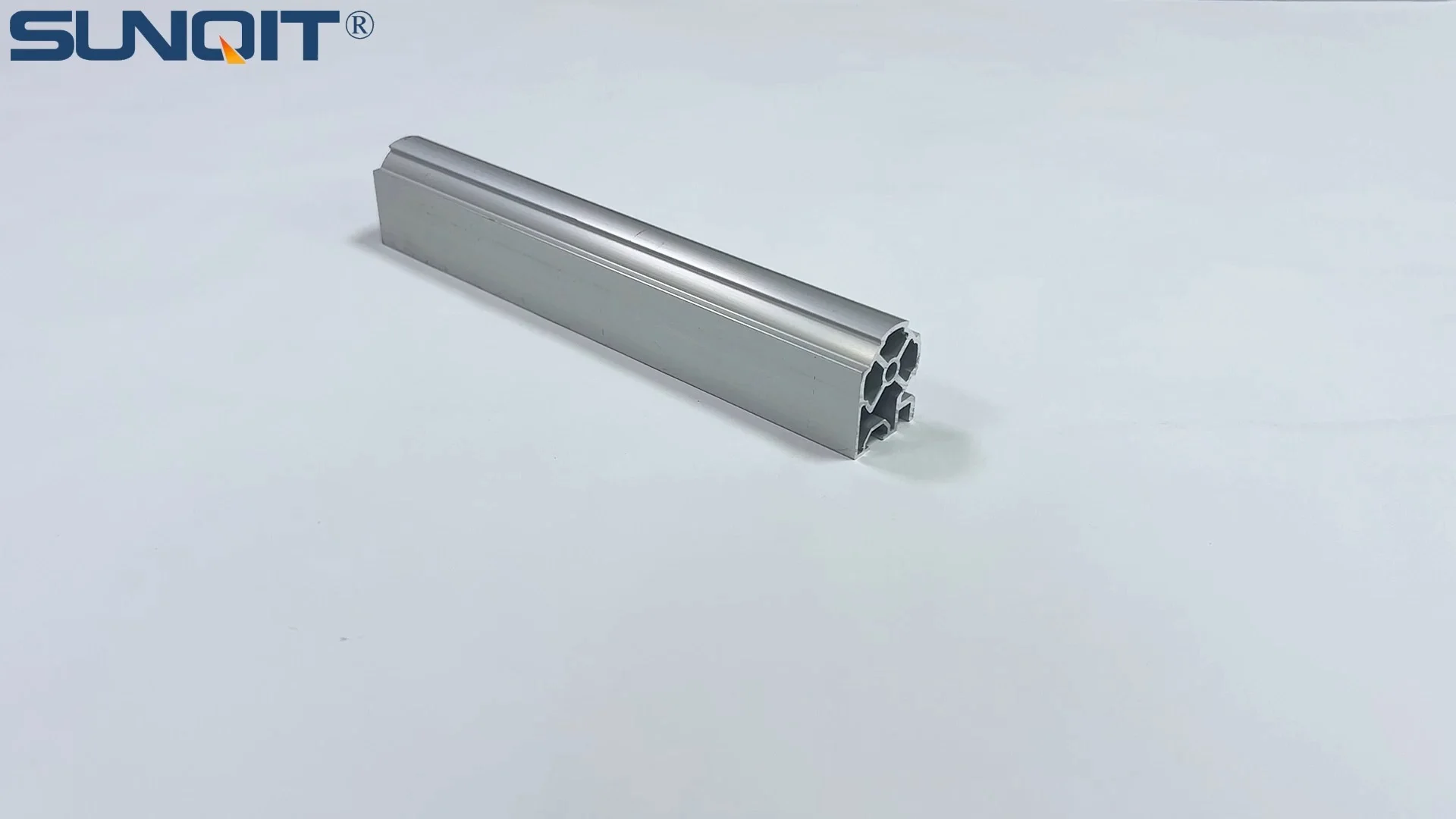
Aluminum Pipe with Tray Holder
Aluminum pipe with tray holder,the pipe one side connected by a joint, the other side with a slot which can hold a tray or a aluminum pannel.
Let's start with a scenario we've all lived (or at least heard of): It's Monday morning, and your team is gearing up to assemble a critical order. The clock is ticking, but halfway through, you hit a wall—you can't find the batch of microchips needed for the final step. The storage room looks like a tornado swept through it: bins overflowing with random screws, shelves bowed under the weight of unlabeled boxes, and that one rusted metal rack that's been wobbly since 2019. You spend 45 minutes digging through piles, only to discover the microchips were accidentally tossed into a bin labeled "miscellaneous washers." By the time you track them down, the assembly line is delayed, and your customer is sending follow-up emails. Sound familiar? If you manage a workshop, factory, or any space where spare parts are stored, this chaos isn't just a minor annoyance—it's a productivity killer, a profit drain, and a daily source of frustration.
But what if there was a way to turn that storage nightmare into a streamlined, stress-free system? A solution that doesn't just hold your parts but organizes them, protects them, and makes every item easy to find—even for the new intern who still mixes up a hex nut and a wing nut? Enter the aluminum pipe with tray holder : a simple yet revolutionary approach to spare parts storage that's changing how workshops, warehouses, and manufacturing floors operate. In this article, we'll dive into why this system works, how it integrates with lean principles, and why it might just be the upgrade your storage room (and your sanity) has been waiting for.
What Is an Aluminum Pipe with Tray Holder, Anyway?
At first glance, it might sound like something you'd find in a high school science lab, but let's break it down. An aluminum pipe with tray holder system is exactly what it sounds like: a modular storage setup built from lightweight, durable aluminum pipes (think sturdy, silver-colored tubes) connected by simple, reusable joints, with flat or divided trays that slide or lock into place to hold your spare parts. Unlike clunky wooden shelves, flimsy plastic bins, or one-size-fits-all metal racks, this system is designed to be yours —customizable to your space, your parts, and your workflow.
Here's what makes it different: Aluminum pipes form the "skeleton" of the system—vertical supports, horizontal beams, and even adjustable shelves—while the tray holders (often made from the same aluminum material) attach to these pipes to create levels for storing everything from tiny washers to larger components like circuit boards or small tools. The magic is in the aluminum pipe accessories that hold it all together: simple connectors, clamps, and brackets that let you build, adjust, and reconfigure the system without welding, drilling, or calling in a contractor. Need to add a shelf? Just slide a new pipe into a joint. Want to raise the trays to make room for taller items below? Loosen a few clamps, adjust, and tighten. It's like building with giant, industrial-grade Legos—only instead of a wonky spaceship, you're creating a storage solution that actually works.
But why aluminum? Why not stick with good old wood, or upgrade to stainless steel? Let's talk materials. Wood shelves might be cheap upfront, but they warp when they get damp, splinter when you drag heavy trays across them, and become breeding grounds for mold if you store oily or greasy parts. Stainless steel is strong, sure, but it's heavy—try moving a stainless steel rack by yourself when you need to rearrange the room. Plus, it's expensive, and once you weld it into place, it's stuck forever. Plastic? It bends under heavy loads and cracks in extreme temperatures. Aluminum, though? It's lightweight (so you can move sections by hand), corrosion-resistant (no rust, even in humid workshops), and surprisingly strong—thick enough to hold stacks of metal parts but thin enough to keep the system from feeling bulky. And unlike wood or plastic, it's easy to clean—just wipe it down with a damp cloth, and it looks as good as new. For spare parts storage, where durability and adaptability matter most, aluminum is the unsung hero.
From Chaos to Order: How It Solves the 3 Big Storage Problems
Let's get real: Your storage room isn't messy because you're disorganized—it's messy because your current system was never designed to handle the chaos of real-world parts storage. Let's tackle the three biggest issues and see how an aluminum pipe with tray holder system fixes them.
Problem #1: "I Can't Find Anything—Even When It's Right in Front of Me"
We've all been there: You swear you put the 5mm bolts on the top shelf, but today, they're nowhere to be found. Or maybe they're there, but they're buried under a pile of other parts, hidden behind a box that "temporarily" got placed there last month. The root cause? A lack of visual organization . Traditional storage relies on bins and boxes, which are great for holding things but terrible for showing you what's inside—especially if you're in a hurry. Bins stack, they tip over, and labels fade or fall off, turning your storage area into a game of "Where's Waldo?" with nuts and bolts.
The aluminum pipe system fixes this with open trays. Instead of hiding parts in opaque bins, trays keep everything visible at a glance. Need a specific resistor? Just scan the trays—no more digging, no more guessing. Even better, most systems let you add dividers (another handy aluminum pipe accessory ) to split trays into sections, so you can separate similar parts (like different sizes of screws) without mixing them up. And since the trays are mounted on aluminum pipes, you can angle them slightly downward for better visibility—so even the parts in the back of the tray are easy to spot. One auto repair shop in Texas reported cutting their "part-hunting time" by 70% after switching to this system: "Before, our mechanics were spending 15 minutes per job just looking for tools and parts," says shop manager Maria Gonzalez. "Now, they walk in, grab what they need, and get back to work. It's like night and day."
Problem #2: "My Storage System Can't Keep Up with My Needs"
Businesses grow, inventory changes, and what worked for 100 parts last year might not work for 500 parts this year. Maybe you started storing small electronics and now need to add larger components. Or perhaps a new project requires specialized tools that don't fit in your existing shelves. Traditional storage—whether it's fixed wooden shelves or welded metal racks—is static. Once it's built, it can't grow, shrink, or change shape without a saw, a welder, or a trip to the hardware store. So you end up with a Frankenstein setup: a few new plastic bins stacked on top of old shelves, a rickety folding table holding overflow parts, and a growing sense that your storage room is running the business, not the other way around.
Aluminum pipe systems, by contrast, are born to adapt . Since they're built with modular pipes and joints, you can expand, shrink, or reconfigure them in minutes. Need to add a new level of trays? Just slide in a few more aluminum pipes and attach the tray holders. Moving to a smaller space? Disassemble the system, move the parts, and rebuild it in the new layout—no waste, no extra cost. One small electronics manufacturer in Oregon recently expanded their product line and needed to store twice as many components. Instead of buying new shelves (which would have cost $2,000+), they simply added two more vertical aluminum pipes and three new trays to their existing system—total cost: $150 and 30 minutes of setup time. "We didn't even need to hire a handyman," says operations lead Jake Lin. "I did it myself with a hex key during my lunch break."
Problem #3: "My Storage Is Falling Apart—And It's Costing Me"
Wooden shelves warp. Plastic bins crack. Metal racks rust. And every time something breaks, you're left with a choice: patch it up (temporarily) or replace it (permanently). Both options cost money—either in replacement parts or in the downtime while you fix the problem. Worse, a damaged storage system can put your parts at risk: a warped shelf might dump a bin of expensive sensors on the floor, or a rusted rack could stain metal parts with corrosion. Over time, these "small" issues add up—costing you in replacement parts, wasted labor, and even damaged customer orders.
Aluminum pipe systems are built to last. Aluminum is naturally resistant to rust and corrosion, so even in damp workshops or garages, it won't degrade over time. The pipes are strong enough to hold heavy trays of metal parts without bending, and the joints (often made from reinforced plastic or aluminum) lock securely to prevent wobbling or collapse. Unlike wood, which needs painting or sealing, aluminum requires almost no maintenance—just an occasional wipe-down to keep it clean. And if a part does wear out (say, a tray holder gets cracked), you can replace just that one accessory instead of the entire system. A warehouse in Ohio has been using the same aluminum pipe storage setup for over 8 years, and according to their facilities manager, "We've only had to replace two tray dividers and a few joint clamps. That's it. Compare that to the wooden shelves we used before—we were replacing those every 2-3 years. The aluminum system paid for itself in saved replacement costs alone."

Lean System Integration: It's Not Just Storage—It's a Productivity Tool
If you're familiar with lean system principles (think "reducing waste," "continuous improvement," "respect for people"), you'll immediately see how an aluminum pipe with tray holder system aligns with them. Lean isn't just about manufacturing—it's about creating systems that work with your team, not against them. Let's break down the lean benefits:
- Eliminates "motion waste": Motion waste is any unnecessary movement—like walking back and forth to find parts, bending down to reach a low bin, or climbing a ladder for a top shelf. With an aluminum pipe system, you can design your storage to be at waist height (the "golden zone" for easy access), reducing bending and stretching. Plus, since parts are organized by frequency of use (most-used parts at eye level, less-used parts higher or lower), your team spends less time moving and more time working.
- Supports "5S" organization: The 5S methodology (Sort, Set in Order, Shine, Standardize, Sustain) is all about creating a clean, efficient workspace. An aluminum pipe system makes "Set in Order" (arranging items for easy access) and "Standardize" (keeping things in their place) simple. Trays have fixed locations, dividers separate parts, and labels (easily attached to the aluminum pipes) ensure everyone knows where things go. No more "I thought it went here!" arguments.
- Reduces "inventory waste": When you can't see what you have, you're more likely to overstock (to avoid running out) or understock (and risk delays). With open trays, you can quickly see when stock is low—no more guessing or counting. One auto parts store reported cutting their excess inventory by 15% after switching to the system: "We used to order extra gaskets 'just in case' because we could never tell how many were left in the bin," says the store manager. "Now, we can see the tray getting empty and order exactly what we need. It's saved us thousands in overstock costs."
"Lean isn't about being perfect—it's about being better. Our aluminum pipe storage system made 'better' possible. Before, our assembly line would stop 3-4 times a day because someone couldn't find a part. Now? Maybe once a week, if that. And when it does stop, it's because we actually ran out— not because the part was hiding. That's lean in action." — Mike Torres, Production Manager, Precision Machining Co.

Traditional Storage vs. Aluminum Pipe System: A Side-by-Side Comparison
Still on the fence? Let's put it all together with a quick comparison. Here's how traditional storage methods stack up against an aluminum pipe with tray holder system:
| Feature | Traditional Storage (Wooden Shelves/Bins) | Aluminum Pipe with Tray Holder System |
|---|---|---|
| Durability | Warping, rotting, or cracking within 2-3 years; bins crack under heavy loads. | Rust/corrosion-resistant; lasts 8+ years with minimal maintenance. |
| Flexibility | Fixed layout; hard to adjust without tools or replacement parts. | 100% modular—add/remove pipes/trays in minutes with basic tools. |
| Visual Access | Parts hidden in bins/boxes; hard to scan quickly. | Open trays with dividers; everything visible at a glance. |
| Assembly Time | Requires tools (screwdrivers, drills, hammers); takes hours/days to build. | Tool-free or minimal tools (hex key); basic setup in under an hour. |
| Cost Over Time | Low upfront cost, but high replacement/maintenance costs (new shelves, bins, repairs). | Slightly higher upfront cost, but minimal maintenance/replacement costs; pays for itself in 1-2 years. |
| Weight Capacity | Limited by shelf strength; wooden shelves bow under heavy loads. | Sturdy aluminum pipes hold 50-100 lbs per linear foot (depending on setup). |
| Aesthetics | Looks cluttered quickly; stains, dents, and scratches are visible. | Sleek, modern design; easy to clean; maintains a professional look even with heavy use. |
Beyond Storage: How It Works with Your Workbench and Workflow
Here's a secret: The best storage system isn't just about storing parts—it's about connecting your storage to your workspace. If your storage room is on one side of the shop and your workbench is on the other, you're still wasting time walking back and forth. Aluminum pipe systems solve this by integrating seamlessly with your existing workflow.
Imagine this: You have a workbench where you assemble small electronics. Instead of keeping parts in a separate storage room, you build a compact aluminum pipe with tray holder system right next to the bench—at arm's reach. The trays hold all the resistors, capacitors, and screws you need for the current job, and since the system is modular, you can reconfigure it when you switch to a new project. No more "walk and fetch" trips—just grab a part, install it, and move on. Some systems even come with casters (another useful accessory) so you can roll the entire storage unit to wherever you need it—perfect for mobile workstations or job sites.
Or say you run a repair shop with multiple workbenches. Each bench can have its own mini aluminum pipe system stocked with the tools and parts specific to that technician's specialty—no more sharing (and losing) communal parts. And when a new tool or part is added, you don't need to buy a whole new shelf—just add a pipe and a tray to the existing setup. It's like having a storage system that grows and changes with your team's needs.
The Accessories That Make It Even Better
A basic aluminum pipe with tray holder system is great, but the real magic is in the aluminum pipe accessories that let you customize it for your unique needs. Here are a few must-haves:
- Tray dividers: Split large trays into smaller sections for organizing tiny parts like screws, washers, or fuses. Color-coded dividers (red for "critical parts," blue for "spares") make identification even faster.
- Label holders: Attach these to the front of trays to clearly mark what's inside—no more guessing or relying on memory. Many are magnetic or clip-on, so you can update labels when parts change.
- Casters/wheels: Add locking casters to the bottom of the system to make it mobile. Great for workshops where you need to move parts to different workbenches or job sites.
- Shelf lips: These small aluminum strips attach to the front of trays to prevent parts from sliding off when the system is moved or bumped—perfect for shops with busy foot traffic.
- Tool hooks: Mount these on the side of the aluminum pipes to hang tools like pliers, screwdrivers, or tape measures—keeping them within reach and off the workbench.
The best part? You don't need to buy all these accessories upfront. Start with the basics (pipes, trays, joints), then add accessories as you realize what you need. It's a "build-as-you-go" approach that keeps costs low and functionality high.
Is It Right for You? 5 Signs You're Ready to Upgrade
Still not sure if an aluminum pipe with tray holder system is worth the investment? Ask yourself these questions:
- Do you spend more than 10 minutes a day looking for parts? If yes, the time saved alone will pay for the system in weeks.
- Have you ever had to reorder parts because you thought they were lost (but they were just misplaced)? Overstocking due to disorganization is a hidden cost—this system eliminates it.
- Is your storage space too small (or feels too small) for your needs? Modular systems let you use vertical space efficiently, making even tiny rooms feel larger.
- Do new team members struggle to find parts, even after training? Clear, visual storage reduces onboarding time and mistakes.
- Have you had parts damaged because they fell off shelves or got crushed in overstuffed bins? Sturdy trays and secure dividers protect your inventory.
If you answered "yes" to even one of these, it's time to consider an upgrade. Remember: This isn't just about storage—it's about creating a workspace that works for you, not against you.
Final Thoughts: From Frustration to Freedom
Let's circle back to that Monday morning scenario we started with. Imagine walking into your storage room and seeing rows of sleek aluminum pipes with trays—each labeled, each organized, each part exactly where it's supposed to be. The microchips are on the second tray from the top, right next to the resistors, in a section marked "Electronics: Assemblies." You grab them in 10 seconds, head back to the assembly line, and the order ships on time. Your team is happy, your customer is happy, and you're not spending the morning stressed and sweaty from digging through clutter.
That's the promise of an aluminum pipe with tray holder system: It turns storage from a daily headache into a seamless part of your workflow. It's durable, flexible, and designed for the chaos of real-world workspaces. It integrates with lean principles to reduce waste and boost productivity. And best of all, it's affordable, customizable, and easy to set up—no contractor required.
So if you're tired of the chaos, the lost parts, and the wasted time, maybe it's time to give your storage room the upgrade it deserves. Your team, your bottom line, and your sanity will thank you.