- Company Articles
- Products and Technology
- Application Cases
- Aluminum Pipe with Tray Holder in 3C Assembly: Reducing Changeover Time

Aluminum Pipe with Tray Holder in 3C Assembly: Reducing Changeover Time
Related Product
Aluminum Pipe with Tray Holder
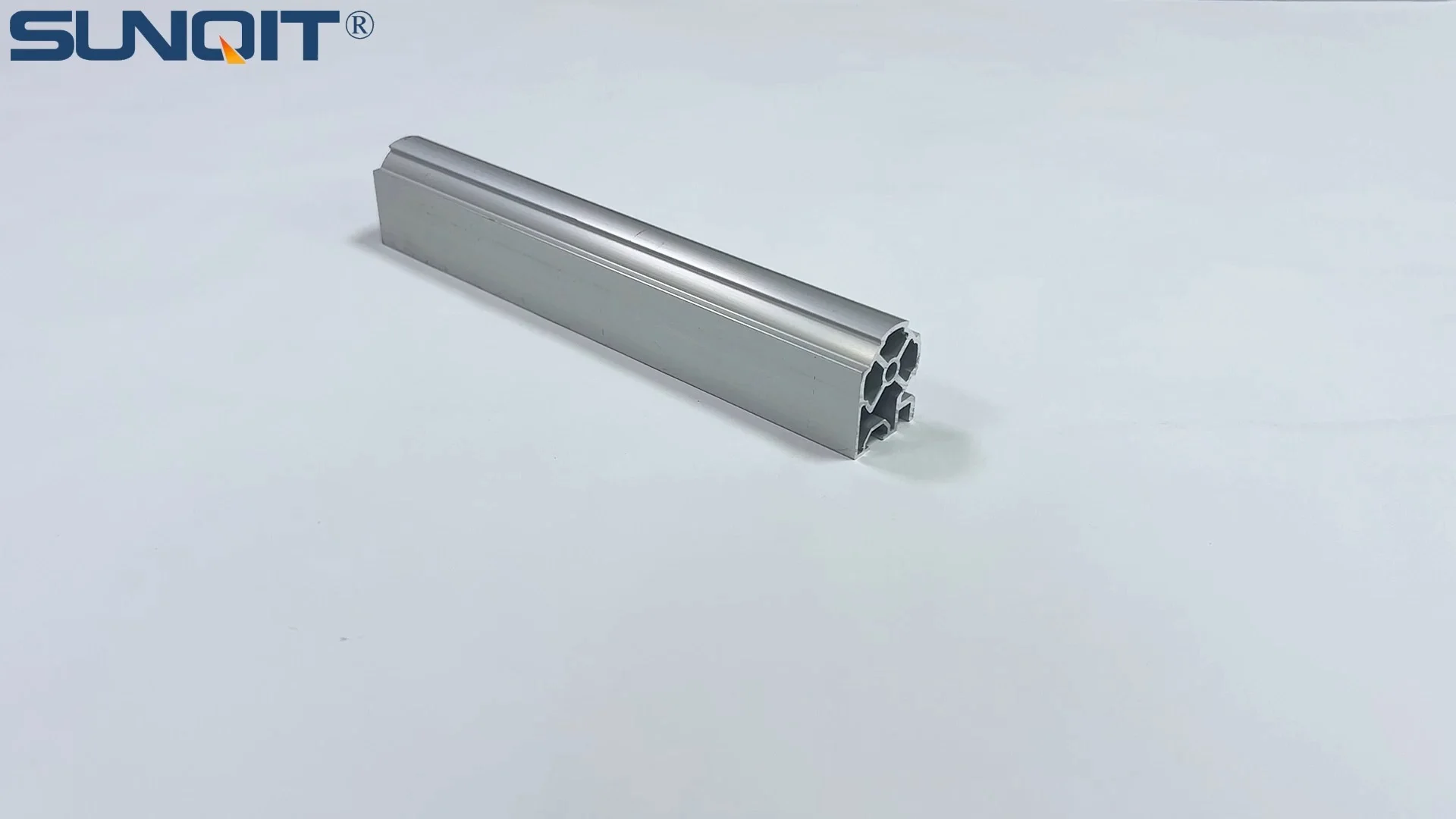
Aluminum pipe with tray holder,the pipe one side connected by a joint, the other side with a slot which can hold a tray or a aluminum pannel.
Introduction: 3C Assembly and the Hidden Cost of Changeover Time
Walk into any 3C (consumer electronics) assembly plant, and you'll be met with a symphony of precision: robotic arms placing microchips, operators soldering tiny components, and conveyor belts humming as half-assembled smartphones, laptops, or smartwatches glide through stations. It's a world where speed and accuracy are king—but there's a quiet villain lurking in the background: changeover time.
Changeover time is the period when a production line stops making one product model to switch to another. For 3C manufacturers, this happens constantly. Think about it: new phone models launch every 6–12 months, laptop specs update quarterly, and wearables get refreshed even more frequently. Each switch means reconfiguring workbenches, adjusting flow racks, reorganizing tool trays, and retraining operators on where to find parts. What might seem like a "quick 30-minute adjustment" can easily balloon into hours of downtime—and that's before you factor in the errors, delays, and frustrated teams that come with it.
One mid-sized 3C factory I visited last year estimated that changeovers ate up 15% of their total production hours. "We're running at 85% capacity not because of demand, but because we're always stopping to switch lines," the plant manager told me. "By the time we get into a rhythm with Model X, it's time to tear everything down for Model Y."
The problem isn't just lost time. Changeovers disrupt workflow, increase labor costs (operators spend hours moving tools instead of assembling), and raise the risk of mistakes—like misplacing a critical component or using the wrong part bin. For an industry where profit margins are razor-thin and customer demand is hyper-volatile, this waste can make or break a company's competitiveness.
So, what's the solution? Rigid, one-size-fits-all assembly lines won't cut it anymore. 3C manufacturers need tools that adapt as fast as their product lines do. Enter the aluminum pipe with tray holder—a modular, lightweight system that's quietly revolutionizing how factories handle changeovers. Let's dive into how this unassuming tool is becoming the backbone of lean, flexible assembly lines.
Meet the Aluminum Pipe with Tray Holder: A Lean Solution for Modern Assembly
At first glance, an aluminum pipe with tray holder might not look like a game-changer. It's just… pipes and trays, right? But that's exactly its power: simplicity paired with adaptability. Unlike the heavy, welded steel racks or clunky wooden workbenches of the past, this system is built from lightweight aluminum pipes (typically 28mm or 30mm in diameter) connected by modular joints, with customizable tray holders that slide or clamp onto the pipes.
Imagine a set of building blocks for adults. You can snap the pipes together with aluminum profile accessories—joints, brackets, clamps—to create exactly what you need: a parts tray rack above a workbench, a flow rack for feeding components to an assembly line, or a mobile cart that follows operators as they switch stations. When it's time to change over, you don't need a wrench, a saw, or a team of engineers. Loosen a few joints, reposition the pipes, swap out the tray holders, and you're ready for the next model.
Take Sarah, an assembly line lead at a smartphone factory in Guangdong. "Before, our workbenches were fixed wood with nails and glue," she told me. "If we needed a taller tray for a new phone model, we'd have to ask maintenance to drill new holes or build a whole new bench. Now, with aluminum pipes, I can adjust the tray height myself in 5 minutes. Just twist the joint, move the pipe up, and lock it. No tools, no waiting."
What makes this system stand out? Three key traits:
- Lightweight but tough: Aluminum is 30% lighter than steel, so operators can reconfigure setups without heavy lifting. But don't let the weight fool you—it's strong enough to hold hundreds of pounds of components, from circuit boards to batteries.
- Modular by design: Every part is interchangeable. A tray holder that fits a 28mm aluminum pipe today will fit the same pipe tomorrow, even if you swap out the joints or add a new section. This consistency eliminates the "will this part work?" guesswork.
- Cost-effective over time: Traditional workbenches or steel racks might seem cheaper upfront, but they're one-and-done. If your product line changes (and in 3C, it always does), you'll have to replace them. Aluminum pipe systems, by contrast, evolve with your needs—saving you from constant reinvestment.
But the aluminum pipe with tray holder isn't just a standalone tool. It's part of a larger lean system—one that prioritizes eliminating waste, streamlining flow, and empowering teams to own their workspace. Let's explore how it fits into the lean manufacturing playbook.

The Lean System Connection: How Aluminum Pipe with Tray Holder Fits into Your Workflow
Lean manufacturing is all about one thing: creating value for the customer while cutting out everything that doesn't. Changeover time? That's "non-value-added" waste—and the aluminum pipe with tray holder is designed to attack it head-on. Here's how it integrates with core lean principles to transform your assembly line:
1. Just-In-Time (JIT) Material Delivery, Without the Wait
In lean systems, materials should arrive exactly when they're needed—not too early (cluttering the floor) or too late (slowing production). Aluminum pipe with tray holder excels here, especially when paired with flow racks. Flow racks use gravity to feed components to operators, so parts roll forward as they're used. By attaching tray holders to aluminum pipes above or alongside flow racks, you can organize smaller parts (screws, gaskets, SIM card trays) in precisely the order and quantity operators need.
At a tablet factory in Vietnam, I watched this in action. Instead of operators walking 20 feet to a central parts bin every time they needed a screen protector, the team mounted aluminum pipe tray holders directly above their workbenches, with flow racks feeding the trays. "Now, the parts come to us," one operator said. "When we switch to a new tablet size, we just adjust the tray dividers and lower the pipe height to match the new screen dimensions. No more walking, no more searching."
2. 5S Principles: Sort, Set in Order, Shine, Standardize, Sustain
5S is the backbone of a clean, efficient workspace, and aluminum pipe systems make it easy to "set in order" (seiton) and "standardize" (seiketsu). With customizable tray holders, you can label exactly where each part goes—no more "I thought the blue screws were here!" mix-ups. And because the system is modular, you can replicate the same setup across stations, so operators know exactly where to find parts, no matter which line they're on.
A laptop manufacturer I worked with took this a step further. They color-coded their aluminum pipe tray holders: red for battery components, blue for motherboards, green for casings. When switching from a 13-inch to a 15-inch laptop, they simply swapped the colored trays and adjusted the pipe spacing to fit the larger casing. "Our error rate dropped by 22% in the first month," the quality control manager reported. "Operators don't second-guess themselves anymore—they just grab the red tray for batteries, every time."
3. Kaizen (Continuous Improvement): Let Your Team Drive Change
Lean isn't a one-time fix—it's a mindset. Aluminum pipe systems put the power of kaizen in the hands of the people who know the line best: your operators. Since reconfiguring the pipes is so simple, teams can experiment with new layouts, test faster workflows, and iterate without waiting for approval.
Take Mike, a shift supervisor at a smartwatch plant. "Last quarter, my night shift suggested angling the tray holders 15 degrees downward," he told me. "They said it would make parts easier to reach without bending. We tried it with the aluminum pipes—literally just loosened the joints, tilted the holders, and locked them back. Productivity went up 8% that week because operators weren't straining to grab parts. Now, we let teams tweak their setups monthly. They're invested because they're the ones designing the workflow."

Breaking Down the Components: Why Aluminum Profile Accessories Matter
You could have the sturdiest aluminum pipes and the most durable tray holders, but without the right aluminum profile accessories, the system falls flat. These small, often overlooked parts—joints, brackets, clamps, and connectors—are the glue that makes the whole setup work. Let's unpack why they're so critical for reducing changeover time.
The Unsung Heroes: Joints and Connectors
Aluminum pipe joints are designed for speed. Unlike traditional bolts or welds, most use a cam-lock or twist-lock mechanism: you slide the joint onto the pipe, twist it 90 degrees, and it locks in place. To adjust, twist it back, reposition, and lock again—no tools required. This is game-changing for changeovers. A team of two operators can reconfigure a 10-foot flow rack in under 20 minutes, compared to 2+ hours with a welded steel rack (which would need to be cut, welded, and repainted).
There are even specialized joints for tricky angles: 45-degree joints for sloped flow racks, 135-degree joints for corner setups, and internal rotary joints that let pipes swivel—perfect for tray holders that need to tilt or rotate. "We use internal rotary aluminum joints on our inspection stations," a quality inspector at a headphone factory explained. "When I need to check the left earcup vs. the right, I just spin the tray holder instead of picking up the part. It sounds small, but over 500 units a day, it adds up."
Tray Holders: Customizable and Quick to Swap
Tray holders aren't one-size-fits-all, and that's intentional. Some clamp onto pipes with a simple lever; others slide along a track, so you can adjust spacing between trays in seconds. For 3C assembly, where parts range from tiny screws (1mm in diameter) to larger battery packs, this flexibility is key. Swap out a shallow tray for small components with a deep tray for batteries, or add dividers to separate different screw sizes—no tools, no hassle.
One factory I visited used magnetic tray holders on their aluminum pipes. "When we switch to a new model, we just pop off the old magnetic trays and snap on new ones labeled with the new part numbers," the line lead said. "It takes less than 5 minutes per station. Before, we used Velcro or tape, which left residue and would fail halfway through a shift."
Casters and Mobility: Taking the Line to the Operator
Many aluminum pipe systems pair with casters (wheels) and caster accessories, turning static workbenches into mobile carts. This is a game-changer for changeovers. Instead of moving operators to the line, you move the line to the operators. Need to assemble a high-volume model? Cluster mobile carts around a central conveyor. Switching to a low-volume, custom order? Spread the carts out to reduce congestion.
"We used to have fixed workbenches bolted to the floor," a plant engineer told me. "If a cart broke down, we'd have to stop the entire line to fix it. Now, our aluminum pipe carts have lockable casters. We just roll in a backup cart, swap the tray holders, and keep going. Changeover for cart repairs went from 2 hours to 10 minutes."
Case Study: Reducing Changeover Time by 40% in a Smartphone Assembly Line
Let's put all this theory into practice with a real-world example. Last year, a leading 3C manufacturer (we'll call them "TechCore") was struggling with changeovers on their smartphone assembly line. They produced 8 different models, with changeovers happening 3–4 times per day. The process was chaotic: operators spent 2+ hours reconfiguring steel workbenches, repositioning fixed flow racks, and relabeling plastic bins. Downtime was costing them ~$12,000 per day in lost production.
TechCore decided to test the aluminum pipe with tray holder system on one of their busiest lines. They replaced 4 fixed steel workbenches with aluminum pipe workbenches, added 6 aluminum flow racks with adjustable tray holders, and equipped all setups with aluminum profile accessories (rotary joints, magnetic tray dividers, and lockable casters). Here's what happened:
| Metric | Before Aluminum Pipe System | After Aluminum Pipe System | Improvement |
|---|---|---|---|
| Average changeover time per line | 135 minutes | 81 minutes | 40% reduction |
| Number of changeover errors (e.g., misplaced parts) | 12 per week | 3 per week | 75% reduction |
| Operator satisfaction score (1–10) | 5.2 | 8.7 | 3.5-point increase |
| Production hours lost to changeovers per month | 144 hours | 86 hours | 58 fewer hours |
| Cost savings from reduced downtime | N/A | $28,000 per month | ROI in ~3 months |
The results spoke for themselves. "The biggest surprise wasn't just the time saved—it was how much calmer the floor felt," the plant manager told me. "Before, changeovers were stressful: operators rushing, supervisors yelling, parts getting lost. Now, it's almost routine. Two people can handle a full line changeover, and they're done before lunch. The team even started suggesting their own tweaks—like adding a second tier of tray holders for small tools. It's transformed our culture."
TechCore was so impressed that they rolled out the system across all 5 of their assembly lines. Within 6 months, their overall changeover time dropped by 35%, and they reclaimed over 300 production hours per month—enough to assemble 12,000 additional smartphones.
Beyond Changeover Time: Additional Benefits for 3C Manufacturers
While reducing changeover time is the star benefit, the aluminum pipe with tray holder system brings a host of other advantages that make it a no-brainer for 3C assembly:
Ergonomics: Happier, Healthier Operators
3C assembly is repetitive work, and poor ergonomics can lead to injuries, absenteeism, and high turnover. Aluminum pipe systems let you adjust heights, angles, and reach to fit each operator. Raise the tray holder to shoulder height for a tall operator, lower it for someone shorter, or tilt it to reduce bending. One factory reported a 30% drop in wrist and back injuries after switching to adjustable aluminum workbenches—saving them tens of thousands in workers' comp claims.
Scalability: Grow Without Rebuilding
As your business grows, so can your aluminum pipe system. Need to add a new assembly station? Just buy a few extra pipes, joints, and tray holders—no need to redesign the entire line. One startup that makes smart home devices told me, "We started with 2 aluminum pipe workbenches in a garage. Now we're in a 10,000 sq. ft. facility, and we've just kept adding to the original system. It's like building with Legos—we've never had to tear anything down."
Sustainability: Reduce Waste, Cut Costs
Aluminum is 100% recyclable, and modular systems generate far less waste than traditional fixed setups (which often end up in landfills when they're no longer needed). Plus, since you're reusing the same pipes and joints for years, you'll spend less on replacements. "We used to throw away wooden workbenches every 2–3 years because they'd warp or get damaged," a sustainability coordinator told me. "Our aluminum pipes are 5 years old and still look brand new. We just swap out the occasional joint or caster—no need for a full replacement."
Conclusion: The Future of 3C Assembly is Flexible
Changeover time might not be the most glamorous topic in manufacturing, but it's one of the most critical. In the fast-paced world of 3C assembly, where product cycles get shorter and customer demands more unpredictable, rigid systems are a liability. The aluminum pipe with tray holder isn't just a tool—it's a mindset shift: building assembly lines that adapt as quickly as your business does.
From reducing downtime and errors to empowering operators and cutting costs, this modular system is proving that the future of manufacturing isn't about bigger machines or faster robots—it's about smarter, more flexible tools. As one plant manager put it: "We used to fight change. Now, we embrace it. With aluminum pipes, changeovers aren't a headache—they're just another part of the day."
So, if you're still struggling with changeover time, take a walk to your assembly line. Look at the workbenches, the flow racks, the tool trays. Are they holding you back? Or could they be replaced with something that works with your team, not against them? The aluminum pipe with tray holder might just be the quiet revolution your factory needs.