- Company Articles
- Products and Technology
- Application Cases
- Aluminum Pipe with Tray Holder in 3C Warehousing: Fast Access to Components

Aluminum Pipe with Tray Holder in 3C Warehousing: Fast Access to Components
Related Product
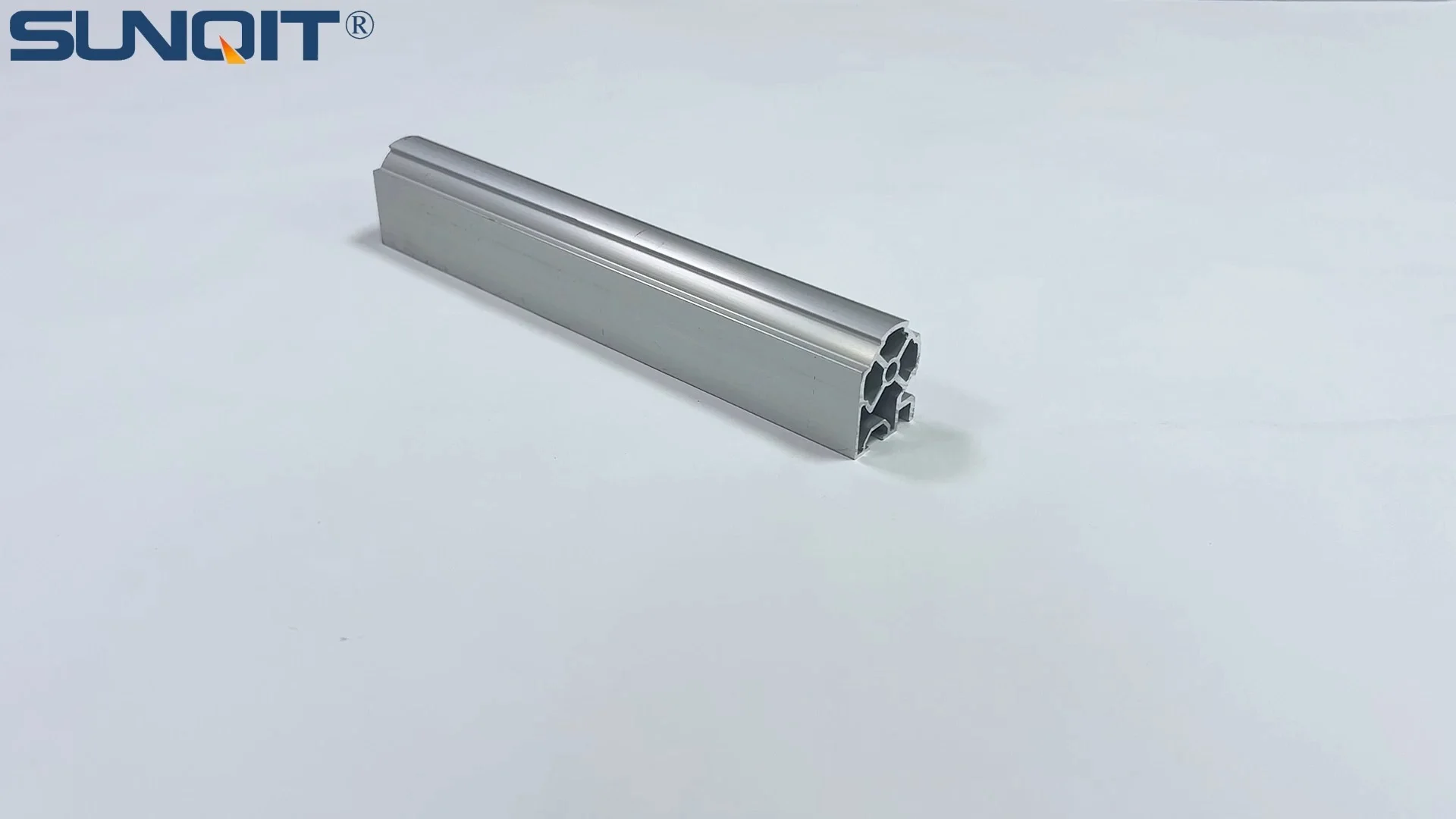
Aluminum Pipe with Tray Holder
Aluminum pipe with tray holder,the pipe one side connected by a joint, the other side with a slot which can hold a tray or a aluminum pannel.
It's 9 AM on a Tuesday in a 3C electronics factory. Maria, a line operator assembling smartphone motherboards, needs a specific batch of microchips. She heads to the material storage area, only to find the components tucked away on a cluttered shelf, buried under boxes of capacitors and resistors. By the time she locates the microchips and returns to her station, five minutes have passed—time that adds up when you're chasing a daily production quota of 500 units. Sound familiar? In 3C manufacturing, where precision and speed are everything, inefficient component access isn't just a hassle; it's a bottleneck that eats into profits and delays deliveries. But what if there was a solution that turned those five-minute hunts into 30-second grabs? Enter the aluminum lean pipe with tray holder —a simple yet transformative tool reshaping how 3C warehouses store and retrieve components.
What is Aluminum Lean Pipe, Anyway?
Before diving into the tray holder itself, let's get to know the star of the show: aluminum lean pipe. If you've walked through a modern factory or warehouse, you've probably seen it without realizing it. Think of lightweight, silver-colored pipes—usually 28mm or 30mm in diameter—connected by sleek joints, forming everything from workbenches to material racks. Unlike heavy steel pipes or flimsy plastic alternatives, aluminum lean pipe strikes a sweet balance: it's strong enough to support heavy component trays (we're talking up to 50kg per linear meter) but light enough that a single worker can reconfigure a rack in minutes. Add in corrosion resistance (critical in 3C environments where humidity and static control matter) and a smooth, ESD-safe surface, and you've got a material tailor-made for electronics manufacturing.
But aluminum lean pipe isn't just a pipe. It's a system. Pair it with aluminum profile accessories —think swivel joints, adjustable feet, and bracket connectors—and suddenly you're not just building a shelf; you're crafting a storage solution that adapts to your needs. Need to add a new tier for larger components? Swap out a fixed joint for an adjustable one. Relocating the rack to be closer to the assembly line? Loosen a few bolts, move it, and tighten—no power tools required. In 3C manufacturing, where product lines shift every 6–12 months (hello, new smartphone models!), that flexibility isn't a nice-to-have; it's a survival skill.
The Tray Holder: Small Design, Big Impact
Now, let's talk about the tray holder—the unsung hero that turns aluminum lean pipes into component-access superheroes. Imagine a shallow, rectangular tray (usually made of high-density plastic or aluminum) mounted onto a frame of aluminum lean pipes. The tray sits at a slight incline, so when you take the front component box, gravity gently slides the next one forward. No more digging. No more rearranging. Just grab and go.
But the magic is in the details. Let's break down why this design works so well for 3C components:
- Visibility: 3C components are tiny—think 0402 resistors (smaller than a grain of rice) or 0.5mm-pitch connectors. Traditional shelving hides them in dark corners, but aluminum lean pipe tray holders are usually open-fronted, with clear labeling slots. Maria can scan the tray, spot the "Microchip XYZ-123" label, and grab the box in seconds.
- Ergonomics: Most tray holders are mounted at waist height (adjustable, thanks to those aluminum profile accessories), so workers don't bend or stretch. For someone like Maria, who retrieves components 20+ times a shift, that means less back pain and more focus on assembling, not searching.
- Modularity: Trays come in sizes to fit everything from bulk capacitors (large trays, 600mm long) to precision ICs (small trays, 300mm long). Mix and match on the same aluminum pipe frame, and suddenly your storage area goes from "junk drawer" to "well-organized toolbox."

From Pipe to Process: How It All Comes Together
To really see the impact, let's zoom out and look at how aluminum lean pipe tray holders fit into the broader 3C warehousing ecosystem. Take flow racks , for example. A flow rack is essentially a series of inclined lanes, each holding trays of components, that "flow" forward as items are removed. Pair a flow rack with aluminum lean pipe tray holders, and you've got a system where components move from receiving to the assembly line with zero manual pushing. A delivery truck unloads component boxes into the back of the flow rack; gravity carries them to the front, where operators like Maria pick them up. It's like a conveyor belt, but simpler, cheaper, and easier to reconfigure.
Then there's the workbench —the heart of any assembly station. Many 3C factories mount small aluminum lean pipe tray holders directly onto workbenches, holding the 5–10 components an operator uses most frequently. Picture this: Maria's workbench has a side-mounted tray holder with three small trays: one for screws, one for connectors, one for thermal paste. No more reaching across the table or walking to a distant rack. Her hands never leave the motherboard she's assembling. That's 2–3 seconds saved per component, which over 500 assemblies a day adds up to 25+ minutes of extra production time. Do the math: 25 minutes × 20 operators × 240 workdays a year = 20,000 extra production minutes. That's enough to assemble 1,250 more motherboards annually. For a 3C manufacturer with a $50 profit per unit, that's $62,500 in extra revenue—all from a few tray holders.

Case Study: How "TechFlow" Cut Retrieval Time by 80%
Let's put this in real-world terms with a hypothetical (but realistic) example. Meet TechFlow Electronics, a mid-sized 3C manufacturer in Shenzhen producing smartwatch modules. Before aluminum lean pipe tray holders, their material storage area was a maze of steel shelving units. Each shelf held unlabeled plastic bins, and components were sorted by "type" (resistors here, capacitors there) but not by production line. Retrieval time averaged 4.5 minutes per operator per trip, and mispicks (grabbing the wrong component) happened 3–4 times a week—costing $2,000 per mistake in rework and scrap.
TechFlow's operations manager, Li Wei, decided to experiment. He replaced two steel shelving units with aluminum lean pipe flow racks fitted with tray holders. They labeled each tray by production line and component type (e.g., "Line 3: Watch Battery Connectors – Model X1"). They also mounted small aluminum lean pipe tray holders directly onto each assembly workbench, stocking them with the top 5 most-used components per line.
The results? Let's look at the numbers:
| Metric | Before Aluminum Lean Pipe Tray Holders | After Implementation | Improvement |
|---|---|---|---|
| Average Component Retrieval Time | 4.5 minutes/trip | 0.9 minutes/trip | 80% reduction |
| Mispicks per Week | 3–4 | 0–1 | 75% reduction |
| Operator Productivity (Units/Day) | 420 modules | 495 modules | 18% increase |
| Space Utilization | 60 sq.m. for 5,000 component types | 45 sq.m. for 5,000 component types | 25% space saved |
Li Wei wasn't just impressed by the numbers—he noticed a cultural shift, too. "Before, operators would grumble about 'wasting time hunting parts,'" he said. "Now, they joke that the components 'come to them.' Morale is up, and we're hitting production targets without overtime. Best of all, when we launched our new smartwatch model last quarter, we reconfigured the flow racks in a day. With steel shelving, that would've taken a week and a half."
Why Not Just Use Plastic Bins or Steel Racks?
You might be thinking: "Can't we get the same results with plastic bins on steel racks?" Let's break down the alternatives:
Steel Racks + Plastic Bins: Steel is strong, but it's heavy. Reconfiguring a steel rack requires 2–3 people and a wrench. In 3C manufacturing, where you might need to shift storage layouts every few months, that's a hassle. Also, steel can rust in humid warehouses, and plastic bins can crack under heavy loads. Plus, without the incline of a tray holder, bins stay put—so you're still digging to reach the back.
Fixed Plastic Flow Racks: These exist, but they're one-size-fits-all. If you need a taller rack or a wider tray, you're out of luck. Aluminum lean pipe, with its modular joints, lets you adjust height, width, and depth on the fly. Want to add a shelf for larger components? Just bolt on a new aluminum profile bracket. Fixed plastic racks can't compete.
Automated Retrieval Systems (AS/RS): For giant 3C manufacturers (think Foxconn), AS/RS is great. But for mid-sized factories like TechFlow, the $1M+ price tag is prohibitive. Aluminum lean pipe tray holders cost a fraction of that (we're talking $500–$1,000 per flow rack) and deliver 80% of the efficiency gains. It's like choosing a hybrid car over a Tesla—practical, affordable, and more than enough for most needs.
Pro Tips: Making the Most of Your Aluminum Lean Pipe Tray Holders
Ready to dive in? Here are a few insider tips to maximize your investment:
1. Label Everything (and We Mean Everything)
Use color-coded labels (red for Line A, blue for Line B) and clear, large-font text. Add QR codes that link to your ERP system, so workers can scan to check stock levels without leaving their stations. Trust us: a $2 label maker will save you $2,000 in mispicks.
2. Optimize Tray Incline
The incline angle matters. Too steep, and component boxes slide too fast, risking damage. Too shallow, and they don't slide at all. Aim for 5–7 degrees for light components (resistors, capacitors) and 7–10 degrees for heavier items (batteries, metal brackets). Test with a few trays first!
3. Pair with "Material Rack B (3 Row and 3 Floor)" for High-Density Storage
If you're tight on space, consider stacking your aluminum lean pipe tray holders using a material rack b (3 row and 3 floor) design. This three-row, three-tier setup lets you store 3× more components in the same footprint. Just make sure the top tier is no higher than 1.8m—you don't want operators climbing ladders for components.
4. Invest in ESD-Safe Trays
3C components hate static. A single static discharge can fry a $50 microchip. Look for tray holders with ESD-safe aluminum frames and conductive plastic trays. Yes, they cost 10–15% more than standard trays, but replacing fried components costs 10× more.
The Future: Smart Tray Holders and IoT Integration
As 3C manufacturing gets smarter, so too will aluminum lean pipe tray holders. Imagine adding tiny IoT sensors under each tray that track how many component boxes are left. When stock hits 10%, the system sends an alert to the warehouse manager's phone: "Line 2, Tray 3: Capacitors – Low Stock (5 left)." No more last-minute scrambles to restock. Some manufacturers are even testing RFID tags on component boxes, so the tray holder can automatically log which components are taken and by whom—perfect for traceability (critical if a batch of components is recalled).
And as aluminum extrusion technology improves, we're seeing even lighter, stronger pipes. New aluminum profile accessories like magnetic joints (no bolts!) and quick-release brackets are making reconfiguration faster than ever. In 5 years, your aluminum lean pipe tray holder might not just hold components—it might talk to your assembly line robot, telling it exactly where to grab the next part.
Final Thoughts: It's About More Than Pipes and Trays
At the end of the day, aluminum lean pipe with tray holders isn't just about storage. It's about respecting your workers' time. It's about turning frustration (digging through bins) into satisfaction (effortless access). It's about taking a small, affordable tool and using it to unlock big gains in productivity and profit.
So, the next time you walk through a 3C warehouse and see those sleek aluminum racks with sliding trays, remember: it's not just metal and plastic. It's a solution built for the people on the front lines—people like Maria, who can now focus on building better electronics instead of hunting for components. And in 3C manufacturing, where the next big thing is always just around the corner, that's the real competitive edge.