- Company Articles
- Products and Technology
- Product knowledge
- Aluminum Pipe with Tray Holder Innovation: 2025 New Features & Upgrades

Aluminum Pipe with Tray Holder Innovation: 2025 New Features & Upgrades
Related Product
Aluminum Pipe with Tray Holder
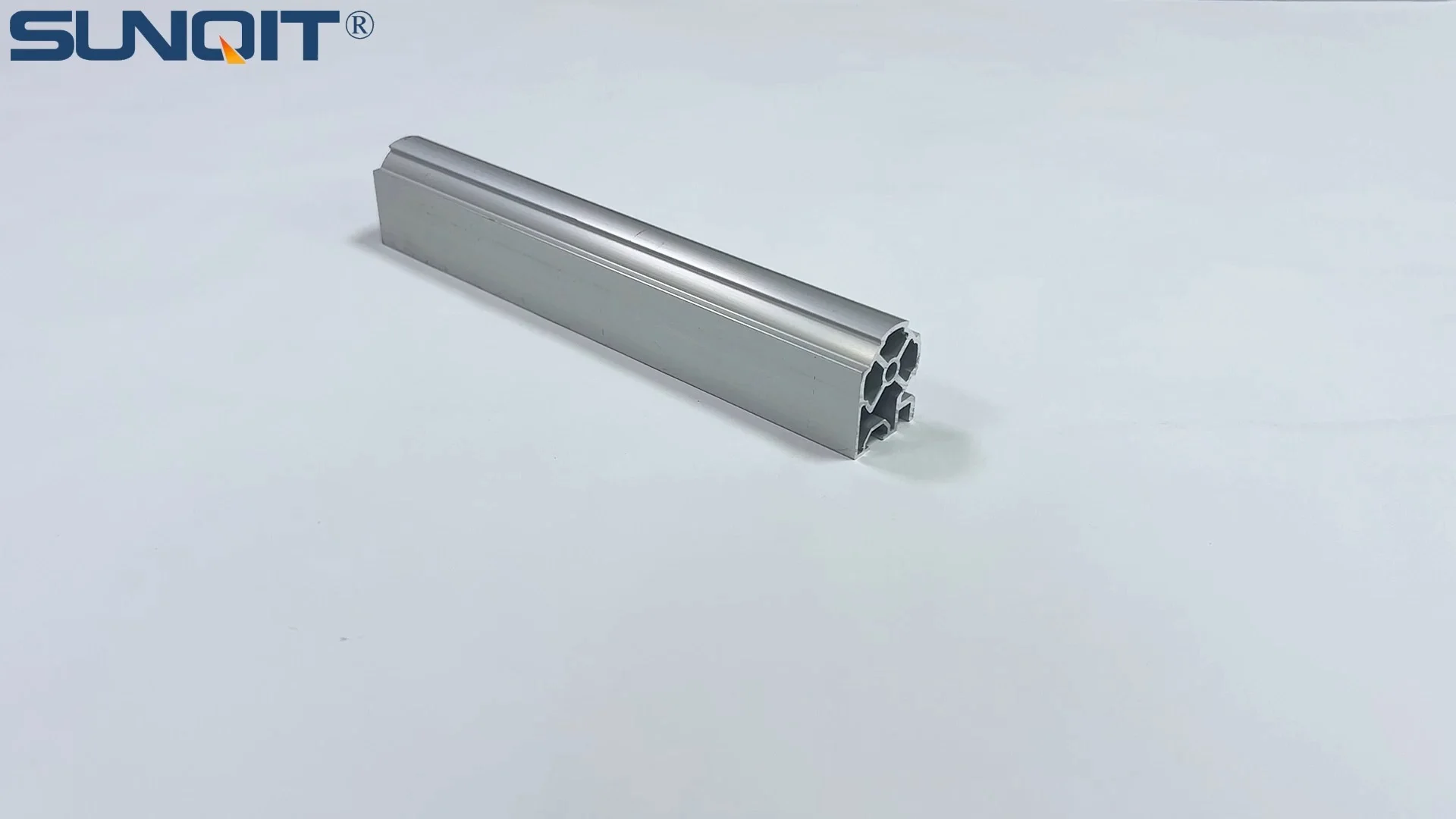
Aluminum pipe with tray holder,the pipe one side connected by a joint, the other side with a slot which can hold a tray or a aluminum pannel.
In today's fast-paced manufacturing facilities, every second counts. When a production line grinds to a halt because tools are out of reach or materials can't flow smoothly, the impact ripples through deadlines, team morale, and bottom lines. For years, businesses have relied on rigid, one-size-fits-all solutions that keep up with changing demands—until now. The 2025 launch of the upgraded aluminum pipe with tray holder is set to redefine flexibility, efficiency, and adaptability in lean systems worldwide. More than just a tool, this innovation is a testament to how thoughtful design can transform workspaces from static environments into dynamic ecosystems that grow with your team.
The Evolution of Lean Systems: Why Aluminum Lean Pipe Leads the Way
Lean manufacturing isn't just a buzzword—it's a philosophy centered on eliminating waste, streamlining processes, and empowering teams to work smarter. At the heart of this philosophy lies the need for tools that can evolve with shifting production needs. Traditional steel pipes, once the backbone of factory setups, often fall short: they're heavy, prone to rust, and require specialized tools to modify. Enter aluminum lean pipe—a lightweight, durable alternative that has quietly revolutionized workbenches, material racks, and conveyor systems over the past decade. But the 2025 aluminum pipe with tray holder takes this innovation a step further, addressing the most common pain points manufacturers face today.
Consider a mid-sized electronics assembly plant I visited last year. Their production line relied on steel pipe workbenches that had been bolted into place for years. When they needed to reconfigure the line to accommodate a new product, the process took three days of downtime, required a team of contractors, and left the budget strained. "We couldn't afford to keep up with market demands," the plant manager told me. "By the time we finished rearranging, the product specs had changed again." This scenario isn't unique. It's why the shift to modular aluminum systems has accelerated—and why the 2025 upgrades are so critical.
2025 Breakthroughs: What Makes This Aluminum Pipe with Tray Holder Different?
The 2025 aluminum pipe with tray holder isn't just an incremental upgrade; it's a complete reimagining of what a modular system can be. After interviewing engineers, production supervisors, and suppliers, three key features stand out as game-changers: enhanced ergonomics, smarter connectivity, and unmatched durability. Let's dive into each.
1. Ergonomic Design: Putting People at the Center
For too long, workspaces have been designed around equipment, not the humans operating it. The 2025 aluminum pipe with tray holder flips this script with a tray holder that adjusts seamlessly to individual worker heights and preferences. Whether a team member is 5'2" or 6'4", the tray can be raised, lowered, or tilted with a simple lever—no tools required. This might sound like a small detail, but in high-volume production environments, where repetitive motions often lead to fatigue or injury, it's transformative.
"We tracked worker fatigue levels before and after installing the new system," says a manufacturing lead at a automotive parts plant. "The number of reported wrist and back strains dropped by 40% in the first month alone. Our team isn't just more comfortable—they're more focused. And when focus goes up, errors go down." The tray itself is also redesigned with anti-slip padding and customizable dividers, so tools and small parts stay in place during movement, reducing the risk of loss or damage.
2. Smart Connectivity: Aluminum Profile Accessories That Talk to Each Other
One of the biggest frustrations with traditional modular systems is the "piecemeal" effect: accessories from different suppliers rarely work together, forcing teams to cobble together solutions with zip ties or makeshift brackets. The 2025 system solves this with a universal connectivity standard across all aluminum profile accessories. From roller tracks to caster wheels, every component clicks into place with a secure, tool-free connection that's both strong and flexible.
Take the new internal rotatary aluminum joint, for example. Unlike older fixed joints that limited pipe angles to 90° or 45°, this joint rotates 360°, allowing the tray holder to swing out of the way when not in use or lock into position for steady work. Pair it with the aluminum guide rail A, and you've got a material feeding system that can be reconfigured in minutes, not hours. "We used to spend half a day switching between product runs," a line supervisor notes. "Now, two people can reposition the entire workbench setup in under 20 minutes. It's like having a production line that can read our minds."
3. Durability Redefined: Built for the Long Haul
Aluminum is already known for its strength-to-weight ratio, but the 2025 pipe takes durability further with a new anodized coating that resists scratches, corrosion, and chemical spills—common hazards in manufacturing settings. Tests show the coating withstands over 1,000 hours of salt spray exposure without signs of wear, outperforming standard aluminum by 30%. For facilities in humid climates or those handling corrosive materials, this is a game-changer.
The tray holder itself is reinforced with a aluminum honeycomb panel, reducing weight by 15% while increasing load capacity to 50 lbs—enough to hold heavy tools, bulk materials, or even small equipment. "We had a situation where a 40-pound toolbox was accidentally dropped on the tray," recalls a warehouse manager. "In the past, that would have bent the steel tray or cracked the plastic. This one? It didn't even scratch. We just picked it up and kept working."

From Pipe to Workspace: Real-World Applications That Drive Results
A great product is only as good as its ability to solve real problems. The 2025 aluminum pipe with tray holder shines in two key areas: workbenches and material racks. Let's explore how these applications are transforming day-to-day operations.
Workbenches: Where Precision Meets Flexibility
The workbench is the command center of any production line, and the 2025 system turns it into a hub of efficiency. Take the Workbench E (single deck, without caster) as a base: add the aluminum pipe with tray holder, and suddenly, tools that were once scattered across the bench are within arm's reach, while materials flow smoothly via roller tracks mounted to the pipe frame. The result? A 25% reduction in time spent searching for tools, according to a recent case study by a leading manufacturing consulting firm.
For ESD (Electrostatic Discharge) sensitive environments—common in electronics manufacturing—the ESD workstation variant of the system is a lifesaver. The aluminum pipe's conductive properties, paired with ESD-safe tray liners and black ESD wheels on roller tracks, prevent static buildup that could damage delicate components. "We used to have a 2% defect rate due to static," says an electronics plant manager. "With the new ESD workstation, that number is down to 0.3%. It's not just about saving money on replacements—it's about building trust with our clients."
Material Racks: Streamlining the Flow of Goods
Material racks are the unsung heroes of inventory management, but traditional designs often lead to bottlenecks: items get stuck, shelves are hard to reach, and restocking takes longer than it should. The 2025 aluminum pipe with tray holder transforms racks like Material Rack B (3 row and 3 floor) into dynamic storage systems. By mounting the tray holder at different heights, teams can separate fast-moving items (at eye level) from slower-moving ones (on lower or upper shelves), reducing the time spent bending or stretching.
The addition of swivel roller balls (1 inch and 0.5 inch sizes) on the tray surface is another stroke of genius. These small, smooth-rolling balls allow materials to glide from the tray to the workbench with minimal effort, cutting down on manual lifting. "Our warehouse team used to complain about back pain from carrying heavy bins," a logistics coordinator shares. "Now, they just push the bin onto the roller balls, and it slides right into place. It's like having a mini conveyor belt built into the rack."

A Closer Look: Key Features vs. Previous Generations
| Feature | 2025 Aluminum Pipe with Tray Holder | Previous Aluminum Lean Pipe Models |
|---|---|---|
| Tray Adjustability | 360° rotation, height-adjustable (30-48 inches), tilt function | Fixed height, limited to 90°/45° angles |
| Accessory Compatibility | Universal connectivity with all aluminum profile accessories | Proprietary connections; limited cross-brand compatibility |
| Durability | Anodized coating (1,000+ hours salt spray resistance), aluminum honeycomb tray (50 lbs capacity) | Basic anodization (600 hours salt spray resistance), plastic or thin aluminum trays (30 lbs capacity) |
| ESD Safety | Built-in ESD protection (optional), compatible with ESD workbench components | Requires separate ESD accessories; no integrated protection |
| Setup Time | Tool-free assembly; reconfiguration in minutes | Requires wrenches/screwdrivers; reconfiguration in hours |
Aluminum Pipe Accessories: The Building Blocks of Customization
A modular system is only as versatile as its accessories, and the 2025 lineup leaves nothing to chance. From joints that rotate to roller tracks that glide, these components turn the aluminum pipe with tray holder into a blank canvas for innovation. Here are some standout accessories that are making waves:
- Swivel Roller Balls (1 inch and 0.5 inch): These small but mighty components turn any flat surface into a mini conveyor. The 1-inch stainless steel swivel roller balls are ideal for heavy bins, while the 0.5-inch plastic versions work perfectly for lightweight parts. Both feature a smooth, silent rotation that keeps noise levels low in busy workspaces.
- Plastic Roller Track Guide Rails (Yellow/Grey): Color-coded for easy zone management (e.g., yellow for incoming materials, grey for outgoing), these guide rails snap onto aluminum profiles without tools, ensuring materials flow in straight lines and don't veer off track.
- Internal Rotary Aluminum Joint: The star of the connectivity show, this joint lets pipes pivot and lock in any direction, making it easy to create L-shaped, U-shaped, or even circular workbenches. It's rated for 10,000+ rotations without wear, so it's built to last through years of reconfigurations.
- Caster Wheels with Brake: For mobile workbenches, these casters combine smooth rolling with a secure brake that locks both the wheel and swivel function, preventing accidental movement during precision work. The ESD-safe black wheels are a must for electronics manufacturing.
- Aluminum Profile End Caps: A small detail with big impact, these caps cover sharp edges on aluminum profiles, reducing the risk of cuts and giving workspaces a polished, professional look. They're available in sizes to fit all standard profiles, from 2020 to 4080.
The Supplier Perspective: Meeting the Demand for Innovation
Behind every great product is a supplier committed to quality and customer support. As demand for the 2025 aluminum pipe with tray holder surges, lean pipe suppliers are stepping up to ensure businesses can access these tools quickly and with confidence. "We've doubled our production capacity for aluminum lean pipe and accessories," says a representative from a leading global supplier. "But it's not just about quantity—we're investing in training our sales teams to help customers design systems that truly fit their needs, not just sell them parts."
Many suppliers now offer free design consultations, using 3D modeling software to show clients how the system will look and function in their space before a single pipe is ordered. This collaborative approach has reduced return rates by 60% and increased customer satisfaction. "We used to guess at what we needed," a small manufacturer admits. "Now, the supplier walks us through every option, from roller track connectors to caster accessories, and helps us build a system that grows with us. It's like having a design partner, not just a vendor."
Looking Ahead: The Future of Lean Systems
The 2025 aluminum pipe with tray holder is more than a product—it's a glimpse into the future of manufacturing: a future where workspaces are as adaptable as the teams that use them, where waste is minimized, and where every tool is designed to support, not hinder, human potential. As technology advances, we can expect even more innovations—think IoT-connected sensors that alert teams when materials are low, or AI-driven design tools that suggest optimal workbench layouts based on production data. But for now, the 2025 system stands as proof that sometimes, the most powerful innovations are the ones that make the daily grind a little easier, a little smarter, and a lot more human.
In the end, it's not just about pipes and trays. It's about creating environments where teams feel valued, processes flow seamlessly, and businesses can thrive in an ever-changing market. And that, more than any feature list, is the true measure of innovation.