- Company Articles
- Products and Technology
- Product knowledge
- Aluminum Pipe with Tray Holder Load Capacity: What You Need to Know

Aluminum Pipe with Tray Holder Load Capacity: What You Need to Know
Related Product
Aluminum Pipe with Tray Holder
Aluminum pipe with tray holder,the pipe one side connected by a joint, the other side with a slot which can hold a tray or a aluminum pannel.
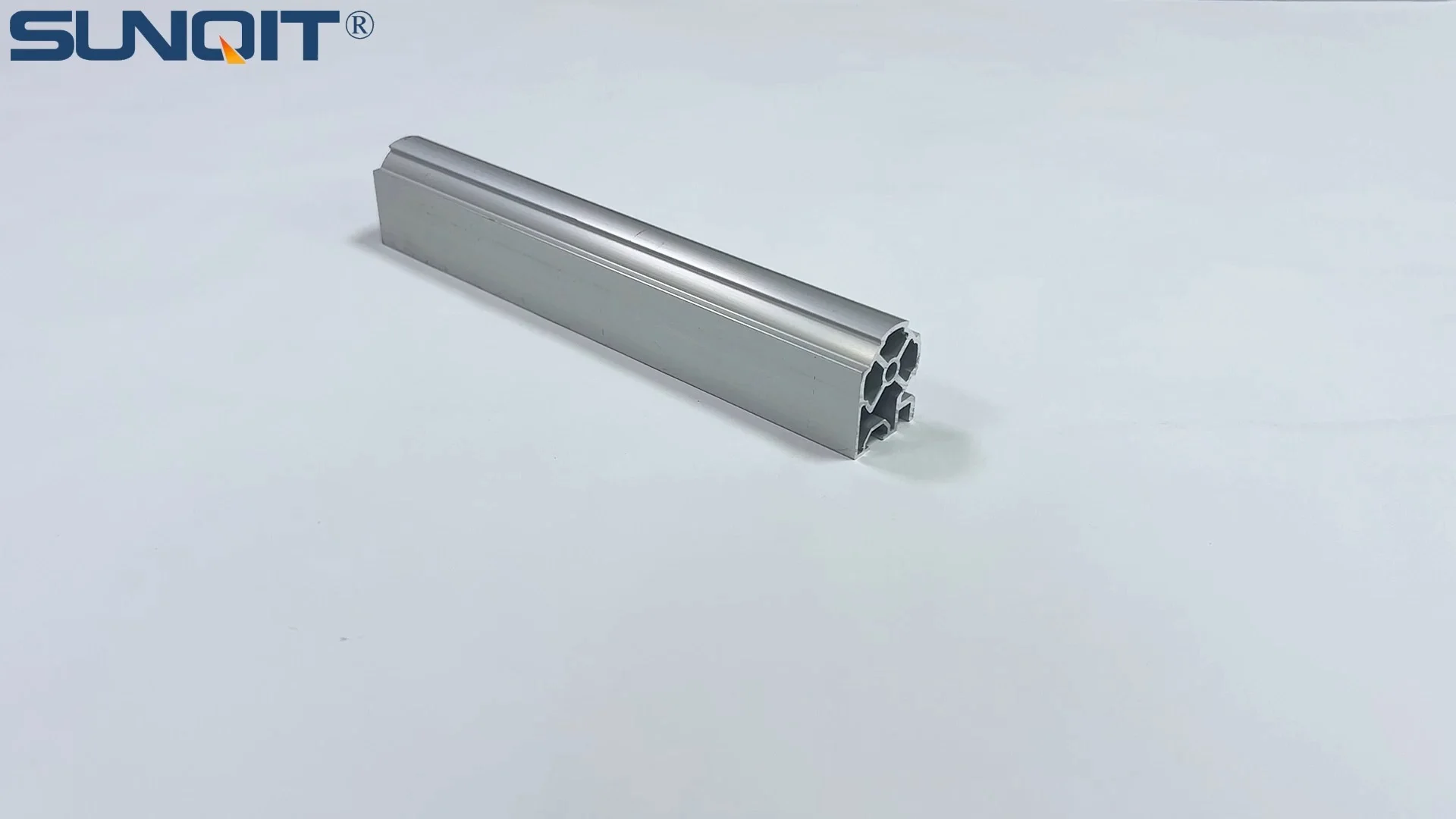
Walk into any modern manufacturing facility, warehouse, or workshop, and you'll likely spot a common challenge: materials scattered across workbenches, tools misaligned, and inventory stacked haphazardly. These chaos points don't just slow down workflows—they create bottlenecks that eat into productivity and profits. Over the years, businesses have turned to various solutions to tackle this, but one system has risen above the rest for its flexibility, durability, and cost-effectiveness: the aluminum pipe with tray holder . At its core, this system uses lightweight yet sturdy aluminum lean pipe and specially designed aluminum pipe accessories to build custom structures—think shelving, racks, and workstations—with integrated trays for organizing everything from small components to bulky tools.
But here's the catch: while these systems are celebrated for their adaptability, their true value hinges on one critical factor: load capacity . Imagine investing in a sleek aluminum tray holder system, only to have it sag under the weight of your materials or, worse, collapse. Not only does this risk damage to expensive inventory, but it also endangers the safety of your team. That's why understanding load capacity isn't just a "nice-to-know"—it's the foundation of a system that works for you, not against you. In this guide, we'll break down everything you need to know about aluminum pipe with tray holder load capacity: what influences it, how to calculate it, real-world applications, and common pitfalls to avoid. Whether you're a facility manager upgrading your workspace or a small business owner setting up your first workshop, this is the knowledge that will ensure your aluminum tray holder system is both efficient and reliable.
What Is an Aluminum Pipe with Tray Holder, Anyway?
Before diving into load capacity, let's make sure we're all on the same page about what an aluminum pipe with tray holder actually is. At its simplest, it's a modular building system designed to create organized storage and workspaces. The "bones" of the system are aluminum lean pipe —hollow aluminum tubes that are lightweight, corrosion-resistant, and surprisingly strong. These pipes are connected using aluminum pipe accessories like joints, clamps, and brackets, which allow you to build structures in almost any configuration: tall shelving units, compact workbench side racks, or rolling carts for material transport.
The "tray holder" part comes in when you add flat or sloped trays to these structures. Trays can be made of metal, plastic, or wood and are attached to the aluminum pipe frame to hold and separate materials. Think of it as a grown-up version of the modular storage systems you might use at home, but built to withstand the rigors of industrial environments. What sets this system apart from traditional steel shelving or fixed racks? For starters, aluminum lean pipe is significantly lighter than steel, making installation and reconfiguration a breeze—no need for heavy machinery or specialized tools. It's also resistant to rust and corrosion, which is a game-changer in humid or messy workspaces (we're looking at you, automotive and food processing plants). Plus, the modular design means you can start small and expand as your needs grow—add a shelf here, extend a tray there, or even repurpose the entire structure if your workflow changes.
But don't let its lightweight nature fool you. When properly designed and assembled, aluminum pipe with tray holder systems can support impressive weights. The key is understanding how to leverage the system's components—pipes, joints, trays—to maximize load capacity without overengineering (and overspending). Let's start by breaking down the factors that determine just how much weight your system can handle.
Key Factors That Influence Load Capacity
Load capacity isn't a one-size-fits-all number stamped on a product label. It's a dynamic metric shaped by a handful of critical factors, each interacting with the others to determine how much weight your aluminum tray holder system can safely support. Let's unpack each one so you can make informed decisions when designing your setup.
1. Aluminum Lean Pipe: Thickness and Diameter
The star of the show— aluminum lean pipe —is the backbone of your system, and its physical properties play the biggest role in load capacity. Two specs matter most here: wall thickness and diameter . Thicker walls mean more material to resist bending under load. For example, a pipe with a 1.5mm wall thickness will generally support more weight than a 1.2mm pipe of the same diameter. Similarly, larger diameter pipes (think 30mm vs. 20mm) distribute weight over a wider area, reducing stress on individual sections. Most manufacturers offer aluminum lean pipe in standard diameters (20mm, 28mm, 30mm) and thicknesses (1.0mm to 2.0mm), each tailored to different load needs. A good rule of thumb: if you're storing heavy items (like metal parts or power tools), opt for thicker, larger-diameter pipes. For lighter loads (small electronics components, paperwork), a thinner, smaller-diameter pipe will do the job and save you money.
2. Aluminum Pipe Accessories: Joints and Connectors
You could have the strongest pipes in the world, but if your aluminum pipe accessories —the joints, clamps, and brackets that hold everything together—are flimsy, your system will fail. Joints are the weak points in any modular system, as they're where stress concentrates when weight is applied. High-quality accessories are typically made from die-cast aluminum or reinforced plastic, with precision-engineered designs that lock pipes into place securely. Look for joints with features like internal ribs for added strength or rubber gaskets to prevent slipping. Avoid cheap, generic accessories—they might save you a few dollars upfront, but they'll compromise load capacity and safety. For example, a poorly made 90-degree joint might twist under heavy load, causing the entire structure to lean or collapse. When in doubt, ask your supplier for load ratings specific to their accessories—reputable manufacturers will have tested data on how much weight each joint can handle.
3. Tray Material and Design
The trays themselves are more than just "holders"—they're active participants in load distribution. The material of the tray matters: steel trays are stronger but heavier, while plastic or aluminum trays are lighter but may flex under heavy loads. For most industrial applications, aluminum trays strike the best balance—they're lightweight, corrosion-resistant, and rigid enough to support moderate to heavy weights. The design of the tray also plays a role. Look for trays with reinforced edges (to prevent bending) and a grid or ribbed bottom (to distribute weight evenly across the surface). A shallow tray with no edges might save space, but it won't contain materials if the system sways, and it offers less structural support than a deeper, reinforced tray. Additionally, how the tray attaches to the aluminum frame matters: trays bolted directly to the pipes (using specialized brackets) will support more weight than those simply resting on top of the frame.
4. Installation Quality: The "Human Factor"
Even the best materials can't overcome shoddy installation. How you assemble your aluminum pipe with tray holder system directly impacts its load capacity. For starters, joints must be tightened properly—not too loose (which causes wobbling) and not too tight (which can strip threads or crack the joint). Use a torque wrench if possible to ensure consistency across all connections. Spacing between vertical supports is another critical detail: the farther apart your vertical pipes, the more the horizontal pipes (and trays) will sag under load. As a general guideline, keep vertical supports no more than 60cm apart for heavy loads; for lighter loads, 80-100cm spacing is acceptable. Finally, ensure the entire structure is level. A system that's tilted to one side will put uneven stress on joints and pipes, reducing its overall load capacity and increasing the risk of failure.
5. Environmental Conditions
You might not think about it, but where you install your system matters too. Extreme temperatures, humidity, and even vibration can affect load capacity. Aluminum is resistant to corrosion, but in highly humid or chemical-exposed environments (like a coastal factory or a lab with harsh cleaners), it's still a good idea to opt for anodized or coated aluminum lean pipe to prevent weakening over time. Temperature swings can cause materials to expand or contract—while aluminum handles this better than steel, repeated cycles of hot and cold can loosen joints. Vibration, common in manufacturing settings with heavy machinery, can gradually loosen connections if joints aren't properly secured. If your workspace is prone to vibration, consider adding locking nuts or thread-locking adhesive to critical joints to maintain tightness over time.

How to Calculate Load Capacity: A Practical Guide
Now that you know what influences load capacity, let's talk about how to actually calculate it. Don't worry—you don't need an engineering degree for this. While manufacturers provide general load ratings for individual components (pipes, joints, trays), the total load capacity of your system depends on how these components work together. Here's a step-by-step approach to estimating it:
Step 1: Identify the Weakest Link
Load capacity is limited by the weakest component in your system. For example, if your aluminum lean pipe can support 50kg per linear meter, but your joints can only handle 30kg, the system's total load capacity will be 30kg. Start by listing the maximum load ratings of each component: pipe (per linear meter), joints (per connection), and tray (per square meter). You can find these specs in the product datasheets from your supplier. If you're using a pre-designed kit (like a workbench or a specific rack model), the manufacturer should provide an overall load rating for the assembled system.
Step 2: Consider the Structure's Design
The way you arrange components affects how weight is distributed. A simple horizontal shelf with vertical supports on both ends will have a different load capacity than a shelf with a center support. For horizontal spans (like the length of a tray holder), use the formula for beam deflection as a rough guide: the longer the span, the less weight it can support without sagging. Most manufacturers provide "span tables" that show maximum recommended span lengths for different pipe sizes and load weights. For example, a 30mm diameter aluminum pipe with a 1.5mm wall thickness might support 40kg over a 50cm span but only 25kg over a 100cm span.
Step 3: Use a Load Capacity Table for Quick Reference
To make this easier, we've compiled a table of common aluminum lean pipe specifications and their approximate maximum load capacities (per linear meter) when used with standard aluminum pipe accessories and a 50cm horizontal span. Note that these are general guidelines—always check with your supplier for exact ratings for your specific components.
| Aluminum Lean Pipe Diameter (mm) | Wall Thickness (mm) | Maximum Load Capacity (kg per linear meter) | Suitable For |
|---|---|---|---|
| 20mm | 1.0mm | 15-20kg | Light components, small tools, paperwork |
| 20mm | 1.2mm | 25-30kg | Medium components, lightweight parts bins |
| 30mm | 1.2mm | 35-45kg | Heavy tools, bulkier components, small machinery parts |
| 30mm | 1.5mm | 50-60kg | Industrial parts, metal components, stacked inventory |
| 40mm | 1.5mm | 70-80kg | Large equipment parts, heavy bins, palletized items |
Note: These values assume the use of high-quality aluminum pipe accessories (e.g., die-cast joints, reinforced brackets) and proper installation. Load capacity decreases as span length increases; for spans over 80cm, reduce the listed capacity by 20-30%.
Step 4: Factor in a Safety Margin
Never design your system to operate at 100% of its maximum load capacity. Always include a safety margin —typically 20-30%—to account for unexpected stresses, like someone leaning on the system or materials being dropped onto the trays. For example, if your calculations show a maximum load of 50kg, limit actual use to 35-40kg. This buffer ensures your system remains safe and durable over time.

Real-World Applications: From Workbenches to Material Racks
Theory is helpful, but seeing how load capacity works in real life brings it all together. Let's look at two common applications of aluminum pipe with tray holder systems: the humble workbench and the material rack b (3 row and 3 floor) —a popular multi-tiered storage solution. By examining these, you'll see how the factors we've discussed (pipe specs, accessories, installation) come into play to determine real-world load capacity.
Case Study 1: The Aluminum Lean Pipe Workbench
Workbenches are the heart of any workshop, and aluminum lean pipe workbenches are prized for their flexibility—you can add shelves, tool hooks, and, of course, tray holders for organizing parts. Let's say you're designing a workbench for an electronics assembly line, where the main tray will hold circuit boards, small tools, and solder reels. Here's how load capacity factors in:
- Pipe Selection: You choose 30mm diameter aluminum lean pipe with a 1.2mm wall thickness (rated for 35-45kg per linear meter over a 50cm span). The workbench top is a 120cm x 60cm aluminum honeycomb panel, supported by four vertical legs (30mm pipe, 1.5mm thickness) spaced 60cm apart along the length.
- Tray Design: The tray is a 60cm x 40cm aluminum tray with 5cm high reinforced edges, bolted directly to the side of the workbench frame using L-brackets (aluminum pipe accessories rated for 25kg per bracket).
- Load Calculation: The horizontal span of the tray support is 60cm (between two vertical legs). Using the span table, the 30mm pipe with 1.2mm thickness can support ~30kg over 60cm (reduced from 35kg for the 50cm span). The tray itself is rated for 40kg, and the brackets (two per tray) can handle 25kg each (total 50kg). The weakest link here is the pipe span at 30kg, so the tray's safe load capacity is 30kg with a 20% safety margin, bringing it to 24kg.
- Real-World Use: The assembly line workers place circuit boards (average weight 0.5kg each) and tools (total ~5kg) on the tray. Even when fully loaded with 30 boards (15kg) plus tools, the total weight is 20kg—well under the 24kg safe limit. The system remains stable, with no sagging, and the tray stays securely attached.
Case Study 2: Material Rack B (3 Row and 3 Floor)
Material Rack B is a popular off-the-shelf design: a three-row, three-floor rack system built with aluminum lean pipe and accessories, ideal for storing boxes, bins, or bulk materials. Let's break down its load capacity:
- System Specs: The rack stands 180cm tall, with three horizontal shelves (each 120cm long, 40cm deep) spaced 60cm apart vertically. The frame uses 30mm aluminum lean pipe (1.5mm thickness), with vertical supports every 60cm. Each shelf is a wire mesh tray (rated for 60kg) attached to the frame with heavy-duty corner brackets (rated for 30kg per bracket, four brackets per shelf).
- Load Calculation per Shelf: The horizontal span between vertical supports is 60cm. The 30mm, 1.5mm pipe can support ~50kg over 60cm. The wire mesh tray is rated for 60kg, and the brackets (four total) can handle 30kg each (120kg total). The weakest link is the pipe at 50kg per shelf. With a 30% safety margin, each shelf's safe load is 35kg.
- Total System Capacity: With three shelves, the total system capacity is 3 x 35kg = 105kg. However, it's critical to distribute weight evenly across each shelf—overloading one shelf (e.g., piling 50kg on the top shelf) could stress the vertical supports and cause the entire rack to tip.
- Real-World Use: The rack is used to store plastic bins of automotive components. Each bin weighs ~8kg, so each shelf can hold 4 bins (32kg), well under the 35kg limit. The even distribution keeps the rack stable, and the aluminum lean pipe frame resists corrosion from the workshop's humidity.
These case studies highlight a common theme: load capacity isn't just about the numbers—it's about matching the system to your actual needs. By understanding how components work together, you can design a setup that's both functional and safe.
Common Misconceptions About Aluminum Pipe with Tray Holder Load Capacity
Even with all this information, there are still myths floating around about aluminum pipe with tray holder systems that can lead to poor decisions. Let's debunk the most common ones:
Myth 1: "Aluminum Is Too Weak for Heavy Loads"
This is perhaps the biggest misconception. While it's true that aluminum is less dense than steel, modern aluminum lean pipe is engineered for strength. Thanks to alloying elements like magnesium and silicon, aluminum lean pipe offers an impressive strength-to-weight ratio—meaning it can support significant weight without the bulk of steel. For example, a 30mm aluminum pipe with a 1.5mm wall thickness can support nearly as much weight as a 25mm steel pipe, but at half the weight. The key is choosing the right pipe thickness and diameter for your load. In most industrial settings (electronics, light manufacturing, warehousing), aluminum is more than up to the task.
Myth 2: "All Aluminum Pipe Accessories Are the Same"
Not all joints, brackets, or clamps are created equal. Generic, unbranded aluminum pipe accessories might look similar to name-brand ones, but they often skimp on material quality and design. For example, a cheap joint might use thin, brittle aluminum that cracks under stress, while a high-quality joint uses die-cast aluminum with internal ribs for reinforcement. Always opt for accessories from the same manufacturer as your aluminum lean pipe—they're engineered to work together, ensuring optimal load capacity and safety.
Myth 3: "Load Capacity Is Static—Once Set, It Never Changes"
Load capacity isn't a permanent feature of your system. Over time, joints can loosen, pipes can bend slightly from repeated loading/unloading, and environmental factors (like corrosion) can weaken components. That's why regular inspections are critical. Check joints for tightness, pipes for signs of bending or cracks, and trays for warping. If you notice any issues, repair or replace components immediately—don't wait for a failure to happen.
Tips for Maximizing Load Capacity (Without Overspending)
Now that you're armed with knowledge, here are practical tips to get the most load capacity out of your aluminum pipe with tray holder system without blowing your budget:
- Opt for Thicker Pipe in High-Stress Areas: You don't need to use 1.5mm wall thickness everywhere—reserve thicker pipes for horizontal spans and vertical supports, where load is concentrated. Use thinner pipes for non-load-bearing components like side rails or tool hooks.
- Add Center Supports for Long Spans: If you need a tray holder longer than 80cm, add a center vertical support to reduce the span and increase load capacity. This is cheaper than upgrading to a thicker pipe.
- Invest in Quality Joints: Spend a little more on high-quality aluminum pipe accessories—they'll extend the life of your system and prevent costly failures.
- Train Your Team on Load Limits: Even the best system will fail if misused. Post load capacity labels on your tray holders and train employees to respect them. Make it clear that overloading isn't just dangerous—it's costly.
- Regular Maintenance: Tighten joints quarterly, inspect pipes for dents or corrosion, and replace worn trays or brackets. A little maintenance goes a long way in preserving load capacity.
Final Thoughts: Building a System That Works for You
Aluminum pipe with tray holder systems are more than just storage solutions—they're tools that can transform chaos into order, boost productivity, and keep your team safe. But their success depends on one thing: understanding load capacity. By considering factors like pipe thickness, joint quality, tray design, and installation, you can create a system that's not only flexible and durable but also tailored to your specific needs. Remember, load capacity isn't about overengineering—it's about balance. It's about choosing the right components, designing for your actual load, and maintaining the system over time. Whether you're setting up a single workbench or outfitting an entire warehouse, take the time to calculate load capacity, test your design, and invest in quality materials. Your inventory, your team, and your bottom line will thank you.
So, what's next? Start by assessing your needs: What materials will you store? How much do they weigh? What's the available space? Then, work with a reputable supplier to select the right aluminum lean pipe, accessories, and trays. And don't forget to factor in that safety margin—because peace of mind is the ultimate load capacity bonus.