- Company Articles
- Products and Technology
- Product knowledge
- Aluminum Pipe with Tray Holder vs Plastic Racks: Durability Comparison

Aluminum Pipe with Tray Holder vs Plastic Racks: Durability Comparison
Related Product
Aluminum Pipe with Tray Holder
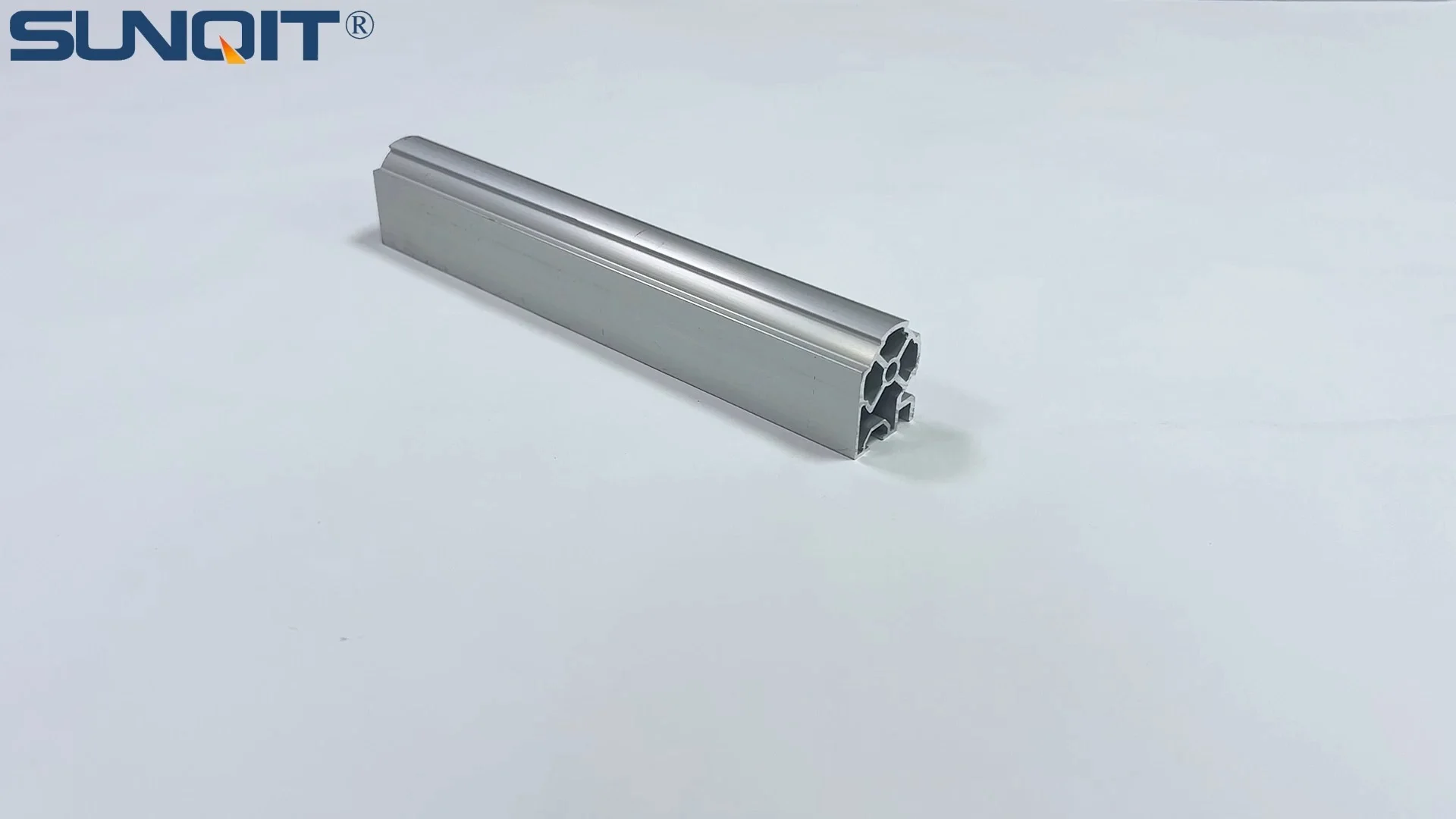
Aluminum pipe with tray holder,the pipe one side connected by a joint, the other side with a slot which can hold a tray or a aluminum pannel.
Walk into any busy warehouse, manufacturing plant, or distribution center, and you'll quickly realize that the unsung heroes of daily operations aren't just the machines or the workers—they're the tools that keep everything organized. From the racks holding raw materials to the workstations where assembly happens, the right storage and workflow equipment can make or break efficiency. But here's the thing: not all tools are built to last. When it comes to choosing between materials for these essential systems, durability isn't just a "nice-to-have"—it's the backbone of long-term productivity, cost savings, and peace of mind. Today, we're diving deep into two popular options: aluminum pipe with tray holders and plastic racks. We'll break down their construction, how they stand up to real-world wear and tear, and why one might outlast the other in the gritty, high-demand environments where they're put to the test.
What is an Aluminum Pipe with Tray Holder?
Before we compare, let's get clear on what we're actually talking about. An aluminum pipe with tray holder is more than just a "pipe with a tray"—it's a modular, customizable component of lean manufacturing and storage systems. At its core, it's built around aluminum lean pipe —a lightweight yet sturdy aluminum tube, often anodized or coated to resist corrosion. These pipes are connected using aluminum profile accessories like joints, brackets, and clamps, which lock together to form rigid, stable structures. The "tray holder" is exactly what it sounds like: a flat or slotted platform (usually made of aluminum or steel mesh) attached to the pipe framework to hold tools, parts, or finished products.
What makes this system unique is its flexibility. Unlike fixed metal shelving, aluminum pipe with tray holders can be reconfigured in minutes. Need to adjust the height of the tray? Swap out a shorter pipe for a longer one. Want to add a second tier? Attach more accessories. This modularity is a hallmark of lean systems, designed to adapt to changing workflow needs. But don't let the "lean" label fool you—these systems are built to take a beating. The aluminum lean pipe itself is typically 1.5mm to 2.0mm thick, with a tensile strength that rivals many steel pipes, while the aluminum profile accessories (think heavy-duty corner joints or reinforced brackets) ensure the entire structure stays stable even under heavy loads.
In practice, you'll find these systems in automotive plants, electronics assembly lines, and warehouses. They're used as workbenches, material racks, or even mobile trolleys (when fitted with casters). The tray holder, in particular, is a workhorse—whether it's holding small screws and washers during assembly or larger components like circuit boards, it keeps items within arm's reach, reducing downtime and improving ergonomics.
What Are Plastic Racks?
Now, let's turn to plastic racks. These are storage systems made primarily from plastic materials, such as polypropylene (PP), polyethylene (PE), or polyvinyl chloride (PVC). Unlike aluminum systems, which are often assembled from separate components, plastic racks are usually either injection-molded as single pieces or built from interlocking plastic panels, beams, and shelves. They come in all shapes and sizes: from small desktop organizers to large pallet racks, and even flow racks that use gravity to move items along a slope.
A common feature in many plastic racks is the plastic roller track guide rail —a grooved or ridged plastic strip that lines shelves or ramps, allowing bins, boxes, or totes to slide smoothly. These rails are designed to reduce friction, making it easy for workers to pull or push items without heavy lifting. Plastic racks are popular for their lightweight nature (they're easy to move without machinery), their resistance to rust (a big plus in humid environments), and their lower upfront cost compared to metal systems. They're also available in bright colors, which can help with visual organization (e.g., red for defective parts, green for finished goods).
But plastic has its limits. Most plastic racks are designed for light to medium-duty use—think storing small parts, office supplies, or lightweight consumer goods. They're common in retail backrooms, food processing facilities (where hygiene is key, as plastic is easy to clean), and labs (where chemical resistance is a priority). However, in high-impact environments like manufacturing plants, their durability can be a question mark. The plastic roller track guide rail, for example, is often the first part to show wear: repeated sliding of heavy boxes can cause the plastic to warp, crack, or develop rough spots, making items stick instead of glide.

Durability Comparison: The Key Factors
Now, let's get to the heart of the matter: how do these two systems stack up when it comes to durability? We'll break this down into five critical areas that matter most in real-world use: material strength, load capacity, resistance to wear and tear, environmental resilience, and lifespan.
1. Material Strength: Aluminum vs. Plastic
At the most basic level, durability starts with what something is made of. Aluminum lean pipe is an alloy—pure aluminum is soft, but when mixed with elements like magnesium or silicon, it becomes much stronger. This alloy has a yield strength (the point at which it starts to bend permanently) of around 110-150 MPa (megapascals), depending on the thickness. For context, that's roughly 70% the strength of low-carbon steel, but with only a third of the weight. The aluminum profile accessories that connect the pipes are equally robust: many are die-cast aluminum, which means they're formed under high pressure, creating dense, defect-free parts that resist cracking.
Plastic, on the other hand, has a much lower yield strength. Polypropylene, one of the most common plastics used in racks, has a yield strength of only 20-30 MPa—less than a quarter of aluminum's. This means plastic bends or deforms under far less stress. While some plastics (like reinforced nylon) are stronger, they're also more expensive and less common in basic racks. Worse, plastic is prone to "creep"—a slow, permanent deformation under constant load. Leave a heavy box on a plastic shelf for months, and you might come back to find the shelf sagging, even if it never exceeded the "rated" weight capacity.
2. Load Capacity: How Much Weight Can They Handle?
Let's put numbers to this. A typical aluminum pipe with tray holder system, built with 2.0mm thick aluminum lean pipe and heavy-duty aluminum profile accessories, can support anywhere from 50kg to 200kg per linear meter, depending on the design. For example, a simple two-tier material rack with 40mm diameter aluminum pipes and reinforced tray holders might hold 150kg per tier—enough for stacks of metal parts, power tools, or even small appliances.
Plastic racks, by contrast, are usually rated for 10kg to 50kg per shelf. A lightweight plastic bin rack with plastic roller track guide rail might top out at 20kg per shelf, while a sturdier molded plastic pallet rack could hit 50kg—but that's still a fraction of aluminum's capacity. Go beyond that, and you risk cracking the plastic or snapping the joints. In one case study from a beverage warehouse, workers reported plastic racks sagging after just six months of holding 40kg cases of soda—even though the manufacturer claimed a 50kg limit. The culprit? The plastic shelves couldn't handle the repeated loading and unloading, compounded by the weight of the cases sitting for hours at a time.
3. Wear and Tear: Scratches, Impacts, and Daily Abuse
In a busy facility, nothing escapes daily abuse. Forklifts nudge racks, pallets scrape against shelves, and tools get dropped. How do aluminum and plastic hold up? Aluminum lean pipe is surprisingly scratch-resistant. Its anodized coating (a thin layer of aluminum oxide) acts like a shield—minor scrapes might mar the finish, but they won't penetrate to the core. Even deeper scratches (from a dropped wrench, say) rarely cause structural damage, since the aluminum itself is resistant to corrosion. The aluminum profile accessories, too, are tough: steel-reinforced joints or powder-coated brackets can take hits without bending or breaking.
Plastic racks, though, are far more vulnerable. A single hard impact—like a pallet jack slamming into a plastic upright—can crack or chip the plastic. Scratches are more than just cosmetic: they create weak points where moisture or chemicals can seep in, leading to further degradation. The plastic roller track guide rail is especially prone to wear. Every time a bin slides over it, tiny bits of plastic rub off. Over time, the rail becomes rough, making it harder to move items. In extreme cases, the rollers (if the rack has them) can even pop out of their plastic housings, rendering the rail useless.
4. Environmental Resistance: Moisture, Heat, and Chemicals
Warehouses and factories are rarely "ideal" environments. There's humidity near washing stations, heat near furnaces, and chemicals like oils or solvents on the floor. Aluminum thrives here. Its natural oxide layer makes it resistant to rust and corrosion, even in damp conditions. In food processing plants, where stainless steel is often required, aluminum lean pipe systems (when paired with stainless steel accessories) can handle daily washdowns with soap and water. High temperatures? Aluminum melts at 660°C, so a hot warehouse (even 40-50°C) won't phase it. And while strong acids might damage it, most industrial chemicals (like motor oil or cleaning solutions) have little effect.
Plastic, by contrast, is sensitive to the elements. Moisture can cause some plastics (like PVC) to swell or become brittle over time. Heat is even worse: polypropylene starts to soften at 100°C, so near ovens or industrial dryers, plastic racks can warp. In a electronics plant in Arizona, plastic racks near a soldering station warped so badly in summer heat that shelves tilted, causing small components to slide off. Cold is no better—plastic becomes rigid and prone to cracking in freezing temperatures. And chemicals? Oils and solvents can dissolve plastic over time. A maintenance team in an auto shop reported plastic racks disintegrating after repeated exposure to brake cleaner—something that wouldn't faze aluminum.
5. Lifespan and Maintenance: How Long Do They Really Last?
Durability isn't just about surviving the day—it's about surviving for years. Aluminum pipe with tray holders have a lifespan of 10-15 years, even in heavy use. Some manufacturers report systems lasting 20+ years with minimal maintenance. The secret? Their modular design means you can replace individual parts (a bent pipe, a worn joint) instead of the entire rack. Maintenance is simple: wipe down with a damp cloth to remove dust, and tighten loose accessories occasionally.
Plastic racks, by comparison, last 3-5 years on average. In high-abuse environments, they might need replacing in as little as 2 years. The problem is that plastic degrades over time, even with light use. UV rays from windows or overhead lights cause "photooxidation," making the plastic brittle. Temperature fluctuations (hot days, cold nights) lead to expansion and contraction, weakening the material. And once a plastic rack starts to degrade, there's no fixing it—you can't "tighten" a cracked joint or "resurface" a warped shelf. You just have to replace it.

Side-by-Side Durability Comparison
| Factor | Aluminum Pipe with Tray Holder | Plastic Racks |
|---|---|---|
| Material Strength (Yield Strength) | 110-150 MPa (aluminum lean pipe) | 20-30 MPa (polypropylene) |
| Max Load Capacity (Per Shelf/Tray) | 50-200 kg | 10-50 kg |
| Impact Resistance | High—resists dents/cracks from moderate impacts | Low—prone to cracking/chipping on hard impacts |
| Moisture/Corrosion Resistance | Excellent (anodized aluminum resists rust) | Poor—moisture can cause swelling or brittleness |
| Heat Resistance | Withstands up to 200°C+ without warping | Softens at 100°C; warps in high heat |
| Lifespan (Heavy Use) | 10-15 years | 3-5 years |
| Maintenance Needs | Minimal—occasional tightening of accessories | Frequent—replacement of worn parts (e.g., plastic roller track guide rail) |
Real-World Verdict: When Durability Matters Most
At the end of the day, the choice between aluminum pipe with tray holders and plastic racks comes down to one question: How important is durability to your operation? If you're storing lightweight, low-turnover items (like office supplies) in a climate-controlled room, plastic might work. But for heavy loads, high-impact environments, or long-term use, aluminum is the clear winner.
Consider the cost, too. Plastic racks are cheaper upfront—$50-$100 for a basic unit vs. $150-$300 for an aluminum system. But over 10 years, you'll replace the plastic rack 2-3 times, spending $100-$300. The aluminum system? It might need a few new accessories ($20-$50 total) but will still be going strong. Add in downtime from broken plastic racks (waiting for replacements, reorganizing items) and the cost gap widens even more.
In the words of Mark, a warehouse manager at a furniture manufacturer: "We switched from plastic to aluminum five years ago, and I haven't looked back. The aluminum racks still look new, even with forklifts bumping them and pallets scraping. The plastic ones? We were replacing them every two years, and they always seemed to break right when we were busiest."
Conclusion: Durability as an Investment
Durability isn't just about "how tough something is"—it's an investment in your business. An aluminum pipe with tray holder system, built with aluminum lean pipe and aluminum profile accessories, isn't just a storage solution; it's a long-term partner that adapts to your needs, handles abuse, and keeps your operation running smoothly. Plastic racks, while affordable, often end up costing more in the long run—whether through frequent replacements, downtime, or lost productivity.
So, the next time you're shopping for storage systems, ask yourself: Do I want to spend less now and replace it later, or invest in something that will grow with my business? For most facilities, the answer is clear. Aluminum isn't just durable—it's the smart choice.