- Company Articles
- Products and Technology
- Solution
- Aluminum Pipe with Tray Holder vs Traditional Metal Racks: Cost Savings Over Time

Aluminum Pipe with Tray Holder vs Traditional Metal Racks: Cost Savings Over Time
Related Product
Aluminum Pipe with Tray Holder
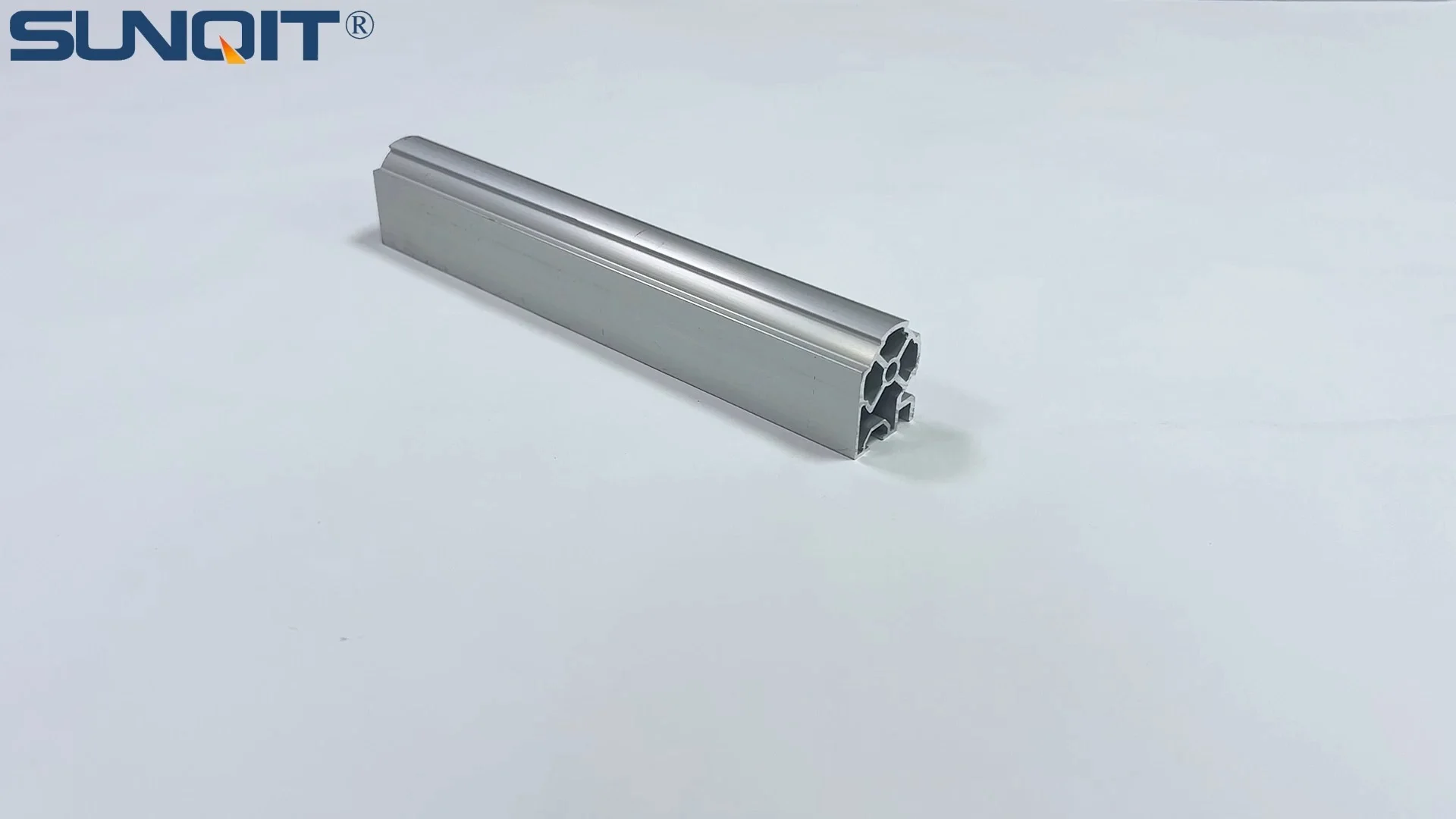
Aluminum pipe with tray holder,the pipe one side connected by a joint, the other side with a slot which can hold a tray or a aluminum pannel.
Walk into any warehouse, factory, or workshop, and you'll likely spot the same challenge: storage space that never seems to work as hard as it should. Shelves overflow with tools, parts get lost in cluttered corners, and every time your business grows or shifts focus, your storage setup feels like it's holding you back. For years, the default solution has been traditional metal racks—sturdy, familiar, and seemingly reliable. But in recent years, a new contender has emerged: aluminum lean pipe with tray holders. Lightweight, modular, and designed for flexibility, it's changing how businesses think about storage. But is it really worth the switch? Let's dive in, beyond the glossy brochures and sales pitches, to uncover the real cost story over time.
What Are We Actually Comparing?
First, let's get clear on the two systems we're pitting against each other. Traditional metal racks are the workhorses many of us grew up with—typically made of heavy steel, welded or bolted together into fixed structures. They're built to hold heavy loads, but their design is often "set it and forget it." Want to adjust a shelf height? Good luck—you'll likely need a wrench, maybe even a cutting tool, and the process will take hours. They're durable, no doubt, but they're also rigid, bulky, and prone to rust if not meticulously maintained.
On the other side is the aluminum lean pipe with tray holder system. Think of it as building blocks for adults: lightweight aluminum pipes, coupled with a range of aluminum pipe accessories (joints, connectors, trays, and wheels), that snap together to form custom racks, workbenches, or flow racks. No welding, no heavy machinery—just basic tools and a little creativity. The magic here is modularity: if you need a taller shelf next month, you can take it apart and rebuild it. If you move to a new space, you can disassemble it and reassemble it in a day. It's storage that adapts to you, not the other way around.
Myth #1: "Traditional Racks Are Cheaper Upfront"
Let's start with the elephant in the room: initial cost. At first glance, traditional metal racks often seem like the budget-friendly choice. A basic steel rack might run you $100–$200 per unit, while an aluminum lean pipe setup with similar capacity could cost $250–$350. On paper, that's a 50% price hike. But here's the catch: initial cost isn't the whole story. Let's break down what you're really paying for.
Traditional racks require professional installation. Unless you have a team of welders or experienced assemblers on staff, you'll need to hire someone to set them up. Welding, anchoring to the floor, and ensuring they're level can add $50–$100 per hour to your bill. And if you need custom sizes? That's extra design fees. Aluminum lean pipe systems, by contrast, are designed for DIY assembly. Most business owners or their staff can put together a basic rack in an afternoon using just a hex key and a rubber mallet. No contractors, no hidden labor costs—just you, the pipes, and the accessories.
Take Sarah, who runs a small electronics repair shop in Ohio. She needed a rack to store replacement parts—small screws, circuit boards, and tools. She considered a traditional steel rack: $180 for the materials, plus $200 for a handyman to install it (he had to weld a few parts to fit her tight corner space). Total: $380. Then she found an aluminum lean pipe kit with tray holders: $280 for the pipes, joints, and trays. Her 16-year-old son helped her assemble it in 2 hours. Total: $280. She saved $100 upfront, and that was before considering the next surprise.

Durability: When "Sturdy" Turns Into "Disposable"
Traditional metal racks are often praised for being "indestructible." Steel is strong, after all. But steel rusts. Even with a powder-coat finish, scratches from heavy boxes or tools can expose the metal, leading to corrosion over time. In humid environments—like a warehouse near the coast or a workshop with frequent spills—rust can eat through a steel rack in 5–7 years. When that happens, you're not just replacing a shelf; you're replacing the entire unit, because traditional racks are welded or bolted into one piece. A single rusted crossbeam can compromise the whole structure.
Aluminum lean pipe systems laugh at rust. Aluminum naturally forms a protective oxide layer, so it resists corrosion even in damp conditions. Mike, who manages a brewery in Portland, switched to aluminum lean pipe racks for storing grain sacks after his steel racks started rusting from the brewery's high humidity. "We used to sand and repaint the steel racks every year—$300 in paint and labor, and they still looked shabby," he says. "The aluminum ones? We've had them for 4 years, and they still look brand new. No maintenance, no rust, no headaches."
But what about wear and tear? Let's say a tray on your aluminum rack cracks, or a joint gets loose. Instead of replacing the entire rack, you just swap out the broken part. Aluminum pipe accessories are cheap and easy to find—$5 for a new joint, $15 for a replacement tray. Traditional racks? If a shelf bends or a weld breaks, you're looking at a repair bill of $100+ or, worse, having to buy a whole new rack. Over 10 years, that adds up.

Flexibility: The Hidden Cost of "Set It and Forget It"
Businesses don't stand still. A bakery might expand from 10 to 50 SKUs in a year. A machine shop might shift from making auto parts to aerospace components, requiring larger storage bins. Traditional racks can't keep up. They're fixed in size and shape—what you build today is what you're stuck with tomorrow. So when your needs change, you have two options: cram the new items into the old racks (inefficient, messy) or buy new racks (expensive, wasteful).
Aluminum lean pipe systems thrive on change. Remember Sarah from the electronics shop? Six months after setting up her first rack, she started offering phone screen repairs, which required larger storage for glass panels and adhesive kits. Instead of buying a new rack, she took apart the top two shelves of her existing aluminum setup, added a few extra pipes, and reconfigured it to fit the new items. Total cost: $40 for two additional pipes and a tray. "If I'd gone with steel, I would've had to buy a whole new rack for $180," she says. "That's $140 saved, just because I could adjust."
This flexibility also applies to relocation. When Tom's furniture workshop moved to a larger space, he was dreading moving his traditional steel racks. Each one weighed 300 pounds, and he would've needed to hire a moving crew and a welder to reinstall them. Instead, he disassembled his aluminum lean pipe racks, loaded them into his pickup truck, and reassembled them in the new shop in a day. "Saved $800 in moving costs alone," he estimates. "And the new space has higher ceilings, so I added another level to the racks—no problem."
Maintenance: Time Is Money, Too
Let's talk about time—the most underrated cost in any business. Traditional metal racks demand constant upkeep. Every few months, you need to check for rust, tighten loose bolts, and repaint scratches. For a medium-sized warehouse with 20 racks, that's a full day of work per quarter for a maintenance employee. At $25 per hour, that's $400 per year in labor. And if you miss a spot? Rust spreads, leading to costly repairs down the line.
Aluminum lean pipe systems? They're low-maintenance by design. A quick wipe with a damp cloth every few months is all it takes to keep them clean. The joints are designed to stay tight, but if one does loosen, a 30-second turn with a hex key fixes it. No painting, no sanding, no specialized tools. For Lisa, who runs a busy e-commerce fulfillment center, this has been a game-changer. "We used to have a guy spend 8 hours a month maintaining our steel racks," she says. "Now he spends 1 hour a month on the aluminum ones. That's 84 extra hours a year he can spend on other tasks—like improving our shipping process. Time saved is profit earned."
Space Efficiency: When Every Square Foot Counts
Warehouse space costs money—anywhere from $6 to $12 per square foot annually, depending on location. Traditional racks are bulky, with thick steel beams and fixed depths that often waste space. A standard steel rack might be 24 inches deep, even if you only need 18 inches for your items. That 6 inches of wasted space per rack adds up when you have 50 racks in a row—that's 250 square feet of unused space, costing $1,500–$3,000 per year.
Aluminum lean pipe systems are slim and customizable. You can build racks exactly to your item sizes—12 inches deep for small parts, 30 inches for large boxes. And because they're lightweight, you can install them higher without worrying about structural stress, utilizing vertical space that traditional racks can't reach. Mark, who runs a clothing distribution center, swapped his steel racks for aluminum lean pipe with tray holders and gained 15% more storage capacity in the same floor space. "We were about to lease an extra 500 square feet for $6,000 a year," he says. "Now we don't need to. That's $30,000 saved over five years, just by using space more efficiently."
The Numbers: A 5-Year Cost Comparison
Let's put all this together with hard numbers. We'll compare a traditional steel rack and an aluminum lean pipe with tray holder system, both designed to hold 500 pounds and measuring 4 feet wide x 2 feet deep x 6 feet tall. We'll track costs over 5 years, including initial purchase, installation, maintenance, reconfiguration, and replacement.
| Cost Category | Traditional Steel Rack | Aluminum Lean Pipe with Tray Holder |
|---|---|---|
| Initial Materials | $200 | $300 |
| Installation Labor | $250 (2 hours @ $125/hour) | $0 (DIY assembly) |
| Annual Maintenance | $100 (paint, rust treatment, bolt tightening) | $10 (occasional joint tightening, cleaning) |
| Reconfiguration Costs (Year 3) | $300 (new rack for expanded needs) | $50 (additional pipes and accessories) |
| Replacement (Year 5, due to rust/damage) | $450 (new rack + installation) | $0 (system still functional; parts replaced as needed) |
| Total 5-Year Cost | $200 + $250 + ($100 x 5) + $300 + $450 = $1,700 | $300 + $0 + ($10 x 5) + $50 + $0 = $400 |
That's a 76% cost savings over five years for the aluminum lean pipe system. And this doesn't even include intangible benefits like time saved on maintenance, improved workflow from better organization, or reduced downtime from reconfigurations. For businesses that grow quickly or frequently adjust their operations, the savings are even steeper.
Real-World Results: From Skepticism to Savings
Not convinced? Let's hear from Mark, who runs a manufacturing plant in Michigan with 50 employees. He was skeptical about aluminum lean pipe systems, calling them "toys" compared to his trusty steel racks. Then, a supplier gave him a small demo kit to test. "I thought, 'Fine, we'll use it for storing rags and cleaning supplies—nothing critical,'" he says. Six months later, he was hooked.
The plant needed to retool its assembly line to produce a new product, which required larger bins for parts. With the steel racks, they would've needed to buy 10 new racks at $350 each, plus $500 in installation—$4,000 total. Instead, they reconfigured the aluminum demo rack and expanded it using leftover pipes and accessories from the kit. Total cost: $200. "That's when I realized I'd been overpaying for years," Mark says. Today, 80% of his plant's storage uses aluminum lean pipe systems, and he estimates annual savings of $25,000.
When Might Traditional Racks Still Make Sense?
To be fair, aluminum lean pipe systems aren't perfect for every scenario. If you need to store extremely heavy loads—think 2,000+ pounds per shelf—traditional steel racks might still be the better choice. Aluminum can handle most industrial needs (up to 1,000 pounds per shelf with proper bracing), but for truly massive items, steel's rigidity is hard to beat. And if your storage needs will never change—you're storing the same items in the same quantities forever—traditional racks might hold their own. But in today's fast-paced business world, how many of us can say our needs will never change?
The Bottom Line: Invest in Adaptability
Traditional metal racks are like flip phones in a smartphone world—they work, but they're outdated. They might seem cheaper upfront, but their rigidity, maintenance costs, and inability to adapt make them a money pit over time. Aluminum lean pipe with tray holders, by contrast, is storage that grows with you. It's modular, low-maintenance, and designed to save you time and money from day one.
So, if you're tired of throwing money at storage solutions that don't keep up with your business, it might be time to make the switch. The initial investment might sting a little, but as Sarah, Mike, and Mark discovered, the long-term savings—both in dollars and in sanity—are well worth it. After all, in business, the best investments are the ones that keep paying off, year after year.
Aluminum lean pipe systems aren't just racks—they're tools for growth. And in a world where adaptability is everything, that's the real cost saver.