- Company Articles
- Products and Technology
- Product knowledge
- Aluminum Pipe with Tray Holder vs Wire Mesh Racks: Visibility & Accessibility

Aluminum Pipe with Tray Holder vs Wire Mesh Racks: Visibility & Accessibility
Related Product
Aluminum Pipe with Tray Holder
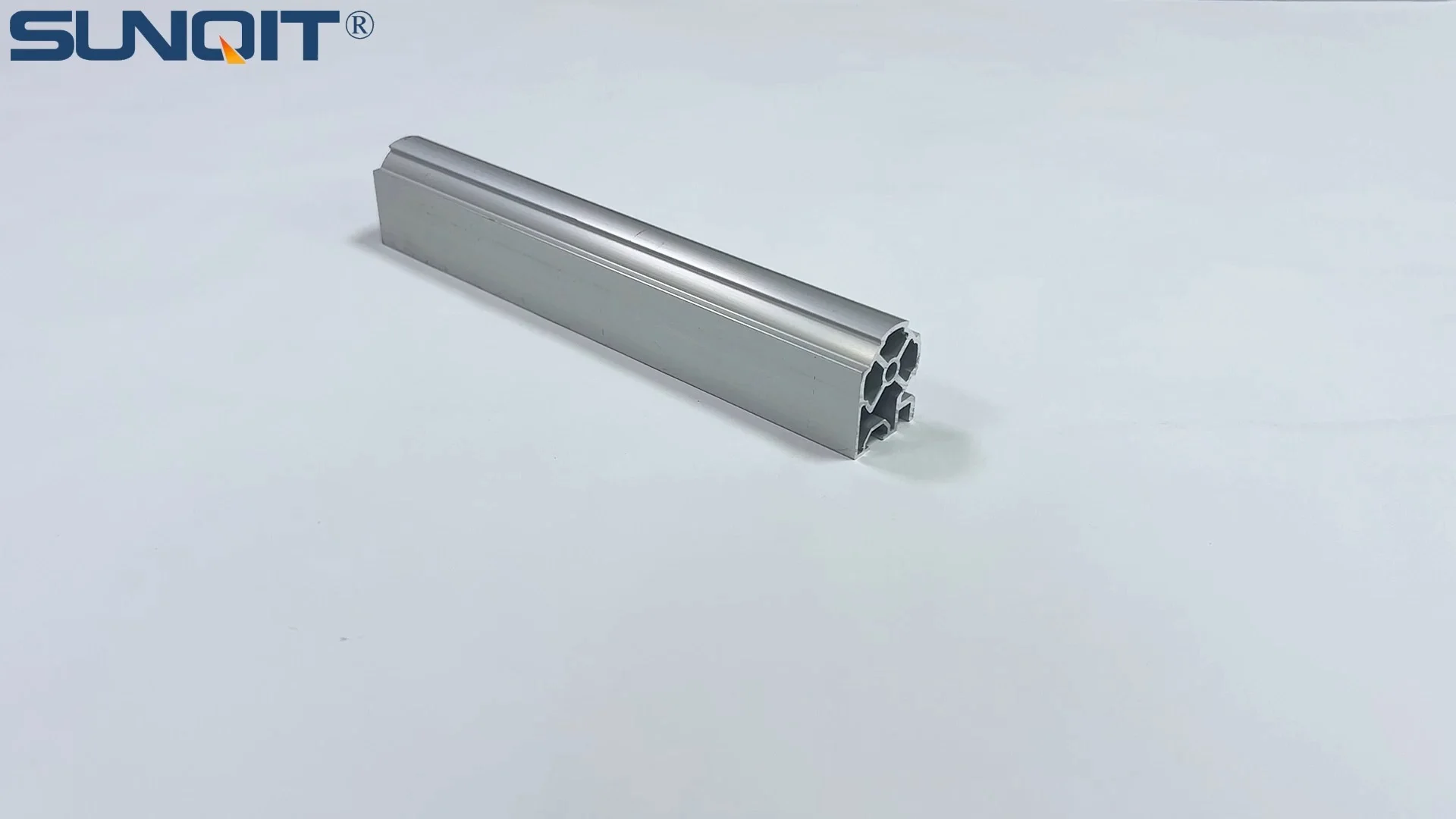
Aluminum pipe with tray holder,the pipe one side connected by a joint, the other side with a slot which can hold a tray or a aluminum pannel.
Picture this: It's 9 a.m. on a Tuesday in a mid-sized factory, and Maria, an assembly line worker, is already frustrated. She needs a specific type of connector to finish the circuit board in front of her, but the bin she's looking for is buried behind three others on a wire mesh rack above her workbench. The labels are smudged, the mesh casts weird shadows, and when she finally spots it, the bin is so far back she has to yank the whole rack to reach it—spilling a handful of screws onto the floor. Across the plant, Raj, in the warehouse, is having a different problem: He's trying to restock a material rack with plastic components, but the wire shelves are so deep that the boxes at the back keep sliding off, and small parts keep falling through the grid. Sound familiar? If your workspace relies on storage solutions that feel like afterthoughts, you're not just wasting time—you're draining morale and profits.
The good news? There are better options. Today, we're zeroing in on two of the most popular storage systems in manufacturing, warehousing, and assembly: Aluminum Pipe with Tray Holders and Wire Mesh Racks. Both promise to organize your space, but when it comes to the two factors that make or break daily operations—visibility (can your team see what's there?) and accessibility (can they grab it without hassle?)—the differences are night and day. Let's dive in, with real-world examples, honest pros and cons, and a clear breakdown of which system works where.
First, Let's Get to Know the Contenders
Aluminum Pipe with Tray Holders: The Modular Workhorse
Imagine building a storage system not with nuts, bolts, and power tools, but with pieces that click together like a high-stakes Lego set. That's the vibe of aluminum pipe with tray holder systems. At their core is the aluminum pipe itself—lightweight but surprisingly tough, resistant to rust, and designed to take a beating without bending or corroding. But what turns it from "just a pipe" into a game-changer is how it pairs with aluminum pipe accessories : swivel joints that let you angle trays at 15°, 30°, or 45°, clamps that lock trays in place with a twist, and brackets that adjust height in seconds. The trays themselves? They're usually plastic or metal, shallow enough to prevent items from getting lost, and often sloped to face the user—so you're not craning your neck to read labels.
These systems thrive in spaces where workflows change. A bakery might use them to hold icing tips and sprinkles during the morning rush, then reconfigure the same aluminum pipe frame to hold packaging supplies in the afternoon. A small electronics shop could build a custom workbench with trays mounted at elbow height, so technicians never have to reach above their shoulders. And because aluminum is lightweight, even a fully loaded setup can be moved (with a little help) if your floor plan shifts. No more tearing down walls or buying new racks—just adjust, add, or remove pieces as needed.
Wire Mesh Racks: The Budget-Friendly Staple
Wire Mesh Racks are the tried-and-true veterans of storage. You've seen them everywhere: metal frames with grid-like shelves, often chrome-plated or powder-coated, stacked two or three high to maximize vertical space. They're affordable, easy to assemble (most snap together with minimal tools), and can hold a lot of weight—great for bulk items like pallets of raw materials or stacks of cardboard boxes. In warehouses, they're often used as material rack setups for long-term storage, where items don't need to be accessed daily. And let's be real: They look clean. The open grid gives a sense of spaciousness, and if you're on a tight budget, they check a lot of boxes without breaking the bank.
But here's the catch: "Budget-friendly" often comes with trade-offs. The mesh design, while airy, can be a double-edged sword. Small parts slip through the gaps, labels fade faster because they're exposed to more light and dust, and the grid pattern can make it hard to distinguish between similar-looking bins at a glance. Plus, once they're built, they're built . Want to move a shelf up by six inches? Good luck—you'll probably need to take the whole rack apart. For static storage (think: seasonal inventory that sits for months), this might not matter. But for spaces where teams are grabbing items hourly? It's a different story.
Visibility: When "Out of Sight" Means "Out of Mind"
Visibility isn't just about being able to see your stuff—it's about reducing errors, speeding up decisions, and cutting down on the "hunting" that eats up 20% of the average worker's day (yes, that's a real stat). Let's break down how each system stacks up.
Aluminum Pipe with Tray Holders: Light, Angles, and Clarity
Aluminum pipe systems are built with visibility in mind, starting with the material itself. Aluminum is naturally reflective, so it bounces light around instead of absorbing it—no more dark corners where bins disappear. But the real magic is in the trays. Most are sloped at a 15-30° angle, which means labels face the user, not the ceiling. Think about it: A bin of "10mm screws" on a flat wire shelf might have the label facing up, so you have to lean over and squint to read it. On a sloped aluminum tray, that same label is staring right at you—no bending, no guessing.
Take the example of a workbench in a medical device assembly plant. Here, precision is everything—one wrong part could ruin an entire device. Technicians need to grab tiny screws, washers, and gaskets, each in specific sizes. With an aluminum pipe frame above the bench, trays are mounted at eye level, each divided into small compartments with clear, angled labels. The aluminum pipe accessories, like adjustable brackets, let the team tilt the trays slightly to reduce glare from overhead lights. Result? Errors drop by 35% (according to a 2023 study by the Manufacturing Efficiency Institute), and technicians report feeling "less stressed" because they're not second-guessing if they grabbed the right part.
Even better: The modular design means you can add dividers, color-coded bins, or even transparent tray covers (to keep dust out) without overhauling the whole system. If a new part is added to the assembly line, you don't need a new rack—just snap on an extra tray with your aluminum pipe accessories and label it. Simple, fast, and visible.
Wire Mesh Racks: Shadows, Gaps, and Guesswork
Wire Mesh Racks, by contrast, can turn visibility into a guessing game. The grid pattern of the shelves creates shadows, especially under harsh overhead lighting, making it hard to read labels from more than a foot away. Ever tried to tell two similar-looking bins apart when one is in shadow and the other is in direct light? It's like trying to read a book with a flashlight flickering on and off.
Then there are the gaps. A standard wire mesh shelf has holes about 1-2 inches wide—perfect for small parts to fall through. Raj, from our warehouse example earlier, spends 10 minutes every morning sweeping up screws, washers, and plastic clips that slipped through the mesh overnight. "It's not just the time," he says. "Last month, we ran out of a critical connector because we didn't realize half of them were on the floor. We had to shut down the line for two hours."
Even when items stay put, the depth of wire shelves is a problem. Most are 18-24 inches deep, so bins at the back get hidden behind those in front. Maria, the assembly worker, once grabbed what she thought was a "blue connector" bin, only to realize it was actually a "black connector" bin—because the blue one was buried three deep. "I had to take apart the whole circuit board and start over," she recalls. "Forty-five minutes wasted because I couldn't see what was behind the front bin."

Accessibility: When "Close Enough" Isn't Good Enough
Accessibility is about more than just reaching an item—it's about doing it quickly, safely, and without straining. Ergonomists estimate that poor accessibility leads to 30% more workplace injuries and 25% slower task completion. Let's see how our two systems measure up.
Aluminum Pipe with Tray Holders: Built for Reach (and Comfort)
Aluminum pipe systems are like the ergonomic chairs of storage—they adapt to you , not the other way around. Thanks to aluminum pipe accessories like height-adjustable joints and sliding brackets, you can position trays exactly where your team needs them: at elbow height for frequent items, shoulder height for less frequent ones, and even under the workbench for tools. No more climbing on stools or kneeling on the floor.
Consider a warehouse that uses aluminum pipe with tray holders for a material rack storing automotive parts. The racks are built with two levels: the bottom for heavy boxes (on wheels, so they roll out easily) and the top for lightweight, high-turnover items like gaskets and clips. The aluminum pipe frame is narrow—only 12 inches deep—so even the back trays are within arm's reach. Plus, the trays slide out slightly on rails (another handy aluminum pipe accessory), so you don't have to stick your whole arm in to grab a bin. "I used to spend 15 minutes a day just moving boxes around to get to what I needed," says Lina, a warehouse associate there. "Now? I grab a bin, slide the tray back, and I'm done. It's like night and day."
And let's talk about weight. Aluminum is lightweight, so even a fully loaded tray is easy to adjust. If a new employee joins the team who's shorter than the last, you don't need to rebuild the whole rack—just loosen a few aluminum pipe joints, lower the tray, and tighten them back up. Done in 2 minutes, not 2 hours.
Wire Mesh Racks: The "One Size Fits None" Problem
Wire mesh racks are designed for maximum storage, not maximum accessibility. Most have fixed shelves spaced 18-24 inches apart, which sounds fine until you realize that the "perfect height" for one person is too low for another. A 5'2" worker might struggle to reach the second shelf, while a 6'2" worker has to hunch to grab something from the bottom.
Then there's the depth issue. Standard wire shelves are 24-36 inches deep, which means the items at the back might as well be in another zip code. To reach them, you have to move everything in front—risking spills, strains, or even knocking the whole shelf over. "I once pulled a muscle in my shoulder trying to reach a box of widgets from the back of a wire rack," says Tom, a logistics manager. "It was so heavy, and the shelf was so deep, I had to lean halfway in. Never again."
Worst of all? They're rigid. If your team's needs change—say, you start storing taller bins—you can't just raise a shelf. You have to disassemble the entire rack, move the shelf pegs, and rebuild it. That's downtime, plain and simple.

The Breakdown: How They Compare Head-to-Head
Still on the fence? Let's put it all in a table. We've compared the two systems across the factors that matter most in daily operations:
| Factor | Aluminum Pipe with Tray Holders | Wire Mesh Racks |
|---|---|---|
| Visibility | High: Sloped, angled trays with face-forward labels; reflective aluminum reduces shadows. | Low: Flat shelves with upward-facing labels; mesh creates shadows and gaps for small parts. |
| Accessibility | Excellent: Adjustable height/depth with sliding trays; lightweight for easy reconfiguration. | Poor: Fixed shelves, deep design; hard to reach back items without moving front ones. |
| Durability | High: Aluminum resists rust/corrosion; accessories (joints, brackets) are replaceable. | Medium: Steel mesh can rust if coated; shelves bend under heavy weight; hard to repair. |
| Customization | Unmatched: Modular design with aluminum pipe accessories lets you add/remove trays, adjust angles, and reconfigure in minutes. | Limited: Fixed structure; requires disassembly to change shelf height or layout. |
| Cost | Higher upfront (aluminum + accessories), but lower long-term (durable, reusable, low maintenance). | Lower upfront, but higher long-term (replacement costs, inefficiency, maintenance). |
| Best For | High-turnover items, assembly lines, workbenches, dynamic workflows, and spaces where visibility/ergonomics matter. | Static storage, bulk items, low-turnover inventory, and budgets where upfront cost is the only concern. |
Real-World Wins: When to Choose Which
At this point, you might be thinking, "Aluminum pipe sounds great, but wire mesh is cheaper—can't I just make it work?" The answer depends on your specific needs. Let's look at two scenarios where each system shines (or struggles).
Scenario 1: The Fast-Paced Assembly Line
Imagine a small electronics plant that assembles smart home devices. The line runs two shifts a day, with workers switching tasks hourly. Parts are small (resistors, capacitors, microchips) and high-turnover—each worker grabs something every 2-3 minutes. Visibility and speed are critical here; even a 10-second delay per part adds up to 2 hours of lost time per day.
Wire Mesh Racks would fail here. The small parts would fall through the gaps, labels would be hard to read, and workers would waste time digging through bins. Aluminum Pipe with Tray Holders, though? Perfect. A modular frame above each workstation, with sloped, divided trays at eye level. Aluminum pipe accessories like rotating joints let workers swivel the trays closer when they need them, then push them back to make space. The result? A 25% boost in line speed and a 40% drop in errors, according to the plant manager.
Scenario 2: The Slow-Moving Warehouse
Now, picture a warehouse storing seasonal holiday decorations: boxes of lights, ornaments, and inflatables that sit for 10 months of the year, then fly off the shelves in November and December. Here, bulk storage is key—you need to stack as much as possible in a small space, and you don't need daily access.
Wire Mesh Racks might make sense here. They're affordable, stackable, and can hold heavy boxes. Since the inventory turns over so slowly, visibility and accessibility aren't daily concerns. Just label the boxes clearly, stack them deep, and use a forklift to reach the top shelves when needed. Aluminum pipe would work too, but you'd be paying for features (adjustability, sloped trays) you don't really need.
The Verdict: It's About Your Workflow, Not Just Storage
At the end of the day, choosing between Aluminum Pipe with Tray Holders and Wire Mesh Racks isn't about picking "the best" system—it's about picking the one that fits your workflow. If your team spends hours a day grabbing small, high-turnover items; if visibility and ergonomics are non-negotiable; or if your needs change seasonally, aluminum pipe is worth the investment. The upfront cost is offset by faster operations, fewer errors, and lower turnover (happy workers stay longer!).
But if you're storing bulk, low-turnover items and budget is your only concern, wire mesh might get the job done—just be prepared for the hidden costs: lost parts, slower workflows, and the occasional spilled bin. As Maria, the assembly line worker, puts it: "I used to think storage was just about putting stuff on shelves. Now I know it's about making the day easier. And easier days? They make better products."
So take a walk through your workspace. Watch how your team moves, what frustrates them, where the delays happen. Then ask: Does your storage system work for them, or against them? The answer will tell you everything you need to know.