- Company Articles
- Products and Technology
- Product knowledge
- Aluminum Pipe with Tray Holder Weight Advantages: Easy Maneuverability

Aluminum Pipe with Tray Holder Weight Advantages: Easy Maneuverability
Related Product
Aluminum Pipe with Tray Holder
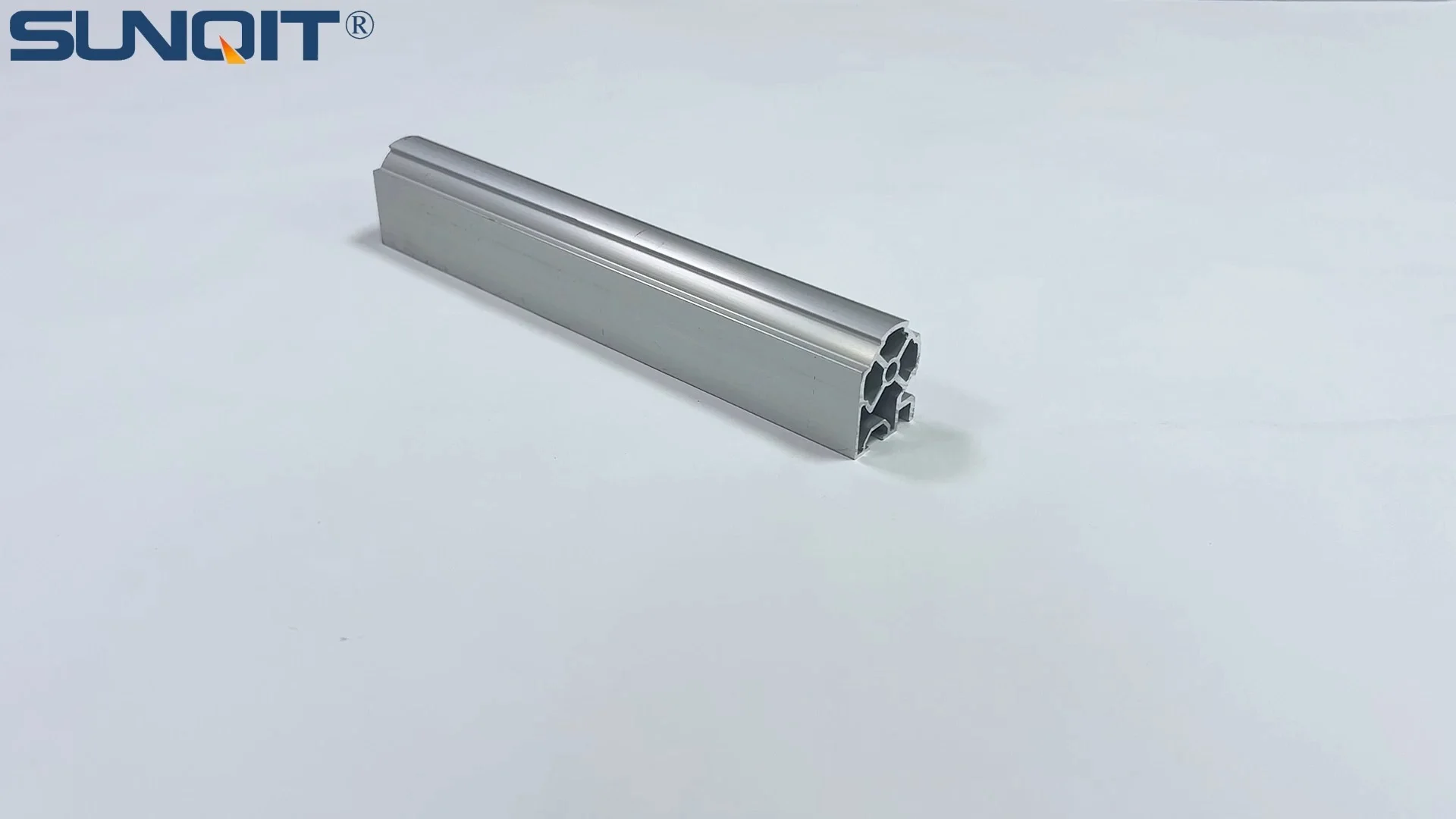
Aluminum pipe with tray holder,the pipe one side connected by a joint, the other side with a slot which can hold a tray or a aluminum pannel.
In the fast-paced world of manufacturing and production, where every minute counts and efficiency is the backbone of success, the tools and equipment that teams rely on can make or break daily operations. Imagine a busy assembly line where workers are constantly moving materials, adjusting workstations, and transporting parts from one station to the next. Now, picture the frustration of struggling with a heavy, cumbersome workbench or a turnover trolley that takes two people to maneuver—time wasted, energy drained, and morale slowly eroding. This is where the yet transformative aluminum pipe with tray holder steps in, quietly revolutionizing how teams work by turning "heavy lifting" into "effortless gliding."
At first glance, you might wonder: What makes aluminum pipe so special? After all, steel has been the go-to for industrial applications for decades, prized for its strength and durability. But in recent years, aluminum lean pipe has emerged as a game-changer, and its most compelling advantage lies in one simple factor: weight. When paired with a tray holder—designed to keep tools, parts, and materials organized and within arm's reach—aluminum pipe creates a system that's not just strong enough for the job, but light enough to adapt, move, and evolve with the needs of your team. Let's dive into how this weight advantage translates to easy maneuverability, and why it's becoming the backbone of modern, efficient workspaces.
The Weighty Problem: Why Traditional Materials Slow You Down
To appreciate the benefits of aluminum pipe with tray holder, it's important to first understand the challenges posed by traditional materials. For years, steel and stainless steel pipes dominated industrial setups. While these materials are undeniably strong—capable of supporting heavy loads and withstanding wear and tear—their Achilles' heel is their density. Steel, for example, has a density of about 7.85 grams per cubic centimeter, while aluminum checks in at just 2.7 grams per cubic centimeter. That's a staggering difference: aluminum is roughly one-third the weight of steel for the same volume.
What does this mean in real terms? Let's take a common piece of equipment: the workbench. A standard steel workbench with a tray holder might weigh 150-200 pounds, making it nearly impossible to move without mechanical assistance. If a production line needs to be reconfigured to accommodate a new product, that workbench becomes a roadblock—requiring forklifts, extra manpower, and precious time to relocate. Similarly, a turnover trolley and rack made of steel can weigh 80-100 pounds empty; once loaded with parts, it becomes a Herculean task to push across the factory floor, leading to slower material flow, increased worker fatigue, and even a higher risk of workplace injuries.
Stainless steel, while resistant to corrosion, is even heavier than carbon steel, adding another layer of difficulty in environments where hygiene is critical (like food processing or pharmaceuticals). Workers in these industries often need to sanitize equipment frequently, which means moving trolleys and racks to cleaning stations—a process that becomes a chore when the equipment itself is a burden to shift.
Aluminum Lean Pipe: Strength Without the Bulk
Enter aluminum lean pipe—a material engineered to bridge the gap between strength and lightness. Aluminum lean pipe is made from high-quality aluminum extrusion profile, a process that shapes aluminum into precise, uniform tubes with consistent wall thickness and structural integrity. This extrusion process isn't just about creating a pipe; it's about designing a material that can handle the rigors of industrial use while shedding unnecessary weight.
The secret lies in aluminum's inherent properties. As mentioned earlier, its low density means that even a sturdy aluminum lean pipe weighs significantly less than its steel counterpart. For example, a 1-meter length of 28mm diameter aluminum lean pipe with a 1.2mm wall thickness weighs approximately 0.5 kg, while a steel pipe of the same dimensions would weigh around 1.5 kg—three times as much. When you multiply that by the number of pipes used in a workbench, a turnover trolley, or a material rack, the weight savings add up dramatically. A typical aluminum lean pipe workbench with a tray holder might weigh just 40-60 pounds, making it easy for one person to adjust or move, even when fully loaded with tools.
But don't let the light weight fool you—aluminum lean pipe is no pushover. Thanks to advances in alloy technology and extrusion design, modern aluminum pipes offer impressive tensile strength (around 200-300 MPa, depending on the alloy), which is more than enough to support the daily demands of manufacturing. When paired with aluminum profile accessories like internal rotatary aluminum joints, gusset plates, and reinforced connectors, the system becomes surprisingly rigid, capable of supporting loads up to 200 kg or more for workbenches and material racks. This combination of strength and lightness is what makes aluminum lean pipe the ideal candidate for tray holders, where the goal is to keep materials organized without adding unnecessary bulk.

Tray Holders: The Perfect Partner for Aluminum Pipe
A tray holder might seem like a simple accessory, but when integrated with aluminum lean pipe, it becomes a catalyst for efficiency. Designed to attach seamlessly to the pipe using lightweight aluminum pipe clamps or parallel fixation aluminum pipe joints, the tray holder provides a stable platform for tools, small parts, or finished components. But here's the key: because both the pipe and the tray holder are made of aluminum (or lightweight plastic for the tray itself), the entire system remains featherlight.
Consider a workbench in an electronics assembly plant. The workbench E (single deck—without caster) is a staple, but when fitted with an aluminum pipe tray holder, it becomes a dynamic workspace. Workers can slide the tray holder along aluminum guide rail A or B to position tools exactly where they need them, without struggling to move the entire bench. The tray itself, often made of aluminum honeycomb panel or lightweight plastic, adds minimal weight—maybe 5-10 pounds—so even when loaded with circuit boards, screwdrivers, and soldering tools, the tray holder doesn't tip the scales.
In material handling, a turnover trolley with an aluminum pipe frame and a multi-tiered tray holder becomes a breeze to push. Instead of two workers grunting to move a steel trolley, one person can effortlessly guide it through narrow aisles, around corners, and up slight inclines. This not only speeds up material transport but also reduces the risk of strain injuries—a win for both productivity and worker well-being.

Maneuverability in Action: Real-World Benefits
Easy maneuverability isn't just a nice-to-have feature; it's a driver of operational excellence. Let's explore how the weight advantage of aluminum pipe with tray holder translates to tangible benefits in everyday scenarios.
1. Agile Workstation Reconfiguration
In today's manufacturing landscape, flexibility is key. Product lines change, customer demands shift, and teams need to adapt quickly. With aluminum lean pipe workbenches, reconfiguration becomes a 15-minute task instead of a half-day project. For example, a automotive parts manufacturer might need to switch from assembling door panels to dashboard components. With steel workbenches, this would require scheduling a forklift, clearing the area, and disrupting production. With aluminum workbenches, a supervisor and one worker can simply unlock the casters (if equipped with caster wheel), move the benches into the new layout, and reattach the tray holders—all while the rest of the line continues running.
"We used to spend an entire morning reconfiguring our assembly line for new orders. Now, with aluminum lean pipe workbenches, two people can rearrange three stations in under an hour. The tray holders stay secure even when moving, so tools don't get jostled around. It's like night and day." — Maria, Production Supervisor at a Consumer Electronics Plant
2. Effortless Material Transport
Turnover trolley and rack systems are the lifelines of material flow, moving parts from storage to production and finished goods to shipping. A steel turnover trolley might require a worker to exert 50-60 pounds of force to get it moving, leading to fatigue after just a few trips. An aluminum trolley, by contrast, needs only 15-20 pounds of force—less than the effort required to push a shopping cart. This means workers can make more trips in a day, reducing bottlenecks and keeping production on schedule.
Even better, aluminum pipe with tray holder systems often integrate with roller track and accessories, like plastic roller track guide rail yellow or grey, which allow trays to slide smoothly from the trolley to a workbench. The roller track, made of lightweight plastic or aluminum, adds minimal resistance, so transferring materials becomes a matter of a gentle push rather than a heave. In a warehouse setting, this can cut down on loading/unloading time by 30% or more.
3. Reduced Worker Fatigue and Injury Risk
Heavy lifting and repetitive strain are leading causes of workplace injuries, costing companies billions in lost productivity and workers' compensation claims each year. The light weight of aluminum pipe systems directly addresses this issue. When workers don't have to strain to move a workbench or push a trolley, they have more energy to focus on precision tasks, and the risk of back injuries, muscle strains, and joint pain drops significantly.
A study by the National Institute for Occupational Safety and Health (NIOSH) found that reducing the force required to push a cart by just 20% can lower the risk of musculoskeletal disorders by nearly 40%. Aluminum lean pipe systems exceed this threshold, often reducing push/pull forces by 50% or more compared to steel. For example, a 250-pound load on a steel trolley might require 75 pounds of force to move, while the same load on an aluminum trolley with caster wheel accessories (like ball-bearing casters) would need only 25 pounds of force—well within safe ergonomic limits.
Aluminum Profile Accessories: Enhancing Maneuverability Without Adding Weight
A great pipe is only as good as its accessories, and aluminum lean pipe systems shine here too. Aluminum profile accessories are designed to complement the pipe's light weight, ensuring that the entire system remains agile and easy to handle. Let's take a closer look at some key accessories that make aluminum pipe with tray holder systems so maneuverable:
Aluminum Joints: Strong, Light, and Versatile
Joints are the connective tissue of any pipe system, and aluminum lean pipe joints are engineered to be both strong and lightweight. Unlike heavy steel joints, which can add pounds to a structure, aluminum joints—like the internal rotatary aluminum joint or the 90° aluminum pipe joint inside connection—are precision-machined from aluminum alloy, weighing just ounces. These joints allow for quick assembly and disassembly, so workers can reconfigure a workbench or trolley on the fly without specialized tools. For example, the parallel fixation aluminum pipe joint lets you attach two pipes side by side securely, adding stability to a tray holder without adding bulk.
Caster Wheel and Accessories: Smooth Movement, Any Surface
No maneuverable system is complete without quality casters, and aluminum lean pipe systems often pair with lightweight caster wheel accessories designed for minimal rolling resistance. Swivel caster wheels with ball bearings glide over concrete, tile, or warehouse floors with ease, while brake mechanisms (like the 360° swivel expanding stem casters wheel with brake) ensure that workbenches or trolleys stay put when needed. Even the caster accessories, like mounting plates and stem adapters, are made of aluminum or high-strength plastic, keeping the overall weight down.
Roller Track and Guide Rails: Effortless Material Flow
To move materials along a tray holder, roller track and accessories are indispensable. Plastic roller track guide rail yellow or grey, for instance, are lightweight yet durable, providing a smooth surface for trays to slide on. These guide rails attach to aluminum pipe using roller track placon mount brackets, which are designed to be lightweight and easy to install. For heavier loads, aluminum guide rail A or B can be used, adding strength without sacrificing maneuverability. The result? Trays glide from one end of the holder to the other with minimal effort, reducing the need for manual lifting.
How Aluminum Pipe with Tray Holder Stacks Up: A Material Comparison
Still not convinced that aluminum is the way to go? Let's put it head-to-head with traditional materials in a side-by-side comparison. The table below highlights key factors that matter most in industrial settings: weight, strength, maneuverability, and more.
| Material | Weight (per linear foot of 28mm pipe) | Tensile Strength (MPa) | Maneuverability (1=Low, 5=High) | Corrosion Resistance | Cost (Relative) |
|---|---|---|---|---|---|
| Aluminum Lean Pipe | 0.17 lbs | 250-300 | 5 | Excellent (natural oxide layer) | Moderate (higher upfront, lower long-term) |
| Steel Pipe | 0.51 lbs | 300-400 | 1 | Poor (requires coating) | Low (higher maintenance costs) |
| Stainless Steel Pipe | 0.55 lbs | 500-600 | 1 | Excellent | High |
| PVC Pipe (Plastic) | 0.12 lbs | 40-60 | 4 | Excellent | Low (low strength, short lifespan) |
As you can see, aluminum lean pipe outperforms steel and stainless steel in maneuverability by a wide margin, while offering comparable strength to steel and excellent corrosion resistance. While the upfront cost may be slightly higher than steel, the long-term savings in labor, energy, and maintenance make it a cost-effective choice for forward-thinking operations.
Addressing Common Concerns: Is Aluminum Strong Enough?
A common question we hear is: "If aluminum is so light, can it really handle the heavy loads in our facility?" It's a valid concern—no one wants to invest in equipment that will bend or break under pressure. The answer, however, is a resounding yes—when designed and used correctly.
Aluminum lean pipe systems are engineered with safety factors in mind. By using aluminum profile accessories like gusset plates (gusset alp 4040, 3030, etc.) and reinforced joints, the system's load-bearing capacity can be significantly increased. For example, a workbench built with aluminum lean pipe and supported by aluminum foot bases can easily handle 300-400 pounds of evenly distributed weight—more than enough for most assembly or packaging tasks. In applications where heavier loads are required, thicker-walled aluminum pipes (like 1.5mm or 2.0mm) can be used, adding minimal weight while boosting strength.
Another point to consider is that aluminum has excellent fatigue resistance, meaning it can withstand repeated loading and unloading without weakening over time. This is crucial in high-cycle environments, like a material rack B (3 row and 3 floor) that's loaded and unloaded multiple times a day. Steel, while strong, is more prone to fatigue cracks if not properly maintained, whereas aluminum's flexibility allows it to absorb stress without permanent damage.
The Future of Work: Lightweight, Adaptable, Human-Centric
As industries continue to evolve toward smarter, more agile manufacturing practices—think Industry 4.0, modular production lines, and human-robot collaboration—the need for lightweight, maneuverable equipment will only grow. Aluminum pipe with tray holder systems align perfectly with this future, offering the flexibility to adapt to changing workflows, the durability to stand up to industrial demands, and the ergonomics to keep workers safe and productive.
In electronics manufacturing, where precision and cleanliness are paramount, aluminum lean pipe workbenches with ESD (electrostatic discharge) protection are becoming standard. These workbenches are light enough to reposition for different product lines but sturdy enough to support sensitive equipment. In food and beverage production, aluminum's corrosion resistance makes it ideal for washdown environments, and its light weight simplifies cleaning and sanitizing routines.
Even in logistics and warehousing, aluminum pipe systems are making waves. Turnover trolleys with aluminum frames and swivel roller balls (1 inch or 0.5 inch) allow for easy loading and unloading, while aluminum guide rails ensure smooth movement along conveyor systems. With the rise of e-commerce and the need for faster order fulfillment, the ability to move materials quickly and efficiently has never been more critical—and aluminum is leading the charge.
Conclusion: Lighten the Load, Lift Productivity
At the end of the day, the success of any production or manufacturing operation hinges on the people and the tools they use. Aluminum pipe with tray holder systems aren't just tools—they're partners in productivity, designed to make work easier, safer, and more efficient. By leveraging aluminum's lightweight nature, these systems transform cumbersome, static workspaces into dynamic, adaptable environments where workers can focus on what they do best: creating quality products.
Whether you're reconfiguring an assembly line, transporting materials across a warehouse, or building a custom workbench, the weight advantage of aluminum lean pipe is impossible to ignore. It's not just about moving things faster—it's about creating a workplace where every member of the team feels supported, where innovation thrives, and where success becomes the norm rather than the exception.
So, the next time you watch your team struggle with a heavy steel trolley or spend hours reconfiguring a rigid workstation, ask yourself: What could we accomplish if we lightened the load? With aluminum pipe with tray holder, the answer is simple: more, better, and with less effort. It's time to let go of the heavy past and embrace a lighter, more efficient future.