- Company Articles
- Products and Technology
- Product knowledge
- Aluminum Profile 3 Way Connector Coatings: Enhancing Durability

Aluminum Profile 3 Way Connector Coatings: Enhancing Durability
Related Product
Aluminum Profile 3 Way Connector
The 3 way - squared corner connector is an external fastening method that is typically used to create a corner connection between three profiles. It is a heavy-duty connection that is simple to use and provides a polished look.
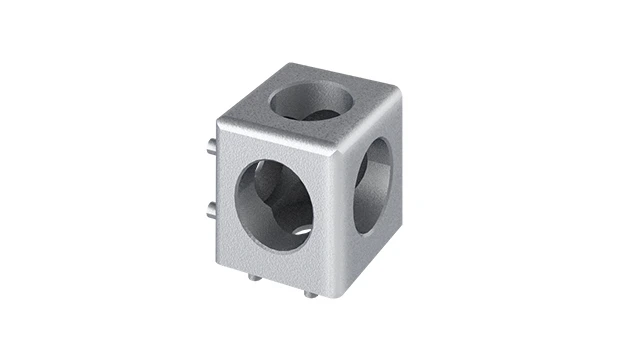
In the bustling world of manufacturing and industrial workflows, every component plays a silent but critical role in keeping operations running smoothly. From the largest conveyor belts to the smallest fasteners, each part contributes to the efficiency, safety, and longevity of the systems we rely on. Among these unsung heroes are aluminum profiles —versatile, lightweight, and infinitely adaptable structures that form the backbone of everything from workbenches and material racks to production lines and lean manufacturing cells. But even the sturdiest aluminum profile is only as strong as its connections, which is where connectors step in. And when it comes to building flexible, multi-directional structures, few connectors are as indispensable as the aluminum profile 3 way connector .
Yet, for all their utility, these connectors face a constant battle against the elements: moisture, chemicals, friction, and daily wear and tear. Over time, unprotected connectors can corrode, weaken, or degrade, leading to loose joints, wobbly structures, and even production downtime. That's where coatings come into play. The right coating isn't just a finishing touch—it's a shield that enhances durability, extends lifespan, and ensures that your aluminum profile systems remain reliable for years to come. In this article, we'll dive deep into the world of aluminum profile 3 way connector coatings, exploring why they matter, the types available, how they're applied, and the real-world impact they have on industrial operations.
The Role of Aluminum Profiles in Modern Industry
Before we zoom in on connectors and their coatings, let's take a moment to appreciate why aluminum profiles have become a cornerstone of modern manufacturing. Unlike rigid steel structures or one-size-fits-all plastic components, aluminum profiles—often referred to as aluminum extrusion profiles —are created through a process where aluminum alloy is pushed through a die to form consistent, custom cross-sections. This allows for precision engineering, with profiles designed to meet specific load-bearing, weight, or dimensional requirements.
The benefits of aluminum profiles are hard to overstate. They're lightweight, making them easy to handle and install without sacrificing strength. They're resistant to corrosion by nature, thanks to aluminum's ability to form a thin oxide layer when exposed to air. And perhaps most importantly, they're modular. By combining profiles with various connectors, brackets, and accessories, engineers and facility managers can build everything from simple workbenches to complex automated systems—all without welding or heavy machinery. This modularity is the backbone of lean systems , where adaptability and quick reconfiguration are key to minimizing waste and maximizing efficiency.
But none of this modular magic would be possible without connectors. Connectors are the glue that holds aluminum profile systems together, allowing for secure, adjustable joints between profiles. And among the many types of connectors—T-joints, L-joints, corner brackets—the 3 way connector stands out for its versatility. As the name suggests, it allows three aluminum profiles to meet at a single point, enabling the creation of multi-directional structures like shelving units with cross-bracing, workstations with overhead racks, or material flow systems that branch into multiple paths. In short, 3 way connectors are the Swiss Army knives of aluminum profile assembly, making them a staple in warehouses, factories, and workshops worldwide.
Why Coatings Matter for 3 Way Connectors
At first glance, a 3 way connector might seem like a simple piece of hardware: a small, often metal component with holes or slots designed to clamp onto aluminum profiles. But looks can be deceiving. These connectors are subjected to significant stress in daily use. Imagine a material rack in a busy warehouse, loaded with heavy boxes. Each time a box is placed or removed, the weight shifts, putting pressure on the connectors that hold the rack's uprights and crossbeams together. Over time, this stress can cause friction between the connector and the profile, leading to wear. Add in environmental factors—humidity in a food processing plant, chemicals in a automotive workshop, or even just regular exposure to dust and moisture—and the risk of degradation increases.
Uncoated or poorly coated connectors are vulnerable to two primary enemies: corrosion and wear. Corrosion, the gradual breakdown of metal due to chemical reactions with the environment, can weaken the connector's structural integrity, leading to cracks or looseness. Wear, on the other hand, comes from repeated friction—for example, when adjusting the position of a profile in the connector or when the connector rubs against other components during use. Both issues can turn a reliable joint into a liability, compromising the safety of the structure and forcing costly replacements or repairs.
This is where coatings prove their worth. A well-applied coating acts as a barrier between the connector's base material (often aluminum or steel) and the outside world. It prevents moisture and chemicals from reaching the metal surface, slowing or stopping corrosion. It also reduces friction, minimizing wear from movement or contact. Additionally, coatings can enhance grip, ensuring that the connector maintains a tight hold on the profile even under stress. In essence, coatings transform a basic connector into a durable, long-lasting component that can withstand the rigors of industrial life.

Types of Coatings for Aluminum Profile 3 Way Connectors
Not all coatings are created equal. The right choice depends on the connector's material, the environment it will be used in, and the specific challenges it faces (e.g., high humidity, chemical exposure, heavy loads). Let's explore the most common coating options for aluminum profile 3 way connectors, their benefits, and their ideal applications.
Anodizing: Nature's Reinforcement
Anodizing is perhaps the most well-known coating process for aluminum, and for good reason. It's an electrochemical process that enhances the natural oxide layer on the surface of aluminum, making it thicker, harder, and more resistant to corrosion. Here's how it works: the aluminum connector is submerged in an electrolyte solution (usually sulfuric acid) and acts as the anode in an electrical circuit. When an electric current is applied, oxygen ions are released, reacting with the aluminum to form a porous oxide layer. This layer can then be sealed (often with hot water or a chemical sealant) to create a non-porous, protective barrier.
The benefits of anodizing are numerous. First, it's incredibly durable. The anodized layer is integral to the aluminum itself, meaning it won't chip, peel, or flake off like paint. Second, it offers excellent corrosion resistance, making it ideal for humid environments, outdoor use, or areas with occasional exposure to water (e.g., washdown stations in food processing plants). Third, anodizing can be dyed, allowing for color customization—though for industrial connectors, functionality often takes precedence over aesthetics, so clear or natural anodizing is most common.
One thing to note is that anodizing is best suited for aluminum connectors. Since the process relies on the aluminum's natural oxide layer, it won't work on steel or other metals. For those materials, alternative coatings are needed.
Powder Coating: Toughness in a Dry Finish
If anodizing is nature's reinforcement, powder coating is the industrial workhorse. Unlike liquid paints, powder coating involves applying a dry powder (typically a thermoplastic or thermoset polymer) to the connector's surface, then curing it under heat to form a hard, protective layer. The powder is applied using an electrostatic gun, which charges the powder particles, causing them to adhere to the grounded connector. Once coated, the connector is baked in an oven (usually at 160–200°C), melting the powder into a smooth, uniform film that hardens as it cools.
Powder coating offers several advantages for 3 way connectors. For starters, it's incredibly tough. The cured coating is resistant to scratches, chips, and impact, making it ideal for connectors that see heavy use or are part of structures that are frequently reconfigured. It also provides excellent chemical resistance, standing up to oils, solvents, and mild acids—common in automotive, aerospace, and manufacturing settings. Additionally, powder coating is available in a wide range of colors and finishes (matte, gloss, textured), allowing for both functionality and branding consistency.
Another perk of powder coating is its environmental friendliness. Unlike liquid paints, which often contain volatile organic compounds (VOCs), powder coatings release little to no harmful emissions. Overspray can also be collected and reused, reducing waste. For companies prioritizing sustainability, this is a significant plus.
Electroplating: Adding a Layer of Protection (and Shine)
Electroplating is a coating process where a thin layer of metal (such as zinc, nickel, or chrome) is deposited onto the connector's surface via electrolysis. This is particularly useful for steel connectors, which are prone to rust, but can also be used on aluminum to enhance specific properties. For example, zinc plating (galvanization) is a popular choice for steel connectors, as zinc acts as a sacrificial anode—corroding itself to protect the underlying steel. Nickel plating, on the other hand, offers a smooth, shiny finish and excellent wear resistance, making it ideal for connectors that need to slide or rotate.
While electroplating provides strong corrosion resistance, it's important to note that the coating is a separate layer from the base metal. This means it can chip or wear off over time, especially in high-friction applications. For this reason, electroplated connectors are often used in low-to-moderate wear environments, such as static shelving or light-duty workbenches, rather than high-impact or frequently adjusted structures.
Ceramic Coatings: The High-Performance Option
For the most demanding environments—think high temperatures, extreme chemical exposure, or heavy mechanical stress—ceramic coatings are the gold standard. Ceramic coatings are made from inorganic materials (like silicon dioxide or aluminum oxide) and are applied via thermal spraying or chemical vapor deposition (CVD). The result is an extremely hard, heat-resistant layer that can withstand temperatures up to 1,000°C or more, as well as exposure to harsh chemicals like acids and alkalis.
While ceramic coatings offer unparalleled performance, they come with a higher price tag and are typically reserved for specialized applications. For example, in aerospace manufacturing, where connectors may be exposed to jet fuels or extreme heat, or in pharmaceutical production, where strict cleanliness and chemical resistance are required, ceramic coatings justify the investment. For most general industrial use, however, anodizing or powder coating will suffice.

Comparing Coating Types: Which One is Right for You?
With so many options, choosing the right coating can feel overwhelming. To simplify, let's compare the key features of the most common coating types in a handy table:
| Coating Type | Base Material Compatibility | Corrosion Resistance | Wear Resistance | Cost | Ideal Environment |
|---|---|---|---|---|---|
| Anodizing | Aluminum only | Excellent (sealed) | High (hard oxide layer) | Moderate | Humid, outdoor, washdown areas |
| Powder Coating | Aluminum, steel, others | Very Good | Excellent (impact/scratch resistant) | Moderate | Industrial workshops, heavy use, chemical exposure |
| Electroplating (Zinc/Nickel) | Steel, iron, some alloys | Good (sacrificial protection) | Moderate (prone to chipping) | Low to Moderate | Static structures, low wear |
| Ceramic Coating | Most metals | Exceptional | Extreme (high hardness) | High | High temp, harsh chemicals, aerospace/pharmaceutical |
As you can see, anodizing and powder coating are the top choices for most industrial aluminum profile 3 way connectors, balancing performance, cost, and versatility. For aluminum connectors in humid or wet environments, anodizing is hard to beat. For steel connectors or applications needing extra impact resistance, powder coating is the way to go.
The Application Process: How Coatings Are Applied to Connectors
A great coating is only as good as its application. Even the best coating material will fail if applied incorrectly—whether due to poor surface preparation, uneven coverage, or improper curing. Let's walk through the typical steps involved in coating an aluminum profile 3 way connector, using powder coating as an example (since it's widely used and applicable to multiple materials).
Step 1: Surface Preparation – The Foundation of Quality
Before any coating can be applied, the connector's surface must be squeaky clean. Any dirt, oil, grease, rust, or previous coatings will prevent the new coating from adhering properly, leading to bubbles, peeling, or uneven coverage. Surface preparation typically involves several stages:
- Degreasing: The connector is cleaned with a solvent or alkaline solution to remove oils and greases from manufacturing or handling.
- Pickling/Descaling: For steel connectors, a acid bath may be used to remove rust or scale. For aluminum, a mild etchant (like phosphoric acid) can help remove oxides and create a rough surface for better coating adhesion.
- Blasting: In some cases, abrasive blasting (using sand, glass beads, or aluminum oxide) is used to create a textured surface, improving coating grip. This is especially common for powder coating, as the rough surface helps the powder adhere during application.
- Rinsing and Drying: After cleaning, the connector is thoroughly rinsed to remove any remaining chemicals, then dried completely to prevent water spots or corrosion before coating.
Step 2: Coating Application – Precision and Uniformity
For powder coating, application is done using an electrostatic spray gun. The gun charges the powder particles with a negative charge, while the connector is grounded (positively charged). The opposite charges attract, pulling the powder onto the connector's surface. This process ensures even coverage, even in hard-to-reach areas like the threads or crevices of a 3 way connector.
For anodizing, the cleaned aluminum connector is submerged in the electrolyte bath, and the electrochemical process begins. The duration of the process and the current density determine the thickness of the oxide layer—typically between 5 and 25 microns for industrial applications.
Step 3: Curing/Sealing – Setting the Shield
Once coated, the connector moves to the curing or sealing stage. For powder coating, this means baking in an oven at 160–200°C for 10–20 minutes. The heat melts the powder particles, causing them to flow together and form a smooth, continuous film. As the connector cools, the film hardens into a durable coating.
For anodizing, sealing is the final step. After the oxide layer is formed, the connector is submerged in hot water (around 80–90°C) or a chemical sealant (like nickel acetate). This closes the pores in the oxide layer, making it non-porous and enhancing corrosion resistance.
Quality Control – Ensuring Perfection
After coating, the connector undergoes quality checks to ensure it meets specifications. This may include adhesion tests (scratching or bending the coating to check for peeling), thickness measurements (using a micrometer or eddy current tester), and corrosion resistance tests (exposing samples to salt spray or humidity chambers for extended periods). Only connectors that pass these tests make it to the final product.
Real-World Impact: How Coatings Improve Industrial Workflows
To truly understand the value of coated connectors, let's look at a few real-world examples of how they've transformed operations for businesses across different industries.
Case Study 1: Automotive Manufacturing Plant Reduces Downtime with Anodized Connectors
A mid-sized automotive parts manufacturer in the Midwest was struggling with frequent breakdowns in their assembly line workbenches. The workbenches, built using aluminum profiles and 3 way connectors, were located near a washdown area where they were regularly exposed to water and cleaning chemicals. Over time, the uncoated aluminum connectors began to corrode, leading to loose joints and wobbly work surfaces. This not only slowed down production but also posed a safety risk to workers.
After consulting with their aluminum profile accessories supplier, the plant switched to anodized 3 way connectors. The anodized coating provided a protective barrier against moisture and chemicals, preventing corrosion. Within six months, the number of workbench repairs dropped by 75%, and production downtime related to loose joints was eliminated. The plant manager noted, "We used to spend hours each week tightening connectors or replacing corroded parts. Now, those connectors just work—no fuss, no maintenance. It's like night and day."
Case Study 2: Food Processing Facility Upgrades to Powder-Coated Connectors for Sanitation
A food and beverage processor was facing challenges with their material handling racks, which stored ingredients and packaging supplies. The racks were built with steel 3 way connectors that had been electroplated, but in the humid, washdown environment of the facility, the plating was chipping off, exposing the steel underneath to rust. Rust flakes posed a contamination risk, violating food safety standards and leading to failed inspections.
The solution? Switching to powder-coated steel connectors. The powder coating was applied in a food-safe, white finish (to make dirt and debris visible) and cured to a hard, non-porous surface that could withstand daily washdowns with sanitizing chemicals. Not only did the new connectors resist rust, but their smooth surface was also easier to clean, reducing the time spent on sanitation. The facility passed its next inspection with flying colors, and the maintenance team reported that the racks now required only occasional tightening, rather than frequent replacement.
Case Study 3: Aerospace Supplier Adopts Ceramic Coatings for High-Temp Applications
An aerospace component supplier needed specialized material racks to hold parts during heat treatment processes, where temperatures reached up to 800°C. Their existing aluminum profile racks used standard powder-coated connectors, but the high heat caused the powder coating to degrade, leaving the connectors vulnerable to oxidation and weakening the structure.
After researching high-temperature options, they invested in ceramic-coated 3 way connectors. The ceramic layer withstood the extreme heat without degrading, ensuring the racks remained stable and safe. While the initial cost was higher than powder coating, the longer lifespan of the ceramic-coated connectors meant lower replacement costs over time. "We used to replace connectors every few months," said the plant engineer. "Now, these ceramic ones have been in use for over two years and still look brand new. The investment paid for itself in less than a year."
Maintaining Coated Connectors: Tips for Longevity
While coated connectors are designed to be low-maintenance, a little care can go a long way in extending their lifespan even further. Here are some simple tips to keep your aluminum profile 3 way connectors in top shape:
Regular Inspection
Make it a habit to inspect connectors during routine maintenance checks. Look for signs of damage, such as chips in powder coating, peeling anodization, or rust spots (for steel connectors). Catching these issues early can prevent further damage—for example, a small chip in powder coating can be touched up with a matching paint pen to prevent moisture from reaching the base metal.
Cleaning
Keep connectors clean by wiping them down with a soft, damp cloth to remove dust, dirt, and debris. For more stubborn grime (e.g., oil or grease), use a mild detergent or solvent recommended by the coating manufacturer. Avoid abrasive cleaners or scouring pads, which can scratch or wear away the coating.
Proper Torque During Installation
Over-tightening connectors can damage the coating, especially around the threads or clamping areas. Always follow the manufacturer's recommended torque specifications when installing or adjusting connectors. Using a torque wrench can help ensure you don't apply too much force, which could crack the coating or warp the connector itself.
Avoiding Harsh Chemicals
Even the most chemical-resistant coatings have limits. Avoid exposing connectors to strong acids, alkalis, or solvents unless the coating is specifically rated for them. If your facility uses harsh cleaning agents, check with your coating supplier to ensure compatibility.
Addressing Wear Points
Connectors that are frequently adjusted (e.g., in reconfigurable lean manufacturing cells) may experience more wear on the coating at the contact points with profiles. Consider using wear pads or plastic inserts between the connector and profile to reduce friction, or opt for a thicker coating (e.g., 25-micron anodizing instead of 10-micron) in high-wear areas.
The Future of Connector Coatings: Innovations on the Horizon
As technology advances, so too do the coatings available for aluminum profile connectors. Here are a few emerging trends that could shape the future of connector durability:
Nano-Coatings: Small Scale, Big Protection
Nano-coatings—coatings applied at the nanoscale (billionths of a meter)—are gaining traction for their ability to provide superior protection in ultra-thin layers. For example, graphene-based nano-coatings can create a barrier just a few atoms thick that is stronger than steel, highly resistant to corrosion, and even self-healing (able to repair small scratches on their own). While still in the early stages of industrial adoption, nano-coatings could one day offer unprecedented durability in a lightweight, low-cost package.
Eco-Friendly Coatings: Sustainable Protection
As sustainability becomes a priority for businesses worldwide, coating manufacturers are developing more eco-friendly options. This includes water-based powder coatings (reducing the need for solvents), low-temperature curing processes (lowering energy use), and biodegradable sealants for anodizing. For example, some companies are experimenting with plant-based sealants for anodized aluminum, replacing traditional chemical sealants with renewable alternatives.
Smart Coatings: Monitoring Wear in Real Time
Imagine a coating that can alert you when it's starting to wear thin or degrade. Smart coatings, embedded with sensors or indicators, could do just that. For example, a coating might change color when its thickness drops below a certain threshold, or emit a small electrical signal that can be detected by monitoring systems. This would allow for predictive maintenance, replacing connectors before they fail rather than after—a game-changer for industries where downtime is costly.
Conclusion: Coatings as a Cornerstone of Reliability
In the grand scheme of industrial operations, aluminum profile 3 way connectors may seem like small fry. But as we've explored, these humble components play a vital role in keeping systems strong, flexible, and efficient. And when protected by the right coating, they become even more powerful—resistant to corrosion, wear, and the daily grind of industrial life.
Whether you're building a simple workbench in a small workshop or a complex production line in a large factory, investing in quality coatings for your connectors is an investment in reliability. Anodizing, powder coating, electroplating, or ceramic coating—each has its strengths, and the key is to match the coating to your environment and needs. By doing so, you'll reduce maintenance costs, minimize downtime, and ensure that your aluminum profile systems stand the test of time.
So the next time you walk through a factory, warehouse, or workshop, take a moment to look at the structures around you. Chances are, there's an aluminum profile 3 way connector holding them together—quietly doing its job, protected by a coating that's working just as hard. In the world of industry, it's often the smallest components that make the biggest difference. And with the right coating, those components can keep making a difference for years to come.