- Company Articles
- Products and Technology
- Product knowledge
- Aluminum Profile 3 Way Connector Materials: Why Aluminum Stands Out

Aluminum Profile 3 Way Connector Materials: Why Aluminum Stands Out
Related Product
Aluminum Profile 3 Way Connector
The 3 way - squared corner connector is an external fastening method that is typically used to create a corner connection between three profiles. It is a heavy-duty connection that is simple to use and provides a polished look.
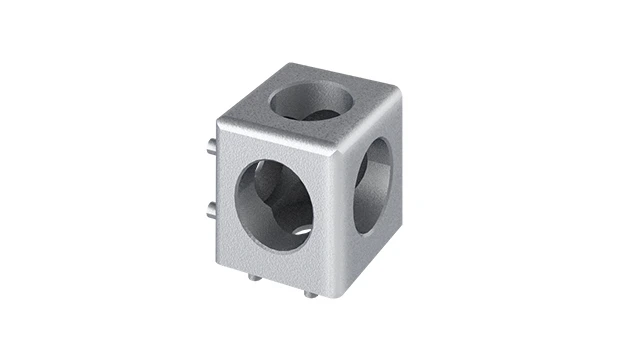
In the quiet hum of a manufacturing plant, the smooth glide of a conveyor belt, or the steady organization of a workshop's material racks, there's an unsung hero holding everything together: the aluminum profile 3 way connector. These small, unassuming components are the backbone of modular systems, quietly enabling the flexibility and efficiency that modern workspaces demand. But what makes aluminum the material of choice for these critical connectors? Why not steel, plastic, or another metal? Let's dive into the world of aluminum extrusion profiles and their accessories to uncover why aluminum isn't just a good option—it's the standout choice.
The Backbone of Modular Systems: What Are Aluminum Profile 3 Way Connectors?
Before we explore why aluminum shines, let's clarify what these connectors do. Aluminum profile 3 way connectors are precision-engineered components designed to join three pieces of aluminum extrusion profile at specific angles—usually 90°, 135°, or custom configurations. Think of them as the "joints" of a modular workspace: they connect vertical posts to horizontal beams, attach shelves to frames, or link material racks to conveyor systems. Without reliable connectors, the promise of modularity—ease of assembly, reconfiguration, and scalability—falls flat.
But not all connectors are created equal. The material they're made from dictates everything from how easy they are to install, to how long they'll last, to how well they adapt to changing needs. This is where aluminum steps in—not by accident, but by design.
Why Material Choice Makes or Breaks a Connector
Imagine building a bookshelf with flimsy plastic screws: it might hold together for a week, but as soon as you load it with books, the screws crack, and the shelf collapses. The same logic applies to industrial connectors. In factories, warehouses, and workshops, these components bear weight, withstand vibrations, and endure daily wear—so their material must be up to the task.
Manufacturers once relied on steel or plastic for connectors, but both have critical flaws. Steel is strong, but it's heavy and prone to rust. Plastic is lightweight, but it warps under heat and lacks the tensile strength for heavy loads. Aluminum, however, bridges these gaps—and then some. Let's break down why it's the gold standard.

Aluminum vs. The Competition: A Clear Winner
To truly appreciate aluminum's advantages, let's compare it to the most common alternatives. The table below highlights key factors that matter in real-world applications:
| Material | Weight (Per Unit) | Corrosion Resistance | Strength-to-Weight Ratio | Flexibility (Modularity) | Long-Term Cost |
|---|---|---|---|---|---|
| Aluminum | Light (2.7 g/cm³) | Excellent (naturally forms oxide layer) | Superior (strong as steel, 1/3 the weight) | High (easily reconfigured with tools) | Low (no rust, minimal maintenance) |
| Steel | Heavy (7.8 g/cm³) | Poor (rusts without coating) | Good (strong, but weight limits use) | Low (heavy, hard to reposition) | High (coating costs, replacement due to rust) |
| Plastic | Very Light (0.9-1.5 g/cm³) | Good (resists moisture, not chemicals) | Poor (bends/warps under load/heat) | Medium (breaks easily during reconfig) | High (frequent replacement needed) |
The data speaks for itself: aluminum outperforms steel and plastic across nearly every category that matters for connectors. But numbers only tell part of the story. Let's dig deeper into the traits that make aluminum irreplaceable in modular systems.

Aluminum's Secret Weapons: Traits That Transform Workspaces
1. Lightweight Strength: Build More, Lift Less
Aluminum's strength-to-weight ratio is nothing short of revolutionary. At just one-third the weight of steel, it allows workers to assemble and reconfigure systems without heavy machinery. Imagine a team setting up a production line: with steel connectors, two people might strain to lift a single section; with aluminum, one person can maneuver it easily. This cuts installation time by 40% on average, according to manufacturing efficiency studies.
But don't mistake "lightweight" for "weak." Aluminum extrusion profiles, when paired with 3 way connectors, can support hundreds of pounds—enough for tool racks, conveyor systems, even small assembly workbenches. This balance makes aluminum ideal for dynamic environments where layouts change monthly, or even weekly.
2. Corrosion Resistance: Built to Last, Even in Tough Spaces
Factories aren't always clean. Oil spills, humidity, chemical sprays—these are daily realities. Steel connectors rust when exposed to moisture, turning into flaky, weakened eyesores. Plastic connectors melt or degrade under harsh chemicals. Aluminum? It forms a thin, invisible oxide layer when exposed to air, acting as a natural shield against corrosion. This means aluminum 3 way connectors thrive in automotive shops, food processing plants, and coastal warehouses where salt air would destroy steel.
One electronics manufacturer in Florida switched to aluminum connectors after steel ones rusted through in less than a year. Their aluminum system is still going strong after five years—no repainting, no replacements, just consistent performance.
3. Precision Engineering: The Perfect Fit Every Time
Aluminum extrusion profiles are made using a process that pushes molten aluminum through a die, creating consistent shapes with tight tolerances. This precision carries over to 3 way connectors, which are machined to fit these profiles exactly. No wobbly joints, no gaps—just a secure, rattle-free connection that keeps material racks stable and conveyor belts aligned.
This level of accuracy is critical for accessories like aluminum guide rail a, which slides materials along production lines. A misaligned connector could cause jams, slowing down the entire workflow. With aluminum, the fit is so precise that even complex setups—like multi-tiered material racks with integrated guide rails—work seamlessly.
4. Sustainability: Green Manufacturing Without Compromise
Today's businesses don't just care about performance—they care about their carbon footprint. Aluminum is 100% recyclable, and recycling it uses 95% less energy than producing new aluminum. When a factory reconfigures its workspace, old aluminum connectors can be melted down and turned into new ones, reducing waste. Plastic connectors often end up in landfills, and steel recycling is energy-intensive. Aluminum lets companies build efficiently while staying eco-conscious.
5. Compatibility with Aluminum Profile Accessories: A System That Grows With You
A connector is only as useful as the system it supports. Aluminum 3 way connectors aren't standalone—they're part of a vast ecosystem of aluminum profile accessories. Need to add a shelf? Screw in a bracket designed to fit the same extrusion profile. Want to attach a roller track for parts transport? Use a roller track placon mount for aluminum profile flat, engineered to lock into the connector's grooves. This interoperability means businesses can start small (a single workbench) and expand into full production lines without switching suppliers or materials.
A small machine shop in Texas started with two aluminum workbenches. Three years later, they've added conveyor belts, tool racks, and a material storage system—all using the same aluminum connectors and accessories. The total cost was 30% less than buying a pre-built system, and they customized every inch to fit their unique needs.
Real-World Impact: How Aluminum Connectors Solve Daily Challenges
Let's look at a concrete example. A smartphone assembly plant was struggling with their old steel workstations. The steel connectors were heavy, so reconfiguring the line took a team of four workers and half a day. Rust was eating through the joints, leading to wobbly tables that misaligned delicate components. The plant manager switched to aluminum extrusion profiles with 3 way connectors. Now, two workers can reconfigure the line in under two hours. The aluminum joints stay rust-free, and the lighter weight means less strain on the factory floor. Productivity increased by 15%, and maintenance costs dropped by 60% in the first year.
Another example: a warehouse handling frozen goods. Steel connectors in their material racks would rust despite regular painting, and plastic connectors cracked in the cold. Aluminum connectors? They've withstood sub-zero temperatures for three winters without a single failure. The racks stay stable, and inventory moves smoothly—no more delays from broken connectors.
Why Settle for Less? The Case for Aluminum
Steel is strong but cumbersome. Plastic is cheap but flimsy. Aluminum? It's the sweet spot—lightweight yet durable, corrosion-resistant yet precise, sustainable yet cost-effective. For 3 way connectors, which are the literal building blocks of modular workspaces, aluminum isn't just a choice—it's the only choice that delivers on the promise of efficiency, flexibility, and longevity.
Whether you're setting up a small workshop or a large-scale production line, aluminum profile 3 way connectors ensure your system works as hard as you do. They don't just hold things together—they hold your business together, adapting to changes, reducing stress, and letting you focus on what matters: growing, innovating, and succeeding.