- Company Articles
- Products and Technology
- Product knowledge
- Aluminum Profile 3 Way Connectors: A Sustainable Alternative to Traditional Fasteners

Aluminum Profile 3 Way Connectors: A Sustainable Alternative to Traditional Fasteners
Related Product
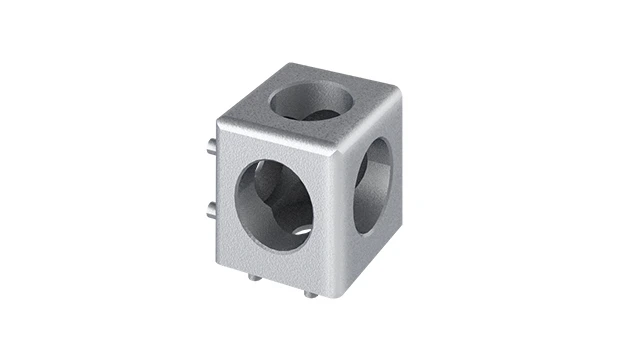
Aluminum Profile 3 Way Connector
The 3 way - squared corner connector is an external fastening method that is typically used to create a corner connection between three profiles. It is a heavy-duty connection that is simple to use and provides a polished look.
Redefining Efficiency, Flexibility, and Eco-Consciousness in Modern Manufacturing
The Quiet Revolution in Manufacturing: Why Fasteners Matter
In the bustling world of production lines, warehouses, and assembly workshops, attention often fixates on big-ticket items: high-tech machinery, automated systems, or state-of-the-art robotics. But if you pause and look closer, the true unsung heroes (or villains) of operational efficiency are often the smallest components—like the fasteners that hold everything together. For decades, manufacturers have relied on traditional fastening methods: welding, rivets, screws, and adhesives that lock structures into permanent shapes. Yet as industries pivot toward sustainability, agility, and leaner operations, these old-guard solutions are revealing their hidden costs—costs that go far beyond the price tag.
Today, the pressure to reduce waste, cut downtime, and adapt to changing production needs is relentless. A factory floor that takes weeks to reconfigure for a new product line, a workstation that ends up in a landfill because its welded frame can't be repurposed, or a warehouse rack that saps labor hours during installation—these are no longer acceptable. Enter aluminum profile 3 way connectors : modular, reusable, and designed with both the planet and productivity in mind. These unassuming components are quietly transforming how we build, adapt, and sustain industrial systems, proving that even the smallest parts can drive big change.
Traditional Fasteners: The Hidden Costs of "Permanent" Solutions
Let's start with the status quo. Traditional fasteners like welds, rivets, and one-time-use screws have been industry standards for a reason: they're strong, familiar, and cheap upfront. But dig deeper, and their true impact becomes clear. Consider a typical scenario: a manufacturer builds a workstation using welded steel frames. Six months later, product demand shifts, requiring a narrower workstation to fit a new assembly line. The welded frame? It's useless. The steel is cut up, most of it ending up in scrap (if recycled at all), and the process repeats—wasting materials, labor, and time.
Then there's the issue of flexibility. In lean manufacturing, the ability to reconfigure spaces quickly is critical. Traditional fasteners are the opposite of flexible. Welding requires skilled labor and specialized equipment; once done, it's nearly impossible to adjust without destroying the structure. Rivets and screws, while removable, often strip or damage materials when taken apart, making reuse risky. This rigidity leads to what experts call "structural waste"—investments in fixed infrastructure that become obsolete as needs change.
Sustainability? Traditional fasteners fall short here, too. Welding releases fumes and consumes energy; rivets and screws are often made from mixed materials that complicate recycling. Even when recycled, the energy required to melt down and reprocess damaged or outdated steel structures is far higher than reusing modular components. For manufacturers aiming to shrink their carbon footprint, these "hidden" environmental costs add up fast.
Aluminum Profile 3 Way Connectors: The Modular Solution
So, what makes aluminum profile 3 way connectors different? At their core, they're part of a modular ecosystem built around aluminum extrusion profiles —hollow, T-slot aluminum beams that serve as the "bones" of industrial structures. These connectors, as the name suggests, join three pieces of aluminum profile at 90-degree angles (or other configurations, depending on the design), creating sturdy, yet frameworks for workbenches, flow racks, conveyor systems, and more.
Imagine (oops—scratch that) Think of them as industrial Legos for adults: no welding, no drilling, no permanent commitments. A worker with basic tools can assemble a workstation in hours, not days, by sliding connectors into the T-slots of aluminum profiles and tightening a few bolts. Need to adjust the height? Loosen the connector, reposition the profile, and retighten. Want to disassemble the entire structure and rebuild it as a material rack next month? No problem—every component is reusable.
But their magic isn't just in convenience. These connectors are engineered for durability. Made from high-grade aluminum alloys, they resist corrosion, handle heavy loads (some models support up to 500kg per joint), and stand up to the wear and tear of factory environments. Paired with aluminum profile accessories like end caps, rubber strips, and brackets, they form systems that are as functional as they are flexible.
The Benefits: Why Manufacturers Are Making the Switch
To truly understand their impact, let's break down the benefits of aluminum profile 3 way connectors and the modular systems they enable:
1. Sustainability: Less Waste, More Reuse
Aluminum is one of the most recyclable materials on the planet—recycling it uses just 5% of the energy required to produce new aluminum. Since connectors and profiles are designed for repeated assembly and disassembly, they rarely end up in landfills. A single set of profiles and connectors can be repurposed dozens of times, from a workbench to a flow rack to a turnover trolley, drastically reducing material waste. For manufacturers committed to circular economy principles, this is a game-changer.
2. Flexibility: Adapt Fast, Stay Competitive
In today's fast-paced markets, agility is key. A electronics manufacturer might need to reconfigure a production line to accommodate a new phone model; a logistics firm might need to adjust rack heights for seasonal inventory. With modular connectors, these changes happen in days, not weeks. No more waiting for welders or ordering custom parts—just grab your existing aluminum profiles, swap out a few connectors, and you're ready. This flexibility is a cornerstone of lean system principles, where minimizing downtime and waste is paramount.
3. Cost Savings: Lower Long-Term Expenses
Yes, aluminum profile systems have a higher upfront cost than welded steel. But consider the long view: no more paying for welding labor, no more replacing damaged structures, no more storing obsolete equipment. A 2023 study by the Manufacturing Efficiency Institute found that companies using modular aluminum systems saved 30-40% on structural costs over five years compared to traditional methods, thanks to reuse, faster reconfiguration, and reduced waste.
4. Safety and Ergonomics
Aluminum is lighter than steel, making structures easier to handle and reducing the risk of injury during assembly. The T-slot design also allows for integrated accessories like tool holders, cable management, and ergonomic work surfaces, creating safer, more comfortable workstations. Unlike welded edges, aluminum profiles have smooth, rounded corners, cutting down on workplace accidents.
| Feature | Traditional Fasteners (Welds, Rivets, Screws) | Aluminum Profile 3 Way Connectors |
|---|---|---|
| Installation Time | Hours to days (requires skilled labor) | Minutes to hours (basic tools, no special skills) |
| Reusability | Low (often damages materials when disassembled) | High (100% reusable with no material damage) |
| Flexibility | Very low (permanent or hard to reconfigure) | Very high (adjustable, reconfigurable in minutes) |
| Environmental Impact | High (energy-intensive production, hard to recycle) | Low (recyclable aluminum, minimal energy for reuse) |
| Long-Term Cost | High (replacement, labor, waste) | Low (reusable, minimal maintenance, no replacement costs) |
Beyond the Connector: The Aluminum Profile Ecosystem
Connectors don't work alone—they're part of a broader system that includes aluminum profile accessories designed to enhance functionality. Think end caps that seal profile ends to prevent dust buildup, rubber strips for noise reduction on conveyor rails, or brackets that attach tools and monitors to workbenches. Even casters and leveling feet can be integrated via specialized connectors, turning a stationary workbench into a mobile cart in minutes.
Take flow racks, for example. A common tool in warehouses, flow racks use gravity to move materials from the back to the front. With aluminum profiles and 3 way connectors, you can build a custom flow rack with adjustable shelf heights, then add roller tracks (another accessory) to control material flow. If your inventory changes, swap out the roller tracks for a different size—no need to buy a new rack.
Or consider ESD workstations, critical for electronics manufacturing to prevent static damage. Aluminum profiles are naturally conductive, and with ESD-safe connectors and accessories (like anti-static mats), you can build a workstation that meets strict industry standards—then reconfigure it when your production line switches to a new device model. This adaptability is why companies like Tesla and Foxconn have adopted modular aluminum systems in their factories.
Sustainability in Action: Real-World Impact
Let's put this into perspective with a real example. A mid-sized automotive parts manufacturer in Ohio recently switched from welded steel workbenches to aluminum profile systems using 3 way connectors. Over two years, they reported:
- A 40% reduction in workstation assembly time (from 8 hours per bench to 3 hours).
- 75% less scrap metal waste (no more cutting up obsolete steel frames).
- A 25% drop in energy use for production setup (no welding equipment running for hours).
- The ability to reuse 90% of components when reconfiguring lines for new parts.
For a company producing 50 workstations annually, these savings translate to tens of thousands of dollars and hundreds of tons of CO2 avoided. Multiply that across industries, and the impact of switching to modular systems becomes clear.
Aluminum's recyclability is another win. Most aluminum profiles contain 30-50% recycled content, and when a structure finally reaches the end of its life (after decades of reuse), the aluminum can be melted down and repurposed with 95% less energy than producing new aluminum. Compare that to steel, which loses quality with each recycling cycle, and it's easy to see why aluminum is the material of choice for sustainable manufacturing.
Choosing the Right Connectors: What to Look For
Not all aluminum connectors are created equal. When selecting 3 way connectors for your operation, consider these factors:
Load Capacity: Check the connector's weight rating—heavier applications (like material racks) need reinforced models. Look for connectors with load tests from reputable suppliers.
Compatibility: Ensure connectors fit your aluminum extrusion profiles (profiles come in standard sizes like 20x20mm, 30x30mm, or 40x40mm). Most suppliers offer connectors tailored to specific profile widths.
Material Quality: Opt for connectors made from high-grade aluminum (6061-T6 is common) for strength and corrosion resistance. Avoid cheap plastic imitations, which may crack under stress.
Ease of Use: Look for quick-release designs or ergonomic bolts that speed up assembly. Some connectors even feature built-in leveling or angle adjustments for uneven floors.
Supplier Support: Choose suppliers who offer technical guidance, CAD models for custom designs, and replacement parts. A good supplier will help you optimize your system for your specific needs.
The Future of Manufacturing: Lean, Green, and Modular
As manufacturers face growing pressure to do more with less—less waste, less energy, less time—the shift to modular systems is accelerating. Lean system principles, which focus on eliminating waste and continuous improvement, align perfectly with the flexibility of aluminum profile 3 way connectors. They empower teams to adapt on the fly, experiment with new layouts, and scale operations without overinvesting in fixed infrastructure.
Looking ahead, we'll likely see even more innovation in this space: smarter connectors with integrated sensors for monitoring load or wear, recycled aluminum profiles with higher strength-to-weight ratios, and AI-driven design tools that help manufacturers optimize modular layouts for maximum efficiency. But even today, the message is clear: small components like 3 way connectors are no longer afterthoughts—they're strategic tools for building a more sustainable, agile, and profitable future.
So, the next time you walk through a factory or warehouse, take a closer look at the structures around you. Chances are, the ones that are changing, growing, and thriving are held together not by welds or rivets, but by the quiet power of aluminum profile 3 way connectors. In a world where adaptability and sustainability are no longer optional, they're not just fasteners—they're the building blocks of progress.