- Company Articles
- Products and Technology
- Product knowledge
- Aluminum Profile 3 Way Connectors for Consumer Electronics Assembly

Aluminum Profile 3 Way Connectors for Consumer Electronics Assembly
Related Product
Aluminum Profile 3 Way Connector
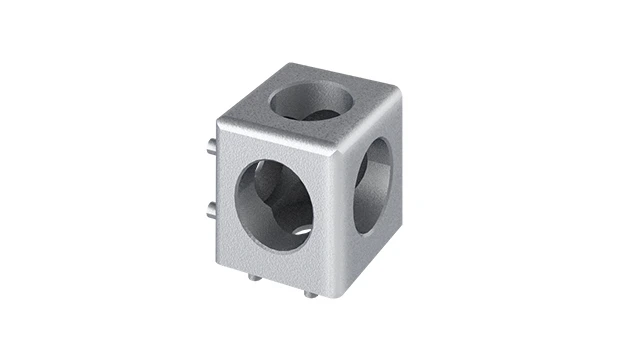
The 3 way - squared corner connector is an external fastening method that is typically used to create a corner connection between three profiles. It is a heavy-duty connection that is simple to use and provides a polished look.
In the high-stakes world of consumer electronics assembly, where every second counts and product designs evolve faster than ever, the difference between success and stagnation often lies in the flexibility of your workspace. Imagine a production floor where a smartphone assembly line needs to reconfigure overnight to accommodate a new model's slimmer chassis, or a laptop manufacturing unit that must adapt to sudden spikes in demand for a popular tablet variant. These scenarios aren't just hypothetical—they're daily realities. And at the heart of solving these challenges? Aluminum profile 3 way connectors. These unassuming components are the unsung heroes that turn rigid workspaces into dynamic, adaptable environments, keeping pace with the relentless innovation of the electronics industry.
What Are Aluminum Profile 3 Way Connectors, Anyway?
Let's start with the basics. Aluminum profile 3 way connectors are specialized hardware designed to join three aluminum extrusion profiles at once, creating stable, multi-directional structures. Unlike traditional welding or permanent fasteners, these connectors slot into the T-slots of aluminum profiles—those distinctive grooves running along the length of the profiles—and secure with bolts, screws, or quick-release mechanisms. Think of them as the "building blocks" that let you snap together custom workbenches, material racks, or assembly stations in hours, not days.
But what makes them so crucial for electronics assembly? For starters, they're engineered for precision. Consumer electronics demand tight tolerances—even a millimeter of misalignment can throw off a PCB installation or component placement. Aluminum profile 3 way connectors, made from high-grade aluminum alloys (often 6063-T5, prized for its strength and corrosion resistance), ensure that every joint is firm yet adjustable. They're also lightweight, which matters when you need to move a workbench or reposition a material rack without halting production. And unlike plastic connectors that warp under heat or steel variants that add unnecessary weight, aluminum strikes the perfect balance of durability and practicality.
Why Aluminum Extrusion Profiles Are the Perfect Partner
To truly appreciate 3 way connectors, you need to understand their dance partner: aluminum extrusion profiles. These profiles are the backbone of modern modular workspaces, and for good reason. Extruded from aluminum billets under high pressure, they feature standardized T-slot designs that make attaching connectors, shelves, tool holders, or even ESD mats a breeze. But it's their versatility that makes them indispensable in electronics assembly.
Aluminum extrusion profiles come in a range of sizes—from slim 20x20mm profiles for lightweight component racks to robust 40x80mm variants for heavy-duty workbenches. This variety means you can tailor your structure to the task at hand: a delicate circuit board assembly station might use 30x30mm profiles for a lightweight, easy-to-maneuver workbench, while a material storage rack holding bulk components could rely on 40x40mm profiles for added stability. And because these profiles are compatible with a suite of accessories—from roller tracks to cable management clips—they form a complete ecosystem that 3 way connectors tap into, turning simple frames into fully functional workspaces.
Perhaps most importantly, aluminum extrusion profiles are inherently compatible with lean system principles. Lean manufacturing, which focuses on minimizing waste and maximizing efficiency, thrives on adaptability. A workspace built with aluminum profiles and 3 way connectors can be disassembled, reconfigured, and reused, eliminating the waste of building custom, one-off furniture for every new project. In an industry where product lifecycles are measured in months, not years, this kind of sustainability isn't just eco-friendly—it's economically essential.

The Key Benefits of 3 Way Connectors in Electronics Assembly
So, what exactly do aluminum profile 3 way connectors bring to the table that other connectors can't? Let's break it down into the five critical advantages that matter most in consumer electronics assembly:
1. Unmatched Flexibility for Rapid Reconfiguration
Consumer electronics don't stand still, and neither should your workspace. A typical smartphone model has a lifecycle of 12–18 months, and during that time, there may be half a dozen minor updates to internal components or casing designs. With 3 way connectors, reconfiguring a workbench to accommodate these changes is as simple as loosening a few bolts, adjusting the angle of a profile, and retightening. Need to add a third shelf to a material rack to hold new battery modules? A 3 way connector lets you branch off from an existing vertical profile in minutes. Want to reposition a conveyor track to align with a new assembly sequence? 3 way connectors make it possible without cutting or welding.
2. Precision That Protects Sensitive Components
In electronics assembly, precision isn't just a buzzword—it's a requirement. A misaligned workbench could lead to misplated PCBs or damaged microchips, costing thousands in scrap and delays. Aluminum profile 3 way connectors are engineered to hold profiles at exact angles (often within ±0.5° tolerance), ensuring that work surfaces stay level, material racks remain stable, and conveyor tracks align perfectly. This level of precision is especially critical for ESD-sensitive environments, where even a slight tilt can disrupt static control measures. When paired with aluminum extrusion profiles, which have consistent cross-sections and smooth surfaces, 3 way connectors create a foundation you can trust with your most delicate components.
3. Durability That Withstands the Grind
Consumer electronics assembly lines run around the clock, and their equipment needs to keep up. Aluminum profile 3 way connectors are built to handle this wear and tear. The aluminum alloy used in their construction resists corrosion from cleaning agents (essential in sterile electronics environments) and won't degrade under the constant vibration of nearby machinery. Unlike plastic connectors that can crack under repeated adjustments or steel connectors that rust in humid conditions, aluminum 3 way connectors maintain their integrity for years. This durability translates to lower replacement costs and less downtime—two factors that directly impact your bottom line.
4. Cost-Effectiveness Through Reusability
In an industry where profit margins are tight, every dollar saved counts. Traditional workspace solutions—like custom-welded steel benches or fixed wooden racks—are expensive to build and even costlier to replace when they become obsolete. Aluminum profile 3 way connectors flip this script by enabling reusability. When a project ends or a design changes, you can disassemble the old structure, sort the profiles and connectors, and reuse them to build something new. This "modular mindset" reduces waste and cuts down on capital expenditure for new furniture. Over time, the savings add up: a recent study by a leading electronics manufacturer found that switching to aluminum profile systems with 3 way connectors reduced workspace reconfiguration costs by 40% compared to traditional methods.
5. Compatibility with Lean System Workflows
Lean manufacturing is all about streamlining processes and eliminating waste, and aluminum profile 3 way connectors are a natural fit. Consider a typical lean workflow: materials should flow smoothly from storage to assembly to testing, with minimal handling. A material rack built with 3 way connectors can be positioned inches from the assembly line, reducing the time workers spend fetching components. A workbench configured with 3 way connectors can integrate tool holders, ESD mats, and cable management systems, keeping the workspace clutter-free and minimizing motion waste. Even better, because these structures are easy to adjust, you can continuously refine your layout based on kaizen events or process improvements—no need to wait for a major renovation.

How 3 Way Connectors Stack Up Against Other Connector Types
Aluminum profile connectors come in all shapes and sizes, from simple 90° angle brackets to complex multi-axis joints. So why choose 3 way connectors over the rest? Let's compare the most common types to see where 3 way connectors shine:
| Connector Type | Angles Supported | Best For | Limitations | Why 3 Way Stands Out |
|---|---|---|---|---|
| 90° Fixed Connector | Only 90° (perpendicular) | Right-angle joints (e.g., workbench legs to tabletop) | Can't create branching structures; limited flexibility | 3 way connectors add a third axis, enabling T-joints and Y-joints for more complex layouts |
| 45° Adjustable Connector | 45°–135° (variable) | Sloped surfaces (e.g., inclined conveyor tracks) | Weaker than fixed connectors; not ideal for heavy loads | 3 way connectors offer fixed-angle stability while still supporting multi-directional builds |
| Swivel Connector | 360° rotation | Dynamic structures (e.g., adjustable monitor arms) | Not designed for static load-bearing; can loosen over time | 3 way connectors provide rigid, secure joints for static workspaces, critical in assembly lines |
| 3 Way Connector | 90°, 135°, or custom (depending on model) | Branching structures (e.g., workbench with integrated material rack, T-shaped conveyor junctions) | More complex to install than basic connectors | Unique ability to join three profiles at once, reducing the need for multiple connectors and simplifying builds |
As the table shows, 3 way connectors fill a unique niche: they provide the stability of fixed connectors with the versatility to create multi-directional structures. In consumer electronics assembly, where workspaces often need to integrate multiple functions (e.g., assembly, testing, and packaging), this ability to branch out without sacrificing strength is invaluable.
Installing 3 Way Connectors: A Step-by-Step Guide for Electronics Workspaces
One of the biggest advantages of aluminum profile 3 way connectors is how easy they are to install—no welding, no specialized tools, just a few basic steps. Here's how to build a simple assembly workbench using 3 way connectors, aluminum extrusion profiles, and a few common accessories:
Step 1: Gather Your Materials
For a standard workbench, you'll need: 4 pieces of 40x40mm aluminum extrusion profile (legs, 1000mm long), 2 pieces of 40x40mm profile (front/back rails, 1500mm long), 2 pieces of 40x40mm profile (side rails, 800mm long), 4 aluminum profile 3 way connectors, 16 M8 bolts (to secure connectors), a hex key, a rubber mallet, and a level.
Step 2: Assemble the Frame
Start by attaching a 3 way connector to the top of each leg profile. Slide the connector into the T-slot at the end of the leg, ensuring the connector's third port faces inward (toward the center of the workbench). Tighten the bolt with the hex key until snug—don't overtighten, as you'll need to adjust later. Next, insert the front and back rails into the horizontal ports of the 3 way connectors. Use the rubber mallet to tap the profiles into place, ensuring they're fully seated. Repeat with the side rails to form a rectangular frame.
Step 3: Level and Secure
Stand the frame upright and use the level to check for wobble. Adjust the 3 way connectors as needed—loosen the bolts slightly, tap the profiles into alignment, then retighten. Once the frame is level, fully tighten all bolts (a good rule of thumb is to tighten until the bolt head is flush with the connector). For added stability, you can add cross-braces using additional 3 way connectors, but for most electronics assembly workbenches, the basic frame will suffice.
Step 4: Add Accessories
Now comes the fun part: customizing your workbench. Use T-slot nuts and bolts to attach ESD mats, tool holders, or a shelf (using—you guessed it—3 way connectors for support). If you need mobility, add casters to the legs; if you need to raise the height, swap out the leg profiles for longer ones. The beauty of 3 way connectors is that nothing is permanent—if you later decide to add a second shelf or reposition the tool holder, you can do so in minutes.
Real-World Applications: How Electronics Manufacturers Are Using 3 Way Connectors
To understand the impact of aluminum profile 3 way connectors, let's look at how two leading consumer electronics companies are putting them to work:
Case Study 1: Smartphone Assembly Line Reconfiguration
A major smartphone manufacturer faced a dilemma: their flagship model was due for a mid-cycle update with a new camera module, requiring the assembly line to add a dedicated testing station. With traditional fixed workbenches, this would have taken weeks of downtime and thousands in custom fabrication costs. Instead, they used aluminum extrusion profiles and 3 way connectors to build a modular testing station in just two days. The station featured a sloped material rack (supported by 3 way connectors) for feeding camera modules, a height-adjustable work surface, and integrated ESD protection. Best of all, when the next model launches, the station can be disassembled and repurposed for battery testing or PCB inspection.
Case Study 2: Lean Material Handling for Wearables
A wearable tech company struggling with material waste turned to lean system principles and aluminum profile 3 way connectors. They replaced their static wooden material racks with modular racks built using 3 way connectors, allowing them to adjust shelf heights based on component size (e.g., smaller shelves for watch batteries, larger shelves for display modules). The racks were positioned directly next to the assembly line, reducing walk time by 25%. Even better, during peak production seasons, they could quickly add extra rack sections using spare profiles and 3 way connectors, avoiding the need to rent temporary storage.
Choosing the Right 3 Way Connector for Your Needs
Not all 3 way connectors are created equal. To get the most out of your aluminum profile system, consider these key factors when selecting 3 way connectors:
Profile Size Compatibility
Connectors are designed to fit specific profile sizes (e.g., 20x20mm, 30x30mm). Using a connector that's too small or too large will result in loose joints or damaged profiles. Always check the manufacturer's specifications to ensure compatibility.
Load Capacity
If you're building a workbench that will hold heavy equipment (e.g., a soldering station or testing rig), opt for heavy-duty 3 way connectors with reinforced walls. Light-duty connectors are fine for material racks or lightweight shelving, but they'll fail under excessive weight.
Environmental Conditions
For cleanrooms or humid environments, look for 3 way connectors with anodized finishes to resist corrosion. In ESD-sensitive areas, choose connectors made from conductive aluminum alloys to maintain static control.
Adjustability
Some 3 way connectors offer micro-adjustment features, allowing you to fine-tune angles after installation. This is especially useful for precision tasks like aligning conveyor tracks or leveling work surfaces.
The Future of Workspace Flexibility: What's Next for 3 Way Connectors?
As consumer electronics continue to shrink in size and grow in complexity, the demand for adaptable workspaces will only increase. So what's on the horizon for aluminum profile 3 way connectors? Manufacturers are already experimenting with smart connectors embedded with RFID tags, allowing teams to track component usage or monitor joint stress in real time. Others are developing quick-release 3 way connectors that can be adjusted without tools, further reducing reconfiguration time. And as sustainability becomes a bigger priority, we'll likely see more connectors made from recycled aluminum, without sacrificing strength or durability.
Perhaps most exciting is the integration of 3 way connectors with Industry 4.0 technologies. Imagine a workspace where a collaborative robot (cobot) uses AI to detect a bottleneck in the assembly line, then automatically triggers the reconfiguration of a material rack built with 3 way connectors—all without human intervention. While this may sound like science fiction, early prototypes are already being tested in advanced manufacturing facilities.
Conclusion: The Connector That Keeps Up with Innovation
In the fast-paced world of consumer electronics assembly, adaptability isn't just a luxury—it's a survival skill. Aluminum profile 3 way connectors may not grab headlines, but they're the backbone of the flexible workspaces that drive innovation. By combining the strength of aluminum extrusion profiles with the versatility of multi-directional joints, these connectors empower manufacturers to build, adjust, and rebuild their workspaces with unprecedented speed and precision. Whether you're assembling smartphones, tablets, wearables, or the next big tech gadget, 3 way connectors ensure your workspace can evolve as quickly as your products do.
So the next time you pick up a sleek new device, take a moment to appreciate the unsung heroes behind its creation. Somewhere on that assembly line, an aluminum profile 3 way connector is hard at work—quietly, reliably, and flexibly—helping turn ideas into reality, one joint at a time.