- Company Articles
- Products and Technology
- Product knowledge
- Aluminum Profile 3 Way Connectors for Modular Production Systems

Aluminum Profile 3 Way Connectors for Modular Production Systems
Related Product
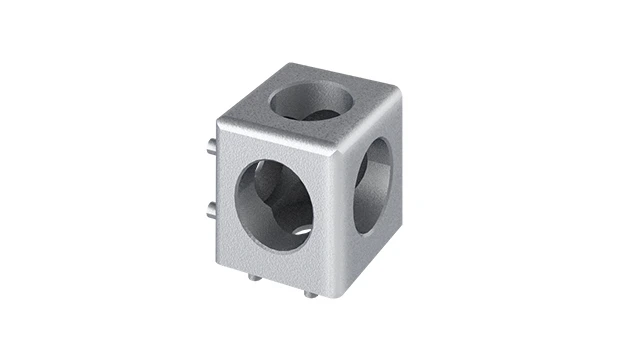
Aluminum Profile 3 Way Connector
The 3 way - squared corner connector is an external fastening method that is typically used to create a corner connection between three profiles. It is a heavy-duty connection that is simple to use and provides a polished look.
In today's fast-paced manufacturing world, the ability to adapt and evolve isn't just a luxury—it's a necessity. Factories, workshops, and production lines are no longer static environments; they need to shift with changing demands, new product launches, and evolving workflows. That's where modular production systems come into play, and at the heart of these systems lies a small but mighty component: the aluminum profile 3 way connector. These unassuming pieces are the unsung heroes that turn rigid structures into flexible, customizable workspaces. Let's dive into why they matter, how they work, and why they've become indispensable for anyone building with aluminum profiles.
What Are Aluminum Profile 3 Way Connectors, Anyway?
If aluminum profiles are the "bones" of modular production systems, connectors are the "joints" that hold everything together. And among these joints, 3 way connectors stand out for their unique ability to create branching structures. Simply put, a 3 way connector is designed to join three aluminum profiles at a single point, allowing for the creation of T-shapes, Y-shapes, or even multi-directional frameworks. Think of them as the "crossroads" of your modular setup—where one profile meets two others, opening up a world of design possibilities.
Unlike fixed or single-direction connectors, 3 way connectors add a layer of versatility that's hard to match. Whether you're building a workbench with side shelves, a material rack with multiple levels, or a production line with branching conveyor paths, these connectors make it possible to redirect and expand your structure without starting from scratch. They're the reason modular systems live up to their name—modular—because they let you tweak, add, or rearrange components with minimal hassle.
Design & Materials: Built to Last, Designed to Adapt
At first glance, an aluminum profile 3 way connector might look like a simple piece of metal, but there's more to it than meets the eye. Most are crafted from high-grade aluminum alloys, like the widely used 6063-T5, known for its strength, lightweight nature, and resistance to corrosion. This choice of material isn't accidental—manufacturing environments can be tough, with exposure to dust, moisture, and occasional impacts, so durability is key.
The design of these connectors is equally thoughtful. Many feature a compact, low-profile shape that sits flush against the aluminum profiles, reducing bulk and maintaining a clean, professional look. Inside, you'll often find threaded holes or slots that align with the T-slots on aluminum profiles, allowing for secure attachment with bolts, screws, or T-nuts—common aluminum profile accessories that make installation a breeze. Some models even include built-in reinforcement ribs to boost load capacity, ensuring they can handle the weight of tools, materials, or finished products without bending or breaking.
What really sets quality 3 way connectors apart, though, is precision. A well-made connector will fit snugly with standard aluminum profiles (like 2020, 3030, or 4040 series), leaving no gaps or wobble. This tight fit isn't just about aesthetics; it's about stability. When you're building a workbench where someone might lean, or a material rack holding heavy components, a loose connection could lead to accidents or system failure. Reputable manufacturers invest in tight tolerances during production, ensuring each connector works seamlessly with the profiles it's designed for.

Why 3 Way Connectors Matter in Modular Systems
You might be wondering: with so many connector types available (90-degree, 45-degree, cross connectors, etc.), why focus on 3 way models? The answer lies in their ability to unlock flexibility. Let's break down the key benefits they bring to modular production systems:
1. They Enable Complex, Multi-Directional Structures
Not every modular setup is a simple straight line or right angle. Sometimes you need to branch off—like adding a side shelf to a workbench for tools, or creating a multi-tiered material rack where items flow in two directions. 3 way connectors make this possible without requiring custom fabrication. For example, a lean system designed for electronics assembly might start with a basic workbench, but as production scales, operators might need a parts bin holder extending off one side and a testing station off the other. With 3 way connectors, that expansion can happen in hours, not days.
2. They Reduce Waste and Save Costs
Traditional manufacturing setups often rely on welded steel structures, which are permanent. If your needs change—say, you need to rearrange your production line for a new product—you'd have to cut, re-weld, or even replace the entire structure, wasting time and money. 3 way connectors eliminate that problem. Since they're bolted, not welded, you can disassemble, reconfigure, and reuse them. A workshop that once used a 3-level material rack might repurpose the same profiles and 3 way connectors to build a mobile trolley when demand shifts—no new materials needed.
3. They Simplify Assembly (Even for Beginners)
You don't need to be a master craftsman to use 3 way connectors. Unlike welding, which requires skill and equipment, assembling with these connectors is a matter of aligning profiles, inserting bolts, and tightening with a hex key. This makes modular systems accessible to small businesses, startups, or even hobbyists who might not have dedicated maintenance teams. I've seen small-scale manufacturers put together custom workbenches in an afternoon using nothing but aluminum profiles, 3 way connectors, and a basic tool kit—something that would have taken days with traditional methods.
4. They Support Lean Manufacturing Principles
Lean manufacturing is all about minimizing waste, streamlining workflows, and maximizing efficiency. 3 way connectors align perfectly with these goals. By allowing quick reconfigurations, they help teams adapt to bottlenecks or new processes on the fly. For instance, if a production line is slowed down by workers having to reach for tools, adding a side shelf with a 3 way connector brings tools within arm's reach, cutting down on movement and time. It's these small, adaptable changes that make lean systems truly effective.

Real-World Applications: Where 3 Way Connectors Shine
To understand just how useful 3 way connectors are, let's look at some common scenarios where they're indispensable. These examples show how they transform aluminum profiles into functional, real-world solutions:
Workbenches: The Backbone of Any Workshop
A basic workbench might seem simple, but add in shelves, tool holders, and overhead racks, and you've got a multi-functional workspace—all thanks to 3 way connectors. Imagine a mechanic's bench: the main surface is a large aluminum profile frame, but off the back, 3 way connectors attach vertical profiles that support a shelf for parts bins. On one side, another set of 3 way connectors branches out to hold a tool pegboard. If the mechanic needs more space later, they can unbolt the side shelf and reposition it, or add a second level to the overhead rack—no need to buy a new bench.
Material Racks and Flow Racks: Organizing for Efficiency
In warehouses or assembly lines, material racks keep components organized and accessible. A typical flow rack uses inclined roller tracks to let materials slide forward as items are taken, reducing the need to bend or reach. 3 way connectors are critical here for building the rack's frame and supporting the roller tracks. For example, a 3-row, 3-floor material rack (similar to "material rack b" in some catalogs) relies on 3 way connectors to join vertical posts with horizontal beams, creating sturdy levels for the roller tracks. If the warehouse starts stocking taller items, adding a fourth floor is as simple as inserting more profiles and connectors into the existing structure.
Production Line Crossovers and Branches
In larger factories, production lines rarely move in a single straight line. Parts might need to split off to different stations for testing, packaging, or customization. 3 way connectors make these branches possible. For instance, a food packaging line might start with a main conveyor belt, then use 3 way connectors to split into two paths: one for standard packaging and one for eco-friendly packaging. The connectors ensure the branching conveyors are aligned and stable, even as products move along them at high speeds.
Mobile Trolleys and Carts
Not all modular structures stay in one place. Mobile trolleys are essential for moving materials between workstations, and 3 way connectors help build their frames. A trolley might have a flat base made from aluminum profiles, with vertical posts (connected via 3 way connectors) supporting side rails to keep items from falling off. Casters (another key accessory) attach to the base, turning the frame into a movable unit. If the trolley needs to carry taller items later, adding an extra level with 3 way connectors lets it adapt without replacing the entire cart.
How Do 3 Way Connectors Compare to Other Connector Types?
To fully appreciate 3 way connectors, it helps to see how they stack up against other common connector types. Below is a comparison table highlighting key differences in design, use cases, and performance:
| Connector Type | Primary Use | Load Capacity (Typical) | Best For | Limitations |
|---|---|---|---|---|
| Aluminum Profile 3 Way Connector | Joining 3 profiles at a single point (T-shapes, Y-shapes) | 150–300 kg (depending on size/material) | Branching structures, multi-level racks, workbench shelves | Not ideal for 4-way or complex angles (use cross connectors instead) |
| 90-Degree Connector | Joining 2 profiles at a right angle | 200–400 kg | Simple frames, corners of workbenches or racks | Limited to 90-degree angles; can't create branches |
| 45-Degree Connector | Joining 2 profiles at a 45-degree angle | 100–250 kg | Diagonal bracing, sloped surfaces (e.g., chutes) | Specialized use; not versatile for straight or branching structures |
| Cross Connector (4-Way) | Joining 4 profiles in a cross shape (horizontal + vertical) | 180–350 kg | Central support posts, multi-directional racks | Bulkier than 3 way connectors; overkill for simple branches |
As the table shows, 3 way connectors fill a unique niche: they offer more versatility than 90-degree or 45-degree connectors but are less bulky than cross connectors. For most modular systems that need to balance simplicity, strength, and adaptability, they're the go-to choice.
Tips for Installing and Maintaining 3 Way Connectors
Even the best connectors won't perform well if they're installed incorrectly. Here are some practical tips to ensure your 3 way connectors (and the modular systems they build) stay strong and functional for years:
Installation: Get It Right the First Time
- Align profiles carefully. Before tightening bolts, make sure all three profiles are straight and aligned with the connector. A small misalignment can create stress on the connector, leading to wobbling or reduced load capacity.
- Don't overtighten. It's tempting to crank bolts as tight as possible, but aluminum profiles and connectors can warp if overstressed. Tighten until the connection is snug—you should feel resistance, but the metal shouldn't bend.
- Use the right accessories. Pair connectors with compatible T-nuts, bolts, and washers (common aluminum profile accessories). Mismatched parts can lead to loose connections or stripped threads.
- Test the structure. After assembly, give the structure a gentle shake or apply light pressure to key points. If it wobbles, check the connectors—you might need to re-tighten bolts or adjust alignment.
Maintenance: Keep Them Working Like New
- Inspect regularly. Every few months, check connectors for signs of wear, like loose bolts or cracks. In high-vibration environments (like near heavy machinery), bolts can loosen over time, so a quick tightening can prevent bigger issues.
- Clean when needed. Dust, oil, or debris can build up in the T-slots or around connectors, making disassembly harder later. Wipe them down with a dry cloth or mild cleaner—avoid harsh chemicals that might damage the aluminum finish.
- replace worn parts. If a connector is bent, cracked, or has stripped threads, replace it immediately. Using damaged connectors compromises the entire structure's safety.
- Lubricate moving parts (if applicable). Some 3 way connectors have rotating components (though rare). If yours do, a drop of light machine oil can keep them moving smoothly.
Choosing the Right Supplier for Your 3 Way Connectors
Not all aluminum profile 3 way connectors are created equal. The quality of your connectors can make or break your modular system—so choosing a reliable supplier is key. Here's what to look for:
1. Quality Materials and Manufacturing
Start by asking about materials. Reputable suppliers will use high-grade aluminum alloys (like 6061 or 6063) and heat treatment processes to ensure strength and corrosion resistance. Avoid suppliers who can't specify the material grade—cheap connectors might look similar but fail under load.
2. Compatibility with Standard Profiles
Most manufacturers produce connectors for standard aluminum profile sizes (2020, 3030, 4040, etc.). Make sure the supplier's 3 way connectors are designed for the profiles you're using. A supplier who offers samples can help you test compatibility before buying in bulk.
3. Range of Accessories
A good supplier won't just sell connectors—they'll offer the aluminum profile accessories you need to go with them, like bolts, T-nuts, washers, and end caps. This saves you time and ensures all parts work together seamlessly.
4. Customer Support
Even with the best products, questions happen. Look for suppliers who offer clear documentation (like installation guides) and responsive customer service. If you're unsure which connector is right for your project, a knowledgeable supplier should be able to guide you based on your load requirements, profile size, and application.
5. Consistency and Reliability
In manufacturing, delays can cost money. Choose a supplier with a track record of consistent stock and on-time shipping. Reading reviews or asking for references from other customers can help you gauge reliability.
The Future of Modular Systems and 3 Way Connectors
As manufacturing continues to evolve—with trends like automation, small-batch production, and sustainable practices—modular systems will only grow in importance. And 3 way connectors will evolve right along with them. We're already seeing innovations like lightweight yet stronger alloys, quick-connect designs that eliminate the need for tools, and even smart connectors with built-in sensors to monitor load or vibration. These advancements will make modular systems even more adaptable, efficient, and user-friendly.
For businesses, this means even greater flexibility to pivot with market demands, reduce waste, and stay competitive. Whether you're a small workshop building your first workbench or a large factory reconfiguring a production line, aluminum profile 3 way connectors will remain a cornerstone of that flexibility—quietly holding everything together, one connection at a time.
Wrapping Up: Why 3 Way Connectors Are a Must-Have
At the end of the day, aluminum profile 3 way connectors are more than just pieces of metal—they're enablers. They enable small businesses to compete with larger manufacturers by reducing setup costs. They enable factories to adapt to new products without rebuilding entire lines. They enable workers to create safer, more efficient workspaces tailored to their needs. In a world where change is constant, they're the steady, reliable tool that makes flexibility possible.
So the next time you walk through a workshop, factory, or warehouse, take a closer look at the structures around you. Chances are, you'll spot aluminum profiles held together by 3 way connectors—quietly doing their job, making modular magic happen. And if you're building your own modular system? Don't overlook these small but powerful components. They might just be the key to unlocking your workspace's full potential.