- Company Articles
- Products and Technology
- Product knowledge
- Aluminum Profile 3 Way Connectors in Food Processing: Hygiene Considerations

Aluminum Profile 3 Way Connectors in Food Processing: Hygiene Considerations
Related Product
Aluminum Profile 3 Way Connector
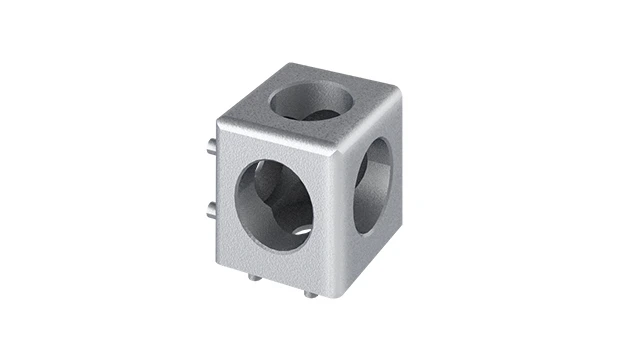
The 3 way - squared corner connector is an external fastening method that is typically used to create a corner connection between three profiles. It is a heavy-duty connection that is simple to use and provides a polished look.
In the fast-paced world of food processing, where every second counts and safety is non-negotiable, the equipment that keeps operations running smoothly often flies under the radar—until a hygiene breach occurs. From conveyor belts that transport fresh produce to workbenches where workers assemble packaged goods, every component plays a role in maintaining the integrity of the final product. Among these unsung heroes are aluminum profile 3 way connectors: small, unassuming parts that hold together the structures powering food processing lines. But why do these connectors matter so much for hygiene? Let's dive into the details, exploring how their design, material, and functionality make them indispensable in an industry where even the tiniest crevice can become a breeding ground for bacteria.
The Role of Aluminum Profiles in Food Processing
Before we zoom in on 3 way connectors, it's important to understand the foundation they're built on: aluminum extrusion profiles. These profiles are created by forcing heated aluminum through a die, shaping it into consistent cross-sections—think T-slots, channels, or tubes—that can be cut, joined, and configured into almost any structure. In food processing, aluminum extrusion profiles are everywhere: they form the frames of workbenches, the supports for conveyor systems, the racks that hold raw materials, and the shelves where finished products are staged.
Why aluminum? Unlike steel, which rusts when exposed to moisture and cleaning chemicals, aluminum naturally forms a thin, protective oxide layer that resists corrosion. This layer isn't just a surface treatment; it's part of the metal itself, meaning it self-repairs if scratched. For food processors, this translates to equipment that can withstand daily washdowns with high-pressure hoses, acidic sanitizers, and even steam cleaning—without degradation. And unlike plastic, which can warp under heat or harbor bacteria in porous surfaces, aluminum is non-porous, easy to sanitize, and durable enough to handle the heavy loads of ingredients, packaging, and machinery.
But aluminum profiles alone aren't enough. To build functional, adaptable structures, you need aluminum profile accessories—connectors, brackets, end caps, and hinges—that turn individual profiles into cohesive systems. Among these accessories, 3 way connectors stand out for their versatility. As the name suggests, they join three aluminum profiles at a single point, allowing for the creation of corners, T-junctions, or multi-directional supports. In food processing, where layouts change with new product lines and space is often limited, this modularity is a game-changer. Need to reconfigure a workbench to accommodate a taller worker? Swap out a few connectors. Want to add a third shelf to a material rack? Just attach a 3 way connector and a new profile. But beyond flexibility, it's their impact on hygiene that truly sets them apart.
Designing for Hygiene: The Anatomy of a 3 Way Connector
Walk into any commercial kitchen or food processing plant, and you'll notice a common theme: smooth surfaces, rounded edges, and minimal crevices. That's because bacteria, mold, and allergens love to hide in tight spaces—think the threads of a bolt, the gap between a welded joint, or the rough edge of a plastic bracket. Aluminum profile 3 way connectors are engineered to eliminate these risks, with design features that prioritize cleanliness without sacrificing strength.
Seamless Connections, No Hidden Gaps
Traditional connectors, like those made from plastic or steel, often rely on screws, nuts, or bolts that protrude from the profile. These protrusions create ledges where food particles can collect, and the threads of the fasteners trap moisture, making them nearly impossible to fully clean. Aluminum profile 3 way connectors, by contrast, are designed to fit snugly into the T-slots of aluminum extrusion profiles. Using specialized bolts or clamping mechanisms that sit flush with the profile's surface, they create seamless connections with no exposed hardware. This means when you wipe down a workbench frame or hose off a conveyor support, there's nowhere for debris to linger—just smooth aluminum from end to end.
Smooth Edges and Curved Corners
Even the sharpest corner is a hygiene hazard. A 90-degree angle between two profiles can create a crevice where water pools, or a sharp edge that snags a cleaning cloth, leaving behind lint or food residue. High-quality aluminum profile 3 way connectors address this with rounded edges and contoured surfaces. The contact points between the connector and the profiles are gently curved, ensuring that cleaning tools—brushes, sponges, or even automated scrubbers—can glide over them without catching. This might seem like a small detail, but in a facility that processes thousands of pounds of food daily, small details add up to big reductions in contamination risk.
Corrosion Resistance, Inside and Out
While aluminum itself is corrosion-resistant, the connectors that join profiles are often made from the same material—or from anodized aluminum, which adds a thicker, harder oxide layer for extra protection. This ensures that even the connector's internal components, which might come into contact with moisture during cleaning, won't rust or degrade. Imagine a 3 way connector holding up a conveyor belt in a poultry processing plant, where daily washdowns with chlorine-based sanitizers are standard. A steel connector would start to corrode within months, flaking rust into the product stream. An aluminum connector? It keeps working, clean and intact, for years.

Hygiene in Action: Real-World Applications
To understand how aluminum profile 3 way connectors impact hygiene, let's look at two common scenarios in food processing: workbenches and material racks.
Workbenches: Where Precision Meets Cleanliness
A typical workbench in a food processing plant might be used for tasks like weighing spices, assembling snack packages, or inspecting fresh produce. The work surface is usually stainless steel for easy sanitizing, but the frame—often made from aluminum extrusion profiles—relies on 3 way connectors to stay stable and hygienic. Consider a workbench E (single deck, without casters), a common model in many facilities. Its frame is built with vertical and horizontal aluminum profiles joined at the corners by 3 way connectors. Because these connectors create flush, gap-free joints, there's no space between the vertical and horizontal supports for crumbs, spills, or cleaning solution to accumulate. When the shift ends and the cleaning crew arrives, they can spray the frame with sanitizer, wipe it down with a microfiber cloth, and know that every inch is free of bacteria. Compare this to a workbench with welded steel joints: over time, welds can crack, creating tiny crevices that even industrial cleaners can't reach. Those crevices become hotbeds for Listeria or Salmonella, putting the entire production run at risk.
Material Racks: Storing Ingredients Safely
Material racks are another critical application. Take material rack B, a 3-row, 3-floor design used to store everything from flour sacks to canned tomatoes. Each shelf is supported by aluminum profiles, and the vertical uprights are connected to horizontal crossbars using 3 way connectors. In a busy plant, these racks are loaded and unloaded dozens of times a day, with spills and dust accumulating on and around them. The 3 way connectors here need to do two things: hold heavy loads without bending, and remain easy to clean. Because they're made from aluminum, they don't rust when exposed to spilled liquids, and their smooth surfaces mean that when the rack is hosed down (a common practice in facilities handling fresh produce), water runs off instead of pooling. Even the T-slots in the aluminum profiles, which are used to adjust shelf heights via connector positions, are designed with hygiene in mind: they're often covered with T-slot rubber seal covers, which plug the slots when not in use, preventing debris from falling into them.

Comparing Connector Materials: Why Aluminum Beats the Rest
Not all connectors are created equal. To highlight why aluminum profile 3 way connectors are the gold standard for hygiene in food processing, let's compare them to two alternatives: stainless steel and plastic.
| Material | Corrosion Resistance | Cleanability | Durability | Cost | Best For |
|---|---|---|---|---|---|
| Aluminum (Anodized) | Excellent: Self-healing oxide layer resists acids, moisture, and sanitizers. | High: Non-porous, smooth surfaces with no crevices; compatible with high-pressure washers. | Very Good: Withstands heavy loads and repeated cleaning; minimal wear over time. | Moderate: More affordable than stainless steel, more durable than plastic. | Daily washdown environments, modular structures, workbenches, and material racks. |
| Stainless Steel | Good: Resists corrosion but can pit if exposed to chlorides (e.g., saltwater, certain sanitizers). | Moderate: Smooth but often requires threaded fasteners, which trap debris; heavier, harder to move for deep cleaning. | Excellent: Extremely strong, but prone to weld fatigue in modular setups. | High: More expensive than aluminum; increased labor costs for welding. | High-heat environments (e.g., bakeries) or where extreme strength is needed. |
| Plastic (Nylon/Polypropylene) | Poor: Can absorb moisture, leading to bacterial growth; degrades under UV light and high temperatures. | Low: Porous surfaces trap bacteria; can warp or crack under pressure, creating hidden gaps. | Poor: Weak under heavy loads; prone to bending or breaking with frequent use. | Low: Inexpensive upfront, but needs frequent replacement. | Temporary setups or low-stress applications with minimal cleaning requirements. |
As the table shows, aluminum strikes the perfect balance of hygiene, durability, and cost. It outperforms plastic in every category that matters for food processing and offers comparable corrosion resistance to stainless steel at a lower price point—all while being lighter and easier to reconfigure. For most food processors, the choice is clear: aluminum profile 3 way connectors aren't just a preference; they're a necessity.
Choosing the Right Lean System Supplier
Even the best design can fall short if the quality isn't there. That's why partnering with a reputable lean system supplier is critical. A reliable supplier doesn't just sell aluminum profiles and accessories—they understand the unique demands of food processing and can guide you toward connectors and profiles that meet industry standards, such as FDA 21 CFR Part 175 (for food contact materials) or EU 10/2011 (for plastic materials in food contact). They'll also ensure that the 3 way connectors you receive are precision-manufactured, with tight tolerances that prevent gaps between profiles and connectors. Look for suppliers who offer certifications, test reports, and case studies from other food processing clients—this is a sign they've been vetted in real-world hygiene-critical environments.
A good lean system supplier will also help you avoid common pitfalls. For example, some cheaper connectors use low-grade aluminum that's prone to bending, or they cut corners on surface finishing, leaving rough edges that harbor bacteria. By investing in high-quality connectors from a trusted supplier, you're not just buying a part—you're investing in peace of mind, knowing that your equipment is built to protect both your product and your customers.
Maintenance: Keeping Connectors Hygienic Over Time
Even the most hygienic connectors need proper care to stay that way. Here are a few maintenance tips to ensure your aluminum profile 3 way connectors continue supporting a clean processing environment:
- Clean regularly, but avoid over-scrubbing: Use a soft-bristled brush or microfiber cloth with mild detergent and warm water. Avoid abrasive pads, which can scratch the aluminum's oxide layer.
- Inspect for wear and tear: Check connectors monthly for cracks, bent edges, or loose fasteners. A cracked connector can create gaps where bacteria hide, so replace damaged parts immediately.
- Lubricate moving parts sparingly: If your connectors have adjustable components (e.g., swivel joints), use food-grade lubricant to keep them moving smoothly. Apply only a small amount—excess lubricant can attract dust and debris.
- replace T-slot covers: If your aluminum profiles use T-slot rubber seal covers, replace them if they become cracked or dislodged. These covers prevent debris from accumulating in the slots.
The Future of Hygienic Design in Food Processing
As food safety regulations grow stricter and consumer demand for transparency increases, the role of equipment design in hygiene will only become more important. Aluminum profile 3 way connectors are already evolving to meet these needs: some manufacturers now offer connectors with antimicrobial coatings, which inhibit bacterial growth on contact, or with integrated sensors that alert maintenance teams to loosened fasteners or corrosion. There's also a trend toward "hygienic by design" systems, where connectors, profiles, and accessories are engineered as a complete package, ensuring every component works together to minimize contamination risk.
Another emerging trend is sustainability. Aluminum is 100% recyclable, and many lean system suppliers now offer recycled aluminum profiles and connectors, allowing food processors to reduce their environmental footprint without compromising hygiene. This aligns with the growing consumer preference for eco-friendly brands, making aluminum an even more attractive choice for forward-thinking facilities.
Conclusion: Small Connectors, Big Impact on Hygiene
In the world of food processing, hygiene is a team sport—and aluminum profile 3 way connectors are critical players. They may be small, but their design, material, and functionality make them indispensable for building equipment that's both adaptable and clean. From seamless connections that eliminate bacterial hiding spots to corrosion-resistant aluminum that withstands harsh cleaning, these connectors ensure that your processing line isn't just efficient—it's safe. So the next time you walk through a food plant, take a moment to look at the frames of the workbenches, the supports of the conveyors, or the shelves of the material racks. Chances are, you'll spot the unassuming 3 way connectors holding it all together—and now you'll know just how much they're doing to keep our food safe.
Whether you're building a new processing line, upgrading existing equipment, or simply looking to improve your hygiene protocols, don't overlook the power of high-quality aluminum profile 3 way connectors. Partner with a trusted lean system supplier, prioritize design features that support cleanliness, and maintain your equipment with care. In the end, it's these small, intentional choices that make the biggest difference in protecting your product, your brand, and the people who rely on you for safe, high-quality food.