- Company Articles
- Products and Technology
- Application Cases
- Aluminum Profile Rubber Strip Applications in 3C Assembly Lines

Aluminum Profile Rubber Strip Applications in 3C Assembly Lines
Related Product
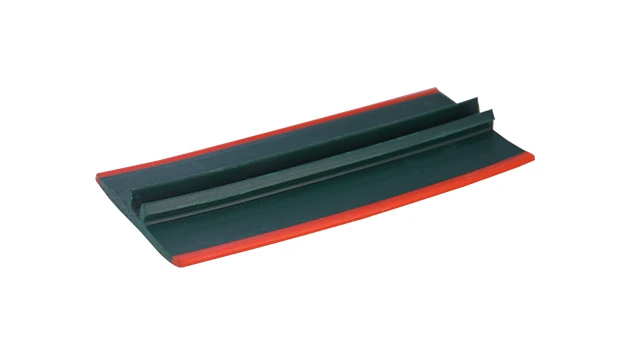
Aluminum Profile Rubber Strip
The tread strip fits into a T-slot channel and provides an anti-slip ribbed surface. It has a key pad that presses into a T-slot and is commonly used for adding traction on steps or as padding for doors. Tread strip can be ordered by rolls. The high quali
In the fast-paced world of consumer electronics manufacturing—where precision, speed, and reliability can make or break a product—every component of the assembly line plays a critical role. From the workbenches where technicians assemble circuit boards to the conveyors that shuttle delicate parts between stations, each element must work in harmony to meet the demands of 3C (computers, communication, and consumer electronics) production. Among these components, aluminum extrusion profiles have become a backbone of modern assembly lines, prized for their lightweight strength, modularity, and adaptability. But today, we're shining a light on a smaller, often overlooked part that elevates their performance: aluminum profile rubber strips. These unassuming accessories, including the versatile T-slot rubber seal cover, are the unsung heroes that enhance safety, precision, and durability in 3C assembly environments. Let's dive into their world.
Understanding 3C Assembly Lines: Where Precision Meets Pressure
First, let's set the stage. 3C assembly lines are the heartbeat of consumer electronics production. Whether it's a smartphone's microchip, a laptop's keyboard, or a smartwatch's sensor, these lines are tasked with assembling tiny, delicate components with micrometer-level accuracy—all while operating at high speeds to meet global demand. The stakes are sky-high: a single misalignment or damaged part can lead to product defects, production delays, or even safety hazards for operators.
To thrive in this environment, assembly lines rely on robust, flexible infrastructure. Workbenches, conveyor systems, material racks, and equipment enclosures must be:
- Lightweight yet durable: Easy to reconfigure for new product models but strong enough to support heavy tools and components.
- Precision-engineered: Minimal vibration, stable surfaces, and consistent alignment to prevent part damage.
- Operator-friendly: Safe edges, ergonomic designs, and reduced noise to protect workers during long shifts.
- Low-maintenance: Resistant to wear, corrosion, and dust to minimize downtime.
Enter aluminum extrusion profiles. These metal structures, shaped by forcing aluminum through a die to create custom cross-sections, check all these boxes. Their hollow, T-slot design—featuring grooves along their length—allows for easy attachment of aluminum profile accessories like brackets, panels, and casters, making them infinitely customizable. But even the best aluminum profiles need a little help to meet 3C's standards. That's where rubber strips come in.
Aluminum Profiles: The Backbone of Modern Assembly Lines
Before we explore rubber strips, let's appreciate why aluminum profiles have become indispensable in 3C manufacturing. Aluminum extrusion profiles are a game-changer for several reasons:
Why Aluminum Extrusion Profiles?
-
Customizability:
T-slot grooves let you attach accessories (think brackets, lights, or tool holders) anywhere along the profile, making it easy to adapt workbenches or racks for new tasks.
-
Strength-to-weight ratio:
Aluminum is 1/3 the weight of steel but offers comparable strength, reducing strain on floor structures and simplifying reconfiguration.
-
Corrosion resistance:
Naturally resistant to rust, aluminum profiles hold up in cleanrooms and high-moisture environments common in electronics manufacturing.
-
Cost-effectiveness:
Lower upfront costs than steel, plus minimal maintenance and long lifespans, making them budget-friendly for high-volume production.
In 3C assembly, aluminum profiles are everywhere. They form the frames of workbenches where technicians solder components, the rails of conveyors that move circuit boards, and the supports of material racks that store delicate parts. But their T-slot design, while a strength, also creates small gaps and edges that need attention. Sharp slot edges can scratch components or injure operators; open slots can collect dust, debris, or moisture, which can compromise precision over time. This is where aluminum profile rubber strips step in to solve these challenges.

Aluminum Profile Rubber Strips: The Multi-Talented Accessory
Aluminum profile rubber strips are exactly what they sound like: flexible, durable strips made from rubber or elastomeric materials, designed to fit into or onto aluminum profiles. While they come in various shapes and sizes, the most common types include edge trim strips (for covering sharp edges), T-slot rubber seal covers (for plugging T-slots), and gaskets (for sealing gaps between profiles). Let's focus on their key roles in 3C assembly lines.
1. Sealing T-Slots: Keeping Dust and Debris at Bay
The T-slot is the defining feature of aluminum profiles, but it's also an open invitation for trouble in 3C environments. Dust, metal shavings, or spilled coolant can accumulate in these slots, gumming up the works when you try to attach new accessories or adjust existing ones. Over time, debris can even cause misalignment in fixtures or tools mounted on the profile—disastrous for precision assembly tasks like soldering or part fitting.
This is where the T-slot rubber seal cover shines. These strips are designed to snap into T-slots, creating a tight, flexible seal that blocks debris from entering. Made from materials like EPDM (ethylene propylene diene monomer) or silicone, they're resistant to oils, chemicals, and temperature fluctuations—perfect for factory floors. For example, in a smartphone assembly workbench, where tiny dust particles can ruin a camera lens or short a circuit, sealed T-slots ensure that the profile remains clean and functional, even after months of heavy use.
2. Cushioning and Vibration Dampening: Protecting Delicate Components
3C components are fragile. A smartphone's OLED screen, for instance, can crack from even minor impacts, and a laptop's motherboard can suffer solder joint failures if exposed to excessive vibration. Aluminum profiles, while rigid, can transmit vibrations from nearby machinery or conveyor belts—threatening these delicate parts during assembly or transport.
Rubber strips act as shock absorbers, dampening vibrations and reducing noise. When applied to the edges of workbenches or conveyor rails, they create a buffer between the aluminum frame and the components placed on it. Imagine a workbench where technicians assemble smartwatch batteries: the rubber edge trim softens the impact if a battery is accidentally dropped, preventing cracks. Similarly, on conveyor systems, rubber strips lining the rails reduce the "clatter" of parts as they move, lowering noise levels for operators and minimizing jostling that could dislodge tiny components like screws or capacitors.
3. Edge Protection: Safety for Operators and Components
Aluminum profiles, when cut or extruded, can have sharp edges—especially along T-slot openings or cut ends. In a busy assembly line, where operators are moving quickly, a sharp edge could scratch hands or snag gloves. Worse, if a component like a plastic casing or glass screen rubs against an unprotected edge, it could get marred, leading to cosmetic defects that render the product unsellable.
Rubber edge trim strips solve this by wrapping around profile edges, creating a smooth, soft surface. They're often designed with a "U" shape that clamps onto the profile's edge, requiring no adhesives—easy to install and replace if worn. In 3C assembly, where workers handle hundreds of parts daily, this simple addition reduces the risk of injuries and product damage, making the line safer and more efficient.
4.Aesthetic and Ergonomic Enhancement: Polishing the Workspace
While functionality is king, aesthetics and ergonomics matter too. A clean, organized workspace boosts operator morale and reduces errors. Rubber strips come in various colors (black, gray, or even company-specific hues) that can match the assembly line's color scheme, giving workbenches and equipment a polished, professional look. Additionally, soft rubber edges feel more comfortable to the touch than cold, hard aluminum—an small but meaningful detail for operators who lean on workbenches for hours.

Key Applications in 3C Assembly Lines: Where Rubber Strips Make a Difference
Now that we understand their roles, let's zoom into specific applications of aluminum profile rubber strips in 3C assembly lines. From workbenches to conveyors, these strips are hard at work in every corner.
Application 1: Workbench Edging and Surface Protection
Workbenches are the command centers of 3C assembly. This is where technicians spend most of their time, assembling, testing, and inspecting components. A typical workbench frame is built from aluminum profiles, with a top surface (often aluminum, wood, or anti-static laminate) and accessories like tool hooks, LED lights, or ESD (electrostatic discharge) mats. Rubber strips here serve two critical roles:
Edge Trim for Safety and Component Protection: The perimeter of the workbench top is often framed with aluminum profiles. Adding rubber edge trim to these profiles prevents scratches on components (like laptop casings) when they're slid across the bench. It also protects operators' wrists and arms from sharp edges during repetitive tasks, like screwing in components or attaching cables.
T-Slot Sealing for Cleanliness: Unused T-slots on the workbench frame can collect dust, lint, or small screws. T-slot rubber seal covers plug these slots, keeping the workbench clean and ensuring that when new accessories (like a parts bin or a magnifying lamp) are added later, the slots are free of debris and ready for use. This is especially important in cleanroom environments, where even a single dust particle can contaminate a semiconductor chip.
Application 2: Conveyor and Material Handling Systems
Conveyors are the arteries of 3C assembly lines, moving parts from station to station—think circuit boards moving from soldering to testing, or phone cases moving from molding to painting. These systems are often built with aluminum profile frames and roller tracks, and rubber strips play a vital role here:
Vibration and Noise Reduction: As parts move along roller tracks, they can vibrate against the aluminum rails, creating noise and risking damage. Rubber strips placed between the rollers and the profile frame absorb these vibrations, quieting the line and stabilizing the parts. For example, when a printed circuit board (PCB) is moving through a testing station, reduced vibration ensures that the probes make accurate contact with the board's pads.
Guiding and Cushioning Delicate Parts: Some conveyors use rubber guide strips along the edges to keep parts centered. For instance, smartphone screens, which are thin and prone to bending, need gentle guidance to prevent warping. Rubber guides apply just enough pressure to keep the screen straight without scratching or deforming it.
Application 3: Equipment Enclosures and ESD Protection
Many 3C assembly processes require specialized equipment, like soldering stations, laser cutters, or ESD-safe enclosures. These enclosures are often built with aluminum profiles for rigidity and lightweight design. Rubber strips here provide:
EMI/RFI Shielding: Some rubber strips are infused with conductive materials (like carbon black) to help block electromagnetic interference (EMI) or radio frequency interference (RFI). This is critical for sensitive electronics testing, where external interference could skew results.
Environmental Sealing: Enclosures for dust-sensitive processes (like camera lens assembly) need to keep out airborne particles. Rubber gaskets between profile joints create airtight seals, ensuring that the internal environment remains clean and controlled.
Comparing Rubber Strip Types: Which One Fits Your Line?
Not all rubber strips are created equal. The right choice depends on the application, environment, and material compatibility. Let's compare the most common types used in 3C assembly lines:
| Type of Rubber Strip | Material | Hardness (Shore A) | Key Features | Best For |
|---|---|---|---|---|
| T-slot Rubber Seal Cover | EPDM or Silicone | 60-70 | Snap-fit design, weather-resistant, dustproof | Sealing unused T-slots on workbenches and racks |
| Edge Trim Strip | PVC or EPDM | 50-60 | U-shaped, clamps onto edges, softens sharp corners | Workbench perimeters, conveyor rails, operator stations |
| Vibration-Damping Gasket | Neoprene or Butyl Rubber | 40-50 | Thick, flexible, high shock absorption | Mounting equipment on aluminum profiles, reducing vibration |
| Conductive EMI Gasket | Rubber with conductive filler (carbon, metal particles) | 50-70 | Blocks EMI/RFI, electrically conductive | ESD enclosures, testing equipment, sensitive electronics |
Real-World Impact: A Case Study in 3C Manufacturing
To illustrate the difference aluminum profile rubber strips make, let's look at a hypothetical (but realistic) case study. A mid-sized electronics manufacturer producing smart home sensors was facing two recurring issues on their assembly line:
- Component Scratches: Plastic sensor casings were getting scratched when slid across workbench edges, leading to a 5% defect rate.
- Dust in T-Slots: Unused T-slots on conveyor frames were collecting dust, which occasionally fell onto PCBs during assembly, causing short circuits.
The solution? The manufacturer installed edge trim strips on all workbench perimeters and T-slot rubber seal covers on unused conveyor slots. Within a month, the defect rate dropped to 0.5%, and dust-related PCB failures decreased by 90%. The total cost of the rubber strips was offset by savings from reduced waste and rework—proving that even small accessories can deliver big ROI in 3C manufacturing.
Choosing the Right Supplier: Beyond the Strip
Now that you understand the value of aluminum profile rubber strips, it's important to source them from a reliable supplier. Look for suppliers who offer:
- Customization: The ability to create strips in specific sizes, colors, or materials to match your profiles (e.g., fitting the unique T-slot dimensions of your aluminum extrusion profiles).
- Quality Testing: Certifications for durability, chemical resistance, and (if needed) ESD or EMI performance.
- Technical Support: Experts who can help you select the right strip for your application, whether it's edge protection or high-temperature sealing.
Conclusion: Small Strips, Big Impact
In the high-stakes world of 3C assembly lines, aluminum profile rubber strips may not grab headlines, but they're essential to keeping operations running smoothly. From sealing T-slots to protecting components, reducing noise to enhancing safety, these small accessories punch far above their weight. As 3C products continue to shrink in size and grow in complexity, the demand for precision and reliability will only increase—and aluminum profile rubber strips will remain a critical tool in meeting that demand.
So, the next time you walk through a 3C assembly line, take a closer look at the workbenches and conveyors. Chances are, you'll spot these unsung heroes hard at work—quietly ensuring that your next smartphone, laptop, or smartwatch is built to perfection.