- Company Articles
- Products and Technology
- Product knowledge
- Aluminum Profile Rubber Strip: Key Material Properties You Need to Know

Aluminum Profile Rubber Strip: Key Material Properties You Need to Know
Related Product
Aluminum Profile Rubber Strip
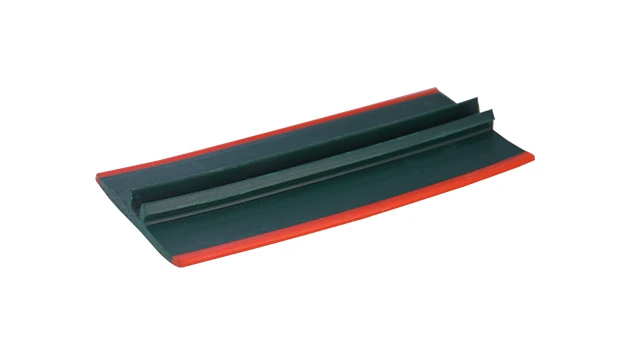
The tread strip fits into a T-slot channel and provides an anti-slip ribbed surface. It has a key pad that presses into a T-slot and is commonly used for adding traction on steps or as padding for doors. Tread strip can be ordered by rolls. The high quali
Walk through any modern factory, workshop, or even a tech-savvy office, and you'll likely spot aluminum extrusion profiles hard at work. They're the silent backbone of assembly lines, the sturdy frames of workbenches, and the sleek supports of shelving units. But here's the thing: for all their strength and versatility, these profiles rely on tiny, often overlooked components to truly shine. One such unsung hero? The aluminum profile rubber strip. It's the kind of part that doesn't grab headlines, but if you've ever marveled at how smoothly a conveyor glides or how quietly a workbench stays stable, you've got this little accessory to thank.
In this article, we're diving deep into the world of aluminum profile rubber strips—what they're made of, why their material properties matter, and how they elevate the performance of aluminum extrusion profiles. Whether you're a procurement manager sourcing parts for a production line, a facility engineer troubleshooting workflow bottlenecks, or just someone curious about the nuts and bolts of industrial design, understanding these small but mighty components could save you time, money, and a lot of headaches down the line.
The Role of Aluminum Profile Rubber Strips in Industrial Design
Aluminum extrusion profiles are celebrated for their lightweight strength, modularity, and adaptability. They're used in everything from automotive manufacturing to electronics assembly, and their T-slot design makes it easy to attach accessories—shelves, panels, conveyor tracks, you name it. But without the right finishing touches, even the best profiles can fall short. That's where aluminum profile accessories like rubber strips come in.
Think about it: when you bolt two aluminum profiles together, there's often a small gap between them. Leave that gap uncovered, and dust, debris, or even moisture can seep in, corroding the metal over time. Worse, those gaps can create sharp edges, posing a safety risk to workers who might brush against them. Then there's noise: metal-on-metal contact in moving parts like roller tracks or conveyors can get surprisingly loud, disrupting the workplace and increasing stress levels. And let's not forget vibration—unchecked, it can loosen joints, misalign equipment, and shorten the lifespan of your setup.
Aluminum profile rubber strips solve all these problems and more. They seal gaps, cushion impacts, dampen noise, and protect both the profiles and the people using them. In short, they turn a good aluminum structure into a great one—durable, safe, and efficient. But not all rubber strips are created equal. Their effectiveness hinges on their material properties, which is why we're breaking down what makes a high-quality strip tick.
Material Composition: What Goes Into a Quality Rubber Strip?
At first glance, a rubber strip might seem simple—just a long, flexible piece of rubber, right? But under the surface, there's careful engineering at play. The best aluminum profile rubber strips are made from a blend of synthetic rubbers and additives, each chosen for specific performance traits. Let's break down the most common materials and why they matter.
EPDM Rubber: The All-Rounder
EPDM (Ethylene Propylene Diene Monomer) is the workhorse of the rubber world, and for good reason. It's prized for its exceptional resistance to weathering, ozone, and UV radiation—making it ideal for both indoor and outdoor applications. If you're using aluminum profiles in a warehouse with large windows or an outdoor assembly area, EPDM strips won't crack or harden under the sun. They also hold up well to temperature extremes, staying flexible in freezing cold and stable in sweltering heat (think -40°C to 150°C, depending on the formulation).
Another perk of EPDM? It's resistant to water, steam, and many common industrial chemicals, like dilute acids and alkalis. That's why you'll often find EPDM strips in food processing facilities or pharmaceutical labs, where cleanliness and chemical resistance are non-negotiable. And because it's a synthetic rubber, it's more affordable than some specialty materials, making it a budget-friendly choice for high-volume projects.
Silicone Rubber: The High-Temp Specialist
When the heat turns up—literally—silicone rubber takes center stage. Unlike EPDM, which tops out around 150°C, silicone can handle sustained temperatures up to 200°C (and even 300°C for short bursts). That makes it indispensable in industries like automotive manufacturing, where engine components generate intense heat, or electronics production, where soldering stations and curing ovens create hot zones.
Silicone also offers excellent electrical insulation properties, which is why it's a favorite in wiring harnesses and battery assembly lines. It's non-toxic and hypoallergenic too, so it's safe for medical device manufacturing or food contact applications (look for FDA-grade silicone if that's your use case). The tradeoff? Silicone is stiffer than EPDM at lower temperatures, and it's generally more expensive. So unless you need that extreme heat resistance, EPDM might be the smarter pick.
Neoprene: The Chemical Warrior
If your workspace deals with oils, greases, or harsh chemicals, neoprene rubber is your best bet. This synthetic rubber is highly resistant to petroleum-based products, making it a staple in automotive garages, machine shops, and industrial cleaning areas. It also stands up well to ozone and weathering, though not quite as well as EPDM, and it has good mechanical strength—meaning it won't tear easily under stress.
Neoprene's downside? It's less flexible than EPDM at low temperatures, and it can degrade in strong oxidizing acids. But for applications where chemical exposure is a daily concern, the extra protection is worth the investment.
PVC: The Economical Option
PVC (Polyvinyl Chloride) rubber strips are the budget-friendly choice for light-duty applications. They're flexible, easy to install, and come in a wide range of colors—great if you need color-coding for organizational purposes (like distinguishing between different work zones on a production line). PVC is also resistant to water and some chemicals, though not as robustly as EPDM or neoprene.
The catch? PVC has a lower temperature tolerance (usually up to 60°C) and can become brittle over time when exposed to UV light. It's best suited for indoor use in controlled environments, like office furniture or low-stress shelving units. If you're looking for a strip that will last years in a high-traffic industrial setting, PVC might not be the most reliable option.

Key Material Properties to Look For
Now that you know the main materials, let's talk about the specific properties that determine how well a rubber strip will perform. These are the metrics manufacturers use to rate their products, and understanding them will help you pick the right strip for your needs.
Hardness: Finding the Sweet Spot
Hardness is measured on the Shore A scale, which ranges from 0 (super soft, like gel) to 100 (hard, like a car tire). For aluminum profile rubber strips, you'll typically see hardness ratings between 40 Shore A (soft and squishy) and 80 Shore A (firm and rigid). So which is right for you?
Softer strips (40-60 Shore A) are great for sealing gaps and absorbing vibration. If you're attaching a panel to a profile and need a tight, dust-proof seal, a softer strip will conform better to irregularities in the surface. They're also ideal for noise dampening—think of them as tiny shock absorbers for metal parts. On the flip side, they can wear out faster under heavy pressure, so they're not the best choice for high-load applications like supporting heavy shelving.
Harder strips (70-80 Shore A) are more durable and better at maintaining their shape under stress. They're perfect for edge protection, where you need a strip that can withstand repeated impacts (like a workbench edge that gets bumped by tools all day). They also hold up well in high-friction areas, like the guides on a conveyor track where parts slide against the strip. The downside? They don't seal gaps as effectively as softer strips, and they can feel "stiff" in applications where flexibility is key.
Tensile Strength: Stretching Without Breaking
Tensile strength measures how much force a rubber strip can handle before it tears. It's measured in megapascals (MPa) or pounds per square inch (psi), and for most industrial strips, you'll want a rating of at least 5 MPa (725 psi). Why does this matter? Imagine you're installing a strip along a long aluminum profile—you might need to stretch it slightly to fit. A strip with low tensile strength could snap mid-installation, wasting time and material.
EPDM and neoprene typically have good tensile strength (around 10-20 MPa), while silicone is a bit lower (5-10 MPa). PVC falls somewhere in the middle. For most applications, though, even the lower end of the spectrum is enough—unless you're using the strip in a dynamic setting where it's being stretched and released repeatedly (like a movable guard rail that's adjusted daily).
Elongation at Break: Flexibility Matters
Elongation at break is the percentage a rubber strip can stretch before it snaps. For example, a strip with 300% elongation can stretch to three times its original length before breaking. This property is closely linked to flexibility—higher elongation means the strip can bend and conform to shapes without tearing.
EPDM and silicone excel here, with elongations often exceeding 300%. That makes them great for applications where the strip needs to wrap around corners or fit into irregularly shaped slots. Neoprene is a bit lower (200-300%), while PVC is usually around 100-200%. If you're working with curved aluminum profiles or custom-designed workbenches with unique angles, prioritize a strip with high elongation—you'll avoid frustrating snags during installation.
Compression Set: Bouncing Back After Pressure
Here's a scenario: you install a rubber strip between two aluminum panels, tightening the bolts to create a seal. Over time, that strip is under constant pressure. Will it stay squished (losing its sealing ability), or will it bounce back when the pressure is released? That's what compression set measures. It's expressed as a percentage—the lower the number, the better the strip retains its shape.
For critical sealing applications (like preventing water or dust from entering electrical enclosures), you'll want a compression set of 30% or less (measured after 22 hours at 70°C, the industry standard test). EPDM and silicone both perform well here, with compression sets often below 25%. PVC, unfortunately, tends to have higher compression sets (40% or more), so it's not ideal for long-term sealing jobs.

Comparing Rubber Strips to Other Aluminum Profile Accessories
Aluminum profile rubber strips are just one of many accessories designed to enhance aluminum extrusion profiles. To understand their unique value, let's compare them to another popular option: the t-slot rubber seal cover. Both are used to seal T-slots, but they have distinct strengths and weaknesses.
| Feature | Aluminum Profile Rubber Strip | T-Slot Rubber Seal Cover |
|---|---|---|
| Design | Typically flat, D-shaped, or U-shaped; flexible and conformable | Rigid or semi-rigid; designed to snap into T-slots with a tight fit |
| Primary Function | Sealing gaps, cushioning impacts, dampening noise, edge protection | Sealing T-slots to prevent debris, dust, or liquids from entering; aesthetic finishing |
| Material Flexibility | Highly flexible; can bend around corners and irregular shapes | Less flexible; best for straight T-slots |
| Installation | Peel-and-stick (adhesive-backed) or friction-fit; easy to cut to length | Snap-fit into T-slot; requires precise slot size matching |
| Reusability | Adhesive-backed strips are single-use; friction-fit can be reused | Can be removed and reused, but may lose tightness after multiple removals |
| Best For | Curved profiles, edge protection, noise dampening, irregular gaps | Straight T-slots, dust sealing, aesthetic uniformity |
As you can see, rubber strips are more versatile for complex shapes and dynamic applications, while t-slot seal covers excel at clean, straight-line sealing. In many cases, you'll use both: a rubber strip along the edge of a workbench for cushioning and a t-slot seal cover in the profile's T-slots to keep out dust. Together, they're a one-two punch for protecting your aluminum extrusion profiles.
Real-World Applications: Where Rubber Strips Make a Difference
To truly appreciate the impact of aluminum profile rubber strips, let's look at how they're used in three common industrial settings. These examples show how the right material properties translate to real-world benefits.
Automotive Assembly Lines: Heat Resistance and Durability
Automotive plants are harsh environments: high temperatures from welding stations, constant vibration from conveyor belts, and exposure to oils and greases. For the aluminum profiles that frame assembly workstations, EPDM rubber strips are the go-to choice. Their resistance to heat (up to 150°C) ensures they don't degrade near welding torches, while their chemical resistance protects against oil spills. The D-shaped variant is particularly popular here—it cushions tools and parts that get dropped on the workbench, reducing noise and preventing dents in the aluminum.
In one case study, a major automaker switched from PVC to EPDM strips on their door panel assembly line. The result? A 60% reduction in strip replacements (from once every 3 months to once every 8 months) and a noticeable drop in workplace noise levels—workers reported less fatigue at the end of shifts. The upfront cost of EPDM was higher, but the long-term savings in labor and materials more than made up for it.
Electronics Manufacturing: Cleanliness and Static Protection
Electronics production demands precision and cleanliness. Even a tiny dust particle can ruin a circuit board, and static electricity can fry sensitive components. That's why many electronics facilities use silicone rubber strips—their non-toxic, low-dust properties keep work areas clean, and their electrical insulation helps prevent static buildup. For ESD (Electrostatic Discharge) workstations, some rubber strips are even formulated with conductive additives to dissipate static safely.
Take a smartphone assembly plant, for example. The workbenches here are made from aluminum extrusion profiles, with silicone strips lining the edges. These strips seal gaps between profiles, preventing dust from collecting in hard-to-clean corners. They also cushion the delicate glass screens as they're moved along the line, reducing the risk of cracks. And because silicone is resistant to the isopropyl alcohol used for cleaning, the strips stay intact even after daily wipe-downs.
Food and Beverage Processing: Hygiene and Temperature Resistance
Food processing facilities have strict hygiene standards: surfaces must be easy to clean, and materials must be food-safe. FDA-grade silicone rubber strips are perfect here. They're non-porous (so bacteria can't hide in cracks), resistant to hot water and steam (for sanitization), and won't leach chemicals into food. U-shaped silicone strips are often used to seal the gaps between aluminum profile shelving units, preventing crumbs and spills from falling between levels and attracting pests.
A dairy processing plant in Wisconsin recently upgraded their cheese aging racks with silicone strips. Previously, they'd used PVC strips, which would harden and crack after repeated steam cleanings. The switch to silicone meant the strips stayed flexible, sealed gaps more effectively, and met FDA standards—all while lasting three times longer. The plant manager noted, "We used to spend hours scraping old PVC bits out of the profile gaps during deep cleans. Now, the silicone strips wipe clean in minutes, and we haven't had to replace a single one in two years."
How to Choose the Right Aluminum Profile Rubber Strip
With so many options available, selecting the perfect rubber strip for your project can feel overwhelming. Here's a step-by-step guide to help you narrow it down:
Step 1: Identify Your Primary Goal
Start by asking: What problem am I trying to solve? Is it sealing gaps? Reducing noise? Protecting edges? Or cushioning impacts? For sealing and noise dampening, prioritize soft to medium-hard EPDM or silicone (40-60 Shore A). For edge protection or high-load applications, go with a harder strip (70-80 Shore A). For chemical resistance, neoprene is your best bet; for extreme heat, silicone.
Step 2: Consider Your Environment
Where will the strip be used? Indoor or outdoor? Temperature range? Exposure to chemicals, UV light, or moisture? Outdoor use calls for EPDM (UV and weather resistance). High temps mean silicone. Chemical exposure? Neoprene. Indoor, low-stress applications (like office furniture) can get away with PVC to save costs.
Step 3: Measure Your Profile and Slot Size
Rubber strips come in standard widths (5mm, 10mm, 15mm, etc.) and thicknesses. Measure the gap or T-slot you're trying to seal—you want a strip that's slightly larger than the gap to ensure a tight fit. For example, a 5mm gap would work best with a 6mm strip (it compresses to fill the space). Most manufacturers provide size charts, so don't guess—measure twice, buy once.
Step 4: Choose the Right Attachment Method
Adhesive-backed strips are quick and easy to install—just peel off the backing and stick. They're great for flat surfaces but may fail in high-heat or high-moisture environments (the adhesive can degrade). Friction-fit strips slide into T-slots or gaps and stay put via pressure; they're reusable but require a precise fit. For permanent installations, consider mechanical fastening (like small screws) in addition to adhesive for extra security.
Step 5: Test Before You Commit
If you're unsure, order samples! Most suppliers will send small lengths of different strips so you can test them in your environment. Check how they hold up to temperature, friction, and chemicals. Install a sample strip and monitor it for a week or two—does it stay in place? Show signs of wear? This small investment can save you from a costly mistake later.
Installation and Maintenance Tips for Long-Lasting Performance
Even the best rubber strip will underperform if installed incorrectly. Follow these tips to ensure a smooth installation and maximize lifespan:
Installation Tips
- Clean the surface first: Dirt, oil, or dust will prevent adhesive-backed strips from sticking. Wipe the aluminum profile with isopropyl alcohol and let it dry completely before installing.
- Cut to length carefully: Use sharp scissors or a utility knife for clean, straight cuts. For curved profiles, make small notches in the strip to help it bend without creasing.
- Apply even pressure: After placing the strip, run a roller or your finger along its length to ensure full contact with the surface. This is especially important for adhesive-backed strips—air bubbles can weaken the bond.
- Avoid overstretching: Stretching the strip during installation can reduce its tensile strength and cause it to shrink back over time. Install it at its natural length.
Maintenance Tips
- Inspect regularly: Check strips monthly for signs of wear—cracks, hardening, or peeling. replace them at the first sign of damage to prevent further issues (like dust entering T-slots or sharp edges being exposed).
- Clean gently: Wipe strips with a damp cloth and mild soap to remove dust and debris. Avoid harsh chemicals (like bleach) unless the strip is specifically rated for them.
- Protect from UV exposure: If using EPDM outdoors, consider painting the aluminum profile above the strip to shade it from direct sunlight—this extends the strip's lifespan.
- replace in sections: If only part of a strip is damaged, you don't need to replace the whole thing. Cut out the worn section and splice in a new piece—just overlap the ends by 1-2cm for a tight seal.
The Bottom Line: Small Strip, Big Impact
Aluminum profile rubber strips might be small, but their impact on the performance and longevity of aluminum extrusion profiles is huge. They seal out the elements, protect workers, reduce noise, and keep industrial systems running smoothly—all while adding minimal cost to your project. By understanding their material properties, choosing the right type for your environment, and installing them properly, you can ensure your aluminum structures are safe, efficient, and built to last.
So the next time you're designing a workbench, assembling a conveyor, or building a shelving unit, don't overlook these unsung heroes. After all, in industrial design, it's often the smallest components that make the biggest difference.