- Company Articles
- Products and Technology
- Product knowledge
- Aluminum Profile Rubber Strip Manufacturing Process: From Raw Material to Finished Product

Aluminum Profile Rubber Strip Manufacturing Process: From Raw Material to Finished Product
Related Product
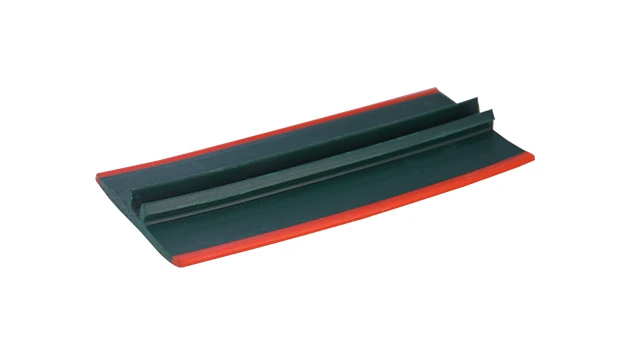
Aluminum Profile Rubber Strip
The tread strip fits into a T-slot channel and provides an anti-slip ribbed surface. It has a key pad that presses into a T-slot and is commonly used for adding traction on steps or as padding for doors. Tread strip can be ordered by rolls. The high quali
Introduction: The Unsung Hero of Aluminum Profiles
Walk into any factory, workshop, or even a modern office, and you'll likely spot aluminum profiles—sleek, durable, and endlessly versatile. They form the frames of workbenches, the rails of conveyor systems, and the structures of storage racks. But what makes these aluminum profiles truly functional? Often, it's the small, unassuming components that hold everything together: aluminum profile rubber strips. These strips seal gaps, dampen vibrations, protect edges, and ensure a snug fit between parts, making them indispensable in everything from industrial workstations to everyday window frames.
Behind every reliable rubber strip lies a meticulous manufacturing process that blends science, craftsmanship, and cutting-edge technology. Today, we're pulling back the curtain to explore how these essential components go from raw materials to the finished products that keep our aluminum profiles—and the world around them—running smoothly. Whether you're a manufacturer sourcing aluminum profile accessories or simply curious about the engineering behind everyday items, this journey will show you why these strips are more than just "add-ons"—they're the quiet backbone of quality and durability.
Step 1: Raw Material Selection – Choosing the Right Rubber for the Job
The first rule of crafting a great aluminum profile rubber strip? Start with the right ingredients. Rubber isn't a one-size-fits-all material, and choosing the correct type depends on where the strip will be used. Will it face extreme temperatures? Chemical exposure? Heavy friction? Each scenario demands a different rubber compound, and manufacturers spend hours testing and selecting materials to ensure the final product performs as expected.
| Rubber Type | Key Properties | Typical Applications | Why It Works for Aluminum Profiles |
|---|---|---|---|
| EPDM (Ethylene Propylene Diene Monomer) | Weather-resistant, heat-resistant (-40°C to 150°C), excellent elasticity | Outdoor aluminum frames, automotive seals, industrial enclosures | Stands up to rain, UV rays, and temperature swings—ideal for exposed aluminum profiles. |
| Silicone | Extreme temperature resistance (-60°C to 230°C), chemical inertness | High-heat industrial equipment, medical devices, oven seals | Safe for sensitive environments where aluminum profiles contact heat or chemicals. |
| Nitrile (Buna-N) | Oil-resistant, (wear-resistant), good adhesion to metals | Industrial machinery, hydraulic systems, fuel tanks | Bonds tightly to aluminum extrusion profiles and resists oils/greases common in factories. |
| Neoprene | Flame-resistant, weather-resistant, good flexibility | Electrical enclosures, marine applications, HVAC systems | Protects aluminum profiles in high-risk environments like power plants or coastal areas. |
Beyond the base rubber, additives play a starring role in fine-tuning performance. Carbon black, for example, strengthens the rubber and improves UV resistance, while plasticizers make it more flexible for tight-fitting t-slot aluminum pipe applications. Curing agents (like sulfur) ensure the rubber holds its shape, and antioxidants prevent degradation over time. Even colorants get special attention—many aluminum profile rubber strips are colored grey or black to blend with aluminum extrusion profiles, though yellow or white options exist for high-visibility applications.
One specialized type you might encounter is the t-slot rubber seal cover, designed to fit perfectly into the grooves of t-slot aluminum profiles. These require precise material selection to ensure they stay in place without cracking, even after repeated insertion and removal—a common scenario in workshops where tools or accessories are frequently attached to aluminum profile workbenches.

Step 2: Compounding – Blending Science and Precision
Once the raw materials are selected, it's time to mix them into a uniform compound—a process that's part chemistry lab, part baking. Imagine making a cake: you need the right proportions of flour, sugar, and eggs to get the texture just right. Similarly, rubber compounding requires exact measurements of rubber, additives, and fillers to achieve the desired hardness, flexibility, and durability.
The process starts in an internal mixer, a large, enclosed machine with rotating blades that churn the ingredients at high speeds. The mixer generates heat, which softens the rubber and helps the additives distribute evenly. For example, when creating a compound for a t-slot rubber seal cover, operators might add extra plasticizer to ensure the strip can bend easily to fit into the t-slot without breaking. The mixing time is critical—too short, and the additives won't blend; too long, and the rubber could degrade, weakening the final product.
After mixing, the compound is rolled into thick sheets using a two-roll mill, a machine that looks like a giant pasta maker. This step removes air bubbles and ensures the material is smooth and consistent. Operators inspect the sheets for any lumps or inconsistencies—even a tiny imperfection could cause a weak spot in the finished strip. Once approved, the sheets are cut into smaller "billets" (chunks) ready for the next stage: extrusion.
Compounding is where experience truly shines. A skilled operator can tell by the feel of the rubber if it's mixed correctly—too sticky, and it might need more filler; too stiff, and perhaps more plasticizer is needed. This human touch, combined with digital sensors that monitor temperature and mixing time, ensures every batch meets the strict standards required for aluminum profile accessories.

Step 3: Extrusion – Shaping the Strip to Fit Aluminum Profiles
If compounding is about creating the right "dough," extrusion is where we shape it into the final form. Extrusion is the process of forcing rubber through a die—a custom-made metal tool with a hole that matches the desired shape of the rubber strip. For aluminum profiles, dies are often designed to fit specific profiles, like the t-slot in a t-groove aluminum pipe or the edge of an aluminum extrusion profile.
The extruder itself is a long, heated cylinder with a rotating screw that pushes the rubber billet forward. As the rubber moves through the cylinder, it's heated to around 80–100°C, making it soft and malleable. When it reaches the die, the screw applies pressure (sometimes up to 1000 psi), forcing the rubber through the die's opening. The result? A continuous strip with the exact cross-section needed—whether it's a simple rectangular seal, a bulb-shaped gasket, or a specialized t-slot rubber seal cover.
Die design is an art form. For example, if the strip is meant to seal a 4040 aluminum profile (a common size in industrial frames), the die must account for the profile's exact dimensions, including small gaps or grooves where the rubber will sit. A poorly designed die can lead to uneven thickness, air bubbles, or misshapen edges—flaws that would make the strip useless for sealing or fitting into aluminum profile accessories. To avoid this, manufacturers use 3D modeling and precision machining to create dies that produce consistent, accurate strips every time.
After extrusion, the strip is cooled immediately—often with water or air—to set its shape. It's then fed onto a conveyor belt, where it continues to cool and harden. At this stage, the strip is still "uncured"—soft and pliable, like a raw cookie dough. To make it strong and durable, it needs one more critical step: vulcanization.
Step 4: Vulcanization – The "Baking" Process That Strengthens Rubber
Vulcanization is what transforms soft, sticky rubber into the tough, elastic material we recognize. Named after Vulcan, the Roman god of fire, this process uses heat and pressure to create chemical bonds (cross-links) between the rubber molecules, making the material stronger, more durable, and resistant to heat and wear. Think of it like baking bread: the dough (uncured rubber) rises and hardens in the oven (vulcanizer), becoming something entirely new.
Most aluminum profile rubber strips are vulcanized using a continuous vulcanization line, where the extruded strip is fed through a heated chamber. The chamber uses either hot air, steam, or microwave radiation to heat the rubber to 140–180°C. The temperature and time depend on the rubber type—silicone, for example, needs higher temperatures than EPDM. As the rubber heats up, the curing agents (like sulfur) react, forming cross-links between the polymer chains. This turns the rubber from a soft, tacky material into one that can stretch, compress, and return to its original shape repeatedly.
For complex shapes, like a rubber strip with multiple lips or grooves, manufacturers might use a press vulcanizer instead. This machine clamps the rubber into a mold and applies heat and pressure, ensuring every detail of the mold is replicated in the final product. This is common for specialized aluminum profile accessories where precision is non-negotiable, such as seals for medical equipment or aerospace components.
After vulcanization, the strip is cooled again to stop the curing process. Operators inspect it for signs of over-vulcanization (brittleness) or under-vulcanization (stickiness)—both of which would render it unfit for use. A properly vulcanized strip should feel firm but flexible, with no cracks or soft spots. It's now ready for the final touches: post-processing.
Step 5: Post-Processing – Trimming, Cutting, and Customizing
Vulcanization gives the rubber strip its strength, but it's not quite ready for the real world yet. Post-processing is where the strip is tailored to specific customer needs, whether it's cutting it to length, adding adhesive backing, or trimming excess material.
The first step is trimming. Extruded strips often have small "flash" (excess rubber) along the edges, leftover from the die. This is removed using sharp blades or laser cutters, leaving clean, smooth edges. For example, a t-slot rubber seal cover might need precise trimming to ensure it fits snugly into the t-slot without overlapping or leaving gaps.
Next, the strip is cut to length. Most manufacturers use automated cutting machines that can slice the continuous strip into pieces of any size—from 10cm for small aluminum profile accessories to 5m for large industrial frames. Some customers even request custom lengths or angles, which requires specialized cutting tools and careful measurements to avoid waste.
Adhesive backing is another common post-processing step. Many aluminum profile rubber strips need to stick to the profile without screws or clips, so manufacturers apply a thin layer of pressure-sensitive adhesive (PSA) to one side. The adhesive is protected by a release liner, which the customer peels off before installation. Applying adhesive evenly is tricky—too thick, and it might ooze out; too thin, and the strip could fall off. Operators use precision rollers to ensure the adhesive layer is consistent, and they test samples by sticking them to aluminum extrusion profiles to check bond strength.
Finally, the strips are inspected one last time. Workers check for dimensional accuracy (using calipers to measure width, thickness, and length), surface defects (scratches, bubbles), and adhesive quality. Any strips that don't meet the standards are rejected—no exceptions. After all, a faulty rubber strip could compromise the entire aluminum profile system, leading to leaks, vibrations, or safety hazards.
Step 6: Quality Control – Ensuring Every Strip Meets the Mark
In manufacturing, quality control isn't just a step—it's a mindset. From the moment raw materials arrive to the second the finished strips are packaged, every stage is monitored to ensure consistency and reliability. For aluminum profile rubber strips, this means testing everything from hardness to heat resistance to adhesion strength.
One of the most important tests is the Shore hardness test, which measures how resistant the rubber is to indentation. A strip meant for a workbench might need a hardness of 60 Shore A (firm but flexible), while a seal for heavy machinery could need 70 Shore A (stiffer, more durable). Operators use a handheld durometer to take readings at multiple points on the strip—any variation beyond 5 Shore A means the batch is rejected.
Other tests include:
- Tensile strength : How much force the strip can withstand before breaking. Important for strips that will be stretched during installation, like those used in expanding aluminum frames.
- Compression set : How well the strip returns to its original shape after being compressed. A low compression set means it will seal gaps effectively for years, even under constant pressure.
- Adhesion test : Pulling the strip off an aluminum extrusion profile to measure how much force is required. A strong bond ensures the strip won't peel off during use.
- Weathering test : Exposing the strip to UV light, rain, and extreme temperatures for weeks to simulate years of outdoor use. This ensures it won't crack, fade, or degrade over time.
For specialized strips, like those used in cleanrooms or medical facilities, additional tests for chemical resistance or biocompatibility may be required. Manufacturers also keep detailed records of every batch, including raw material lot numbers, mixing times, and test results. This traceability ensures that if a problem arises, they can quickly identify and fix the issue—giving customers peace of mind that their aluminum profile accessories are built to last.
From Factory to Field: Where Aluminum Profile Rubber Strips End Up
After weeks of processing, testing, and refining, the aluminum profile rubber strips are finally ready to leave the factory. But where do they go? The answer is almost everywhere aluminum profiles are used—and that's a lot of places.
In industrial settings, they're critical components of workbenches, material racks, and conveyor systems. For example, a t-slot rubber seal cover might line the edges of an aluminum workbench, protecting workers from sharp corners and reducing noise when tools are placed on the surface. In automotive factories, rubber strips seal the gaps between aluminum extrusion profiles in assembly lines, preventing dust and debris from jamming moving parts.
Construction is another major market. Window and door manufacturers use EPDM rubber strips to seal aluminum frames, keeping rain, wind, and noise out of homes and offices. Builders rely on them to cushion glass panels in aluminum curtain walls, ensuring the structure is both airtight and earthquake-resistant.
Even everyday items benefit from these strips. Your laptop's aluminum chassis? The rubber feet that keep it from sliding on your desk are likely made from the same process. The gym equipment at your local fitness center? Rubber strips dampen vibrations, making treadmills and weight machines quieter and more stable. And in medical facilities, silicone rubber strips seal aluminum profile accessories in cleanrooms, preventing contamination and ensuring sterile environments.
Perhaps most importantly, these strips play a role in sustainability. By ensuring aluminum profiles fit tightly and wear evenly, they extend the lifespan of products, reducing the need for replacements. Many manufacturers also use recycled rubber in their compounds, further minimizing environmental impact. In a world where durability and eco-friendliness matter more than ever, aluminum profile rubber strips are quietly doing their part.
Conclusion: The Art and Science of Small Components
Aluminum profile rubber strips may be small, but their impact is enormous. They're a testament to the idea that great products are built from the ground up—starting with quality materials, careful craftsmanship, and a commitment to excellence. From the first batch of rubber in the mixer to the final inspection before shipping, every step in the process is designed to create a strip that's reliable, durable, and perfectly suited to its job.
The next time you walk past an aluminum workbench, open a window, or use a piece of machinery, take a moment to appreciate the rubber strips holding it all together. They may not grab headlines, but they're the unsung heroes that make our world safer, more efficient, and more comfortable. And for manufacturers, they're a reminder that even the smallest components deserve the same attention to detail as the largest structures—because when it comes to quality, there's no such thing as "just a rubber strip."