- Company Articles
- Products and Technology
- Product knowledge
- Aluminum Profile Rubber Strip Shore Hardness Explained: 50A vs 70A vs 90A

Aluminum Profile Rubber Strip Shore Hardness Explained: 50A vs 70A vs 90A
Related Product
Aluminum Profile Rubber Strip
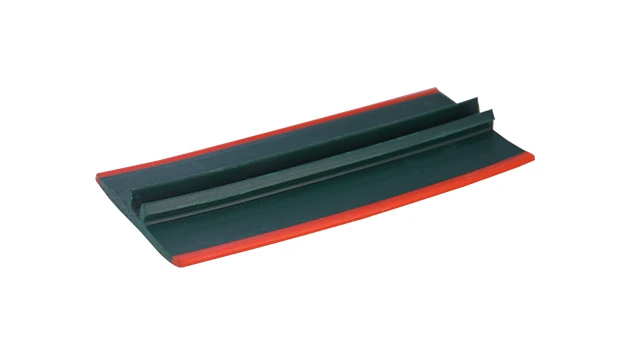
The tread strip fits into a T-slot channel and provides an anti-slip ribbed surface. It has a key pad that presses into a T-slot and is commonly used for adding traction on steps or as padding for doors. Tread strip can be ordered by rolls. The high quali
Walk into any factory, workshop, or even a modern office, and you'll likely spot aluminum extrusion profile structures—sleek, modular, and incredibly versatile. From workbenches and machine guards to shelving units and conveyor frames, these profiles form the backbone of countless industrial and commercial setups. But what makes them truly functional? It's often the small, unsung heroes: the accessories that turn a basic frame into a fully operational system. Among these, aluminum profile rubber strips might not grab headlines, but they play a critical role in sealing gaps, damping vibrations, protecting edges, and ensuring smooth operation.
Yet, not all rubber strips are created equal. One of the most important factors that dictates their performance is "Shore hardness"—a measure of how soft or hard the rubber is. Choose a strip that's too soft, and it might wear out quickly under pressure; too hard, and it could crack or fail to seal properly. In this guide, we're diving deep into three common Shore hardness levels for aluminum profile rubber strips: 50A, 70A, and 90A. By the end, you'll know exactly which one to pick for your aluminum profile project, whether you're building a workbench, a production line, or a custom enclosure.
What Even Is Shore Hardness, Anyway?
Before we compare 50A, 70A, and 90A, let's get back to basics: What is Shore hardness, and why does it matter for rubber strips? Shore hardness is a standardized way to measure the resistance of a material to indentation—essentially, how "hard" or "soft" it feels when pressed. The most common scale for rubber and elastomers is the Shore A scale, which ranges from 0 (extremely soft, like gel) to 100 (very hard, almost rigid plastic).
To measure it, a tool called a durometer is used: a small, spring-loaded device with a pointed tip. When pressed against the rubber, the depth of the indentation determines the Shore A value. Lower numbers mean the rubber is softer and more flexible; higher numbers mean it's firmer and more rigid. Think of it like this: A 50A rubber strip might feel like a soft pencil eraser, 70A like a car tire's sidewall, and 90A like a hard plastic spatula—still rubbery, but with little give.
For aluminum profile accessories like rubber strips, Shore hardness directly impacts performance. A strip's hardness affects how well it seals gaps, absorbs vibrations, resists wear, and conforms to uneven surfaces. Choosing the right hardness isn't just about preference—it's about making sure the strip does its job, whether that's keeping dust out of a control panel or protecting workers from sharp edges on a workbench .
50A: The Soft, Flexible Performer
Let's start with the softest of the trio: 50A. If you press a 50A rubber strip between your thumb and finger, it will compress easily, leaving a slight indentation that slowly bounces back. It's squishy, pliable, and feels almost "spongy" compared to higher hardness levels. This extreme flexibility is its superpower—and its Achilles' heel.
What 50A Does Best
50A rubber strips excel in applications where conformability is key. Because they're so soft, they can easily fill irregular gaps or seal against uneven surfaces. For example, in T-slot rubber seal cover applications—where the strip is inserted into the T-slot of an aluminum profile to seal enclosures or cabinets—50A is ideal for tight, dust-proof or water-resistant seals. It conforms to minor warps in the profile or slight misalignments in the frame, ensuring no gaps are left unprotected.
Another sweet spot for 50A is vibration dampening. In machinery or equipment mounted on aluminum extrusion profiles, soft rubber strips absorb shocks and reduce noise by cushioning the contact between moving parts. Medical devices, precision measuring tools, and audio equipment often use 50A strips to minimize vibrations that could throw off sensitive readings or damage components.
They're also gentle on delicate surfaces. If you're building a workbench for assembling electronics or handling fragile parts, a 50A edge strip will protect both the parts and the workers—no more scraped knuckles or chipped circuit boards.
The Trade-Offs of 50A
Softness comes with a catch: durability. 50A rubber has lower tensile strength (resistance to stretching) and abrasion resistance than harder options. In high-wear areas—like the edges of a workbench that's constantly scraped by tools or the tracks of a sliding door—50A strips will wear down faster, developing nicks, tears, or thinning over time. They're also more prone to deformation under constant pressure; if you clamp a heavy object against a 50A strip for months, it might stay compressed permanently.
Temperature sensitivity is another factor. While 50A rubber works well in moderate environments (typically -40°F to 180°F), extreme heat can make it even softer and more prone to melting, while extreme cold can make it brittle. It's not the best choice for outdoor use in harsh climates or industrial settings with high temperatures, like near furnaces or welding stations.
Best For:
Sealing irregular gaps, vibration dampening, delicate surface protection, indoor applications with low wear, and T-slot rubber seal cover for dust/water resistance in controlled environments.

70A: The Versatile Middle Ground
Move up to 70A, and you'll notice a clear difference: firmer, but still distinctly rubbery. Pressing it feels like squeezing a car tire's sidewall—there's resistance, but it still gives under pressure, bouncing back quickly once released. 70A is often called the "workhorse" of rubber strips, and for good reason: it strikes a near-perfect balance between flexibility and durability, making it the most common choice for aluminum profile accessories .
What 70A Does Best
70A's claim to fame is versatility. It's flexible enough to seal standard gaps in aluminum extrusion profiles (think 1-3mm gaps between panels) but rigid enough to hold its shape under moderate pressure. Unlike 50A, it won't permanently deform if clamped, and unlike 90A, it won't crack if the profile flexes slightly (which aluminum does under load).
General-purpose sealing is where 70A shines. It's the go-to for edge protection on workbenches, machine guards, and shelving units—areas where the strip needs to absorb occasional impacts (like a dropped tool) without tearing. It's also widely used in window and door frames for aluminum profiles, keeping out drafts, dust, and light rain. Outdoor applications? 70A handles them better than 50A, with a temperature range of roughly -40°F to 212°F, making it suitable for most climates.
Another advantage is cost-effectiveness. Because 70A is so commonly used, it's often more readily available and affordable than specialized 50A or 90A strips. For manufacturers and DIYers building standard aluminum profile structures, 70A is the "set it and forget it" option—reliable, predictable, and rarely a bad choice.
The Trade-Offs of 70A
70A's balance is also its limitation: it's not the best at any single task. It's not as flexible as 50A for irregular gaps, so if you're sealing a warped or highly uneven surface, 50A might do a better job. It's not as durable as 90A in heavy-wear applications, like conveyor tracks where parts slide over the strip thousands of times a day—over time, 70A will show signs of wear, though it will last longer than 50A.
It's also not ideal for extreme conditions. In industrial settings with constant exposure to oils, chemicals, or temperatures above 212°F, 70A can degrade faster than specialized high-hardness or chemical-resistant rubbers. But for 90% of aluminum profile projects—from office partitions to workshop workbenches—these trade-offs are negligible.
Best For:
General-purpose sealing, edge protection, moderate-wear applications, indoor/outdoor use in mild to moderate climates, and most standard aluminum profile projects where balance is key.

90A: The Hard, Heavy-Duty Warrior
At the top of the hardness scale, we have 90A. Pressing a 90A rubber strip feels almost like pressing a hard plastic—there's very little give, and it springs back instantly. It's rigid, firm, and has a "clicky" feel when flexed sharply (though bending it too much can cause it to crack). 90A is the heavyweight champion, built for durability and resistance above all else.
What 90A Does Best
90A rubber strips are designed for punishment. They have exceptional tensile strength and abrasion resistance, making them ideal for high-wear, high-impact environments. In industrial settings, you'll find 90A strips on conveyor systems, where parts slide or roll over them continuously; on machine bases, where they need to withstand vibrations from heavy equipment; and on loading docks, where they absorb impacts from forklifts or pallet jacks.
Another key advantage is dimensional stability. 90A rubber resists deformation under constant load, so it's perfect for applications where the strip needs to maintain a tight seal or structural support over time. For example, in aluminum extrusion profiles used as guides for sliding doors or drawers, a 90A strip will keep the door aligned for years, whereas a softer strip might compress and cause sticking.
Temperature and chemical resistance are also stronger with 90A. It can handle higher temperatures (up to 248°F) and is more resistant to oils, greases, and mild chemicals than softer options. This makes it a favorite in automotive, manufacturing, and food processing facilities, where exposure to harsh substances is common.
The Trade-Offs of 90A
90A's rigidity is a double-edged sword. While it's tough, it lacks flexibility. It won't conform to irregular gaps or uneven surfaces—if your aluminum profile has warps or misalignments, a 90A strip will leave gaps instead of sealing them. It's also prone to cracking if bent too sharply, so it's not suitable for profiles that flex under load (like lightweight frames or temporary structures).
Installation can also be trickier. 90A strips are stiffer, so inserting them into T-slots or grooves requires more force. They're also less forgiving during installation—if you kink or twist them, they might develop permanent creases or cracks.
Best For:
Heavy-wear applications, high-impact protection, dimensional stability under load, exposure to oils/chemicals, and high-temperature environments where flexibility is less critical than durability.
50A vs 70A vs 90A: A Side-by-Side Comparison
| Hardness Level | Feel & Flexibility | Tensile Strength (Approx) | Temperature Range (°F) | Common Applications | Best For |
|---|---|---|---|---|---|
| 50A | Soft, squishy; compresses easily, slow rebound | 1,500-2,000 psi | -40 to 180 | T-slot sealing, vibration dampening, delicate surface protection | Irregular gaps, indoor low-wear, sensitive equipment |
| 70A | Firm but flexible; moderate compression, quick rebound | 2,500-3,000 psi | -40 to 212 | Edge protection, general sealing, workbench trim, window frames | Balanced durability/flexibility, most standard projects |
| 90A | Hard, rigid; minimal compression, instant rebound | 3,500-4,000 psi | -40 to 248 | Heavy-duty guides, conveyor tracks, impact absorption, chemical resistance | High-wear, high-impact, dimensional stability, harsh environments |
How to Choose: 3 Questions to Ask
With 50A, 70A, and 90A each offering unique benefits, how do you pick the right one for your project? Start by asking these three questions:
1. What's the strip's main job?
Are you sealing gaps (flexibility matters), protecting edges (durability matters), or dampening vibrations (softness matters)? If sealing irregular gaps, 50A is best. For edge protection on a workbench, 70A balances protection and comfort. For heavy-duty impact absorption, 90A is the way to go.
2. What environment will it live in?
Is the aluminum profile indoors or outdoors? Exposed to heat, cold, or chemicals? 50A struggles with extreme temps, while 90A handles heat and chemicals better. For outdoor use in mild climates, 70A is a safe bet.
3. How much wear and tear will it face?
Will the strip be touched, scraped, or pressed constantly (like a workbench edge), or rarely disturbed (like a seal on a cabinet)? High-wear areas need 90A; low-wear can use 50A or 70A.
When in doubt, 70A is the default. It works for most aluminum profile accessories and is forgiving enough for DIY projects. But if your application has specific demands—like extreme softness or heavy duty—don't hesitate to opt for 50A or 90A.
Final Thoughts: Hardness Isn't Everything
Shore hardness is a critical factor for aluminum profile rubber strips, but it's not the only one. Other properties like material composition (EPDM, silicone, neoprene), thickness, and design (hollow vs. solid) also play a role. For example, a 70A silicone strip will handle higher temperatures than a 70A EPDM strip, even though their hardness is the same.
Ultimately, the best rubber strip is the one that fits your aluminum extrusion profile and your project's unique needs. Whether you choose 50A for its gentle flexibility, 70A for its all-around reliability, or 90A for its tough durability, the right hardness will ensure your aluminum profile system works smarter, lasts longer, and stays safe.
So next time you're browsing aluminum profile accessories , take a moment to check the Shore hardness. It might seem like a small detail, but it's the difference between a strip that works and one that fails. And isn't that what lean manufacturing is all about? Getting the details right, so your system runs smoothly—no exceptions.