- Company Articles
- Products and Technology
- Product knowledge
- Aluminum Profile Rubber Strip vs Foam Gasket: Sealing Performance Compared

Aluminum Profile Rubber Strip vs Foam Gasket: Sealing Performance Compared
Related Product
Aluminum Profile Rubber Strip
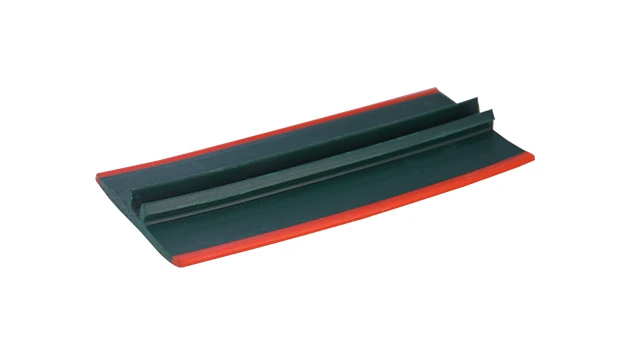
The tread strip fits into a T-slot channel and provides an anti-slip ribbed surface. It has a key pad that presses into a T-slot and is commonly used for adding traction on steps or as padding for doors. Tread strip can be ordered by rolls. The high quali
In the world of manufacturing and industrial design, it's often the smallest components that make the biggest difference. When it comes to assembling aluminum extrusion profiles —those versatile, T-slot wonders that form the backbone of workbenches, material racks, and production lines—sealing components like rubber strips and foam gaskets are the unsung heroes. They keep dust out of sensitive electronics, prevent liquids from damaging machinery, and ensure that everything from ESD workbenches to conveyor systems runs smoothly, day in and day out. But not all seals are created equal. Today, we're diving deep into two of the most common options: aluminum profile rubber strips and foam gaskets. By the end, you'll know which one deserves a spot in your next project.
What Are Aluminum Profile Rubber Strips, Anyway?
Let's start with the workhorse of the sealing world: aluminum profile rubber strips. If you've ever run your hand along the edge of an aluminum workbench or a material rack and felt a smooth, flexible edge, chances are you've encountered one. These strips are specifically designed to fit into the T-slots of aluminum profiles , those grooved channels that make aluminum extrusion so modular and adaptable. But their job isn't just to look neat—they're engineered to seal, protect, and enhance.
Most aluminum profile rubber strips are made from synthetic rubbers like EPDM (ethylene propylene diene monomer) or silicone, chosen for their durability and resistance to the elements. Think about it: in a busy factory, these strips are exposed to everything from oil spills to high temperatures from machinery, not to mention the constant wear of workers leaning on workbenches or materials sliding across racks. EPDM rubber laughs in the face of these challenges—it resists UV rays, ozone, and even mild chemicals, making it a staple in outdoor or harsh indoor environments. Silicone, on the other hand, shines in extreme temperatures, staying flexible whether it's freezing cold in a warehouse or sweltering near a production oven.
What really sets these strips apart is their design. Unlike generic rubber seals, they're precision-molded to fit the T-slots of standard aluminum profiles, like the 2020, 3030, or 4040 series. That means no guesswork during installation—you slide them into the slot, and they stay put, creating a tight, consistent seal along the entire length of the profile. Some even come with a slight lip or bulb shape, which compresses when the profile is joined to another component, ensuring a gap-free connection. Imagine building a material rack where every joint is sealed so tightly that dust can't settle on the products inside—that's the power of a well-designed rubber strip.
And let's not forget their versatility. Beyond sealing, they act as bumpers to reduce noise when parts are placed on workbenches, protect delicate components from sharp aluminum edges, and even provide a non-slip surface for tools or materials. On an ESD workbench, where static electricity can fry sensitive electronics, conductive rubber strips take it a step further by grounding the surface—turning a simple bench into a safe zone for assembling circuit boards. It's no wonder they're a go-to for manufacturers who refuse to cut corners on quality.
Foam Gaskets: The Soft Spoken Sealing Specialist
Now, let's meet the underdog: foam gaskets. If rubber strips are the tough, no-nonsense workers, foam gaskets are the flexible problem-solvers, adapting to irregular shapes and tight spaces with ease. Made from materials like neoprene, polyurethane, or polyethylene foam, these gaskets are all about compression. They start as soft, spongy sheets (or pre-cut shapes) and, when squeezed between two surfaces, conform to every nook and cranny, creating a seal that's hard to beat for irregular or uneven gaps.
Foam gaskets come in two main types: open-cell and closed-cell. Open-cell foam is like a sponge—it's lightweight, breathable, and great for absorbing shocks or sound, but it's not water-tight. Closed-cell foam, on the other hand, has tiny, sealed bubbles that trap air, making it waterproof and resistant to moisture. For industrial sealing, closed-cell foam is usually the way to go. Picture a food processing plant where a conveyor system needs to keep water and cleaning chemicals from seeping into motor compartments—closed-cell neoprene foam gaskets would form a barrier that rubber strips, with their rigid T-slot fit, might struggle to match on uneven surfaces.
Installation is another area where foam gaskets shine. Many come with adhesive backings, so you peel off the paper and stick them directly onto the surface—no need for T-slots or special tools. This makes them ideal for retrofitting existing equipment or sealing non-aluminum components, like plastic enclosures or wooden workbenches. Ever walked into a server room and noticed how quiet it is? That's partly thanks to foam gaskets dampening the hum of fans and machinery—their soft texture absorbs vibrations, turning a noisy space into a more pleasant work environment.
But foam gaskets aren't without their limits. While they're great for compression, they can lose their shape over time if compressed too tightly—a problem called "compression set." Leave a heavy box on a foam-gasketed shelf for months, and you might come back to find a permanent indentation, breaking the seal. They're also not as tough as rubber when it comes to abrasion; drag a metal tool across a foam gasket repeatedly, and it'll start to tear or wear thin. In high-wear areas, like the edges of a workbench where tools are constantly being set down, foam might not hold up as well as rubber.

The Showdown: Comparing Sealing Performance
Now, the moment we've been waiting for: pitting aluminum profile rubber strips against foam gaskets in a head-to-head comparison. To make this fair, we'll break it down by the factors that matter most in real-world applications: durability, environmental resistance, ease of installation, and cost.
| Factor | Aluminum Profile Rubber Strip | Foam Gasket |
|---|---|---|
| Durability & Wear Resistance | Excellent. Made from tough rubbers (EPDM, silicone) that resist tearing, abrasion, and compression set. Lasts 5–10 years in heavy use. | Good for light to medium use. Closed-cell foam resists moisture but can develop compression set over time. Lasts 2–5 years in heavy use. |
| Environmental Resistance | Thrives in harsh conditions: resists UV rays, ozone, oil, chemicals, and extreme temperatures (-40°C to 150°C for EPDM). | Depends on material: Neoprene resists oil, but most foams struggle with UV and high temps (best for -20°C to 80°C). |
| Sealing Irregular Gaps | Best for uniform gaps (T-slots, straight edges). Rigid shape struggles with uneven surfaces. | Superior for irregular gaps. Compresses to conform to bumps, dents, or non-linear edges. |
| Installation | Requires T-slots in aluminum profiles. Slides into place—no adhesives needed, but needs precise profile matching. | Adhesive-backed for easy peel-and-stick. Works on any surface (aluminum, plastic, wood) but needs clean, dry conditions. |
| Cost | Higher upfront cost ($1–$3 per foot, depending on material). | Lower upfront cost ($0.50–$1.50 per foot for closed-cell foam). |
| Additional Benefits | Acts as a bumper, reduces noise, and can be conductive (for ESD workbenches). | Sound dampening, lightweight, and easy to cut to custom shapes. |
Let's put this into context with a real scenario. Suppose you're building a production line for assembling smartphones—precision is key, and you need to protect sensitive components from dust and static. The workbenches are made from 4040 aluminum profiles, with T-slots running along every edge. Here, aluminum profile rubber strips are a no-brainer: they slide into the T-slots, create a tight seal to keep dust out, and if you choose conductive rubber, they'll ground the workbench to prevent static damage. Plus, they'll stand up to the constant sliding of phone parts and tools without wearing thin.
Now, imagine you're retrofitting an old wooden packaging station to keep rainwater from leaking into the storage area below. The wooden surface is uneven, with gaps that vary from 1mm to 5mm. A foam gasket with adhesive backing would conform to those irregular gaps, creating a waterproof seal that a rigid rubber strip (which needs a T-slot) couldn't match. And since the station is indoors and not exposed to extreme temps, the foam's limitations in UV resistance aren't a problem.

When to Choose Which: A Practical Guide
So, how do you decide between aluminum profile rubber strips and foam gaskets for your project? Let's break it down with some common industrial scenarios:
Choose Aluminum Profile Rubber Strips If…
- You're working with aluminum extrusion profiles (2020, 3030, 4040, etc.) with T-slots—they're designed for this!
- Durability is non-negotiable: think heavy machinery, outdoor applications, or high-wear workbenches.
- You need resistance to oil, chemicals, or extreme temperatures (e.g., near ovens or freezers).
- Static control is important: conductive rubber strips are a must for ESD workstations in electronics manufacturing.
Choose Foam Gaskets If…
- You're sealing irregular or uneven surfaces (e.g., plastic enclosures, wooden shelves, or retrofitted equipment without T-slots).
- Sound dampening or vibration absorption is key (e.g., server rooms, conveyor systems with noisy motors).
- You need a quick, adhesive-backed solution for temporary or low-cost projects.
- The environment is mild (indoors, room temperature, no harsh chemicals).
The Role of Aluminum Profile Accessories in Sealing Success
It's worth noting that neither rubber strips nor foam gaskets work in isolation—they're part of a larger ecosystem of aluminum profile accessories that make aluminum extrusion so powerful. For example, rubber strips often pair with end caps (like 4040 aluminum profile end caps) to seal the ends of profiles, preventing debris from getting stuck in T-slots. Foam gaskets, on the other hand, might be used alongside caster wheels to seal the gaps between a mobile trolley and its base, ensuring nothing rattles loose during transport.
Manufacturers and suppliers know this, which is why you'll often find rubber strips sold alongside other aluminum profile accessories—joints, connectors, and brackets. It's a reminder that sealing isn't an afterthought; it's part of the design process. A well-chosen rubber strip or foam gasket can turn a basic aluminum frame into a weatherproof enclosure, a dust-free workbench, or a quiet conveyor system. And when paired with the right accessories, the possibilities are endless.
Final Thoughts: It's All About the Right Tool for the Job
At the end of the day, there's no "better" option between aluminum profile rubber strips and foam gaskets—only the right one for your project. Rubber strips are the reliable, long-lasting choice for aluminum extrusion profiles and harsh environments, while foam gaskets are the flexible, adaptable solution for irregular gaps and light-duty applications. The key is to assess your needs: What's the environment like? What surface are you sealing? How long do you need the seal to last?
Whether you're building a material rack for a warehouse, an ESD workbench for electronics assembly, or a conveyor system for a food plant, the sealing component you choose will play a huge role in how well your project performs. So, take the time to evaluate, test, and choose wisely. After all, in manufacturing, the smallest details often make the biggest impact—and a good seal is one detail you can't afford to overlook.