- Company Articles
- Products and Technology
- Product knowledge
- Aluminum Profile Rubber Strip vs Magnetic Seals: Which Works Best for Enclosed Workstations?

Aluminum Profile Rubber Strip vs Magnetic Seals: Which Works Best for Enclosed Workstations?
Related Product
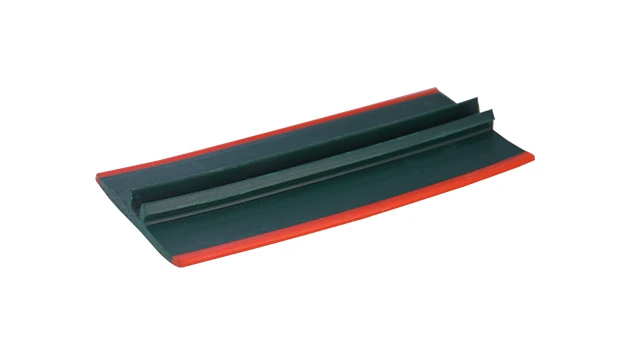
Aluminum Profile Rubber Strip
The tread strip fits into a T-slot channel and provides an anti-slip ribbed surface. It has a key pad that presses into a T-slot and is commonly used for adding traction on steps or as padding for doors. Tread strip can be ordered by rolls. The high quali
Walk into any modern manufacturing facility, research lab, or electronics assembly plant, and you'll likely encounter a common sight: enclosed workstations. These structures—often built from sleek aluminum extrusion profiles with clear acrylic or polycarbonate panels—serve as protective cocoons for sensitive tasks. Whether it's assembling microchips, testing pharmaceuticals, or handling ESD-sensitive components, enclosed workstations shield against dust, static, temperature fluctuations, and even cross-contamination. But what keeps these workstations "enclosed"? The answer lies in the seals that line their edges: yet critical components that bridge the gaps between panels, doors, and frames. Two of the most popular options? Aluminum profile rubber strips and magnetic seals. Today, we're diving into the details to help you decide which one deserves a spot in your workspace.
Why Seals Matter in Enclosed Workstations
Before we compare rubber and magnetic seals, let's talk about why these tiny components matter. An enclosed workstation is only as good as its weakest point—and more often than not, that weak point is a poorly sealed gap. Imagine a workbench in an ESD workstation where delicate circuit boards are being assembled. Even a small crack could let in dust particles, which might short-circuit a component, or static electricity, which could fry a microchip. In a lab setting, inconsistent temperature or humidity due to leaks could ruin hours of research. Seals aren't just about "keeping things out"—they're about maintaining control. And when it comes to control, the type of seal you choose can make all the difference.
Aluminum Profile Rubber Strips: The Workhorse of Basic Sealing
If you've ever worked with aluminum profiles, you're probably familiar with the T-slots that run along their length. These slots are designed to hold accessories—brackets, handles, and yes, seals. Aluminum profile rubber strips (sometimes called T-slot rubber seal covers) are the unsung heroes of many enclosed workstations. They're simple, affordable, and surprisingly effective for most everyday sealing needs.
What Are Aluminum Profile Rubber Strips?
At their core, these are flexible strips of rubber (or rubber-like materials) designed to fit snugly into the T-slots of aluminum extrusion profiles. They come in various shapes—most commonly a "U" or "T" cross-section—to grip the edges of the profile, and their soft, compressible nature allows them to seal gaps when a door or panel is closed. Think of them as the weatherstripping on your car door: when you shut the door, the rubber compresses, filling the space between the door and frame.
Materials matter here. Manufacturers use different rubbers depending on the workstation's environment:
- EPDM Rubber: The most common choice for general use. It's durable, resistant to UV rays and moderate temperatures (-40°C to 150°C), and affordable. Great for indoor workbenches or enclosed stations in dry, temperate environments.
- Silicone Rubber: Ideal for high-heat or chemical-exposed areas. Silicone handles extreme temperatures (-60°C to 230°C) and stands up to oils, solvents, and acids—perfect for labs or industrial settings where harsh substances are present.
- Neoprene Rubber: Known for its oil and abrasion resistance. If your workstation doors are opened and closed hundreds of times a day (think busy assembly lines), neoprene strips will hold up better than EPDM.
Pros of Aluminum Profile Rubber Strips
Budget-Friendly: Rubber strips are one of the most cost-effective sealing solutions. A 10-meter roll can cost as little as $10–$20, depending on the material. For small businesses or workshops with tight budgets, this is a huge win.
Easy to Install and replace: You don't need special tools or expertise to install rubber strips. Just measure the length of your aluminum profile, cut the strip with scissors, and press it into the T-slot—it clicks into place. When it wears out (more on that later), swapping it takes 5 minutes. No professionals required.
Flexible for Imperfect Frames: Not all aluminum profiles are perfectly straight, and not all workstation doors align flawlessly. Rubber strips' flexibility lets them conform to minor gaps or warps in the frame, ensuring a decent seal even if the workstation isn't 100% square.
Low Maintenance: For low-traffic workstations (e.g., a storage closet or a rarely used testing bench), rubber strips can last 2–3 years with minimal upkeep. Just wipe them down occasionally to remove dust buildup.
Cons of Aluminum Profile Rubber Strips
Limited Sealing Power: Rubber strips rely on compression to seal. While this works for blocking dust or light drafts, they can't create an airtight or watertight seal. In environments where even tiny gaps matter—like cleanrooms or ESD workstations handling sensitive microelectronics—this can be a dealbreaker.
Wear and Tear: Every time you open or close a workstation door, the rubber strip rubs against the frame. Over time, this friction causes the rubber to harden, crack, or lose its elasticity. In high-traffic areas (e.g., a workbench where operators access tools every 5 minutes), you might need to replace strips every 6–12 months.
Environmental Limitations: While silicone rubber handles heat well, standard EPDM strips can degrade in extreme cold (becoming brittle) or humidity (growing mold). They also aren't the best choice for environments with sharp objects—something as simple as a loose screw or a misaligned panel can tear the rubber.

Magnetic Seals: The Precision Option for Critical Environments
For workstations where "good enough" isn't enough, magnetic seals step in. These seals use the power of magnets to create a tight, consistent barrier—think of them as the upgraded version of your refrigerator door seal, but engineered for industrial use. They're pricier, but for environments like ESD workstations, cleanrooms, or labs, the investment often pays off.
What Are Magnetic Seals?
Magnetic seals consist of two parts: a flexible magnetic strip (usually rubberized, with ferrite or neodymium magnets embedded) and a metal strike plate (typically steel). The magnetic strip attaches to the door or panel, and the strike plate mounts to the aluminum profile frame. When the door closes, the magnet pulls the strip tight against the strike plate, creating a seal that's far tighter than rubber alone.
Unlike rubber strips, which rely on compression, magnetic seals use attraction. This means they seal uniformly across the entire length of the door—no more uneven gaps where dust or static can sneak in.
Pros of Magnetic Seals
Superior Sealing Performance: Magnetic seals create near-airtight seals, blocking dust, airborne particles, and even static electricity better than rubber strips. In ESD workstations, this is critical—static charges can jump gaps as small as 1mm, but a magnetic seal eliminates those gaps entirely.
Long-Lasting Durability: Magnets don't wear out the way rubber does. The magnetic strip itself is often encased in a tough, abrasion-resistant material (like PVC or silicone), so it can handle thousands of door cycles without cracking or losing elasticity. Most magnetic seals last 5–7 years with proper maintenance.
Consistent Seal, Even with Wear: Rubber strips lose their compression over time, leading to leaks. Magnetic seals? The magnet's pull stays strong, so the seal remains tight even as the strip ages. This consistency is why you'll find magnetic seals in critical environments like hospitals (for isolation rooms) or aerospace manufacturing (for sensitive component testing).
Cons of Magnetic Seals
Higher Upfront Cost: Magnetic seals are not cheap. A 1-meter magnetic strip with a strike plate can cost $30–$50, and that's before installation. For a workstation with four doors, you're looking at $120–$200 in materials alone—compared to $40–$80 for rubber strips.
Installation Complexity: To work properly, magnetic seals need precise alignment. The strike plate must be perfectly parallel to the magnetic strip, and the gap between them must be just right (usually 1–2mm). Misalignment leads to weak seals or doors that won't close. Most businesses hire professionals for installation, adding to the cost.
Slightly Stiffer Operation: The magnetic pull makes doors harder to open than rubber-sealed ones. It's a small difference—maybe an extra 1–2 pounds of force—but over hundreds of daily door openings, it can tire out workers. For large panels (e.g., 6-foot tall workstation doors), this can be a bigger issue.

Rubber Strips vs. Magnetic Seals: A Head-to-Head Comparison
| Feature | Aluminum Profile Rubber Strips | Magnetic Seals |
|---|---|---|
| Seal Quality | Good for dust, light drafts; not airtight | Near-airtight; blocks dust, particles, static |
| Cost (Materials) | $1–$2 per meter | $30–$50 per meter (with strike plate) |
| Installation | DIY-friendly (5 minutes per strip) | Requires alignment (30+ minutes per strip) |
| Lifespan | 6–24 months (high/low traffic) | 5–7 years |
| Best For | Basic workbenches, low-traffic areas, tight budgets | ESD workstations, cleanrooms, high-precision labs |
How to Choose: Key Factors to Consider
Now that you know the pros and cons, how do you decide between rubber strips and magnetic seals? Here are the questions to ask:
1. What's the Workstation's Purpose?
If it's a basic workbench for assembling non-sensitive parts (e.g., plastic components), rubber strips are more than enough. But if it's an ESD workstation handling circuit boards or a lab testing pharmaceuticals, magnetic seals are worth the investment. Remember: a single dust particle or static discharge can ruin a $1,000 component—making the extra $100 on seals a no-brainer.
2. How Often Is the Workstation Used?
High-traffic workstations (dozens of door openings per hour) will wear out rubber strips quickly. Magnetic seals, with their longer lifespan, make sense here. For low-traffic areas (e.g., a storage workstation opened once a day), rubber strips are economical.
3. What's Your Budget?
Small businesses or startups might prioritize upfront savings with rubber strips. Larger companies with critical processes (and bigger budgets) can justify magnetic seals. If cost is a concern but you need better sealing than rubber, consider a hybrid approach: magnetic seals on the main door and rubber strips on secondary panels.
4. What's the Environment Like?
Extreme temperatures, humidity, or chemicals? Silicone rubber strips or magnetic seals (with silicone coating) are better than standard EPDM. If the workstation is outdoors or exposed to UV rays, avoid EPDM rubber—opt for UV-resistant silicone or magnetic seals.
Real-World Examples: When to Choose Which
Case 1: A Small Electronics Repair Shop
A local repair shop has two workbenches: one for general repairs (phones, laptops) and one for more sensitive jobs (tablet motherboards). For the general workbench, they use aluminum profile rubber strips—affordable and easy to replace. For the sensitive workbench, they splurge on magnetic seals to reduce dust and static, cutting down on motherboard failures by 40%.
Case 2: A Mid-Size Manufacturing Plant
A plant assembling automotive sensors uses enclosed workstations along its production line. The stations near the conveyor belt (high traffic) have magnetic seals to handle constant door openings. Stations in the back (used once per shift) have rubber strips to save costs. This hybrid approach keeps downtime low and budgets in check.
Final Thoughts: It's About Balance
Aluminum profile rubber strips and magnetic seals aren't enemies—they're tools for different jobs. Rubber strips are the practical choice for everyday workbenches and tight budgets, offering simplicity and affordability. Magnetic seals are the precision option, ideal for ESD workstations, cleanrooms, or any environment where a perfect seal is non-negotiable.
The next time you're setting up an enclosed workstation, ask: What am I protecting? How often will this be used? And what's the cost of failure? The answers will guide you to the right seal. Whether you choose rubber or magnetic, remember: the best seal is the one that keeps your workspace safe, efficient, and ready for whatever comes next.