- Company Articles
- Products and Technology
- Product knowledge
- Aluminum Profile Rubber Strip vs Polyurethane Strips: Wear Resistance Comparison

Aluminum Profile Rubber Strip vs Polyurethane Strips: Wear Resistance Comparison
Related Product
Aluminum Profile Rubber Strip
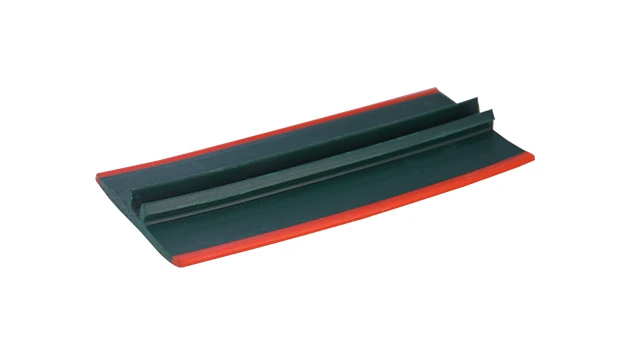
The tread strip fits into a T-slot channel and provides an anti-slip ribbed surface. It has a key pad that presses into a T-slot and is commonly used for adding traction on steps or as padding for doors. Tread strip can be ordered by rolls. The high quali
Introduction: The Unsung Heroes of Aluminum Profile Performance
Aluminum profiles have become the backbone of modern manufacturing, construction, and design. From sleek office furniture to heavy-duty industrial workbenches, from conveyor systems in factories to window frames in high-rise buildings, these versatile structures owe their functionality to more than just the aluminum extrusion profile itself. It's the smaller components—the aluminum profile accessories—that often make the biggest difference in performance, durability, and user experience. Among these accessories, strips play a critical role: they seal gaps, cushion impacts, reduce noise, guide movement, and protect surfaces. But not all strips are created equal. When it comes to longevity and reliability, wear resistance stands out as a defining factor. Today, we're diving deep into two of the most common materials used for these strips: aluminum profile rubber strips and polyurethane strips. By the end of this article, you'll understand how each material holds up under wear and tear, which scenarios favor one over the other, and how to make the best choice for your specific needs.
Understanding Aluminum Profile Rubber Strips: Flexibility with a Familiar Feel
Aluminum profile rubber strips are a staple in countless applications, thanks to their long history and proven performance. At their core, these strips are made from rubber—a material prized for its elasticity, flexibility, and cost-effectiveness. But what exactly are they, and where do they shine?
What Are Aluminum Profile Rubber Strips?
Simply put, these are strips of rubber designed to fit into the grooves or edges of aluminum profiles. They come in various shapes—t-seals, u-channels, flat strips, and custom profiles—to match the specific geometry of the aluminum extrusion profile they're paired with. Common uses include sealing out dust and moisture in windows and doors, cushioning vibrations in machinery, reducing noise in automotive applications, and protecting surfaces from scratches in furniture. For example, on a workbench built with aluminum profiles, rubber strips along the edges prevent tools from slipping off and cushion the impact of heavy objects being placed down.
Composition: The Building Blocks of Rubber Strips
Rubber strips are typically made from either natural rubber (derived from the latex of rubber trees) or synthetic rubber (like EPDM, neoprene, or nitrile). Natural rubber offers excellent elasticity and flexibility, making it ideal for applications where stretch and recovery are key. Synthetic rubbers, on the other hand, are engineered to address specific weaknesses of natural rubber—EPDM, for instance, boasts superior resistance to UV rays and extreme temperatures, while nitrile excels in oil and chemical environments. Additives like carbon black, sulfur (for vulcanization), and plasticizers are often mixed in to enhance strength, durability, or flexibility. This composition gives rubber strips their characteristic softness and "give," which is great for sealing and cushioning but raises questions about how well they hold up over time under constant wear.

Polyurethane Strips: The Tough Contender in Wear Resistance
Polyurethane strips, by contrast, are a newer player in the aluminum profile accessory game, but they've quickly gained a reputation for toughness. Polyurethane is a polymer composed of organic units linked by urethane bonds, and its properties can be fine-tuned during manufacturing to range from soft and flexible to hard and rigid. This versatility has made it a favorite in industries where durability is non-negotiable.
What Sets Polyurethane Strips Apart?
Polyurethane strips for aluminum profiles are designed to handle high stress, friction, and impact. Unlike rubber, which often feels soft and pliable, polyurethane can be formulated to have a firmer texture while retaining flexibility—think of a material that bends but doesn't easily tear or wear down. Common applications include heavy-duty conveyor guides, where products slide over the strips thousands of times a day; industrial workbench edges, where tools and parts are constantly dragged across the surface; and machinery seals that need to withstand oils, chemicals, and extreme temperatures. In short, polyurethane strips thrive in environments where "good enough" just isn't enough.
The Science Behind Polyurethane's Durability
Polyurethane's wear resistance starts with its molecular structure. The polymer chains are cross-linked, creating a dense, tough network that resists deformation. Manufacturers can adjust the ratio of hard and soft segments in the polymer to balance flexibility and hardness—for example, ester-based polyurethanes are more resistant to abrasion and oils, while ether-based polyurethanes offer better hydrolysis resistance (resistance to water absorption). This customization means there's a polyurethane strip for almost every wear scenario, from low-friction guiding to high-impact cushioning.

Wear Resistance Fundamentals: What Does "Wear" Even Mean?
Before we compare rubber and polyurethane, let's clarify what "wear resistance" actually entails. Wear is the gradual degradation of a material due to friction, impact, or exposure to external forces. It can take several forms: abrasive wear (when a rough surface scrapes against the material), adhesive wear (when two surfaces stick and tear off particles), fatigue wear (cracking from repeated stress), or erosive wear (damage from liquids or particles hitting the surface). For aluminum profile strips, all these types of wear are possible, depending on the application. A strip on a conveyor might face mostly abrasive wear from sliding products, while a strip on a door seal might deal with adhesive wear from repeated opening and closing. Understanding these types of wear is key to evaluating how rubber and polyurethane perform in real-world conditions.
Comparative Analysis: Wear Resistance Factors
Now, let's put rubber and polyurethane head-to-head across the most critical wear resistance factors. We'll break down how each material handles abrasion, impact, chemicals, temperature, and environmental exposure—all of which contribute to overall wear.
Abrasion Resistance: When Friction Takes Its Toll
Abrasive wear is perhaps the most common challenge for aluminum profile strips, especially in applications like conveyor systems, workbenches, or sliding guides. Every time a product slides over a strip, every time a tool is dragged across a workbench edge, friction wears away tiny particles of material. Over time, this can lead to thinning, cracking, or even complete failure of the strip.
Rubber strips, while flexible, often struggle with high abrasion. Natural rubber, in particular, has a lower hardness rating (measured on the Shore A scale, where higher numbers indicate harder materials) compared to polyurethane—typically around 40-70 Shore A. This softness means it's more prone to scuffing and tearing when exposed to rough surfaces or constant friction. Synthetic rubbers like neoprene or EPDM offer slightly better abrasion resistance, but they still fall short of polyurethane in most cases.
Polyurethane, by contrast, is engineered for abrasion resistance. Depending on the formulation, it can range from 60-95 Shore A, with some grades even reaching Shore D (a harder scale). This higher hardness, combined with its cross-linked molecular structure, allows polyurethane to withstand repeated friction without significant wear. For example, in a factory setting where a conveyor moves metal parts over an aluminum profile guide strip 10,000 times a day, a rubber strip might need replacement every 3-6 months, while a polyurethane strip could last 2-3 years under the same conditions. That's a huge difference in maintenance costs and downtime.
Impact Resistance: Bouncing Back from Hard Knocks
Impact wear occurs when objects hit the strip with force—think of a heavy part being dropped on a workbench edge or a pallet slamming into a conveyor guide. The material needs to absorb the impact without tearing, cracking, or deforming permanently.
Rubber has long been valued for its impact absorption. Its elasticity allows it to compress under force and return to its original shape, which is why it's commonly used in shock-absorbing applications. A rubber strip on a workbench, for example, can cushion a dropped wrench and protect both the wrench and the aluminum profile. However, rubber has a limit: under repeated heavy impacts, especially with sharp objects, it can develop tears or fatigue cracks. Natural rubber is particularly susceptible to this, as its molecular bonds are less stable than those in polyurethane.
Polyurethane offers a unique combination of impact resistance and toughness. While it's not as soft as rubber, it has high tensile strength and elongation at break, meaning it can stretch and absorb impact energy without breaking. In fact, some polyurethane formulations are so impact-resistant that they're used in industrial bumpers and machine guards. For example, in a warehouse where metal turnover trolleys frequently collide with aluminum profile racks, a polyurethane strip would absorb the impact better than rubber, reducing damage to both the trolley and the rack over time.
Chemical Resistance: Standing Up to Fluids and Solvents
Many aluminum profile applications involve exposure to chemicals—oils, greases, cleaning agents, or even water. Over time, these substances can degrade the strip material, leading to swelling, hardening, or softening, all of which reduce wear resistance.
Rubber's chemical resistance varies widely by type. Natural rubber is highly susceptible to oils and solvents, which can cause it to swell and lose elasticity. Synthetic rubbers like nitrile (resistant to oils) or EPDM (resistant to water and weathering) fare better, but they still have limitations. For example, EPDM rubber might hold up well against rain and mild detergents but could degrade quickly in contact with gasoline or industrial solvents.
Polyurethane, especially ester-based formulations, is generally more chemical-resistant than rubber. It resists oils, greases, and many solvents, making it ideal for industrial settings where machinery uses lubricants or where cleaning with harsh chemicals is common. Ether-based polyurethane, while slightly less chemical-resistant, offers excellent hydrolysis resistance, meaning it won't break down when exposed to water or steam—perfect for food processing or pharmaceutical facilities where frequent washing is required. In short, polyurethane strips are less likely to degrade chemically, which directly translates to better long-term wear resistance in harsh environments.
Temperature Resistance: Performing When the Heat (or Cold) Is On
Extreme temperatures can wreak havoc on strip materials. High heat can cause softening, hardening, or even melting, while extreme cold can make materials brittle and prone to cracking. Both scenarios reduce wear resistance by weakening the the the the the the the the the the the the the the the the the the the the the the the the the the the the the the the the the the the the the the the the the the the the the the the the the the the the the the the the the the the the the the the the the the the the the the the the the the the the the the the the the the the the the the the the the the the the the the the the the the the the the the the the the the the the the the the the the the the the the the the the the the the the the the the the the the the the the the the the the the the the the the the the the the the the the the the the the the the the the the the the the the the the the the the the the the the the the the the the the the the the the the the the the the the the the the the the the the the the the the the the the the the the the the the the the the the the the the the the the the the the the the the the the the the the the the the the the the the the the the the the the the the the the the the the the the the the the the the the the the the the the the the the the the the the the the the the the the the the the the the the the the the the the the the the the the the the the the the the the the the the the the the the the the the the the the the the the the the the the the the the the the the the the the the the the the the the the the the the the the the the the the the the the the the the the the the the the the the the the the the the the the the the the the the the the the the the the the the the the the the the the the the the the the the the the the the the the the the the the the the the the the the the the the the the the the the the the the the the the the the the the the the the the the the the the the the the the the the the the the the the the the the the the the the the the the the the the the the the the the the the the the the the the the the the the the the the the the the the the the the the the the the the the the the the the the the the the the the the the the the the the the the the the the the the the the the the the the the the the the the the the the the the the the the the the the the the the the the the the the the the the the the the the the the the the the the the the the the the the the the the the the the the the the the the the the the the the the the the the the the the the the the the the the the the the the the the the the the the the the the the the the the the the the the the the the the the the the the the the the the the the the the the the the the the the the end of the world.
UV and Environmental Resistance: Fighting the Elements
Outdoor applications—like aluminum profile strips on patio furniture, window frames, or outdoor conveyor systems—expose strips to UV radiation from sunlight, which can cause degradation over time. This is known as photo-oxidation, and it leads to hardening, cracking, or fading of the material.
Rubber strips, especially natural rubber, are vulnerable to UV damage. Without UV stabilizers, they can become brittle and crack after just a few months of direct sunlight. Synthetic rubbers like EPDM are more UV-resistant, but they still degrade faster than polyurethane. Polyurethane, when formulated with UV stabilizers, can withstand years of outdoor exposure without significant hardening or cracking. This makes it the better choice for any aluminum profile application that lives outside, from garden furniture to outdoor kiosks.
Real-World Performance: Case Studies in Wear Resistance
To put these theoretical comparisons into context, let's look at two real-world scenarios where wear resistance makes a tangible difference: a manufacturing workbench and a high-traffic conveyor system.
Case Study 1: Industrial Workbench Edges
A mid-sized electronics manufacturer uses aluminum extrusion profile workbenches for assembling circuit boards. The workbench edges see constant use: technicians slide tools, parts bins, and completed boards across the edges daily. Initially, the company used rubber strips, which were cheap and easy to install. However, within 4 months, the rubber strips began to show significant wear—thinning along the contact points, with visible scuffs and small tears. The IT department estimated that replacing the strips on 50 workbenches cost $2,000 in materials and 16 hours of downtime annually.
Seeking a better solution, the company switched to polyurethane strips with a Shore A hardness of 85. After 2 years, the polyurethane strips showed minimal wear—only slight dulling of the surface, with no tears or thinning. The total cost over 2 years was $3,000 for materials (higher upfront cost) but zero downtime for replacements. The ROI was clear: polyurethane saved the company time and money in the long run, not to mention reduced frustration from frequent maintenance.
Case Study 2: Food Processing Conveyor Guides
A food packaging plant uses aluminum profile conveyors to transport plastic trays of frozen meals. The conveyor guides—strips along the sides of the aluminum extrusion profile—keep the trays centered. The environment is cold (around 40°F) and wet (from occasional spills and daily washdowns with hot, soapy water). The plant first tried EPDM rubber strips, which initially worked well but began to harden in the cold after 6 months, leading to trays jamming as the strips lost flexibility. They then switched to ether-based polyurethane strips, which are hydrolysis-resistant and maintain flexibility in cold temperatures. After 18 months, the polyurethane strips showed no signs of hardening or degradation, even with daily exposure to water and cold. The plant reduced guide strip replacements from 4 times a year to once every 2 years, cutting maintenance costs by 75%.
Maintenance and Longevity: The Hidden Costs of Wear
Wear resistance isn't just about how long a strip lasts—it's also about the maintenance required to keep it performing. Rubber strips often need regular cleaning with mild detergents to prevent buildup of dirt and grime, which can accelerate wear. They may also need conditioning with rubber protectants to maintain flexibility, especially in dry or cold environments. Polyurethane strips, by contrast, are low-maintenance. They can be cleaned with harsh chemicals without damage, and they don't require conditioning. When they do wear out, it's usually gradual, giving plenty of warning before failure—unlike rubber, which can suddenly tear or crack.
Cost Considerations: Upfront Price vs. Long-Term Value
It's no secret that polyurethane strips cost more upfront than rubber strips. Depending on the formulation and size, polyurethane can be 2-3 times the price of rubber. For budget-conscious projects, this sticker shock might seem like a dealbreaker. But as we've seen in the case studies, the total cost of ownership (TCO) tells a different story. TCO includes not just the initial material cost but also installation, maintenance, replacement frequency, and downtime. A rubber strip that costs $5 and lasts 3 months has a TCO of $20 per year, while a polyurethane strip that costs $15 and lasts 2 years has a TCO of $7.50 per year. When scaled across hundreds or thousands of strips in a factory, the savings add up quickly.
Choosing the Right Strip: A Decision Guide
So, how do you decide between aluminum profile rubber strips and polyurethane strips? Here's a quick checklist to help:
- High abrasion or friction? Choose polyurethane.
- Heavy impacts or sharp objects? Polyurethane is tougher.
- Chemical exposure (oils, solvents, water)? Polyurethane (ester for oils, ether for water).
- Outdoor or UV exposure? Polyurethane with UV stabilizers.
- Cold environments? Polyurethane maintains flexibility better.
- Low-budget, low-wear applications (e.g., light-duty sealing in dry, indoor settings)? Rubber may suffice.
In most industrial, high-wear scenarios—like workbenches, conveyors, and heavy machinery—polyurethane strips are the clear winner. For light-duty, indoor, or cost-sensitive applications where wear is minimal, rubber can still be a viable choice.
Conclusion: Wear Resistance Reigns Supreme
When it comes to wear resistance, polyurethane strips outperform aluminum profile rubber strips in nearly every category: abrasion, impact, chemical resistance, temperature tolerance, and UV stability. While rubber has its place in low-wear, budget-friendly applications, polyurethane offers unmatched longevity and reliability in demanding environments. For anyone building with aluminum extrusion profiles—whether it's a single workbench or a sprawling factory—investing in polyurethane strips means fewer replacements, less downtime, and greater peace of mind. After all, in the world of aluminum profile accessories, the best strip is the one you never have to think about replacing.
Wear Resistance Comparison Table
| Factor | Aluminum Profile Rubber Strip | Polyurethane Strip |
|---|---|---|
| Abrasion Resistance | Low to moderate (3-6 months in high-friction settings) | High (2-3 years in high-friction settings) |
| Impact Resistance | Good for light impacts; prone to tearing under heavy/repeated impacts | Excellent; absorbs heavy impacts without tearing |
| Chemical Resistance | Variable (poor with oils/solvents; better with synthetic rubbers like nitrile) | High (resistant to oils, solvents, water with proper formulation) |
| UV/Environmental Resistance | Poor (brittles/cracks outdoors without stabilizers) | High (with UV stabilizers; lasts years outdoors) |
| Maintenance Needs | Regular cleaning and conditioning | Low maintenance; no conditioning required |
| Total Cost of Ownership | Higher over time due to frequent replacements | Lower due to long lifespan and minimal maintenance |