- Company Articles
- Products and Technology
- Product knowledge
- Aluminum Profile Rubber Strip vs Rubber Extrusions: Key Differences

Aluminum Profile Rubber Strip vs Rubber Extrusions: Key Differences
Related Product
Aluminum Profile Rubber Strip
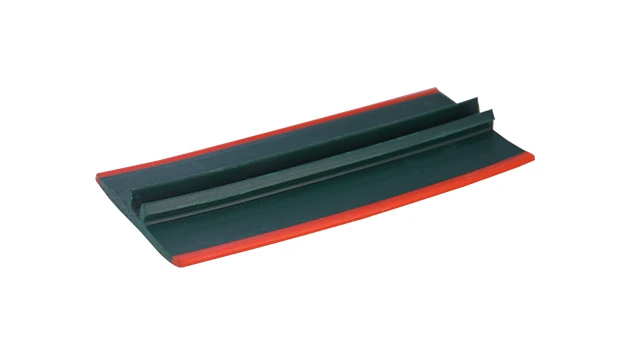
The tread strip fits into a T-slot channel and provides an anti-slip ribbed surface. It has a key pad that presses into a T-slot and is commonly used for adding traction on steps or as padding for doors. Tread strip can be ordered by rolls. The high quali
In the bustling world of manufacturing, warehousing, and industrial design, it's often the smallest components that hold the biggest impact. Think about the workbench where an assembly line operator spends hours piecing together electronics, or the material rack that keeps inventory organized and accessible. Behind these structures—often built with aluminum extrusion profiles—lie unsung heroes: rubber components that seal, cushion, protect, and enhance functionality. Two such components, aluminum profile rubber strips and rubber extrusions, are frequently confused, yet they serve distinct roles in industrial setups.
Whether you're a plant manager upgrading your production line, a lean system supplier designing custom workstations, or a hobbyist building a DIY project with aluminum profiles, understanding the difference between these two rubber solutions is critical. Choose the wrong one, and you might end up with leaks, premature wear, or inefficient workflows. Choose the right one, and you'll unlock smoother operations, longer-lasting equipment, and safer work environments.
In this article, we'll dive deep into the world of aluminum profile rubber strips and rubber extrusions. We'll explore what they are, how they're made, where they're used, and most importantly, how to tell them apart. By the end, you'll have the knowledge to select the perfect rubber component for your next project—whether it's a simple workbench upgrade or a full-scale lean system overhaul.
What is an Aluminum Profile Rubber Strip?
Let's start with the more specialized of the two: the aluminum profile rubber strip. As the name suggests, this component is specifically designed to work with aluminum profiles—those versatile, groove-filled structures that form the backbone of everything from workbenches to conveyor systems. If you've ever run your hand along the edge of an aluminum extrusion profile and felt a soft, flexible lining, you've likely encountered an aluminum profile rubber strip.
Purpose and Design
Aluminum profile rubber strips are engineered with one primary goal: to complement aluminum profiles. Their design is often dictated by the unique T-slot or edge geometry of the profile they're meant to fit. Some are thin and flat, designed to line the edges of a profile to prevent scratches on materials or injuries to workers. Others are shaped to fit into T-slots, acting as seals to keep out dust, moisture, or debris. Still more might have a bulbous or hollow center, providing cushioning when parts or tools are placed on the profile. Take, for example, a material rack B (3 row and 3 floor) used in a warehouse. The aluminum profiles that form the rack's shelves might have rubber strips along their edges to protect fragile items from chipping or sliding off. Or consider a workbench in an electronics assembly line: the aluminum frame's edges could be lined with a soft rubber strip to prevent static buildup (a key feature if the strip is ESD-rated) or to muffle the sound of tools being set down.Materials Used
The materials chosen for aluminum profile rubber strips are carefully selected to balance durability, flexibility, and compatibility with aluminum. The most common options include:- EPDM (Ethylene Propylene Diene Monomer): A favorite for outdoor or industrial environments, EPDM is resistant to UV rays, ozone, heat, and water. It's ideal for aluminum profiles used in factory floors or outdoor storage racks where exposure to the elements is a concern.
- Silicone: When high temperatures are a factor—think near ovens or welding stations—silicone rubber strips shine. They can withstand extreme heat without degrading, making them a top choice for specialized workbenches or lean systems in automotive or aerospace manufacturing.
- Neoprene: For environments with oil, grease, or chemicals, neoprene is the go-to. It's resistant to many industrial fluids, making it suitable for aluminum profiles in machine shops or maintenance areas.
- PVC (Polyvinyl Chloride): A cost-effective option for indoor use, PVC rubber strips are flexible and easy to install. They're often found in office settings or light-duty workbenches where heavy wear and tear isn't a major concern.
Real-World Example: The Case of the Scratched Circuit Boards
A small electronics manufacturer recently upgraded their assembly line with new aluminum extrusion profile workbenches. Eager to cut costs, they skipped aluminum profile rubber strips, assuming the bare aluminum edges were smooth enough. Within weeks, workers began noticing tiny scratches on circuit boards as they slid them across the workbench edges. The solution? Adding EPDM rubber strips to the bench edges. Not only did the scratches stop, but the strips also reduced noise from tools being set down—improving the overall work environment.
Common Applications
Aluminum profile rubber strips are everywhere in industrial settings, though they often go unnoticed. Here are some of their most common uses:- Edge Protection: Lining the edges of aluminum workbenches, shelves, or material racks to prevent damage to products or injury to workers.
- Sealing: Fitting into T-slots of aluminum profiles to seal gaps in enclosures, such as machine guards or cleanroom partitions.
- Noise Reduction: Cushioning impacts between moving parts or tools and the aluminum frame, reducing clatter in busy factories.
- Static Dissipation: ESD (Electrostatic Discharge) rated rubber strips for workbenches in electronics manufacturing, where static can damage sensitive components.
- Vibration Dampening: Absorbing vibrations from machinery mounted on aluminum profiles, preventing wear and tear on both the machine and the profile.
What are Rubber Extrusions?
Now, let's turn to the more versatile cousin: rubber extrusions. Unlike aluminum profile rubber strips, which are specialized for aluminum profiles, rubber extrusions are a broad category of rubber products made through a manufacturing process called extrusion. This process allows for an almost endless variety of shapes, sizes, and configurations, making rubber extrusions suitable for a wide range of industries beyond just aluminum profile applications.
The Extrusion Process: Shaping Rubber into Custom Solutions
To understand rubber extrusions, it helps to first grasp how they're made. The extrusion process starts with raw rubber compound—often a mixture of rubber polymers, fillers, curing agents, and additives. This compound is fed into an extruder, a machine with a rotating screw that pushes the rubber through a die (a metal plate with a specific cross-sectional shape). As the rubber exits the die, it takes on the die's shape—whether that's a simple round cord, a complex multi-lobed seal, or a flat strip. After extrusion, the rubber is cured (vulcanized) using heat, which cross-links the polymer chains and gives the rubber its final strength, elasticity, and durability. Some extrusions may also undergo secondary processes, such as cutting to length, bonding, or adding adhesive backings for easy installation. What makes extrusion so powerful is its flexibility. Unlike injection molding, which requires expensive molds for each shape, extrusion dies are relatively inexpensive and can be customized to create unique profiles. This makes rubber extrusions ideal for both high-volume production runs and small-batch, custom projects.Materials and Shapes: Beyond One-Size-Fits-All
Rubber extrusions come in as many materials as they do shapes. The choice of material depends on the application's requirements, such as temperature resistance, chemical exposure, or flexibility. Common materials include:- Nitrile (Buna-N): Excellent resistance to oil and fuel, making it a staple in automotive and aerospace applications (e.g., fuel line seals).
- FKM (Viton): A high-performance rubber resistant to extreme heat, chemicals, and solvents. It's used in demanding environments like chemical processing plants or jet engines.
- Butyl Rubber: Known for its superior airtightness, butyl extrusions are often used in tires, inner tubes, and vacuum systems.
- And More: From natural rubber (for high elasticity) to chloroprene (for weather resistance), the material options are nearly limitless.
- Cords and O-Rings: Round or square cross-sections used for sealing (e.g., gaskets in).
- Channels and U-Shapes: Used to line edges or hold components in place (e.g., window seals in vehicles).
- Bulb Seals: Hollow or solid bulb-shaped extrusions that compress to create a tight seal (e.g., door seals in refrigerators).
- Custom Profiles: Complex shapes designed for specific applications, such as multi-lip seals for hydraulic cylinders or T-shaped extrusions for mounting in unique grooves.
Real-World Example: The Automotive Door Seal
Next time you close your car door, listen for that satisfying "thud." That sound—and the lack of wind noise while driving—is thanks to rubber extrusions. Automotive door seals are typically bulb-shaped extrusions made from EPDM or thermoplastic elastomer (TPE). They're designed to compress when the door closes, creating a tight seal against the car's body. The extrusion process allows manufacturers to create seals with precisely calibrated flexibility and compression, ensuring a perfect fit for each car model's unique door and frame geometry.
Applications Across Industries
Rubber extrusions' versatility means they're used in almost every industry imaginable. Here are just a few examples:- Automotive: Door seals, window guides, hose gaskets, and vibration dampeners.
- Construction: Weatherstripping for doors/windows, expansion joints in buildings, and gaskets for plumbing fixtures.
- Medical: Flexible tubing for IV lines, seals for medical devices, and non-toxic gaskets for equipment.
- Food and Beverage: FDA-approved extrusions for conveyor belts, sealing gaskets in processing equipment, and hose linings.
- Industrial Manufacturing: Seals for hydraulic presses, guide rails for machinery, and protective edging for conveyor systems.

Key Differences: Aluminum Profile Rubber Strip vs. Rubber Extrusions
Now that we understand what aluminum profile rubber strips and rubber extrusions are, let's compare them side by side. While they may look similar at first glance, their differences in design intent, manufacturing, and application are significant. To make this clearer, let's break down the key distinctions in the table below:
| Feature | Aluminum Profile Rubber Strip | Rubber Extrusion |
|---|---|---|
| Design Intent | Specifically engineered to fit aluminum profiles (T-slots, edges, etc.). | General-purpose; designed for a wide range of applications, not limited to aluminum. |
| Shape Complexity | Often simple (flat, U-shaped, or T-shaped) to match standard aluminum profile geometries. | Can be highly complex (multi-lobed, hollow, custom cross-sections) to meet unique application needs. |
| Compatibility | Only compatible with specific aluminum profile sizes/designs (e.g., 2020, 3030, 4040 profiles). | Compatible with various materials (metal, plastic, wood) and applications. |
| Manufacturing Focus | May involve extrusion followed by die-cutting or trimming to fit profile specifications. | Primarily extrusion-based, with optional secondary processes (curing, cutting, bonding). |
| Common Materials | EPDM, silicone, neoprene (selected for compatibility with aluminum and industrial environments). | Wide range: nitrile, Viton, butyl, natural rubber, etc. (selected for application-specific properties). |
| Primary Applications | Edge protection, T-slot sealing, cushioning on aluminum workbenches, racks, and lean systems. | Door/window seals, automotive gaskets, medical tubing, industrial hoses, and custom sealing solutions. |
| Cost | Often lower for standard sizes (due to mass production for common aluminum profiles). | Cost varies; simple shapes are affordable, but custom complex profiles may be more expensive. |
| Installation | Designed for easy, tool-free installation (e.g., press-fit into T-slots or adhesive backing). | Installation depends on shape/application (may require adhesives, fasteners, or specialized tools). |
Design Intent: Specialized vs. General-Purpose
The most fundamental difference between the two lies in their design intent. Aluminum profile rubber strips are like a custom-tailored suit: made to fit a specific "body" (aluminum profile). Their shapes are often standardized to match common profile sizes—for example, a strip designed to fit the T-slot of a 4040 aluminum extrusion profile will not fit a 2020 profile. This specialization ensures a snug, secure fit that maximizes functionality. Rubber extrusions, by contrast, are more like a versatile wardrobe staple—think a plain white t-shirt that can be dressed up or down. They're not tied to any specific structure and can be shaped to fit almost any need. A rubber extrusion might serve as a seal in a plastic container, a bumper on a wooden shelf, or a gasket in a metal pipe. Their lack of specialization is their greatest asset, allowing them to adapt to diverse applications.Shape and Compatibility: Fitting In vs. Standing Alone
Walk into any aluminum profile supplier's catalog, and you'll find aluminum profile rubber strips categorized by the profile they fit: "for 3030 profiles," "for T-slot 4080 profiles," etc. Their shapes are often simple—U-shaped to clip onto edges, T-shaped to slide into T-slots, or flat to line surfaces. This simplicity ensures they're easy to install and remove, a key feature in lean manufacturing environments where flexibility and quick reconfiguration are priorities. Rubber extrusions, on the other hand, can have wildly complex shapes. Imagine a multi-lobed seal for a car door, with one lobe to compress against the frame and another to channel water away. Or a hollow extrusion with internal ribs for added strength. These shapes are designed to solve specific problems, like reducing wind noise or withstanding high pressure. But this complexity comes at a cost: a custom extrusion die may be needed, and the extrusion may not fit any standard structure without additional modification.Cost and Availability: Off-the-Shelf vs. Custom
For standard aluminum profiles, rubber strips are often readily available and affordable. Since aluminum extrusion profile manufacturers produce millions of the same profile (e.g., 4040), rubber strip suppliers can mass-produce matching strips, driving down costs. Need a strip for a 3030 profile? Your local aluminum profile supplier likely has them in stock, ready to ship. Rubber extrusions, by contrast, can vary widely in cost and lead time. Simple, standard extrusions (like round cords or flat strips) are inexpensive and easy to find. But if you need a custom shape—say, a triangular extrusion with a hollow center—you'll need to order a custom die, which can cost hundreds of dollars and take weeks to produce. This makes custom extrusions a better choice for large production runs where the die cost can be spread out, rather than small-batch projects.
The Cost of Customization: A Small Business Dilemma
A small furniture maker wanted to add a custom rubber edge to their wooden tables to prevent slipping. They initially considered a rubber extrusion, thinking it would be the most durable option. However, when they requested a quote for a custom-shaped extrusion to match their table edges, they were hit with a $500 die fee and a 6-week lead time. Instead, they opted for a standard aluminum profile rubber strip (even though they weren't using aluminum profiles) by attaching it with adhesive. The result? A cost-effective solution that met their needs without the custom extrusion price tag.

Pros and Cons: When to Choose Which?
Now that we've compared their features, let's weigh the advantages and disadvantages of each option. This will help you decide which is right for your project.
Aluminum Profile Rubber Strip: Pros
- Perfect Fit: Designed specifically for aluminum profiles, ensuring a secure, gap-free fit that maximizes performance (e.g., better sealing, less slipping).
- Easy Installation: Most are press-fit or adhesive-backed, requiring no special tools. Even someone with minimal DIY experience can install them.
- Cost-Effective for Aluminum Projects: No need for custom dies or modifications—standard strips are affordable and widely available.
- Industrial-Grade Durability: Materials like EPDM and silicone are chosen to withstand the wear and tear of factory environments, including exposure to oils, chemicals, and heavy use.
- Safety Focus: Many are designed to reduce sharp edges, preventing injuries to workers and damage to materials.
Aluminum Profile Rubber Strip: Cons
- Limited Versatility: They only work with specific aluminum profiles. A strip for a 4040 profile won't fit a 2020 profile, and they're useless if you're not using aluminum at all.
- Shape Limitations: Shapes are standardized, so you can't get a custom cross-section for unique needs.
- Dependence on Profile Availability: If your project uses a non-standard or custom aluminum profile, finding a matching rubber strip may be difficult or impossible.
Rubber Extrusions: Pros
- Unmatched Versatility: Can be shaped, sized, and material-matched to almost any application, regardless of the base material (aluminum, plastic, wood, etc.).
- Custom Solutions: Ideal for unique problems that standard strips can't solve, like complex sealing or specialized cushioning.
- Broad Material Selection: Choose from hundreds of materials to meet specific requirements (e.g., high heat resistance, chemical compatibility, FDA approval).
- Scalability: Once a die is made, extrusions can be produced in large volumes at low per-unit costs.
Rubber Extrusions: Cons
- Higher Upfront Costs: Custom dies and small-batch production can be expensive, making them impractical for one-off projects.
- Longer Lead Times: Designing and manufacturing a custom die takes time—often weeks—delaying project completion.
- Overkill for Simple Needs: Using a custom extrusion for a basic edge protection job on an aluminum profile is like using a sledgehammer to crack a nut—unnecessary and costly.
- Installation Complexity: Some extrusions require adhesives, fasteners, or specialized tools for installation, adding time and effort.
The Bottom Line: When to Choose Which?
Choose an aluminum profile rubber strip if:
- Your project uses standard aluminum extrusion profiles (e.g., 2020, 3030, 4040).
- You need a quick, easy installation with no custom tools or dies.
- Your primary goals are edge protection, basic sealing, or cushioning on aluminum structures.
- Cost is a concern, and you want an off-the-shelf solution.
Choose a rubber extrusion if:
- Your project requires a custom shape, size, or material not available in standard strips.
- You're working with non-aluminum materials (e.g., plastic, wood, steel).
- Your application has specialized needs (e.g., extreme temperature resistance, unique sealing requirements).
- You're producing in large volumes, making the cost of a custom die worthwhile.
Choosing the Right Supplier: What to Look For
Whether you opt for an aluminum profile rubber strip or a rubber extrusion, the quality of the product depends largely on the supplier. Here's what to look for when selecting a supplier—especially if you're sourcing for industrial or lean system projects.
For Aluminum Profile Rubber Strips
If you're buying aluminum profile rubber strips, prioritize suppliers who specialize in aluminum profile accessories. These suppliers understand the nuances of different profiles and can help you find the perfect strip for your needs. Key factors to consider:- Profile Compatibility: Ensure they carry strips for your specific aluminum profile (e.g., 4080b eu standard aluminum profile, 3030 national standard profile a). A good supplier will list compatible profiles for each strip.
- Material Options: Look for a range of materials (EPDM, silicone, neoprene) to match your environment (indoor vs. outdoor, high heat vs. chemical exposure).
- Sample Availability: Reputable suppliers will send samples so you can test the strip's fit, feel, and durability before ordering in bulk.
- Lean System Expertise: If you're building a lean system (e.g., workbenches, material racks), choose a supplier who understands lean principles—they can recommend strips that enhance efficiency (e.g., low-friction strips for smoother material flow).
For Rubber Extrusions
For rubber extrusions, especially custom ones, look for suppliers with a track record in extrusion manufacturing. Key considerations:- Design Support: A good supplier will help you refine your extrusion design, suggesting material options and shape modifications to improve performance and reduce costs.
- Die Manufacturing Capabilities: In-house die manufacturing can speed up lead times and ensure quality control. Ask about their die design process and turnaround time.
- Material Certifications: If your application requires specific certifications (e.g., FDA for food contact, UL for flame resistance), ensure the supplier can provide certified materials.
- Production Capacity: For large orders, confirm they can meet your volume requirements without sacrificing quality or delaying delivery.
Red Flag: The Case of the Mismatched Strip
A manufacturer ordered aluminum profile rubber strips from a general hardware supplier, assuming "one size fits all." When the strips arrived, they were too narrow for the T-slots of their 4040 aluminum extrusion profiles, leading to constant slipping and poor sealing. Frustrated, they switched to a specialized aluminum profile supplier who asked for their profile specs upfront and recommended a compatible strip. The new strips fit perfectly, saving time and money in the long run.
Conclusion: Small Components, Big Impact
Aluminum profile rubber strips and rubber extrusions may seem like minor details in the grand scheme of industrial projects, but their impact is anything but small. The right choice can enhance safety, improve efficiency, and extend the life of your equipment. The wrong choice can lead to downtime, repairs, and frustration.
Remember: aluminum profile rubber strips are the specialists—perfect for standard aluminum extrusion profiles, offering easy installation and cost-effective protection. Rubber extrusions are the generalists—versatile, customizable, and ready to tackle unique challenges across industries. By understanding their differences, you can select the option that aligns with your project's materials, budget, and goals.
So, the next time you're designing a workbench, building a material rack, or upgrading a lean system, take a moment to consider the rubber components. They may not be the stars of the show, but they're the unsung heroes that make everything run smoothly. And when in doubt, reach out to a trusted supplier—their expertise can help you make the best choice for your specific needs.
After all, in manufacturing and industrial design, success lies in the details. And when it comes to rubber components, those details start with understanding the difference between aluminum profile rubber strips and rubber extrusions.