
- Company Articles
- Products and Technology
- Procurement Guidelines
- Aluminum Side Guards: A Cost-Benefit Analysis for Manufacturing Managers
Balancing Safety, Efficiency, and Budget in Modern Production Lines
Introduction: The Hidden Cost of Overlooking Workplace Safety
If you're a manufacturing manager, you've got a lot on your plate. Between meeting production deadlines, keeping labor costs in check, and ensuring your team hits quality targets, it's easy for "small" details to slip through the cracks. But here's the thing: those "small" details often end up being the ones that make or break your operation's success. Take workplace safety, for example. A single accident on the shop floor can derail weeks of progress—costing you not just in medical bills and workers' comp claims, but in downtime, lost productivity, and even damage to your team's morale.
One area where safety and efficiency intersect more than you might think is in the design of your workstations and material handling systems. Today, we're going to zoom in on a component that's often overlooked but plays a critical role in both: aluminum side guards. These unassuming barriers, typically made from aluminum extrusion profiles, are installed along the edges of workbenches, material racks, and conveyor systems to prevent tools, parts, and materials from slipping or falling. But are they worth the investment? Let's dive into a cost-benefit analysis that'll help you decide whether aluminum side guards deserve a spot in your next budget meeting.
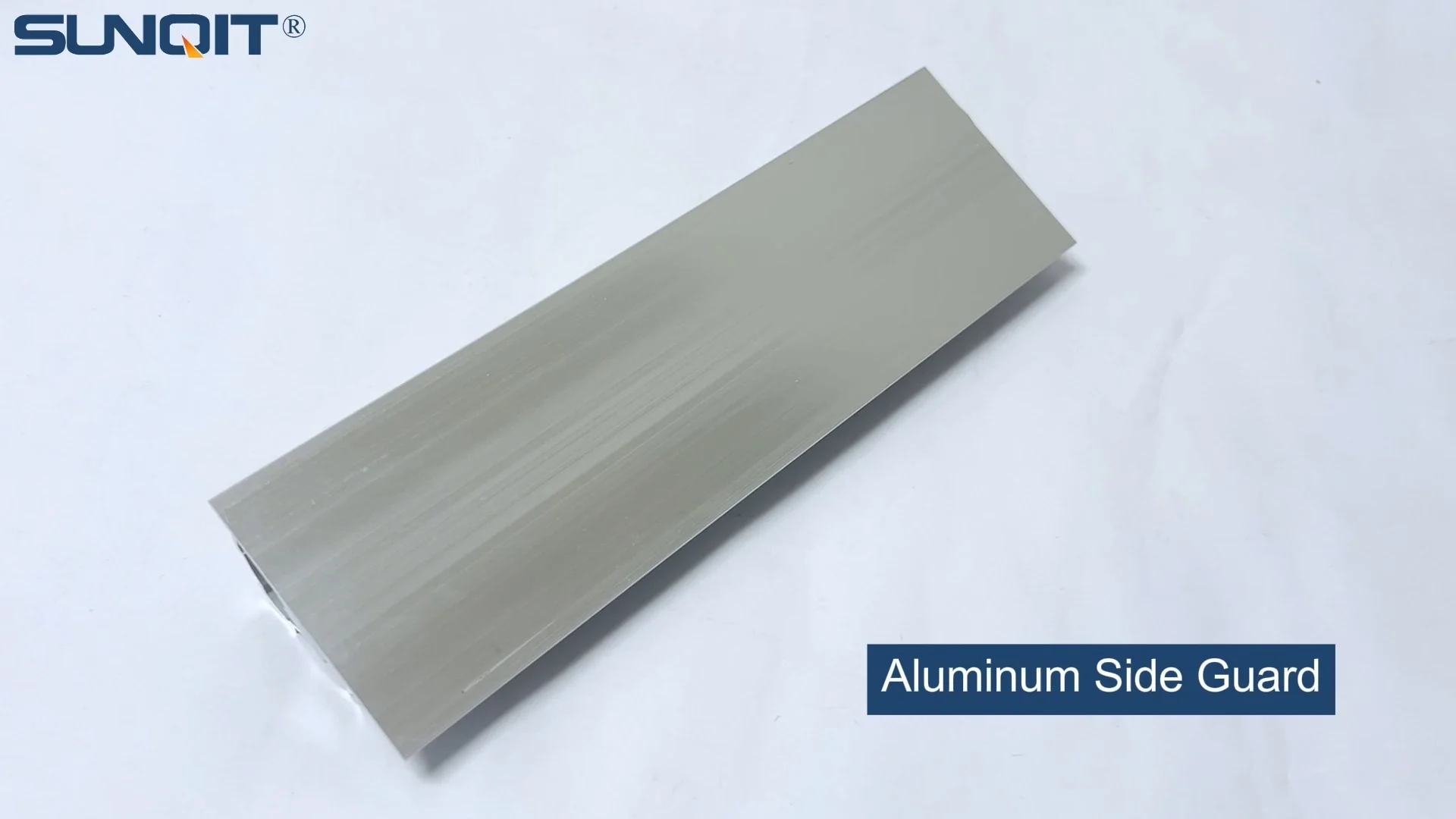
What Are Aluminum Side Guards, Anyway?
Before we get into the numbers, let's make sure we're all on the same page. Aluminum side guards are protective barriers crafted from lightweight yet durable aluminum extrusion profiles—think of them as the "guardrails" of your production line. Unlike clunky steel barriers or flimsy plastic strips, these guards are designed to be both strong and flexible. They're typically mounted along the edges of workbenches, the sides of material racks, or the perimeters of conveyor belts, creating a physical barrier that keeps items from sliding off during handling, assembly, or transport.
What makes aluminum side guards stand out is their construction. Aluminum extrusion profiles are created by forcing molten aluminum through a die, resulting in uniform, customizable shapes—like the T-slots and grooves that make these guards easy to attach, adjust, and modify. This means you can tailor them to fit almost any workstation or rack, whether you're working with a small assembly bench or a large-scale material storage system. And because they're made from aluminum, they're resistant to rust, corrosion, and dents—unlike steel, which can degrade over time, or plastic, which cracks under heavy use.

The Case for Aluminum: Key Benefits Beyond "Just Safety"
At first glance, you might think aluminum side guards are all about safety—and while that's a big part of their value, their benefits stretch far beyond preventing falls. Let's break down why these guards are worth considering for your operation.
1. Safety First: Reducing Accidents (and Their Costs)
Let's start with the obvious: safety. A single dropped tool or part can lead to a cascade of problems. If a worker slips on a fallen component, you're looking at potential injuries, medical expenses, and lost workdays. According to the Occupational Safety and Health Administration (OSHA), the average cost of a non-fatal workplace injury is around $42,000—including direct costs like medical bills and indirect costs like downtime and training for replacement workers. Multiply that by even one accident per year, and suddenly a few hundred dollars in side guards seems like a bargain.
Aluminum side guards act as a first line of defense. By creating a physical barrier, they prevent items from rolling or sliding off workbenches during assembly or from material racks during stocking. This isn't just about protecting your team, either—dropped parts can damage expensive machinery, scratch finished products, or contaminate sensitive components (hello, costly rework). For example, in electronics manufacturing, a single static-sensitive part that hits the floor might be ruined, costing hundreds of dollars in wasted materials alone. Aluminum side guards add a layer of protection that keeps these scenarios from happening in the first place.
2. Durability: Longevity That Saves You Money Over Time
Let's talk about lifespan. Plastic side guards might cost less upfront, but how long do they last? In a busy manufacturing environment—where tools get knocked around, parts are stacked, and workers are moving quickly—plastic guards can crack, chip, or snap within a year or two. Steel guards, while strong, are prone to rust if not regularly painted or treated, especially in humid or wet environments (like food processing or automotive plants). And when they do degrade, you're stuck replacing them—costing you time, money, and the hassle of downtime during installation.
Aluminum side guards, on the other hand, are built to last. Aluminum's natural resistance to corrosion means they hold up in harsh environments, from dusty warehouses to cleanrooms. They're also dent-resistant—unlike steel, which can bend under impact, or plastic, which shatters. Most manufacturers estimate a lifespan of 10–15 years for aluminum extrusion profile guards, even with heavy daily use. That's 5–10 times longer than plastic guards, which need replacing every 2–3 years. Over time, this longevity translates to fewer replacement costs and less disruption to your workflow.
3. Flexibility: Adapting to Your Lean System
If you're running a modern manufacturing operation, you're probably already on board with lean system principles—maximizing value, minimizing waste, and staying agile. Aluminum side guards fit right into this mindset. Thanks to their modular design (think T-slots and compatible accessories), they're easy to adjust, reconfigure, or relocate as your needs change. Need to widen a workbench? Simply extend the guard using additional aluminum extrusion profiles. Switching from manual assembly to automated conveyor systems? The guards can be detached and reinstalled on the new setup in hours, not days.
This flexibility is a game-changer for lean operations. Traditional steel guards are often welded in place, making them nearly impossible to modify without cutting or rewelding—wasting time and labor. Plastic guards, meanwhile, are often glued or snapped into place, meaning you'll likely need to buy new ones if you reconfigure your workspace. Aluminum side guards, with their T-slot design, let you use bolts, brackets, or clips to attach them securely, then adjust or remove them as needed. It's lean manufacturing in action: no waste, no unnecessary costs, just adaptability.
4. Lightweight Yet Strong: Easing Handling and Installation
Let's not overlook the practical side of things: aluminum is lightweight. A 6-foot length of aluminum extrusion profile might weigh just 5–10 pounds, compared to 20–30 pounds for a similar steel guard. This makes installation a breeze—your team can mount them without heavy lifting equipment, reducing the risk of back injuries during setup. It also means you can easily move or reposition guards if your workflow changes, without needing to call in a crew of contractors.
Don't let the lightweight fool you, though—aluminum is surprisingly strong. It has a high strength-to-weight ratio, meaning it can withstand impacts from tools, parts, and even the occasional bump from a forklift (within reason, of course). This combination of strength and lightness makes aluminum side guards ideal for both stationary setups (like workbenches) and mobile systems (like rolling material carts), where adding extra weight would slow down operations.

The Cost Breakdown: Initial Investment vs. Long-Term Savings
Okay, so aluminum side guards sound great—but what do they cost? Let's get real about the numbers. Like any safety or efficiency upgrade, there's an upfront investment, but the long-term savings often outweigh the initial expense. Let's break it down.
Upfront Costs: What You'll Pay Today
First, the sticker shock (if there is any). Aluminum extrusion profiles typically cost more per linear foot than plastic or steel. Here's a rough estimate based on current market prices (as of 2025):
- Aluminum side guards: $15–$30 per linear foot (including mounting brackets and hardware)
- Plastic side guards: $5–$15 per linear foot
- Steel side guards: $10–$25 per linear foot (not including anti-rust coating)
So, for a typical workbench that's 6 feet long, you might pay $90–$180 for aluminum guards, compared to $30–$90 for plastic or $60–$150 for steel. At first glance, plastic seems like the cheapest option, followed by steel, then aluminum. But here's where the story changes: you can't just look at the upfront cost—you need to consider the total cost of ownership over time.
Long-Term Costs: Maintenance, Replacement, and Downtime
Let's say you install plastic side guards on 10 workbenches (60 linear feet total). At $10 per foot, that's $600 upfront. But plastic guards have a lifespan of about 2–3 years—they'll crack, fade, or warp under heat, UV light, or heavy impacts. So every 3 years, you're replacing them, spending another $600. Over 10 years, that's $2,000 (initial $600 + 3 replacements at $600 each). And that doesn't include the labor cost of installing new guards each time, or the downtime if a guard breaks mid-shift and you have to stop production to fix it.
Steel guards, on the other hand, might last 5–7 years, but they require maintenance. You'll need to paint them every 1–2 years to prevent rust, especially if your facility is humid or exposed to chemicals. A can of industrial paint costs $30–$50, and painting 60 feet of guards takes 2–3 hours (at $25–$50 per hour for labor). Over 10 years, that's $300–$500 in paint plus $500–$1,500 in labor for painting alone. Add in the initial cost of $15 per foot ($900 for 60 feet), and you're looking at $1,700–$2,900 over 10 years—not to mention the risk of rust weakening the guards, leading to early replacement.
Now, aluminum side guards. At $20 per foot (mid-range), 60 feet would cost $1,200 upfront. But here's the kicker: they don't need painting, they don't rust, and they last 10–15 years. So over a 10-year period, you might spend $0 on maintenance and $0 on replacements. Total cost: $1,200. That's less than half the cost of plastic guards over the same timeframe and significantly less than steel when you factor in maintenance.
The Hidden Savings: Avoiding Accidents and Rework
We can't talk about costs without mentioning the elephant in the room: accidents. As we noted earlier, a single non-fatal workplace injury costs around $42,000. Even a "minor" incident—like a part falling off a material rack and damaging a $500 piece of equipment—adds up. Aluminum side guards reduce the risk of these incidents by creating a physical barrier, which means fewer accidents, less downtime, and lower insurance premiums (many insurers offer discounts for safety upgrades).
Let's say your facility has one accident per year related to falling items, costing $10,000 on average (including downtime and repairs). If aluminum side guards reduce that risk by 50% (a conservative estimate), you'd save $5,000 per year. Over 10 years, that's $50,000 in avoided costs—dwarfing the $1,200 upfront investment in guards. Suddenly, the "expensive" aluminum option starts to look like a steal.
Comparing the Options: Aluminum vs. Plastic vs. Steel
To make this even clearer, let's put it all in a table. The following compares aluminum, plastic, and steel side guards over a 10-year period for a 60-foot installation (e.g., 10 workbenches, each 6 feet long):
| Category | Aluminum Side Guards | Plastic Side Guards | Steel Side Guards |
|---|---|---|---|
| Initial Cost (60 feet) | $1,200 ($20/linear foot) | $600 ($10/linear foot) | $900 ($15/linear foot) |
| Estimated Lifespan | 10–15 years | 2–3 years | 7–10 years |
| Replacement Cost (10 years) | $0 (no replacement needed) | $1,400 (3 replacements at $600 each) | $450 (1 replacement at $900, partial) |
| Maintenance Cost (10 years) | $0 (no painting, rust-proof) | $0 (no maintenance, but short lifespan) | $1,000 (paint + labor every 2 years) |
| Estimated Accident Savings (10 years) | $50,000 (50% reduction in $10k/year accidents) | $10,000 (10% reduction, less durable barrier) | $30,000 (30% reduction, heavier but prone to rust) |
| Total 10-Year Cost (Net) | -$48,800 (savings) | -$8,000 (savings, but minimal) | -$27,650 (savings, but less than aluminum) |
*Note: Negative numbers indicate net savings (total savings minus total costs). Accident savings are based on a hypothetical 50% reduction for aluminum, 30% for steel, and 10% for plastic, assuming one $10,000 accident per year without guards.
As you can see, aluminum side guards come out on top by a wide margin when you factor in long-term costs and accident savings. They require a higher upfront investment, but their durability, low maintenance, and safety benefits make them the most cost-effective choice over time.
Real-World Applications: Where Aluminum Side Guards Shine
Still not convinced? Let's look at how aluminum side guards perform in real manufacturing settings. Here are a few scenarios where they've made a measurable difference for managers like you.
1. Workbenches: Keeping Assembly Lines Moving
Imagine a busy electronics assembly line, where workers are piecing together circuit boards on a long workbench. Without side guards, small components—resistors, capacitors, screws—often roll off the edges, getting lost under the bench or stepped on. Workers spend time searching for parts, slowing down production, and occasionally, a lost screw ends up in a finished product, causing a quality issue. After installing aluminum side guards along the workbench edges, the plant manager reported a 30% reduction in time spent searching for lost parts and a 50% drop in quality defects related to foreign objects. Over six months, that translated to $12,000 in saved labor and $8,000 in avoided rework—more than enough to cover the cost of the guards.
2. Material Racks: Preventing Spills and Damage
A automotive parts manufacturer was using steel racks to store heavy metal components. The racks had no side guards, so when workers loaded or unloaded parts, items would sometimes slide off the sides, denting the floor, damaging the parts, and creating tripping hazards. The plant had one major accident per quarter, costing an average of $5,000 in repairs and downtime. After retrofitting the racks with aluminum side guards, accidents dropped to zero over a year. The upfront cost was $2,500 for 200 feet of guards, but the savings from avoided accidents totaled $20,000—an 8x return on investment in just 12 months.
3. Lean System Integration: Adapting to Changing Workflows
A furniture manufacturer embraced lean manufacturing, which meant frequently reconfiguring their production line to reduce waste. They initially used plastic side guards on their workbenches and material carts, but every time they moved a workstation, the plastic guards cracked or broke, requiring replacement. Switching to aluminum side guards let them easily detach, reposition, and reattach the guards without damage. Over two years, they saved $3,000 on replacement plastic guards and reduced setup time for new workflows by 40%—all while keeping their lean system on track.
Is Aluminum Right for You? When to Consider Other Options
We've sung aluminum's praises, but it's not the best fit for every scenario. Here are a few cases where you might opt for a different material:
- Short-term projects: If you're setting up a temporary workstation that'll be dismantled in a year or two, plastic guards might be cheaper upfront—just be prepared to replace them if the project runs long.
- Extreme heat environments: While aluminum handles moderate heat well, in foundries or kilns with temperatures over 400°F, steel (which has a higher melting point) might be better.
- Ultra-heavy loads: If you're storing 500+ pound items that could crush aluminum, steel might be necessary—though aluminum can still work with reinforced brackets.
For most general manufacturing, assembly, and warehousing operations, though, aluminum side guards offer the best balance of cost, durability, and flexibility.
Conclusion: Investing in Aluminum Side Guards—A No-Brainer for Smart Managers
At the end of the day, manufacturing management is about making choices that balance safety, efficiency, and budget. Aluminum side guards might seem like a small upgrade, but their impact is anything but. They reduce accidents, cut down on maintenance costs, adapt to your lean system, and save you money over time—all while keeping your team safe and your production line moving.
So, the next time you're reviewing your budget, ask yourself: Can I afford not to invest in aluminum side guards? When you consider the cost of accidents, the hassle of frequent replacements, and the benefits of a more efficient, adaptable workspace, the answer is clear. Aluminum side guards aren't just a safety measure—they're a smart business decision.
Your team deserves a workspace that keeps them safe. Your bottom line deserves investments that pay off. Aluminum side guards deliver on both. It's time to stop overlooking the "small" components that make a big difference—and start reaping the rewards of a safer, more efficient operation.