- Company Articles
- Products and Technology
- Solution
- Aluminum Side Guards & Lean 5S: Organizing Workspaces Safely & Efficiently

Aluminum Side Guards & Lean 5S: Organizing Workspaces Safely & Efficiently
Related Product
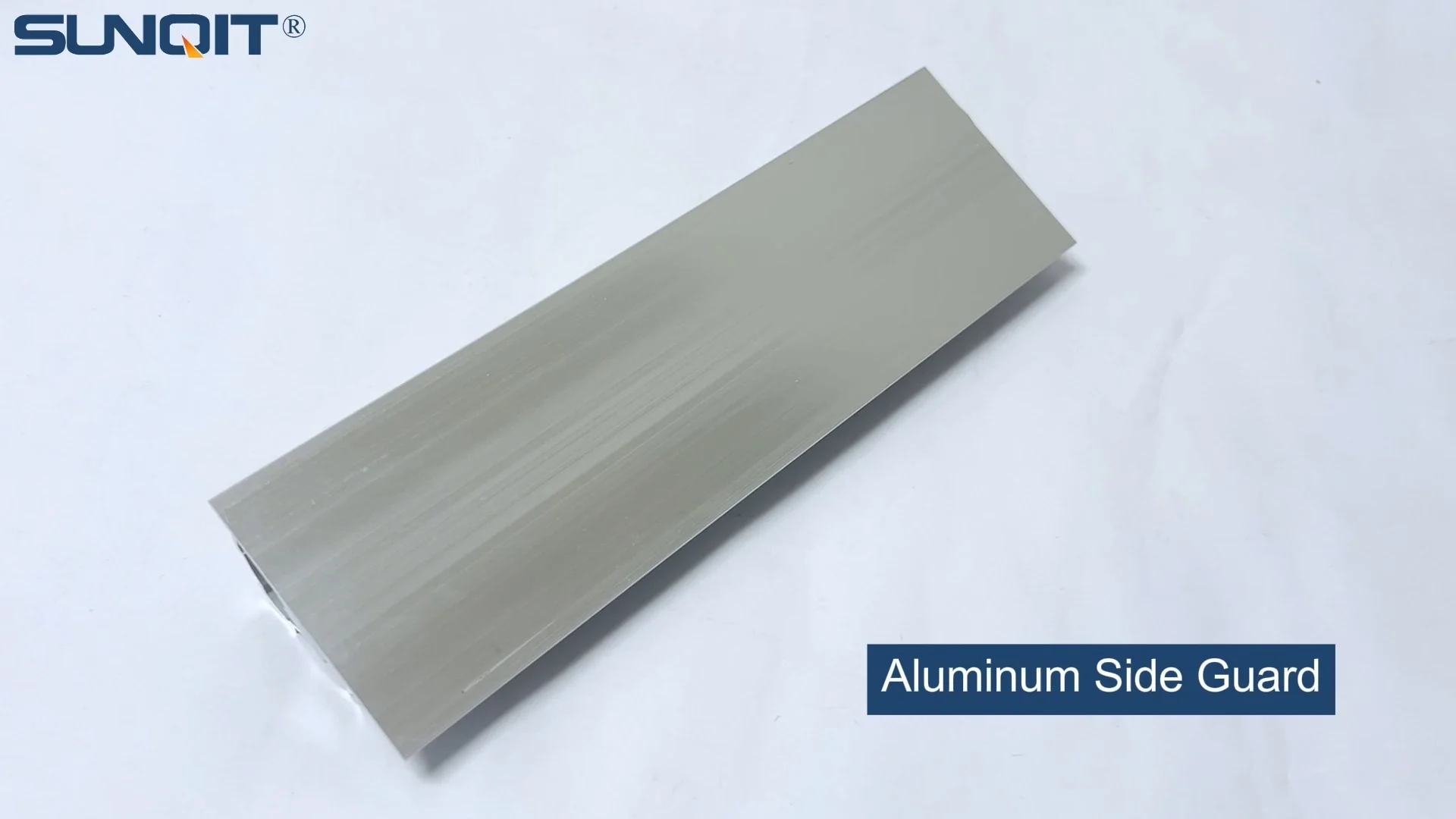
Aluminum Side Guard
Aluminum side guard, it works with a aluminum pipe or a roller track as side guard to prevent material drop,or move to wrong direction.
Introduction: The Hidden Cost of a Disorganized Workspace
Think about the last time you stepped into a busy production floor—tools scattered across workbenches, materials stacked haphazardly on flow racks, employees weaving through cluttered aisles just to retrieve a single part. It's a scene that feels all too familiar in many manufacturing, warehousing, or assembly environments. At first glance, it might seem like "just how things are"—a necessary chaos that comes with getting work done. But here's the truth: that chaos isn't just messy. It's quietly eating away at your team's productivity, increasing safety risks, and making it nearly impossible to maintain the efficiency that modern businesses need to thrive.
We've all experienced the frustration of losing valuable time hunting for a misplaced tool or waiting for a colleague to move a precariously balanced stack of materials. Worse, we've heard the stories—or witnessed firsthand—the accidents: a box slipping off an unguarded flow rack, a worker tripping over a loose cable, a part falling from a conveyor belt onto a busy walkway. These aren't just isolated incidents; they're symptoms of a workspace that's not designed to support the people who use it.
This is where Lean 5S comes in—a tried-and-true methodology that transforms chaos into order by focusing on five principles: Sort, Set in Order, Shine, Standardize, and Sustain. But Lean 5S isn't just about tidying up. It's about creating a workspace that works with your team, not against them. And while tools like labeled bins, color-coded zones, and regular cleaning schedules are foundational, there's one often-overlooked element that can make or break your Lean journey: aluminum side guards. These simple, unassuming barriers might seem like a small detail, but when paired with aluminum profile, workbenches, flow racks, and conveyors, they become the backbone of a workspace that's both safe and supremely efficient. In this article, we'll dive into how aluminum side guards integrate with Lean 5S to transform your workspace, one guardrail at a time.
Understanding Lean 5S: More Than Just "Cleaning Up"
Before we explore the role of aluminum side guards, let's take a moment to ground ourselves in what Lean 5S really is. Developed in Japan and popularized globally, 5S isn't a one-time spring cleaning project. It's a mindset—a way of designing workspaces that prioritize clarity, safety, and efficiency. Let's break down the five principles briefly to see why each matters:
- Sort (Seiri): Separate what's necessary from what's not. If a tool, material, or piece of equipment isn't used regularly, it doesn't belong in the immediate workspace. This reduces clutter and frees up valuable space.
- Set in Order (Seiton): Arrange necessary items so they're easy to find, use, and return. Think labeled storage, tools hung at eye level, and materials placed where they're needed most. The goal? "A place for everything, and everything in its place."
- Shine (Seiso): Keep the workspace clean and well-maintained. This isn't just about aesthetics; a clean space prevents dust buildup, identifies wear and tear early, and reduces the risk of slips, trips, and falls.
- Standardize (Seiketsu): Create consistent processes for how the workspace is organized and maintained. This ensures that everyone on the team knows where things go, how to clean up, and how to spot issues before they escalate.
- Sustain (Shitsuke): Make Lean 5S a habit. This means training new team members, regularly auditing the workspace, and celebrating small wins to keep motivation high.
The challenge, of course, is turning these principles into action. Even with the best intentions, many teams struggle to maintain "Set in Order" or "Standardize" because their workspace lacks the physical structure to support these habits. For example, you might Sort and label bins for tools, but if those bins are placed on a flow rack without side guards, they'll eventually slide off, get mixed up, or create a hazard. You might Set in Order a conveyor system to move parts between stations, but without side guards, parts can fall off mid-transit, disrupting the flow and risking injury. This is where aluminum side guards step in: they're the physical reinforcement that turns Lean 5S principles into a sustainable reality.

The Unsung Hero: What Are Aluminum Side Guards, and Why Do They Matter?
At their core, aluminum side guards are simple barriers—typically made from lightweight, durable aluminum profile—that attach to workbenches, flow racks, conveyors, or shelving to prevent materials, tools, or parts from sliding, falling, or spilling. But to call them "just barriers" is to underestimate their impact. Aluminum side guards are the silent enforcers of order in a Lean workspace. They keep materials where they belong, protect workers from falling objects, and create clear, unobstructed pathways that reduce congestion and confusion.
So why aluminum? Unlike heavy steel guards or flimsy plastic alternatives, aluminum side guards offer the perfect balance of strength, flexibility, and cost-effectiveness. Aluminum is lightweight, making it easy to install and reconfigure as your workspace needs change—a critical feature for Lean environments that evolve over time. It's also resistant to rust and corrosion, ensuring that guards hold up in harsh industrial settings where moisture, dust, or chemicals might otherwise degrade other materials. Plus, aluminum profile (the extruded aluminum rails used to build the guards) is designed with T-slots, which means you can easily attach accessories like brackets, labels, or even additional guards without drilling or welding. This modularity makes aluminum side guards adaptable to almost any workspace, from small workbenches to large-scale conveyor systems.
But perhaps the biggest advantage of aluminum side guards is their role in reinforcing Lean 5S principles. Let's break it down:
- Sort & Set in Order: By keeping materials contained on flow racks or workbenches, side guards prevent "creep"—the slow spread of tools or parts into areas where they don't belong. This makes it easier to Sort (remove unnecessary items) and Set in Order (keep necessary items in their designated spots).
- Shine: A workspace with side guards is easier to clean. Without parts or debris falling onto the floor, sweeping, mopping, and inspecting for wear and tear becomes faster and more effective—supporting the Shine principle.
- Standardize: Aluminum side guards can be color-coded (think bright yellow for high-traffic areas or red for hazard zones) to create visual standards that everyone on the team recognizes. This reduces guesswork and ensures consistency across shifts.
- Sustain: Because aluminum side guards are durable and easy to maintain, they don't require constant replacement or repair. This means your team can focus on sustaining Lean habits, not fixing broken equipment.
In short, aluminum side guards aren't just add-ons—they're the glue that holds your Lean 5S system together. They turn abstract principles into tangible, everyday actions that your team can rely on.

Building Blocks: Aluminum Profile & Workbench Integration
To truly understand the power of aluminum side guards, we need to look at how they integrate with the foundational elements of any workspace: workbenches and aluminum profile. Workbenches are the heart of any assembly or manufacturing operation—the place where hands-on work happens, tools are stored, and parts are prepared. But a workbench without proper guarding is like a desk without a edge—sooner or later, something's going to fall off.
Imagine a typical workbench in a busy assembly line. It's cluttered with tools, half-assembled parts, and bins of screws and washers. The team member working there is focused on their task, but every time they reach for a tool, their elbow knocks a bin of parts toward the edge. By mid-shift, that bin is hanging off the side, risking a spill. Now, picture the same workbench with aluminum side guards: a low-profile rail (typically 2-3 inches high) running along the front and sides, attached to the workbench frame using aluminum profile brackets. Suddenly, the bin stays put. The team member can work without worrying about knocking items off, and cleanup at the end of the shift takes minutes instead of hours.
But aluminum side guards on workbenches aren't just about containing items—they also support better organization. Many workbenches use aluminum profile frames, which means side guards can be paired with accessories like tool hooks, label holders, or small shelves. For example, a workbench used for electronics assembly might have side guards with integrated ESD (electrostatic discharge) strips to protect sensitive components, while a heavier-duty workbench in a automotive shop could have taller guards to contain larger parts. The T-slot design of aluminum profile makes it easy to mix and match these accessories, creating a workbench that's tailored to the specific needs of the task at hand.
This integration between aluminum profile, workbenches, and side guards also makes reconfiguration a breeze. Let's say your team shifts from assembling small parts to larger components. With traditional wooden or steel workbenches, you'd likely need to replace the entire setup. But with aluminum profile workbenches, you can simply adjust the height of the side guards, add extensions, or even reposition the guards to create a larger workspace. This flexibility ensures that your workbench evolves with your team, supporting sustained Lean practices over the long term.
Flow Racks & Conveyors: Streamlining Material Flow with Side Guards
Workbenches are where the "hands-on" work happens, but material flow—how parts and tools move between workbenches, storage areas, and shipping—is the lifeblood of any operation. This is where flow racks and conveyors come in. Flow racks use gravity or rollers to move materials from the back to the front, ensuring that the oldest stock is used first (a key Lean practice known as FIFO: First In, First Out). Conveyors automate material transport, reducing the need for manual lifting and carrying. But without aluminum side guards, both flow racks and conveyors can become sources of inefficiency and risk.
Consider a flow rack in a warehouse, stocked with boxes of components for an assembly line. Without side guards, boxes can easily slide off the sides, especially as workers load new stock from the back. This not only creates a mess but also disrupts FIFO—if a box falls off, it might get misplaced, leading to expired or obsolete inventory. Worse, a falling box could injure someone walking below. Now, add aluminum side guards along the edges of each flow rack shelf. Suddenly, boxes stay aligned, workers can load and unload without worrying about spills, and inventory remains organized. The guards also act as a visual cue, reminding teams to keep boxes within the rack's boundaries—a simple but effective way to reinforce the "Set in Order" principle.
Conveyors face similar challenges. Whether it's a belt conveyor moving packages in a warehouse or a roller conveyor transporting parts between assembly stations, items can shift, tip, or fall off during transit. This isn't just a waste of time (stopping the conveyor to retrieve fallen parts); it's a safety hazard. Aluminum side guards solve this by creating a clear "lane" for materials to travel in. Guards can be adjusted to match the size of the items being transported—taller guards for larger boxes, shorter ones for small parts—and they can be fitted with accessories like guide rails or bumpers to keep fragile items stable. For example, in an electronics plant, a conveyor moving circuit boards might use low-profile aluminum side guards with soft rubber edges to prevent damage to delicate components, while a steel mill might use heavy-duty aluminum guards to contain large, hot metal parts.
What's more, aluminum side guards on conveyors and flow racks are designed to work seamlessly with aluminum profile systems. This means you can extend guards around corners, connect them to workbenches, or even add gates for easy access—all without compromising the integrity of the system. For instance, a flow rack might feed into a conveyor, with side guards bridging the gap between the two to ensure materials move smoothly from one to the other. This kind of integration eliminates bottlenecks and creates a continuous, efficient flow that's essential for Lean operations.
Real-World Impact: A Before-and-After Scenario
To put this all into perspective, let's walk through a hypothetical (but realistic) before-and-after scenario. Meet Acme Manufacturing, a mid-sized company that produces automotive parts. Before implementing Lean 5S with aluminum side guards, Acme's production floor was typical of many manufacturers: workbenches cluttered with tools, flow racks overflowing with unguarded parts, and conveyors that frequently jammed due to fallen items. Productivity was stagnant, safety incidents were on the rise, and employee morale was low.
The "Before" Picture:
- Workbenches: Tools and partially assembled parts often fell onto the floor, leading to 1-2 hours of cleanup per shift and frequent delays as workers searched for lost items.
- Flow Racks: Boxes of screws and bolts regularly slid off unguarded shelves, causing spills that took 30-45 minutes to clean up. Misplaced inventory led to 5-10% of orders being delayed due to "stockouts" (even though the parts were actually in the building, just lost).
- Conveyors: Parts fell off conveyor belts an average of 3-4 times per day, requiring the line to stop and workers to retrieve items. This resulted in 2-3 hours of unplanned downtime weekly.
- Safety: Two minor injuries in the past year (a worker tripping over a fallen part, another suffering a cut from a sharp edge of a spilled box) led to increased workers' compensation costs and a tense team environment.
The "After" Transformation:
Acme's Lean team started by implementing the 5S principles, but they quickly realized that without physical barriers, their efforts to "Set in Order" and "Standardize" were unsustainable. They invested in aluminum profile, aluminum side guards, and (accessories) to upgrade their workbenches, flow racks, and conveyors. Here's what changed:
- Workbenches: Aluminum side guards were added to all workbenches, along with T-slot tool holders and labeled bins. Tools and parts stayed in place, reducing cleanup time to 15 minutes per shift. Workers reported feeling "less stressed" and "more focused" without the constant fear of knocking items off.
- Flow Racks: Each shelf of every flow rack was fitted with aluminum side guards and dividers, creating separate lanes for different parts. Spills dropped to zero, and inventory accuracy improved—stockouts decreased by 90%, and order delays were cut by 75%.
- Conveyors: Aluminum side guards with guide rails were installed along all conveyors, keeping parts centered and preventing falls. Downtime due to fallen items dropped to zero, adding an extra 8-10 productive hours per week.
- Safety: No injuries were reported in the six months following the upgrade. Workers noted feeling "safer" and "more valued," leading to a 15% increase in employee retention.
The results spoke for themselves: Acme saw a 22% increase in productivity, a 40% reduction in safety incidents, and a significant boost in team morale. And while the aluminum side guards were just one part of their Lean journey, the team credited them with making the 5S principles "stick." As one supervisor put it: "We'd tried organizing before, but the guards turned 'neat for a day' into 'neat for good.'"
The Data Speaks: Comparing Traditional vs. Guarded Workspaces
To quantify the impact of aluminum side guards on Lean 5S, let's look at a side-by-side comparison of key metrics. The table below draws on industry data and real-world case studies to highlight the difference between traditional workspaces and those equipped with aluminum side guards, aluminum profile, and integrated workbenches, flow racks, and conveyors.
| Metric | Traditional Workspace | Lean Workspace with Aluminum Side Guards | Improvement |
|---|---|---|---|
| Productivity (hours of value-added work per employee) | 5.2 hours/day | 6.8 hours/day | +31% |
| Material waste (scrap/lost parts) | 8% of total materials | 2% of total materials | -75% |
| Unplanned downtime (due to spills, jams, or accidents) | 4.5 hours/week | 0.5 hours/week | -89% |
| Safety incidents (minor injuries per year) | 6 incidents/year | 1 incident/year | -83% |
| Employee satisfaction (based on internal surveys) | 62/100 | 85/100 | +37% |
These numbers tell a clear story: aluminum side guards aren't just a "nice-to-have"—they're a strategic investment that pays off in productivity, safety, and employee engagement. By creating a workspace that's organized, predictable, and safe, you're not just improving metrics; you're building a culture where Lean 5S isn't a chore, but a way of life.
Sustaining Success: Why Aluminum Side Guards Support Long-Term Lean Goals
One of the biggest challenges in Lean implementation is sustaining the improvements over time. It's easy to get everyone excited for a "5S blitz" that tidies up the workspace, but without systems in place to maintain that order, chaos inevitably creeps back in. This is where aluminum side guards truly shine—they're not just a one-time fix, but a long-term solution that supports sustained success.
Aluminum side guards are low-maintenance by design. Unlike wood, which can warp or rot, or plastic, which can crack, aluminum holds up to daily wear and tear without requiring constant repairs. A quick wipe with a damp cloth is usually all it takes to keep guards clean and functional, supporting the "Shine" principle. And because aluminum profile is modular, reconfiguring guards as your workspace changes is simple—no need to replace entire systems when you add a new workbench or expand a conveyor line. This adaptability ensures that your Lean setup can grow with your business, rather than becoming obsolete.
Perhaps most importantly, aluminum side guards create visual standards that reinforce Lean habits. When workers see guards in place, they're reminded to keep materials within the designated areas. New team members can quickly learn where items belong by following the "path" created by the guards, reducing training time and ensuring consistency across shifts. Over time, these visual cues become second nature, turning Lean 5S from a set of rules into an intuitive way of working.
Conclusion: Aluminum Side Guards—Small Change, Big Impact
In the world of Lean 5S, it's easy to get caught up in grand gestures: overhauls of entire production lines, expensive software systems, or company-wide training programs. But as we've explored, some of the most powerful changes are the smallest ones. Aluminum side guards might not grab headlines, but they're the quiet heroes that turn Lean principles into practice. By keeping materials contained, reducing safety risks, and creating visual order, these simple barriers transform chaotic workspaces into hubs of efficiency.
Whether you're just starting your Lean journey or looking to reinvigorate an existing program, don't overlook the impact of aluminum side guards. Paired with aluminum profile, workbenches, flow racks, and conveyors, they create a workspace that's not just organized, but empowering —one where your team can focus on what they do best: building, creating, and delivering value. After all, Lean 5S is about more than efficiency; it's about respecting the people who make your business run. And what better way to show that respect than by giving them a workspace that's safe, organized, and designed to help them succeed?
So the next time you walk through your production floor, take a look around. Are your workbenches, flow racks, and conveyors supported by aluminum side guards? If not, that might be the missing piece in your Lean puzzle. Small change, big impact—that's the power of aluminum side guards.