- Company Articles
- Products and Technology
- Product knowledge
- Aluminum Side Guards for Small vs Large-Scale Manufacturing Facilities

Aluminum Side Guards for Small vs Large-Scale Manufacturing Facilities
Related Product
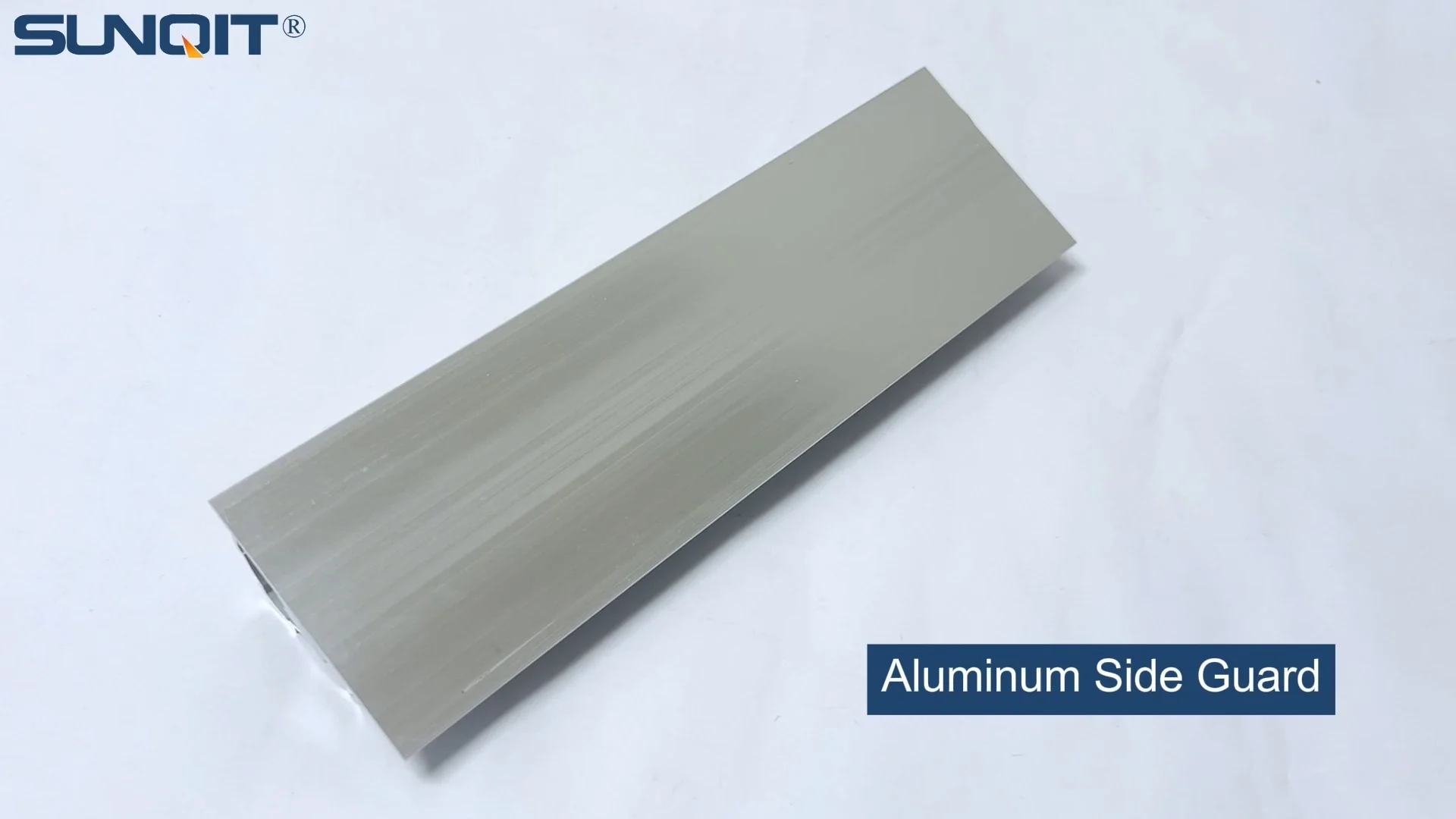
Aluminum Side Guard
Aluminum side guard, it works with a aluminum pipe or a roller track as side guard to prevent material drop,or move to wrong direction.
Aluminum Side Guards for Small vs Large-Scale Manufacturing Facilities
In the bustling world of manufacturing, where every second counts and safety is non-negotiable, the smallest components often play the biggest roles. Take aluminum side guards, for instance—those unassuming barriers attached to workbenches, material racks, and roller tracks. They might not grab headlines, but they quietly keep production lines moving, protect workers from hazards, and ensure materials stay where they belong. Yet, the way these side guards are designed, installed, and used varies dramatically between small workshops and sprawling industrial plants. In this article, we'll explore how aluminum side guards adapt to the unique needs of small-scale and large-scale manufacturing facilities, diving into real-world applications, material benefits, and the key accessories that make them indispensable.
What Are Aluminum Side Guards, Anyway?
Before we jump into comparisons, let's clarify what we mean by "aluminum side guards." Simply put, these are protective or structural barriers made from aluminum profiles, pipes, or extrusions, mounted along the edges of equipment like workbenches, material racks, conveyor systems, and roller tracks. Their primary jobs? To prevent materials from sliding off surfaces, guide items along production lines, shield workers from moving parts, and add structural rigidity to lightweight equipment. Think of them as the "guardrails" of the manufacturing floor—unseen but critical to keeping operations smooth and safe.
Aluminum side guards come in all shapes and sizes, from simple L-shaped aluminum guides on a workbench to heavy-duty, multi-layered barriers on a high-capacity material rack. They're often paired with accessories like roller track connectors, swivel roller balls, and aluminum pipe clamps to enhance functionality. And while steel or plastic might seem like viable alternatives, aluminum has emerged as the go-to material for modern manufacturing—and for good reason.

The Material Advantage: Why Aluminum Profiles Lead the Way
Aluminum's rise in manufacturing isn't accidental. Its unique blend of properties makes it ideal for side guards, whether in a garage-sized workshop or a million-square-foot plant. Let's break down the benefits:
- Strength-to-Weight Ratio: Aluminum is lightweight (about one-third the weight of steel) but surprisingly strong. This means side guards can be sturdy enough to withstand bumps and heavy loads without adding unnecessary bulk to equipment—a huge plus for mobile tools like turnover trolleys or hand trolleys.
- Corrosion Resistance: Unlike steel, aluminum naturally forms a protective oxide layer, so it won't rust, even in humid or chemical-exposed environments. This is a game-changer for facilities handling liquids or outdoor storage (think food processing or automotive parts that sit on material racks).
- Customization: Aluminum extrusion profiles—precise shapes formed by pushing molten aluminum through a die—come in endless configurations (2020, 3030, 4040, 4080 EU standard profiles, to name a few). This allows side guards to be tailored to specific equipment: a narrow aluminum guide rail A for a small workbench, or a wide 38 aluminum roller track yellow with side guide for a large material rack.
- Cost-Effectiveness: While aluminum might cost more upfront than plastic, its durability and low maintenance needs (no painting or rust treatment) make it cheaper in the long run. For large-scale facilities, this translates to significant savings over time.
- Modularity: Aluminum pipe accessories—like internal rotatary aluminum joints, parallel lean pipe joints, and roller track placon mount brackets—let workers assemble, disassemble, or reconfigure side guards in minutes. This flexibility is a lifesaver for small shops with changing needs and large plants adapting to new product lines.
With these benefits in mind, let's explore how aluminum side guards perform in small and large manufacturing settings—and why one size definitely does not fit all.

Small-Scale Manufacturing: Flexibility and Functionality in Tight Spaces
Small-scale manufacturing facilities—think local machine shops, electronics repair workshops, or artisanal product makers—operate in a world of constraints: limited square footage, tight budgets, and the need to pivot quickly between projects. For these operations, aluminum side guards aren't just about safety; they're about making every inch of space count and every dollar stretch. Let's dive into their unique needs and how aluminum side guards rise to the challenge.
Challenges in Small-Scale Facilities
Walk into a small manufacturing space, and you'll likely find a mix of multipurpose workbenches, mobile material racks, and maybe a basic roller track for moving parts. The priorities here are:
- Space Efficiency: With limited room, equipment must be compact and often double-duty. A workbench might serve as both a assembly station and storage area, so side guards need to keep tools and materials organized without eating up surface space.
- Budget Sensitivity: Small businesses can't afford over-engineered solutions. Side guards need to be cost-effective, with minimal waste and the ability to repurpose components for new projects.
- Flexibility: Production runs are short, and workflows change often. A side guard that works for assembling circuit boards this week should adapt to packing boxes next week.
- Ease of Use: Staff might wear multiple hats (operator, maintenance, manager), so installing or adjusting side guards shouldn't require specialized tools or training.
Aluminum Side Guards: The Small-Scale Solution
Aluminum checks all these boxes, thanks to its lightweight, modular nature. Let's look at three common small-scale applications and how side guards make a difference:
1. Workbenches: Organized, Safe, and Adaptable
Workbenches are the heart of small facilities, and aluminum side guards here do double duty: protecting workers from sharp edges and keeping tools/materials from sliding off. Take the workbench E (single deck-without caster) —a staple in small electronics shops. Adding aluminum side guards to this simple bench transforms it into an organized hub.
For example, a local phone repair shop in Portland uses workbench E with 2020 EU standard aluminum profiles as side guards. They've mounted swivel roller balls (0.5 inch) along one edge to easily slide phones between repair stations, and plastic roller track guide rail yellow along the other to separate screwdrivers, tweezers, and spare parts. The guards are held in place with internal rotatary aluminum joints , so they can be rotated out of the way when the bench needs to hold larger items (like laptop screens). Best of all, the total cost for materials—aluminum profile, joints, and roller balls—was under $150, a fraction of what a custom steel guard would cost.
2. Material Racks: Compact Storage That Grows With You
Small facilities rarely have room for massive storage systems, so material racks need to be vertical, narrow, and easy to move. Aluminum side guards here prevent small parts (screws, washers, circuit boards) from falling off shelves while keeping the rack lightweight enough to wheel around with a hand trolley.
Consider a jewelry manufacturer in Austin with a material rack B (3 row and 3 floor) —a compact, 3-tier rack designed for small parts. To secure delicate gemstones and metal findings, they added side guards made from basic aluminum tubes and aluminum guide rail A . The tubes are connected with 45° aluminum pipe joint inside connection s, creating a lightweight barrier that still supports the weight of small plastic bins. When the business expanded, they simply added more tubes and joints to the existing rack, avoiding the need to buy a whole new system.
3. Roller Tracks: Smooth Material Flow Without the Fuss
Even small facilities need to move materials from point A to B—whether it's a box of finished products to the shipping area or raw materials to the workbench. Roller tracks with aluminum side guards simplify this process by guiding items and reducing friction.
A woodworking hobby shop in Denver uses mini aluminum roller track yellow along a countertop, with side guards made from plastic roller track guide rail grey . The guards keep small wood pieces from veering off the track, while the 0.5-inch swivel roller balls allow even heavy blocks to glide smoothly. Since the track is lightweight (thanks to aluminum), the owner can easily detach it and store it when not in use—something steel tracks would make impossible.
Key Accessories for Small-Scale Side Guards
Small facilities thrive on simplicity, so the best aluminum side guard accessories are those that are easy to install, affordable, and multi-functional. Here are the MVPs:
- Swivel Roller Balls (0.5 inch): Tiny but mighty, these allow materials to slide effortlessly along workbenches or roller tracks without needing motors or heavy machinery.
- Internal Rotary Aluminum Joints: Let side guards pivot or fold, saving space when not in use. Perfect for workbenches that need to switch between tasks.
- Aluminum Guide Rail A: A lightweight, low-profile rail that guides small items without adding bulk. Ideal for narrow material racks.
- Plastic Pipe End Caps: Cheap and cheerful, these cover sharp aluminum tube ends, preventing scratches on tools or worker hands.
In short, for small-scale facilities, aluminum side guards are all about adaptability. They're not permanent fixtures but tools that evolve with the business—just like the entrepreneurs who use them.
Large-Scale Manufacturing: Durability and Integration in High-Volume Environments
If small-scale manufacturing is about flexibility, large-scale manufacturing is about consistency. Think automotive plants, electronics factories, or pharmaceutical production lines—facilities where thousands of parts move daily, heavy machinery runs 24/7, and a single breakdown can cost millions. Here, aluminum side guards aren't just accessories; they're critical components of safety compliance, efficiency, and automation. Let's explore how they're engineered to meet these demands.
Challenges in Large-Scale Facilities
Large facilities operate on a different scale entirely. Their priorities include:
- Heavy Loads: Side guards must withstand the weight of pallets, large components (engine blocks, circuit boards), and even automated robots moving materials.
- Continuous Operation: Downtime is costly, so side guards need to be durable enough to handle constant use without bending, breaking, or requiring frequent repairs.
- Safety Compliance: OSHA, ISO, and industry-specific regulations (like FDA for food) demand strict barriers to protect workers from moving parts, falling objects, and ESD (electrostatic discharge) in electronics manufacturing.
- Automation Integration: Side guards must work seamlessly with conveyors, robotic arms, and sensor systems—no jams, no misalignments, no interruptions to the production flow.
Aluminum Side Guards: The Large-Scale Solution
Aluminum rises to these challenges by leveraging its strength (via thick-walled extrusion profiles) and compatibility with heavy-duty accessories. Let's examine three high-stakes applications:
1. Material Racks: Securing Heavy Parts in High-Volume Storage
Large facilities use material racks that tower dozens of feet and hold tons of inventory. For example, an automotive plant might have a material rack B (3 row and 3 floor) scaled up to 10 tiers, storing engine blocks, transmissions, and axles. Here, side guards aren't optional—they're legally required to prevent catastrophic collapses.
A Toyota plant in Kentucky uses 4080 EU standard aluminum profiles for side guards on these racks. These profiles are thick (2.0mm walls) and reinforced with aluminum pipe clamps and roller track placon mount center support brackets to handle loads up to 500 lbs per shelf. To further secure parts, they've added stainless steel swivel roller balls (1 inch) along the guard edges, allowing workers to slide heavy components onto the rack without lifting—reducing strain injuries and speeding up loading times.
2. Conveyors and Roller Tracks: Guiding Materials in Automated Systems
Conveyors are the arteries of large-scale manufacturing, moving parts between assembly stations at speeds up to 100 feet per minute. Roller tracks with aluminum side guards keep these parts on course, even when the line is running at full tilt.
A semiconductor factory in Arizona relies on 85 steel roller track to transport sensitive wafers. To prevent jams and ESD damage, they use 38 aluminum roller track black ESD with side guide —side guards made from conductive aluminum that dissipate static electricity, paired with 40 steel roller track black ESD wheels . The guards are mounted using roller track placon mount for aluminum profile high brackets, ensuring they stay aligned even when the track vibrates during operation. This setup has reduced wafer damage by 40% and cut downtime from misaligned parts by 60%.
3. ESD Workstations: Protecting Sensitive Electronics
In electronics manufacturing (think smartphones, medical devices), even a tiny static charge can fry components. ESD workstations require side guards that not only organize tools but also ground static—something aluminum excels at, thanks to its conductivity.
A Samsung supplier in Vietnam uses ESD workstation s with side guards made from 3030 EU standard aluminum profiles and black ESD wheel s. The profiles are connected with 90° aluminum profile connectors and coated in a conductive finish, ensuring any static from workers or tools is safely grounded. To keep small components (resistors, capacitors) from rolling off, they've added swivel roller balls 1 inch along the guard edges—allowing easy access without static buildup. This design has helped the facility meet ISO 13485 standards and reduce component waste by 25%.
Key Accessories for Large-Scale Side Guards
Large facilities need side guard accessories that prioritize strength, precision, and compatibility with automation. Here are the workhorses:
- 4080 EU Standard Aluminum Profiles: Thick-walled and rigid, these are the backbone of heavy-duty side guards, capable of withstanding high loads and constant vibration.
- Roller Track Placon Mount for Aluminum Profile High: Elevates side guards to align with tall conveyor systems, ensuring materials don't catch or jam.
- Stainless Steel Swivel Roller Balls (1 inch): Larger and sturdier than their small-scale counterparts, these handle heavy materials with minimal friction.
- Black ESD Wheels and Guides: Critical for electronics facilities, these dissipate static and prevent damage to sensitive components.
For large-scale facilities, aluminum side guards are investments in reliability. They're designed to last for years, integrate with complex systems, and keep pace with the relentless demands of high-volume production.
Side-by-Side Comparison: Small vs. Large-Scale Aluminum Side Guard Applications
To bring the differences into focus, let's compare small and large-scale side guard applications across key aspects:
| Aspect | Small-Scale Facilities | Large-Scale Facilities |
|---|---|---|
| Primary Use Case | Organizing tools, securing small parts, guiding lightweight materials on workbenches/mini roller tracks. | Securing heavy loads, integrating with automation (conveyors), grounding ESD, complying with strict safety standards. |
| Typical Load Capacity | Up to 50 lbs per linear foot (e.g., small tools, plastic bins). | 500+ lbs per linear foot (e.g., engine blocks, pallets of components). |
| Customization Level | Highly modular—easily disassembled/reconfigured with basic joints and lightweight profiles. | Engineered for specific systems—custom extrusions and brackets to match conveyor/rack dimensions. |
| Installation Complexity | Simple—can be assembled with hand tools (no welding or specialized training). | Complex—requires alignment with automated systems, often installed by certified technicians. |
| Cost per Unit | $1–$5 per linear foot (basic aluminum tubes and plastic accessories). | $10–$30 per linear foot (thick-walled profiles, ESD coatings, heavy-duty brackets). |
| Maintenance Frequency | Low—occasional tightening of joints, cleaning of roller balls. | Moderate—regular inspections for alignment, lubrication of ESD components, replacement of worn brackets. |
| Key Accessories | 0.5-inch swivel roller balls, internal rotary joints, plastic end caps. | 1-inch stainless steel roller balls, ESD wheels, high-support placon mounts, conductive connectors. |
Choosing the Right Aluminum Side Guards: A Decision Framework
Whether you're running a small machine shop or managing a large automotive plant, selecting the right aluminum side guards starts with asking the right questions. Here's a step-by-step guide to making the best choice:
- Assess Your Loads: How much weight will the side guards need to support? A small workshop moving circuit boards needs lightweight guards; a plant moving steel beams needs heavy-duty extrusion profiles.
- Map Your Workflow: Are the guards stationary (e.g., a fixed workbench) or part of a moving system (e.g., a conveyor)? Mobile systems need flexible joints; fixed systems can use rigid brackets.
- Check for Special Requirements: Do you need ESD protection? Corrosion resistance? Compliance with OSHA/ISO standards? These will narrow down material coatings and accessory options.
- Plan for Growth: Small facilities should prioritize modularity (can you add more tubes later?); large facilities need guards that integrate with future automation upgrades.
- Budget for Total Cost of Ownership: Don't just look at upfront costs. Aluminum's low maintenance might save small facilities money long-term, while large facilities should factor in installation and compliance costs.
Conclusion: Aluminum Side Guards as a Foundation for Manufacturing Success
Aluminum side guards are more than just metal barriers—they're a reflection of a manufacturing facility's priorities. For small operations, they're tools of flexibility, turning tight spaces into efficient work zones. For large plants, they're pillars of reliability, ensuring safety and productivity at scale. And through it all, aluminum's unique properties—lightweight strength, corrosion resistance, and endless customization—make it the perfect material for the job.
So the next time you walk through a manufacturing floor, take a moment to notice those aluminum side guards. They might not be flashy, but they're working tirelessly to keep the line moving, the workers safe, and the products flowing. And whether they're guiding a tiny circuit board or securing a heavy engine block, they're proof that in manufacturing, the smallest details often make the biggest impact.