- Company Articles
- Products and Technology
- Solution
- Aluminum Side Guards in Automotive Manufacturing: Critical Safety Solutions

Aluminum Side Guards in Automotive Manufacturing: Critical Safety Solutions
Related Product
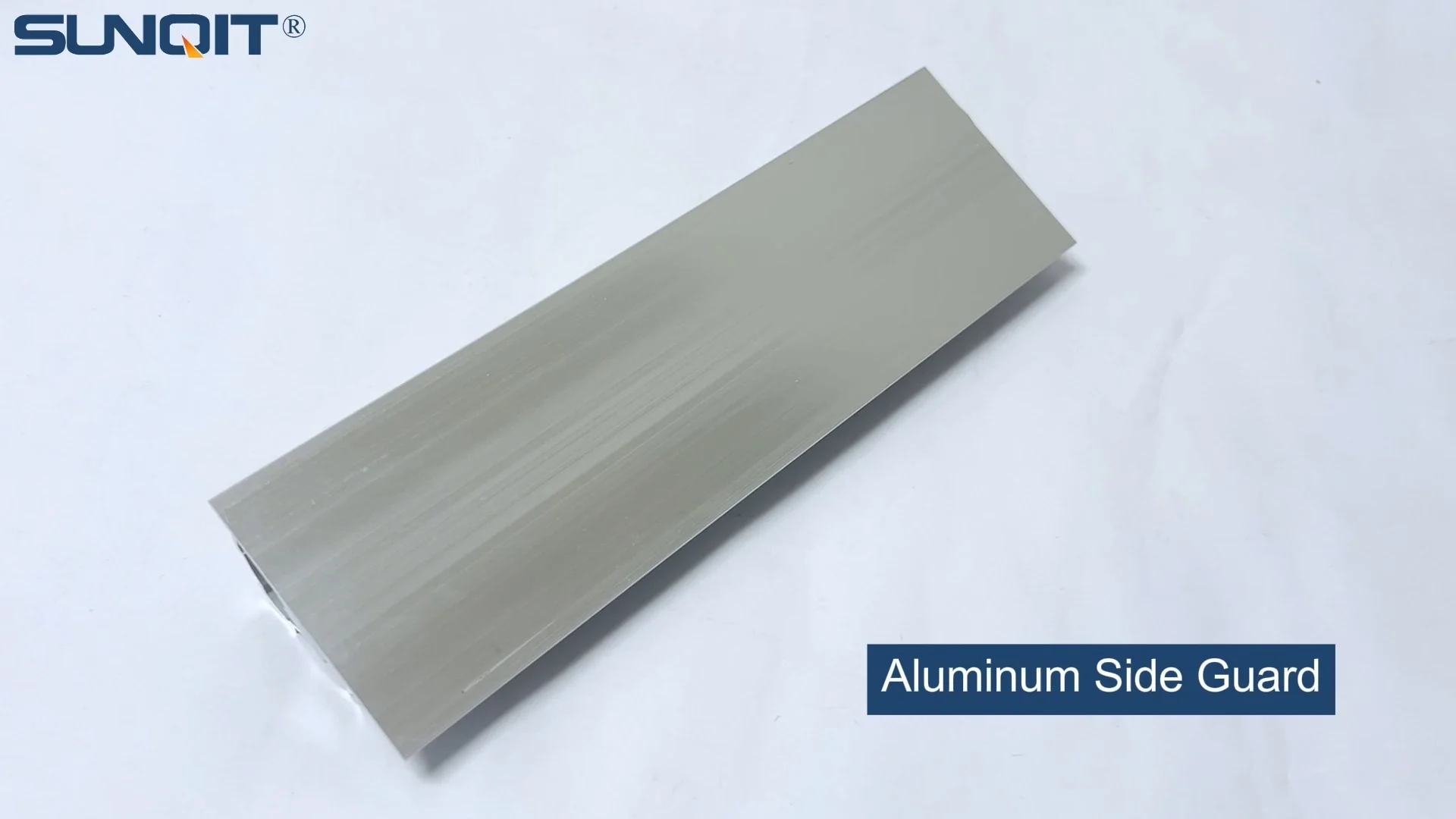
Aluminum Side Guard
Aluminum side guard, it works with a aluminum pipe or a roller track as side guard to prevent material drop,or move to wrong direction.
Walk into any automotive manufacturing plant, and you'll feel the energy—the hum of machinery, the rhythmic clink of parts, and the focused movement of workers bringing cars to life. In this fast-paced world, where precision and speed are king, there's an unsung hero working quietly in the background: aluminum side guards. These unassuming structures might not grab headlines, but they're the backbone of a safe, efficient workspace. Today, we're diving into why aluminum side guards, crafted from materials like aluminum extrusion profile, have become indispensable in automotive manufacturing, how they integrate with conveyor systems, and why they're a cornerstone of modern lean system practices.
The Hidden Risks: Why Side Guards Matter More Than You Think
Imagine a conveyor belt carrying heavy engine components, zipping along at 6 feet per second. Without proper guidance, a single misaligned part could jam the system, causing a ripple effect of delays. Worse, that part might slide off, crashing into a worker or damaging expensive equipment. In 2023, the Bureau of Labor Statistics reported over 22,000 workplace injuries in automotive manufacturing—many linked to conveyor mishaps or unprotected machinery. Side guards aren't just "nice-to-haves"; they're the first line of defense against these risks.
But their role goes beyond safety. In a industry where every second counts, side guards ensure parts move smoothly, reducing bottlenecks and keeping production on track. They're the silent organizers, corralling components so workers can focus on assembly, not chasing stray parts. And when paired with a lean system mindset—eliminating waste, streamlining processes—they become a tool for efficiency, too.
Aluminum Extrusion Profile: The Game-Changer in Side Guard Design
Not all side guards are created equal. For decades, manufacturers relied on steel—strong, but heavy and prone to rust. Plastic was lighter but lacked durability. Then came aluminum extrusion profile, and everything changed. Extrusion, a process where aluminum is pushed through a die to create custom shapes, unlocked a new level of versatility. Suddenly, side guards could be tailored to fit any conveyor, any part, any workspace.
Why Aluminum Extrusion Profile Stands Above Traditional Materials
Let's break it down. Steel side guards might feel tough, but their weight makes them hard to install and reconfigure—critical drawbacks in a manufacturing floor that's always evolving. Aluminum extrusion profile, by contrast, is 30% lighter than steel, so workers can adjust or relocate guards without heavy machinery. And don't let the lightness fool you: aluminum alloys used in extrusion have a tensile strength of 30,000 psi, more than enough to handle the rigors of daily use.
Corrosion is another battle. Steel rusts; aluminum? It forms a natural oxide layer that protects it from moisture and chemicals—perfect for factories where oil, coolant, and cleaning agents are part of the daily grind. And when it comes to customization? Aluminum extrusion profile shines. Need a guard with a lip to catch small parts? A curved edge to guide delicate electronics? Extrusion makes it possible, without the high costs of custom steel fabrication.
| Feature | Steel Side Guards | Plastic Side Guards | Aluminum Extrusion Profile Guards |
|---|---|---|---|
| Weight | Heavy (hard to install/reposition) | Light (but prone to bending) | Lightweight (easy to handle, no heavy lifting) |
| Durability | High (but rusts over time) | Low (cracks under heavy impact) | High (rust-resistant, withstands 10+ years of use) |
| Customization | Limited (expensive to tool for unique shapes) | Basic (molds restrict design) | Unlimited (extrusion dies create any shape, size, or feature) |
| Cost Over Time | High (rust repair, replacement every 5-7 years) | High (frequent replacements) | Low (minimal maintenance, long lifespan) |

Working in Harmony: Side Guards, Conveyors, and the Lean System
A lean system isn't just about cutting costs—it's about creating a workspace that flows. Conveyors are the arteries of this flow, and aluminum side guards are the valves that keep everything moving in the right direction. Let's say a plant produces 500 transmissions daily. Each transmission housing weighs 45 pounds; without side guards, even a 1-degree tilt could send it sliding off the conveyor. That's a 45-pound projectile, a broken housing, and a halted line. With aluminum side guards, the housing stays centered, the conveyor runs smoothly, and the line meets its quota.
But it's not just about preventing disasters. Lean systems thrive on consistency, and side guards deliver that. By standardizing the path of parts, they reduce variability—no more "this part fits here, that one needs a nudge." Workers know exactly where components will arrive, cutting down on mental load and errors. And when paired with aluminum profile accessories like adjustable brackets or quick-connect joints, guards can be reconfigured in minutes to adapt to new production runs. Need to switch from sedans to SUVs? Swap out a few brackets, adjust the guard height, and you're ready—no need for a full system overhaul.

Aluminum Profile Accessories: The Unsung Partners in Customization
Aluminum extrusion profile is powerful on its own, but it's the accessories that make it truly versatile. Think of the profile as the canvas; aluminum profile accessories are the brushes and paints. Need to mount a guard to a conveyor frame? Use a T-slot bracket. Want to add a lip to catch small screws? Snap on an edge trim. These accessories—from end caps that prevent snags to corner connectors that allow 90-degree bends—turn generic guards into tailored solutions.
Take a plant that manufactures electric vehicle batteries. The battery packs are sensitive to static, so the side guards need ESD (electrostatic discharge) protection. With aluminum profile accessories like conductive gaskets, the guards can dissipate static, keeping the packs safe. Or consider a conveyor that handles both small bolts and large axles: adjustable height brackets let workers raise the guard for axles and lower it for bolts, all without tools. It's this flexibility that makes aluminum side guards a favorite among manufacturers who refuse to be boxed into "one-size-fits-all" solutions.
Real Impact: How One Plant Cut Injuries by 40% with Aluminum Side Guards
Let's get concrete. In 2022, a mid-sized automotive parts manufacturer in Michigan was struggling. Their steel side guards were rusting, causing parts to stick and jam conveyors. Workers were getting hurt—minor cuts from sharp, rusted edges, and one serious incident when a gearbox fell off an unguided conveyor. The plant was also struggling to meet lean system goals; changeovers took hours, and downtime was costing them $15,000 per week.
They switched to aluminum extrusion profile guards with aluminum profile accessories. The results? In six months, conveyor jams dropped by 65%, and injuries fell by 40%. Changeovers now take 20 minutes instead of 2 hours, thanks to quick-connect brackets. And because the guards are lightweight, workers no longer strain their backs moving them—absenteeism due to back pain dropped by 30%. "It's like night and day," said the plant manager. "We didn't just get safer—we got faster."
The Future: Smarter, Greener, More Connected Guards
As automotive manufacturing evolves, so do aluminum side guards. Today's guards are getting "smarter"—some plants are embedding sensors into the extrusion profile to detect misaligned parts or worn rollers, alerting maintenance before a jam occurs. And with aluminum being 100% recyclable, they're aligning with the industry's push for sustainability. A guard that's retired after a decade can be melted down and turned into a new extrusion profile, with no loss in quality.
There's also a trend toward integration with digital tools. Imagine a 3D model of your plant floor: drag and drop a new conveyor path, and the software automatically generates the specs for custom aluminum side guards, complete with a list of needed aluminum profile accessories. It's lean system thinking meets Industry 4.0—and it's already happening in forward-thinking plants.
Final Thoughts: Investing in Safety, Investing in People
At the end of the day, aluminum side guards are more than metal and accessories. They're a statement: "We value our workers." They say, "We're committed to getting the job done right—safely, efficiently, and sustainably." In a industry where every detail matters, these guards are the quiet champions, turning chaos into order, risk into reliability.
So the next time you walk through a manufacturing plant, take a moment to notice the side guards. Look at the smooth lines of the aluminum extrusion profile, the way they guide parts with precision, the aluminum profile accessories that make them fit like a glove. They might not be glamorous, but they're the reason that plant runs like a well-oiled machine—one safe, efficient step at a time.