- Company Articles
- Products and Technology
- Application Cases
- Aluminum Side Guards in Communication Equipment Production: Safety Case Studies

Aluminum Side Guards in Communication Equipment Production: Safety Case Studies
Related Product
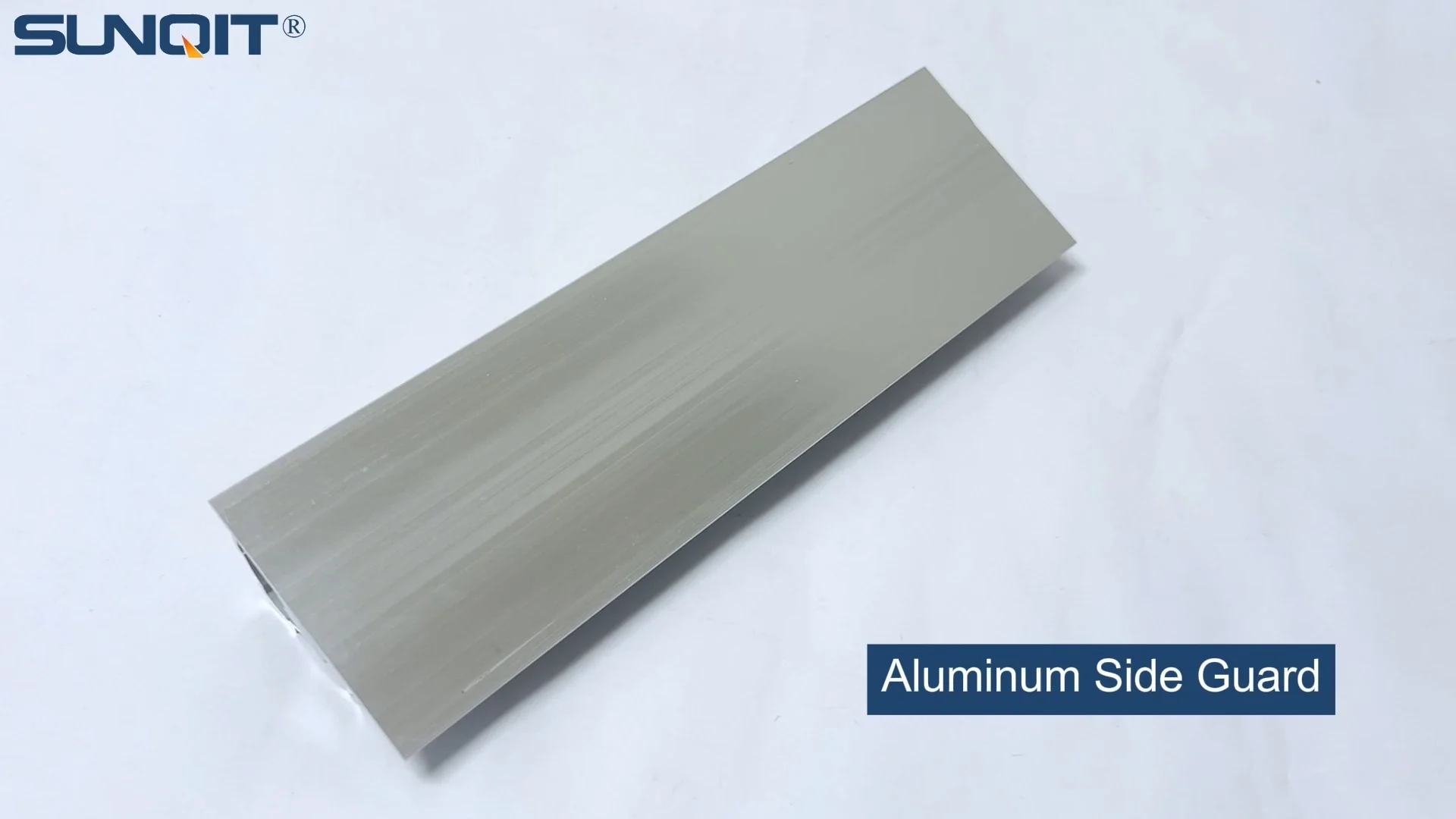
Aluminum Side Guard
Aluminum side guard, it works with a aluminum pipe or a roller track as side guard to prevent material drop,or move to wrong direction.
Communication equipment production is a world where precision meets pace. Every day, technicians and assembly line workers handle sensitive components—from circuit boards to fiber-optic modules—that power our global connectivity. In this high-stakes environment, even a small mistake can lead to costly product defects, production delays, or worse, worker injuries. That's why safety isn't just a buzzword here; it's the backbone of efficient, sustainable operations. Over the years, manufacturers have turned to innovative solutions to mitigate risks, and one tool has emerged as a quiet hero: aluminum side guards.
These unassuming barriers, often crafted from aluminum extrusion profiles and paired with aluminum profile accessories, play a critical role in creating secure workspaces. Unlike rigid steel guards or flimsy plastic alternatives, aluminum side guards offer a unique blend of strength, flexibility, and adaptability—qualities that make them ideal for the dynamic needs of communication equipment production. Whether installed along conveyor belts, around workbenches, or beside roller tracks, they act as a first line of defense, preventing slips, falls, and collisions while keeping both workers and products safe.
In this article, we'll dive into real-world case studies from communication equipment factories that have integrated aluminum side guards into their operations. We'll explore the challenges they faced, how aluminum side guards provided tailored solutions, and the measurable impact on safety, productivity, and product quality. Along the way, we'll also highlight why aluminum—with its lightweight durability and compatibility with systems like roller tracks and casters—has become the material of choice for modern safety solutions.
Case Study 1: Preventing Module Slips on High-Speed Conveyors
At a leading communication equipment manufacturer in Guangdong, China, the production line for 5G base station modules was facing a recurring problem: during peak production hours, heavy modules (weighing up to 15kg each) were slipping off the conveyor belts, leading to damaged components and near-misses with workers. The conveyor, which operated at speeds of 1.2 meters per second, was critical to meeting tight delivery deadlines, but the lack of proper barriers meant that even a slight misalignment during loading could send a module tumbling.
"We were averaging 2-3 module drops per week," recalls Li Jiawei, the plant's safety manager. "Each drop cost us around $800 in damaged parts, not to mention the time spent cleaning up and restarting the line. Worse, one worker strained his back trying to catch a falling module last year. We knew we needed a solution that could keep up with our conveyor speed without adding unnecessary bulk."
The team initially considered plastic guards, but they warped under the factory's heat. Steel guards were durable but added significant weight to the conveyor frame, requiring costly structural reinforcements. That's when they turned to aluminum extrusion profiles. "Aluminum was a game-changer," says Li. "We worked with a supplier to design custom side guards using 4040 aluminum extrusion profiles—lightweight enough to mount directly onto the conveyor frame, yet strong enough to withstand impacts from shifting modules."
The installation process was surprisingly straightforward. Using aluminum profile accessories like T-slot nuts and brackets, the maintenance team attached the guards along both sides of the conveyor. The guards stood 12cm tall, with rounded edges to prevent snags, and were spaced 5cm apart to allow visibility of the modules as they moved. "We were worried the guards might slow down loading, but the opposite happened," Li notes. "Workers felt more confident placing modules, knowing they wouldn't slide off. Loading time per module dropped by 10 seconds on average."
After six months of use, the results were clear: module drops fell to zero, and worker-reported near-misses decreased by 85%. "The aluminum guards paid for themselves in under three months," Li says. "And because they're corrosion-resistant, we don't have to worry about rust affecting the conveyor's mechanics. It's a low-maintenance solution that keeps our line running smoothly and our team safe."
Case Study 2: Reducing Part Loss and Worker Fatigue at Assembly Workbenches
Over in a Shenzhen-based factory specializing in fiber-optic transceivers, the assembly workbenches were a hotbed of activity. Technicians spent 8-hour shifts hunched over small, delicate parts—connectors, PCBs, and optical lenses—piecing together components that required sub-millimeter precision. But the workbenches, originally designed without barriers, posed two major issues: parts rolling off the edges (leading to lost components and rework) and workers accidentally bumping into the bench corners, causing fatigue and minor injuries.
"Our technicians were dropping an average of 15-20 small parts per day," explains Zhang Wei, the production supervisor. "A single fiber-optic connector costs $50, so those losses added up fast. Plus, we noticed workers were rubbing their hips and forearms—they'd bump into the bench edges while reaching for tools. Morale was starting to dip, and assembly times were creeping up as fatigue set in."
The solution? Aluminum side guards tailored to the workbenches. The team opted for 3030 aluminum extrusion profiles, chosen for their slim profile (30mm x 30mm) and compatibility with the workbench's existing aluminum frame. "We didn't want guards that would crowd the workspace," Zhang says. "Aluminum let us keep the guards low—only 5cm tall—so they didn't block access to tools but still caught rolling parts. We also rounded the corners of the guards using aluminum profile accessories like end caps to eliminate sharp edges."
To measure impact, the factory tracked key metrics for two months before and after installing the guards. The results, compiled in the table below, spoke for themselves:
| Metric | Before Aluminum Side Guards | After Aluminum Side Guards | Improvement |
|---|---|---|---|
| Daily Part Drops | 15-20 parts | 2-3 parts | 87% reduction |
| Worker Reported Minor Injuries | 8-10 per month | 1-2 per month | |
| Average Assembly Time per Unit | 18 minutes | 15 minutes | 17% faster |
| Worker Fatigue Scores (1-10, 10=most fatigued) | Average 7.2 | Average 4.5 | 38% reduction |
"The biggest surprise was the drop in fatigue," Zhang notes. "Workers no longer have to focus on 'babying' parts to keep them from rolling off, so they can concentrate on assembly. And the rounded edges mean no more bruised hips at the end of the day. One technician even joked that the guards 'feel like a safety blanket'—they make the workspace feel more intentional, less chaotic."
Perhaps most telling is the feedback from the team: 92% of technicians reported feeling "more confident and comfortable" at their workbenches after the guards were installed. "Safety isn't just about avoiding accidents," Zhang adds. "It's about creating an environment where people can do their best work. Aluminum side guards helped us do that."

Case Study 3: Stabilizing Circuit Boards on Roller Tracks
A Shanghai factory producing network switches faced a unique challenge with its roller track system, which transported circuit boards (PCBs) between soldering, testing, and assembly stations. The tracks, which used 1-inch swivel roller balls, were efficient for moving lightweight PCBs, but during sharp turns or sudden stops, boards would slide sideways, sometimes falling off entirely. Damaged PCBs cost the factory $3,000 per incident, and the delays from cleanup and rework were eating into production targets.
"The roller track was a bottleneck," says Wang Tao, the plant engineer. "We tried rubber mats on the tracks, but they slowed down the boards. We even tested plastic guide rails, but they cracked under the constant friction of PCBs sliding against them. We needed something that could guide the boards without impeding their movement."
The solution came in the form of aluminum side guards paired with aluminum guide rails. The team selected 38 aluminum roller track yellow with side guide—specifically designed to work with their existing roller track system. "Aluminum guide rails are smooth, so PCBs glide past them without sticking," Wang explains. "And the side guards, made from basic aluminum tube, were mounted 2cm above the track surface to create a 'channel' for the boards. We used roller track connectors to attach the guards to the track frame, ensuring they stayed aligned even during vibrations."
One unexpected benefit was the guards' compatibility with the factory's caster-equipped workstations. "We have mobile testing stations on casters that roll alongside the roller track," Wang notes. "The aluminum guards are low-profile enough that the casters can pass under them without getting caught. That flexibility was a huge plus—we didn't have to redesign our entire layout."
After three months of use, PCB falls dropped from 1-2 per day to zero. "The aluminum guards not only protected the boards but also improved the flow of the entire line," Wang says. "Technicians no longer have to hover over the tracks to catch wayward PCBs, so they can focus on their tasks. Our on-time delivery rate jumped from 85% to 98%."

Why Aluminum Side Guards Stand Out in Communication Equipment Production
The case studies above highlight why aluminum side guards have become indispensable in communication equipment production. Let's break down their key benefits:
- Lightweight yet Durable: Aluminum extrusion profiles offer the strength of steel at a fraction of the weight, making them easy to install and compatible with existing structures like conveyors and roller tracks. Unlike plastic, they resist warping, cracking, and corrosion, even in humid or high-temperature factory environments.
- Customizable: Aluminum profiles come in a range of sizes (2020, 3030, 4040, etc.) and can be cut, drilled, or shaped to fit unique workspace needs. Paired with aluminum profile accessories like brackets, end caps, and connectors, they can be tailored to conveyors, workbenches, or roller tracks.
- Low Maintenance: Aluminum's natural resistance to rust and wear means guards require minimal upkeep. A quick wipe with a damp cloth is usually enough to keep them clean, and damaged sections can be replaced without overhauling the entire system.
- Safety-First Design: Rounded edges, smooth surfaces, and compatibility with other safety features (like caster wheels and anti-slip feet) make aluminum guards ideal for protecting workers from bumps and cuts while safeguarding products from damage.
- Cost-Effective: While aluminum may have a higher upfront cost than plastic, its longevity and low maintenance needs make it more economical in the long run. As seen in the case studies, reduced product loss, fewer injuries, and improved productivity quickly offset initial investments.
In the fast-paced world of communication equipment production, safety and efficiency go hand in hand. Aluminum side guards, with their blend of strength, flexibility, and adaptability, have proven to be more than just barriers—they're partners in creating workspaces where workers feel protected, products remain intact, and operations run smoothly. From preventing module slips on conveyors to stabilizing PCBs on roller tracks, these unassuming tools deliver measurable results that bottom lines and team morale can feel.
As manufacturers continue to innovate, aluminum extrusion profiles and aluminum profile accessories will undoubtedly play an even bigger role in shaping the future of factory safety. After all, when it comes to protecting what matters—workers, products, and productivity—aluminum side guards don't just meet the standard; they set it.