- Company Articles
- Products and Technology
- Product knowledge
- Aluminum Side Guards in Electronics Manufacturing: Static Control Considerations

Aluminum Side Guards in Electronics Manufacturing: Static Control Considerations
Related Product
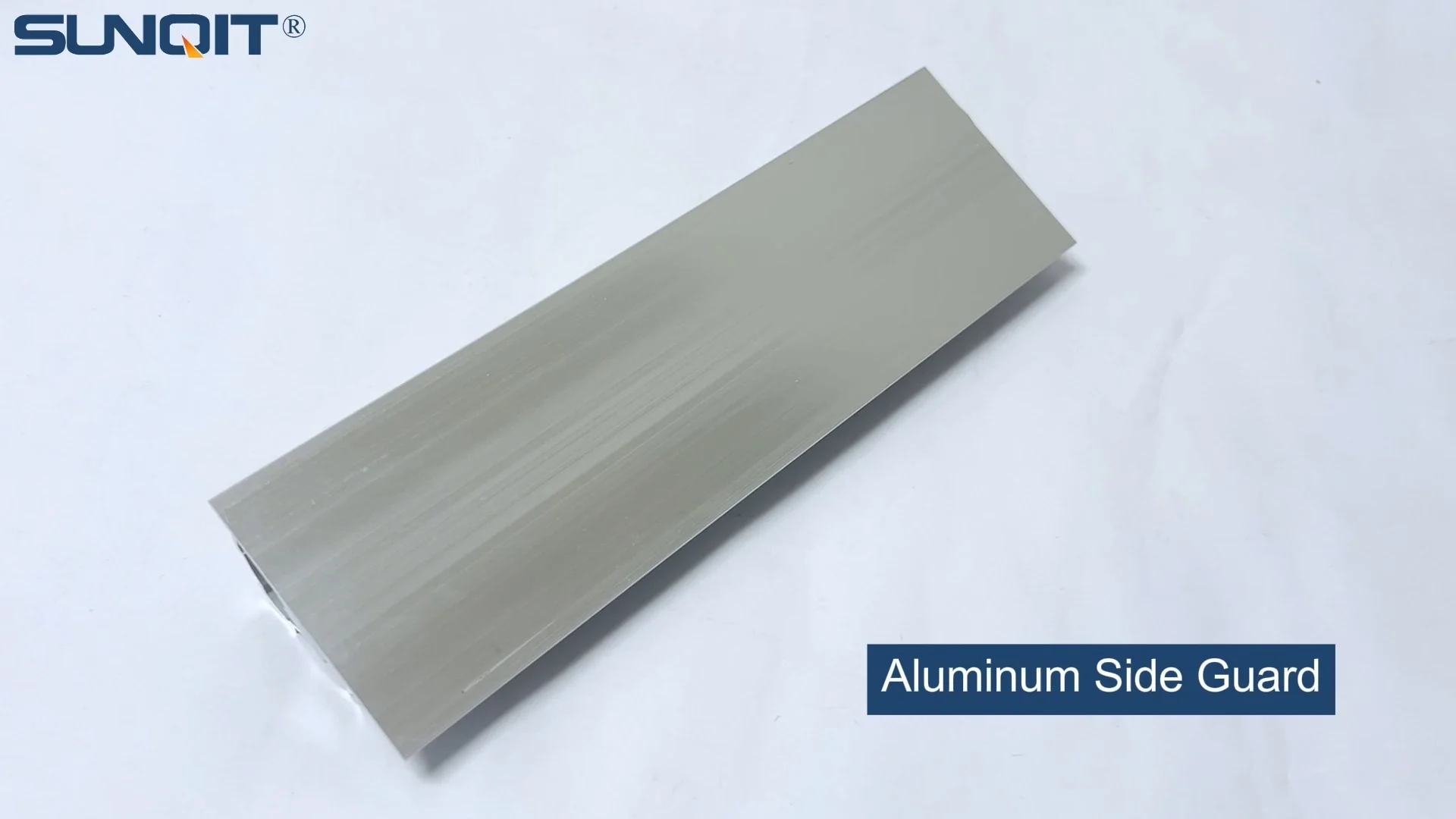
Aluminum Side Guard
Aluminum side guard, it works with a aluminum pipe or a roller track as side guard to prevent material drop,or move to wrong direction.
In the high-stakes world of electronics manufacturing, where a single misplaced component or unseen defect can derail production, there's an invisible adversary that often flies under the radar: static electricity. It's a silent threat, capable of damaging sensitive microchips, disrupting circuit boards, and even rendering entire batches of products useless—all without a single visible sign until it's too late. For manufacturers, the cost of static-related failures isn't just financial; it's a blow to reputation, efficiency, and trust. That's where intentional design choices, like the use of aluminum side guards, become critical. More than just physical barriers, these unassuming components play a pivotal role in creating static-safe workspaces, protecting both products and the people who build them. Let's dive into why aluminum side guards matter, how they integrate with systems like ESD workstations and lean workflows, and the key considerations for making them a cornerstone of your static control strategy.
1. The Hidden Danger of Static in Electronics Manufacturing
To understand the importance of aluminum side guards, we first need to grasp the scope of the static problem. Static electricity is generated by the friction or separation of materials—something as simple as sliding a circuit board across a workbench, removing a plastic cover from a component, or even a worker walking across a carpeted floor. In most environments, this static dissipates harmlessly into the air. But in electronics manufacturing, where components like microprocessors, sensors, and memory chips can be sensitive to charges as low as 10 volts, even a small static discharge can cause catastrophic damage.
The consequences of static damage fall into two categories: catastrophic failure and latent defects . Catastrophic failure is immediate—visible damage like burned circuits or cracked solder joints that render a component non-functional right away. Latent defects, however, are far more insidious. They occur when a component is weakened by static but continues to work initially, only to fail weeks, months, or even years later in the field. For manufacturers, this means increased warranty claims, recalls, and a loss of customer trust—costs that far exceed the price of the damaged component itself.
In response, the electronics industry has developed strict standards for electrostatic discharge (ESD) control, from grounding mats and wrist straps to specialized flooring and packaging. But one often-overlooked element of this ecosystem is the physical infrastructure that surrounds the production process: workbenches, material racks, and, crucially, side guards. These guards aren't just about preventing physical collisions or keeping parts from falling off tables—when designed with static control in mind, they become active participants in diverting static away from sensitive components.
2. Aluminum Side Guards: A Foundation for Static-Safe Workspaces
What Are Aluminum Side Guards?
Aluminum side guards are protective barriers, typically mounted along the edges of workbenches, conveyor systems, or material racks, designed to contain parts, guide workflow, and—when engineered correctly—channel static charges away from sensitive electronics. Unlike generic plastic or steel guards, which may insulate static rather than dissipate it, aluminum side guards are built with conductivity and grounding in mind. They're often made from extruded aluminum profile, a material prized for its strength, lightweight nature, and ability to be customized with slots, channels, and mounting points for accessories like brackets or grounding clips.
In practice, aluminum side guards serve dual purposes: they physically separate components from the surrounding environment (preventing accidental knocks or falls) and act as a conductive path for static charges, ensuring they're safely grounded before they can build up to damaging levels. This dual functionality makes them a staple in environments where both efficiency and safety are non-negotiable—like lean manufacturing setups, where every inch of workspace is optimized for workflow, and ESD workstations, where static control is the backbone of quality assurance.
Why Aluminum? The Material Advantage
At first glance, aluminum might seem like an unlikely choice for static control. After all, isn't metal conductive by nature? Yes—but not all metals are created equal when it comes to ESD protection. Aluminum stands out for three key reasons: conductivity, corrosion resistance, and versatility. Let's break them down:
- Controlled Conductivity: Aluminum is a good conductor of electricity, but not so conductive that it risks creating short circuits or interference with sensitive electronics. This balance allows it to safely redirect static charges to ground without disrupting the devices being manufactured.
- Lightweight and Durable: Unlike steel, aluminum is lightweight, making it easy to install and reconfigure as production lines change—critical in lean manufacturing environments where flexibility is key. It's also naturally resistant to corrosion, even in humid or temperature-fluctuating facilities, ensuring long-term performance without rust or degradation.
- Customizable via Aluminum Profile: Aluminum profile, the extruded material used to make most side guards, is available in a range of shapes, sizes, and finishes. Whether you need a simple flat barrier, a guard with integrated channels for cable management, or one with slots for attaching roller tracks, aluminum profile can be tailored to fit the exact needs of your workspace.

3. The Role of Aluminum Profile in Static Control Design
Conductivity and Grounding Capabilities
At the heart of aluminum side guards' static control capabilities is the aluminum profile itself. Extruded aluminum profile is typically made from high-purity aluminum alloys, which offer consistent conductivity across the entire length of the guard. This uniformity is essential for static control—if a guard has non-conductive gaps or weak points, static charges can become trapped, creating hotspots that pose a risk to nearby components.
To maximize conductivity, aluminum side guards are often treated with conductive coatings or anodized finishes that enhance their ability to transfer charges. Anodization, a process that forms a protective oxide layer on the aluminum surface, not only increases durability but can also be modified to maintain or even improve conductivity. This ensures that the guard remains effective at grounding static even after years of wear and tear.
Grounding is the final piece of the puzzle. A conductive aluminum guard is useless if it isn't properly connected to a grounding system. Most aluminum side guards integrate with ESD workstations by using aluminum pipe accessories like conductive brackets, clips, or screws that bridge the gap between the guard and the workstation's grounding point. This creates a continuous path for static charges to flow from the guard, through the workstation, and into the facility's grounding network—effectively neutralizing the threat before it can reach sensitive components.
Compatibility with ESD Workstations
ESD workstations are the command centers of static-safe manufacturing, equipped with features like grounded work surfaces, ionizers, and anti-static mats. Aluminum side guards don't exist in isolation; they're designed to complement these workstations, creating a cohesive static control ecosystem. For example, a typical ESD workstation might include a grounded workbench, a wrist strap for the operator, and aluminum side guards along the edges to contain components. When a component is placed on the workbench, any static it carries is either dissipated through the work surface or, if it comes into contact with the side guard, channeled away through the guard's grounding path.
This integration is seamless thanks to the modular nature of aluminum profile. Manufacturers can choose guards that match the height and width of their ESD workstations, with pre-drilled holes or T-slots that allow for quick attachment using standard aluminum pipe accessories. This modularity also makes it easy to reconfigure workstations as production needs change—adding or removing guards, adjusting heights, or integrating new tools without sacrificing static protection.

4. Integrating Aluminum Side Guards with Lean Systems and Roller Tracks
Streamlining Workflow Without Sacrificing Safety
In today's fast-paced manufacturing environments, efficiency is as important as safety. Lean systems, which focus on minimizing waste and maximizing workflow, rely on tools like roller tracks to move components smoothly from one stage of production to the next. But introducing motion into a static-sensitive environment can increase the risk of static generation—parts sliding along roller tracks, friction between materials, and constant movement all create opportunities for static buildup. Aluminum side guards play a vital role here, acting as both guides for the roller tracks and static dissipaters for the components moving along them.
Imagine a lean production line where circuit boards are transported via roller tracks from assembly to testing. Without side guards, boards might shift, collide, or fall off the tracks—risking physical damage. With standard plastic guards, the friction between the boards and the guards could generate static, endangering the components. But aluminum side guards, grounded and integrated with the roller track system, solve both problems: they keep boards aligned on the track while safely dissipating any static generated during movement.
The key to this integration is the use of roller track connectors and brackets that are compatible with aluminum profile. These accessories, often made from conductive materials, ensure that the roller track and side guards share a common grounding path. When a component slides along the roller track, any static it picks up is transferred to the track, then to the brackets, and finally to the aluminum side guards, where it's channeled to ground. This chain of conductivity ensures that static is neutralized at every step of the workflow, not just at the workstation.
Aluminum Pipe Accessories: Enhancing Functionality
Aluminum side guards are only as effective as the accessories that support them. Aluminum pipe accessories—like brackets, clips, grounding straps, and end caps—turn basic guards into versatile tools that adapt to specific manufacturing needs. For example, roller track placon mounts (a type of bracket used to attach roller tracks to aluminum profile) ensure that the track and guard are securely fastened and electrically connected. Caster accessories , when used with mobile workstations, allow guards to move while maintaining grounding through conductive wheels and floor mats.
Another essential accessory is the aluminum guide rail , which can be mounted along the top of side guards to create a smooth, low-friction surface for components. These guide rails are often paired with roller tracks, helping to align parts as they move through the production line and reducing the friction that generates static. By combining aluminum side guards with the right accessories, manufacturers can create custom solutions that address their unique challenges—whether it's containing small components, guiding large circuit boards, or integrating with automated systems.
5. Key Considerations for Implementing Aluminum Side Guards
Design Factors: Height, Thickness, and Coverage
Not all aluminum side guards are created equal. To be effective, they must be designed with the specific needs of your manufacturing process in mind. Three critical design factors are height, thickness, and coverage:
- Height: The guard must be tall enough to contain the components being handled. For small parts like resistors or capacitors, a guard height of 3–4 inches may suffice. For larger items like circuit boards or assemblies, heights of 6–12 inches or more may be necessary. A guard that's too short won't prevent components from falling off the workstation, while one that's too tall can impede workflow or block access to tools.
- Thickness: Thickness impacts both durability and conductivity. Thicker aluminum profile (e.g., 1.5–2mm walls) is stronger and less likely to bend or warp over time, ensuring consistent grounding. Thinner profiles may be lighter and cheaper but risk deformation, which can create gaps in conductivity.
- Coverage: Guards should extend the full length of the workstation or roller track, with no gaps between sections. Even a small gap can create a static hotspot, as charges may accumulate in the unprotected area. For curved or irregularly shaped workstations, custom-cut aluminum profile can be used to ensure full coverage.
Grounding Techniques: Ensuring Continuous Protection
A guard is only as good as its grounding. Without a reliable path to dissipate static, even the best aluminum side guard becomes just a metal barrier. There are several grounding techniques to consider:
- Direct Hardwiring: The most reliable method, where the guard is connected to the workstation's grounding point using a conductive wire and clamp. This ensures a continuous path for static charges.
- Conductive Adhesives: For guards that can't be drilled or clamped, conductive adhesives can bond the guard to a grounded surface. However, these adhesives may degrade over time and require regular inspection.
- Spring-Loaded Contacts: Ideal for mobile workstations, these contacts use springs to maintain a connection between the guard and a grounded rail or mat as the workstation moves.
Regardless of the method, grounding connections should be tested regularly using a multimeter to ensure resistance is below 1 megohm (the industry standard for ESD protection). Loose or corroded connections can increase resistance, reducing the guard's effectiveness.
Compatibility with Existing Infrastructure
Before installing aluminum side guards, it's critical to assess compatibility with your existing infrastructure. Do your current workstations have pre-drilled holes or T-slots for attaching guards? Are your roller tracks compatible with aluminum guide rails? Will the guards interfere with automated equipment like robotic arms or conveyor systems? Answering these questions upfront can save time and avoid costly rework.
Many manufacturers opt for a phased implementation, starting with high-risk areas (like microchip assembly lines) and expanding to other workstations as needed. This approach allows for testing and refinement before full deployment, ensuring the guards integrate seamlessly with existing systems.
6. Comparing Materials: Aluminum vs. Plastic, Steel, and Other Alternatives
Aluminum isn't the only material used for side guards. Let's compare it to common alternatives to understand why it's often the preferred choice for static control:
| Material | Conductivity (Static Control) | Durability | Weight | Cost | Best For |
|---|---|---|---|---|---|
| Aluminum | High (excellent grounding when properly connected) | High (resistant to corrosion and impact) | Low (easy to install and reconfigure) | Moderate (higher than plastic, lower than stainless steel) | ESD workstations, lean systems, roller tracks, mobile workstations |
| Plastic (PVC, ABS) | Low (insulates static; anti-static additives may degrade over time) | Medium (prone to cracking and wear) | Low | Low | Non-sensitive environments, temporary setups, low-budget applications |
| Steel | High (good conductivity but heavier) | Very high (resistant to impact but prone to rust) | High (difficult to reconfigure) | High | Heavy-duty applications with minimal movement |
| Wood | Very low (insulates static; porous surface traps charges) | Low (prone to warping, splintering) | Medium | Low | Non-electronics applications (not recommended for static-sensitive work) |
As the table shows, aluminum strikes the best balance of conductivity, durability, weight, and cost for electronics manufacturing. While plastic may be cheaper, its poor static control makes it unsuitable for sensitive components. Steel, though durable, is heavy and difficult to reconfigure—limiting its use in lean systems where flexibility is key. Aluminum, with its lightweight design, excellent conductivity, and modularity, emerges as the clear winner for static-safe, efficient workspaces.
7. Maintenance and Longevity: Keeping Aluminum Side Guards Effective
Regular Inspection Practices
Like any safety equipment, aluminum side guards require regular inspection to maintain effectiveness. A weekly inspection checklist might include:
- Checking for physical damage (dents, bends, cracks) that could create gaps in conductivity.
- Inspecting grounding connections for tightness and corrosion.
- Testing resistance with a multimeter to ensure it remains below 1 megohm.
- Verifying that accessories like guide rails or brackets are securely attached.
Annual inspections should be more thorough, including checking for wear on anodized coatings, testing conductivity across the entire length of the guard, and replacing any damaged aluminum pipe accessories. By catching issues early, manufacturers can avoid costly downtime and ensure continuous static protection.
Cleaning and Care for Conductive Surfaces
Aluminum side guards are exposed to dust, oils, and chemicals that can build up on the surface, reducing conductivity. Regular cleaning is essential, but it's important to use the right products—harsh chemicals or abrasive cleaners can damage the anodized finish or remove conductive coatings. Instead, use a mild detergent and a soft cloth, wiping in the direction of the extrusion to avoid scratching. For stubborn stains, a solution of isopropyl alcohol (70% or higher) can be used, as it evaporates quickly and won't leave residue.
After cleaning, it's a good practice to retest conductivity to ensure the cleaning process didn't compromise the guard's grounding path. This simple step can prevent static buildup from hidden residues and keep the guard performing at its best.
8. Real-World Applications: Case Studies in Electronics Manufacturing
To put these concepts into context, let's look at two real-world examples of how aluminum side guards have improved static control in electronics manufacturing:
Case Study 1: Smartphone Component Manufacturer
A manufacturer of smartphone camera modules was struggling with recurring static-related defects. Microscopic sensors were failing quality checks at a rate of 5%, costing the company over $200,000 annually in wasted materials and rework. An audit revealed that the plastic side guards on their assembly workstations were insulating static, creating charges that damaged the sensors as they moved along roller tracks. The company replaced the plastic guards with aluminum profile guards, grounded via direct hardwiring to their ESD workstations, and added aluminum guide rails to reduce friction with the roller tracks. Within three months, defect rates dropped to 0.5%, saving over $180,000 annually. Workers also reported improved workflow, as the aluminum guards were lighter and easier to adjust than the plastic ones.
Case Study 2: Medical Device Assembly Line
A medical device manufacturer producing pacemaker components needed to comply with strict ESD standards to ensure patient safety. Their existing steel side guards were heavy and prone to rust, which created inconsistent grounding. They switched to aluminum side guards with anodized coatings, paired with conductive caster accessories for their mobile workstations. The aluminum guards were easier to clean (critical for sterile medical environments), lighter to move, and provided consistent conductivity. During a subsequent FDA inspection, the company received praise for their static control measures, and they reported a 40% reduction in maintenance time compared to the steel guards.
9. Conclusion: Aluminum Side Guards as a Cornerstone of Static Control
Static electricity may be invisible, but its impact on electronics manufacturing is very real. For manufacturers looking to protect sensitive components, reduce defects, and maintain compliance with industry standards, aluminum side guards are more than just a practical choice—they're a strategic investment. By leveraging the conductivity of aluminum profile, integrating with ESD workstations and lean systems, and using the right aluminum pipe accessories, these guards create a static-safe environment that protects products, improves efficiency, and supports long-term success.
The key takeaway? Static control isn't a one-size-fits-all solution. It requires intentional design, from the materials used in workbench guards to the way they're grounded and maintained. Aluminum side guards, with their unique combination of conductivity, durability, and versatility, are a foundational element of this design—silent sentinels that work behind the scenes to keep production moving and products safe. As electronics continue to shrink in size and increase in complexity, the role of aluminum side guards in static control will only grow more important. For manufacturers ready to invest in their future, there's no better time to make them part of your workflow.