- Company Articles
- Products and Technology
- Product knowledge
- Aluminum Side Guards vs Stainless Steel: Which Is Better for Cleanroom Environments?

Aluminum Side Guards vs Stainless Steel: Which Is Better for Cleanroom Environments?
Related Product
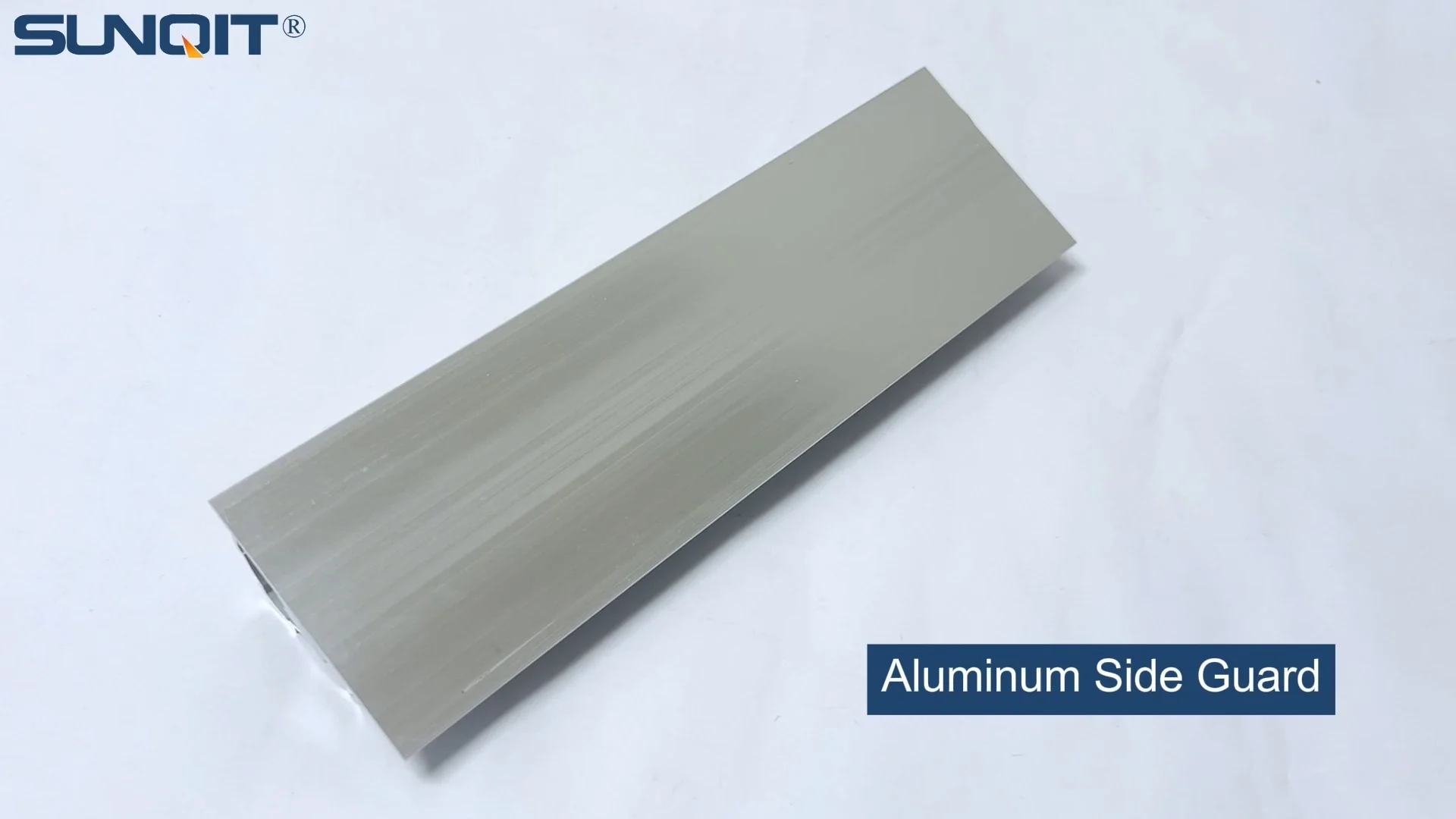
Aluminum Side Guard
Aluminum side guard, it works with a aluminum pipe or a roller track as side guard to prevent material drop,or move to wrong direction.
Walk into a modern cleanroom, and you'll immediately sense the precision in every detail—from the filtered air humming overhead to the sterile white walls that seem to glow under specialized lighting. These controlled environments, found in industries ranging from semiconductor manufacturing to biopharmaceutical research, are designed to minimize contamination at every turn. Even the smallest particle, a stray fiber, or a trace of moisture can derail a batch of life-saving drugs, ruin a microchip, or invalidate critical lab results. In such high-stakes settings, every component matters—and that includes the unassuming yet vital side guards that line workbenches, conveyor systems, and material racks.
Side guards might not be the first thing you notice, but their role is indispensable. They prevent tools, samples, or materials from sliding off surfaces, shield sensitive equipment from accidental bumps, and maintain the cleanroom's strict boundaries by containing spills or debris. But when it comes to choosing between materials, two options dominate the conversation: aluminum side guards and stainless steel side guards. Each has its own set of strengths, weaknesses, and ideal use cases. In this article, we'll dive deep into the properties, benefits, and trade-offs of both, helping you decide which material is the right fit for your cleanroom's unique needs.
Understanding Cleanroom Environments: Why Material Choice Matters
Before we compare aluminum and stainless steel, let's first ground ourselves in what makes cleanrooms so demanding. Cleanrooms are classified by ISO standards, with ISO 1 being the most stringent (allowing no more than 10 particles of 0.1μm per cubic meter) and ISO 9 being the least (up to 35,200,000 particles of 0.5μm per cubic meter). In ISO 5 or higher environments—common in semiconductor or vaccine production—even the air is filtered to remove 99.999% of particles 0.3μm and larger. Every surface, including side guards, must be non-shedding, easy to clean, and resistant to the harsh chemicals used for disinfection.
Material selection here isn't just about durability; it's about compliance. Regulatory bodies like the FDA (for pharmaceuticals) or SEMI (for electronics) set strict guidelines for materials that come into contact with products or processes. A side guard that flakes, corrodes, or traps bacteria could compromise an entire production run, leading to costly delays or even recalls. With that in mind, let's explore how aluminum and stainless steel stack up.
Aluminum Side Guards: Lightweight, Versatile, and Cost-Effective
Aluminum has long been a favorite in manufacturing for its winning combination of lightness and strength, and its appeal extends to cleanroom design. Let's break down why it's a top contender for side guards.
The Science Behind Aluminum's Appeal
Aluminum is a silvery-white metal known for its low density (about one-third the weight of steel) and natural resistance to corrosion. When exposed to air, it forms a thin, protective oxide layer (aluminum oxide) that prevents further rusting—a property that's especially valuable in cleanrooms where moisture or mild chemicals are present. But what truly makes aluminum stand out in cleanroom applications is its aluminum extrusion profile manufacturing process. Extrusion involves forcing heated aluminum through a die to create custom cross-sectional shapes, from simple rods to complex, multi-functional profiles. This allows engineers to design side guards with integrated features like grooves for cable management, lips to contain spills, or mounting points for accessories—all in a single piece, reducing the need for seams that could trap particles.
Benefits of Aluminum Side Guards
- Lightweight and Easy to Install : Aluminum's low weight makes it a breeze to handle during installation. Unlike stainless steel, which often requires heavy machinery or multiple workers to position, aluminum side guards can be mounted by a single technician using basic tools. This not only speeds up setup but also reduces the risk of accidents in tight cleanroom spaces.
- Excellent Cleanability : When anodized (a process that thickens the natural oxide layer), aluminum develops a smooth, non-porous surface that resists staining and is easy to wipe down. In cleanrooms, where daily cleaning with agents like isopropyl alcohol or hydrogen peroxide is standard, this translates to less downtime and more consistent hygiene.
- Cost-Effective : Aluminum is generally more affordable than stainless steel, both in raw material costs and fabrication. Extrusion allows for mass production of custom profiles, driving down per-unit prices, while its lightweight nature also cuts shipping and handling expenses.
- Design Flexibility : Aluminum extrusion profile technology lets manufacturers create side guards tailored to specific cleanroom needs. Whether you need a slim guard for a benchtop or a heavy-duty version for a conveyor system, extrusion can deliver precise dimensions and features without compromising structural integrity.
Potential Drawbacks to Consider
Aluminum isn't without limitations, especially in extreme cleanroom conditions:
- Lower Strength Compared to Stainless Steel : While aluminum is strong for its weight, it can't match stainless steel's tensile strength. In high-load applications—like side guards for industrial workbenches that support heavy equipment—aluminum may bend or warp over time.
- Vulnerable to Galvanic Corrosion : If aluminum comes into direct contact with dissimilar metals (like steel fasteners) in the presence of moisture, it can trigger galvanic corrosion, where the aluminum acts as a sacrificial anode and deteriorates. This requires careful material pairing or the use of insulating gaskets.
- Limited Resistance to Harsh Chemicals : While aluminum holds up well to mild disinfectants, strong acids or alkalis (common in some pharmaceutical cleanrooms) can etch its surface, compromising both appearance and functionality.

Stainless Steel Side Guards: Durability and Corrosion Resistance Redefined
Stainless steel, a family of iron-based alloys containing at least 10.5% chromium, has earned a reputation as the gold standard for materials that demand uncompromising performance. Within this family, the stainless steel pipe series includes grades like 304 (the most common) and 316 (known for superior corrosion resistance), each tailored to specific environments. For cleanrooms where durability and chemical resistance are non-negotiable, stainless steel side guards often rise to the top.
The Science Behind Stainless Steel's Strength
Stainless steel's claim to fame is its "passive layer"—a thin, invisible film of chromium oxide that forms on its surface when exposed to oxygen. This layer self-heals: if scratched, new chromium atoms react with oxygen to repair the damage, ensuring long-term corrosion resistance. Unlike aluminum, stainless steel's strength isn't sacrificed for lightness; it's inherently rigid, making it ideal for applications where structural integrity is critical. The stainless steel pipe series leverages this strength, offering side guards that can withstand heavy impacts, high temperatures, and exposure to aggressive chemicals without deforming or deteriorating.
Benefits of Stainless Steel Side Guards
- Unmatched Corrosion Resistance : Grades like 316 stainless steel are resistant to chloride-rich environments (think coastal cleanrooms or those using salt-based disinfectants) and even harsh acids like sulfuric acid. This makes them indispensable in biopharmaceutical or chemical processing cleanrooms where exposure to aggressive substances is daily.
- High Temperature Tolerance : Stainless steel retains its strength at both high and low temperatures, making it suitable for cleanrooms with thermal cycling—such as those used in semiconductor manufacturing, where ovens or cryogenic systems are common.
- Longevity and Low Maintenance : A well-maintained stainless steel side guard can last decades. Unlike aluminum, it doesn't require anodizing to stay corrosion-resistant, and its smooth surface resists pitting or cracking, even after years of heavy use.
- Regulatory Compliance : Stainless steel is widely accepted by regulatory bodies like the FDA and ISO for use in critical cleanrooms. Its non-reactive nature ensures it won't leach contaminants into products, making it a safe choice for pharmaceutical or medical device manufacturing.
Potential Drawbacks to Consider
Stainless steel's strengths come with trade-offs:
- Heavy and Hard to Fabricate : Stainless steel is dense—about three times heavier than aluminum—making installation labor-intensive. Cutting, bending, or welding it also requires specialized equipment and skilled technicians, driving up fabrication costs.
- More Expensive Upfront : Stainless steel raw materials and processing are pricier than aluminum. For budget-conscious operations or cleanrooms with low-load requirements, this can be a significant barrier.
- Prone to Fingerprints and Smudges : Stainless steel's shiny surface shows every smudge, requiring frequent polishing to maintain a cleanroom's sterile appearance. While this is a minor issue functionally, it adds to daily maintenance efforts.

Head-to-Head: Aluminum vs. Stainless Steel Side Guards
To better visualize the differences, let's compare key factors side by side:
| Factor | Aluminum Side Guards | Stainless Steel Side Guards |
|---|---|---|
| Material Composition | Aluminum alloy (often 6061 or 6063) | Iron-based alloy with ≥10.5% chromium (e.g., 304, 316) |
| Density (g/cm³) | 2.7 (lightweight) | 7.9 (heavy) |
| Corrosion Resistance | Good (natural oxide layer); improved with anodizing | Excellent (passive chromium oxide layer); 316 grade resists chlorides |
| Strength (Tensile Strength, MPa) | ~200-300 (varies by alloy) | ~500-700 (varies by grade) |
| Fabrication Ease | Easy (aluminum extrusion profile allows custom shapes; lightweight for cutting/drilling) | Difficult (requires specialized tools for cutting/welding; heavy handling) |
| Cost (Per Linear Meter) | $20-$50 (lower) | $50-$150 (higher) |
| Maintenance Needs | Moderate (anodizing every 5-10 years; regular cleaning) | Low (passivation occasionally; frequent polishing for appearance) |
| Ideal Applications | Low-to-medium load; cleanrooms with mild chemicals; electronics assembly | High load; harsh chemicals/temperatures; pharmaceuticals, biotech |
Choosing the Right Material: Key Factors to Evaluate
The "better" material depends entirely on your cleanroom's unique demands. Here are the critical factors to weigh:
1. Cleanroom Classification and Contamination Risks
ISO 1-5 cleanrooms (ultra-low particle counts) demand materials with minimal outgassing and no shedding. Both aluminum and stainless steel fit the bill, but if your cleanroom uses aggressive disinfectants (e.g., peracetic acid in pharma), stainless steel's chemical resistance is non-negotiable. For ISO 6-9 cleanrooms with lower contamination risks, aluminum may be sufficient and more cost-effective.
2. Load and Impact Requirements
If your side guards will regularly support heavy equipment (e.g., on a workbench in a mechanical engineering cleanroom) or withstand frequent bumps from material carts, stainless steel's strength is worth the investment. For lighter loads—like guarding a conveyor belt transporting small electronic components—aluminum's lightweight nature is an asset.
3. Environmental Conditions
Consider temperature extremes, humidity, and exposure to chemicals. Aluminum struggles with strong acids, while stainless steel 316 thrives in saltwater or chloride-rich environments (e.g., coastal cleanrooms). In high-temperature cleanrooms (e.g., those with ovens), stainless steel's heat resistance prevents warping, whereas aluminum may soften at elevated temperatures.
4. Budget and Long-Term ROI
Aluminum has a lower upfront cost, but stainless steel often offers better long-term value in harsh environments due to its longevity. For example, a pharmaceutical cleanroom using stainless steel side guards may pay more initially but avoid replacement costs for 20+ years, while aluminum might need replacement every 10 years in the same setting.
5. Integration with Lean Systems
Modern cleanrooms often adopt lean system principles, focusing on efficiency, waste reduction, and adaptability. Aluminum's lightweight and modular design (thanks to aluminum extrusion profile) aligns well with lean goals, as it allows for quick reconfiguration of workbenches or conveyor systems. Stainless steel, while durable, is harder to modify, making it better suited for static, long-term setups.
Real-World Examples: When to Choose Aluminum or Stainless Steel
Let's look at how these materials perform in actual cleanroom settings:
Case Study 1: Semiconductor Manufacturing Cleanroom
A leading semiconductor plant in Arizona needed side guards for their wafer-processing workbenches. The cleanroom operates at ISO 5 standards, with low chemical exposure (mostly isopropyl alcohol for cleaning) and moderate loads (wafer cassettes weighing ~5kg). They chose aluminum side guards for two reasons: aluminum extrusion profile allowed for custom grooves to route delicate sensor cables, and the lightweight material made it easy to reposition workbenches during process upgrades—a key part of their lean system for maximizing workflow efficiency. After three years, the guards showed no signs of corrosion and required only annual cleaning.
Case Study 2: Biopharmaceutical Cleanroom
A biotech company in Switzerland producing mRNA vaccines needed side guards for their fill-finish line, where vials are filled and sealed. The cleanroom uses hydrogen peroxide vapor (HPV) for decontamination and frequent wipe-downs with peracetic acid. Here, stainless steel 316 side guards were the only option—aluminum would have corroded under the harsh chemicals. While the upfront cost was 30% higher than aluminum, the guards have lasted 12 years with minimal maintenance, proving their worth in a critical, high-regulatory environment.
Maintenance Tips: Keeping Your Side Guards in Top Shape
Proper maintenance extends the life of both materials:
Aluminum Side Guards
- Anodize the surface to corrosion resistance (recommended every 5-7 years in humid environments).
- Clean with mild detergents or isopropyl alcohol; avoid abrasive pads that scratch the anodized layer.
- Inspect for galvanic corrosion at fasteners—use aluminum or plastic screws instead of steel.
Stainless Steel Side Guards
- Passivate the surface after installation to restore the passive chromium layer (critical for welds).
- Clean with non-chloride detergents; for stubborn stains, use a soft cloth and baking soda paste.
- Polish with a microfiber cloth to remove fingerprints and maintain shine (important for ISO 1-5 cleanrooms' aesthetic standards).
Future Trends: Innovations in Cleanroom Materials
The cleanroom industry is evolving, and material science is keeping pace. For aluminum, advances in alloy technology (e.g., aluminum-lithium alloys) are boosting strength without sacrificing weight, making it a stronger competitor to stainless steel. For stainless steel, nanocoatings are being developed to reduce fingerprint visibility and enhance cleanability. Additionally, both materials are being integrated with smart sensors—embedded in aluminum extrusion profiles or stainless steel pipes—to monitor temperature, humidity, or corrosion in real time, adding a new layer of control to cleanroom management.
Conclusion: Making the Right Choice for Your Cleanroom
Aluminum side guards and stainless steel side guards each bring unique strengths to the table. Aluminum shines in lightweight, cost-sensitive, and moderately demanding cleanrooms, where its aluminum extrusion profile allows for custom designs and easy integration into lean system setups. Stainless steel, on the other hand, is the go-to for high-load, harsh chemical, or ultra-critical environments like pharmaceuticals, where durability and compliance are paramount.
Ultimately, the best choice depends on your cleanroom's classification, environmental conditions, budget, and long-term goals. By carefully evaluating these factors—and perhaps testing both materials in non-critical areas first—you can ensure your side guards not only meet today's needs but also adapt to tomorrow's challenges. After all, in the world of cleanrooms, every detail counts—and the right side guards are more than just barriers; they're partners in precision.