- Company Articles
- Products and Technology
- Product knowledge
- Aluminum Three Way Lean Pipe Joint: Benefits Over Steel Alternatives

Aluminum Three Way Lean Pipe Joint: Benefits Over Steel Alternatives
Related Product
Three Way Lean Pipe Joint
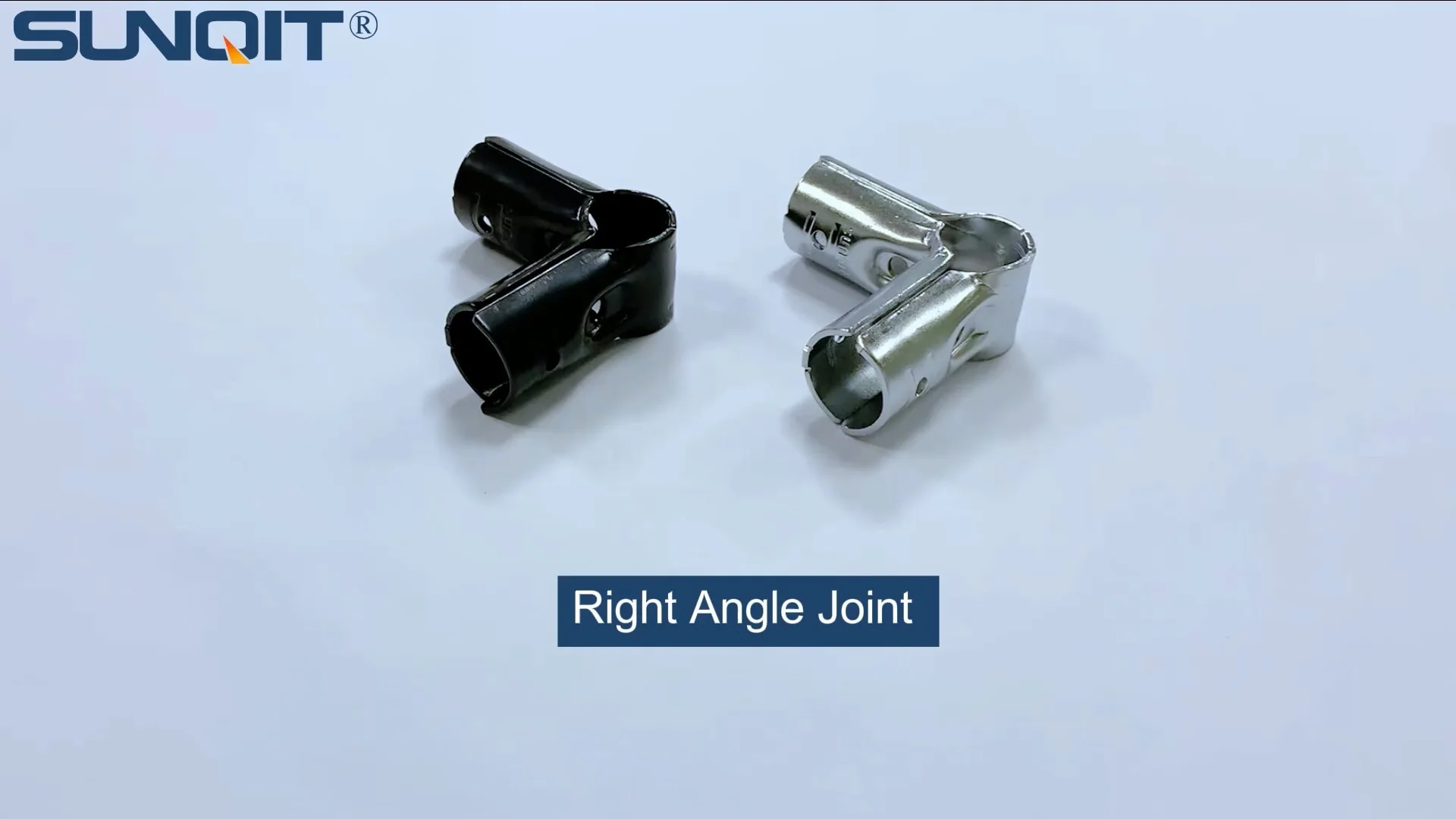
Three way lean pipe joint for 3 pcs 28MM lean pipe connection in straight angle, which used widely in workbench, flow rack, hand trolley frame connection.
In the fast-paced world of manufacturing, where efficiency and adaptability can make or break a production line, every component matters. From the largest conveyor systems to the smallest connectors, each part plays a role in keeping operations running smoothly. One such unsung hero? The lean pipe joint. These simple yet critical components are the backbone of modular workbenches, material racks, and flow systems—essential tools for any lean manufacturing setup. But not all joints are created equal. Today, we're shining a spotlight on the aluminum three way lean pipe joint and why it's quickly becoming the go-to choice for forward-thinking facilities, leaving traditional steel alternatives in the dust.
Before diving into the specifics, let's take a step back. Lean manufacturing isn't just a buzzword; it's a philosophy centered on minimizing waste, maximizing value, and fostering continuous improvement. At its core, lean systems rely on flexibility— the ability to reconfigure workspaces, adjust workflows, and scale operations as needs change. This is where lean pipe joints come into play. They're the building blocks that turn simple pipes into complex, functional structures: think workbenches that can be adjusted in minutes, material racks that grow with inventory, or flow racks that streamline product movement from station to station.
For decades, steel three way joints were the industry standard. They're strong, familiar, and have a reputation for durability. But as manufacturing demands evolve—with a greater focus on speed, sustainability, and worker safety—steel's limitations have become harder to ignore. Enter the aluminum three way lean pipe joint: a lightweight, corrosion-resistant, and infinitely adaptable alternative that's redefining what modular systems can do. Let's break down why this shift is happening, and why your facility might want to make the switch too.
1. Lightweight Design: Easing Installation and Reducing Worker Strain
Imagine trying to assemble a material rack with steel joints. Each joint feels like a brick in your hand; lifting, aligning, and securing them requires brute strength, and even a small miscalculation can lead to strained muscles or dropped components. Now, contrast that with an aluminum three way joint. Pick one up, and you'll immediately notice the difference—aluminum is about 60% lighter than steel. That might not sound like a big deal on paper, but in a factory setting, where workers assemble and reconfigure structures daily, it's a game-changer.
Let's put numbers to it. A standard steel three way joint might weigh around 450 grams, while an aluminum equivalent tips the scales at just 180 grams. Multiply that by the dozens of joints in a typical workbench or flow rack, and the total weight savings add up fast. A small material rack with 20 joints? Steel would add 9 kilograms; aluminum? Just 3.6 kilograms. That's a difference of over 5 kilograms—no small feat when you're moving the rack across the shop floor or adjusting its height.
The benefits go beyond physical ease. Lighter components mean faster installation times. A team that once took an hour to build a workbench might now finish in 40 minutes, freeing up time for other tasks. There's also a safety angle: lighter joints reduce the risk of accidents during handling. Dropping a steel joint could dent equipment or injure a foot; an aluminum joint is far less likely to cause harm. For facilities prioritizing ergonomics and worker well-being, this alone makes aluminum three way joints worth considering.
2. Corrosion Resistance: Longevity in Harsh Environments
Steel is strong, but it's no match for moisture, chemicals, or even humidity. Over time, exposure to these elements leads to rust—a problem that doesn't just look unsightly but weakens the joint's structural integrity. A rusted steel joint might seize up, making reconfiguration impossible, or worse, fail under load. In industries like food processing, pharmaceuticals, or electronics manufacturing—where cleanliness and precision are non-negotiable—rust isn't just a maintenance issue; it's a compliance risk. Even a tiny rust flake could contaminate products or damage sensitive components.
Aluminum, on the other hand, is naturally corrosion-resistant. When exposed to oxygen, it forms a thin, protective oxide layer that prevents further oxidation. Unlike steel, which requires coatings (like paint or galvanization) to fight rust—coatings that can chip or wear off over time—aluminum's defense mechanism is built-in. This makes aluminum three way joints ideal for environments where moisture is present, such as warehouses with high humidity or facilities that use water-based cleaning solutions.
Consider a case study: a mid-sized electronics manufacturer in the Midwest switched to aluminum three way joints for their ESD workstations (another key keyword, though we're focusing on joints here). Previously, their steel joints would start showing rust spots within 6–8 months, requiring frequent replacements. After switching to aluminum, the joints looked brand-new after two years, with zero signs of corrosion. The maintenance team estimated they saved over $5,000 annually on replacement parts and labor—money that could be reinvested into other areas of the business.

3. Modularity and Compatibility: Seamless Integration with Aluminum Profile Accessories
One of the biggest advantages of lean pipe systems is their modularity—the ability to mix and match pipes, joints, and accessories to create custom structures. But this flexibility hinges on compatibility. Steel joints, while functional, often limit your options. They're designed to work with steel pipes, and pairing them with other materials (like aluminum profiles) can be a headache, requiring adapters or custom modifications.
Aluminum three way joints, by contrast, are engineered for versatility—especially when paired with aluminum profile accessories. These accessories, which include everything from caster wheels to roller tracks, are designed to snap or bolt onto aluminum joints without fuss. Want to add a roller track to your material rack for smoother product flow? The aluminum joint has pre-drilled holes that align perfectly with the track's mounting brackets. Need to attach a caster wheel for mobility? The joint's threading matches standard caster stems, no adapters needed.
This compatibility extends to pipes too. Aluminum three way joints work seamlessly with both aluminum lean pipes and even some steel pipes (with the right inserts), giving you the freedom to upgrade gradually. Maybe you start by replacing steel joints with aluminum ones on a single workbench, then swap out the steel pipes for aluminum later when budget allows. There's no need for a complete overhaul—just incremental improvements that add up to a more flexible system.
Take a real-world example: a automotive parts supplier that needed to reconfigure their assembly line to accommodate a new product. With steel joints, they would have had to order custom adapters to attach aluminum roller tracks to their existing steel racks—a process that would take 2–3 weeks and cost extra. With aluminum three way joints, they simply unbolted the old steel joints, bolted on the new aluminum ones, and attached the roller tracks directly. The entire project was done in a day, with no downtime for production.
| Feature | Aluminum Three Way Lean Pipe Joint | Steel Three Way Lean Pipe Joint |
|---|---|---|
| Weight (per joint) | ~180 grams | ~450 grams |
| Corrosion Resistance | Naturally resistant (oxide layer); no coating needed | Prone to rust; requires painting/galvanization |
| Compatibility with Accessories | Seamless integration with aluminum profile accessories (caster wheels, roller tracks, etc.) | Limited; often requires adapters for non-steel accessories |
| Installation Time | Up to 30% faster (lighter weight, pre-aligned holes) | Slower (heavier, may require tools for rusted threads) |
| Long-Term Cost | Lower (less maintenance, longer lifespan) | Higher (replacement costs for rusted parts) |

4. Cost-Effectiveness: Lower Long-Term Expenses, Despite Higher Initial Price
Let's address the elephant in the room: aluminum three way joints are often more expensive upfront than steel ones. A steel joint might cost $5, while an aluminum one could be $8 or $9. At first glance, that seems like a loss for aluminum. But manufacturing isn't about short-term costs—it's about total cost of ownership (TCO), which includes maintenance, replacement, and operational efficiency over time. When you factor in TCO, aluminum starts to look like the smarter investment.
Maintenance is a big part of this. Steel joints need regular upkeep to prevent rust: sanding, repainting, or re-galvanizing every few years. In a facility with 100 steel joints, that could mean $500–$1,000 in annual maintenance costs, not to mention the labor hours spent on the work. Aluminum joints? They're virtually maintenance-free. The oxide layer we mentioned earlier does all the work, so you can install them and forget about them—no sanding, no painting, no upkeep.
Then there's replacement frequency. A steel joint in a humid environment might last 3–5 years before rust weakens it to the point of needing replacement. An aluminum joint, in the same environment, could last 10–15 years. Let's do the math: Over 10 years, you'd replace a steel joint twice (costing $5 x 2 = $10), plus maintenance ($50 over 10 years). Total: $60. An aluminum joint costs $9 upfront, no maintenance, and lasts the full 10 years. Total: $9. That's a savings of $51 per joint over a decade—more than enough to offset the higher initial price.
There's also the operational savings we touched on earlier: faster installation, fewer worker injuries, and greater flexibility. A facility that can reconfigure a production line in hours instead of days can take on more orders, respond faster to customer demands, and reduce downtime. Those are intangible costs that don't show up on a price tag but have a huge impact on the bottom line.

5. Sustainability: Aligning with Green Manufacturing Goals
Sustainability isn't just a trend anymore; it's a business imperative. More and more manufacturers are setting goals to reduce their carbon footprint, and choosing eco-friendly components is a key part of that. Here again, aluminum three way joints have the edge over steel.
Aluminum is 100% recyclable, and recycling it uses just 5% of the energy required to produce new aluminum. Steel is recyclable too, but the process is more energy-intensive, and steel recycling often results in lower-quality material (known as "downcycling"). When an aluminum joint reaches the end of its life, it can be melted down and turned into a new joint with no loss in quality—a closed-loop system that aligns with circular economy principles.
The lightweight nature of aluminum also plays into sustainability. Lighter components mean less fuel is used to transport them from the supplier to your facility. A truckload of aluminum joints can carry 2.5 times as many units as a truckload of steel joints, reducing the number of shipments needed. Over a year, that could mean dozens fewer truck trips, cutting down on carbon emissions.
Many lean system suppliers are now prioritizing aluminum products for this very reason. They're not just selling joints—they're selling a way for manufacturers to meet their sustainability goals without sacrificing performance. For example, a major automotive manufacturer in Europe recently switched to aluminum three way joints as part of its plan to become carbon-neutral by 2030. The switch reduced the company's annual carbon footprint by an estimated 12 tons, just from lower transportation and maintenance emissions.
Why Choose an Aluminum Three Way Lean Pipe Joint Today?
At the end of the day, the choice between aluminum and steel three way lean pipe joints comes down to what matters most to your facility. If you're looking for a short-term, low-cost fix, steel might still make sense. But if you value long-term savings, flexibility, worker safety, and sustainability—all critical factors in modern manufacturing—aluminum is the clear winner.
These joints aren't just a replacement for steel; they're an upgrade. They're lighter, more durable, easier to work with, and better for the planet. They're the kind of small change that has a big impact—making your production line more efficient, your workers happier, and your business more competitive in a crowded market.
So, the next time you're setting up a new workbench, upgrading a material rack, or reconfiguring your flow system, ask yourself: Are we using the best tools for the job? If the answer involves steel joints, it might be time to make the switch to aluminum three way lean pipe joints. Your team, your bottom line, and your sustainability goals will thank you.