- Company Articles
- Products and Technology
- Product knowledge
- Aluminum vs Stainless Steel Lean Pipe Clamps: Corrosion Resistance

Aluminum vs Stainless Steel Lean Pipe Clamps: Corrosion Resistance
Related Product
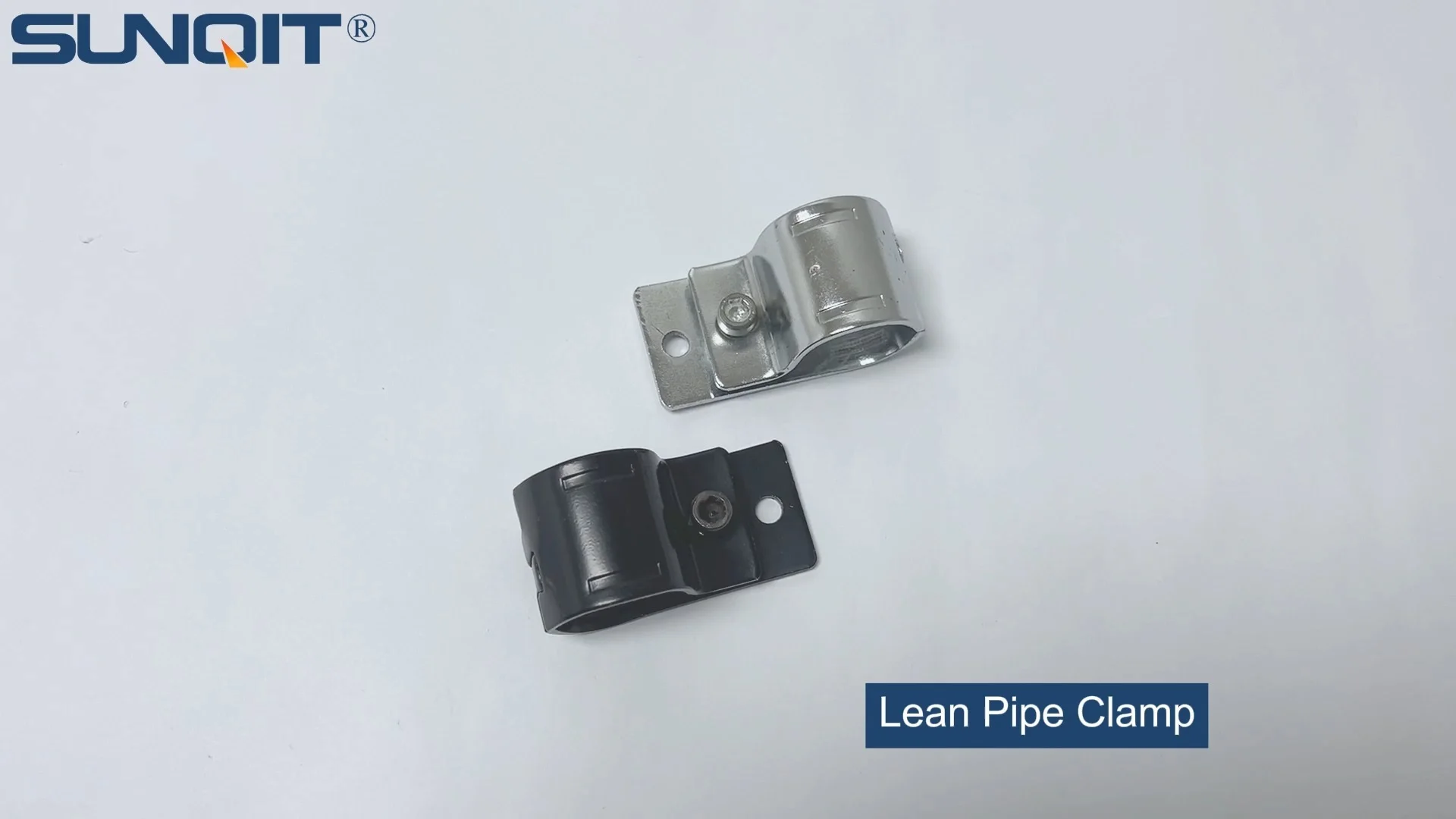
Lean Pipe Clamp
Lean pipe clamp is used for rack system hang monitor or other panel for workbenck, flowrack in production daily use.
It's 7:30 AM on a Monday at PrecisionWorks Manufacturing, and the morning shift is already hitting a snag. Juan, the line supervisor, kneels beside the assembly workstation, frowning at a rusted metal component. "Again?" he mutters, tapping the lean pipe clamp that's holding the workstation's frame together. The clamp, once silver, is now streaked with orange—corrosion that's causing the pipe to wobble, slowing down the team's ability to assemble circuit boards. "This is the third time this month," he sighs, grabbing a wrench. "We need to fix this for good."
If you've ever walked through a factory, warehouse, or workshop, you've probably seen the backbone of modern manufacturing: lean pipe systems. These modular setups—made of pipes, joints, and clamps—form workbenches, material racks, conveyors, and more. But while the pipes and frames get most of the attention, it's the small components like lean pipe clamps that keep everything stable. And when those clamps corrode? Productivity grinds to a halt.
Today, we're diving into a critical question for anyone building or maintaining lean systems: aluminum lean pipe clamps vs. stainless steel pipe series clamps—which one offers better corrosion resistance? We'll break down the science, real-world applications, and stories from the factory floor to help you choose the right clamp for your space.
What Are Lean Pipe Clamps, Anyway? The Unsung Heroes of Lean Systems
Before we compare materials, let's make sure we're on the same page: What exactly is a lean pipe clamp? Think of it as the "glue" of lean systems—though instead of sticky residue, it uses mechanical force to hold pipes, joints, and accessories together. Whether you're building a lean pipe workbench , a material rack, or a turnover trolley, clamps are the silent workhorses that keep everything rigid, secure, and adjustable.
But not all clamps are created equal. They come in different shapes, sizes, and—most importantly—materials. And when it comes to longevity, the material choice is everything. In damp environments, chemical-heavy workshops, or even just high-humidity spaces, corrosion can turn a sturdy clamp into a weak link faster than you might think.
Why Corrosion Resistance Matters (Spoiler: It's Not Just About Rust)
Corrosion isn't just an aesthetic problem. That orange rust on Juan's clamp? It's a sign of metal breaking down at a molecular level. Over time, corroded clamps lose their grip, leading to wobbly workstations, misaligned conveyor tracks, or even collapsed material racks. The result? Downtime for repairs, increased risk of workplace injuries, and wasted money on constant replacements.
Take the food and beverage industry, for example. Factories here deal with daily exposure to water, cleaning chemicals, and steam—environments where even "stainless" steel can struggle if not properly maintained. Or coastal facilities, where salt air eats away at unprotected metal like a slow-acting acid. In these settings, choosing a clamp with strong corrosion resistance isn't a luxury; it's a necessity.

Aluminum Lean Pipe Clamps: Lightweight Warriors Against Corrosion
Enter aluminum lean pipe clamps. If stainless steel is the burly bouncer of the material world, aluminum is the agile athlete—lightweight, versatile, and surprisingly tough when it comes to fighting corrosion.
Aluminum's secret weapon? A thin, invisible layer of aluminum oxide that forms naturally when the metal is exposed to air. Think of it as a self-healing shield: if the surface gets scratched, the oxide layer reforms almost immediately, preventing further damage. This makes aluminum clamps highly resistant to rust, even in humid or wet environments. "We switched to aluminum clamps in our bottle-filling area last year," says Mei, a plant manager at FreshFlow Beverages. "Before, we were replacing steel clamps every 6 months because of rust. Now? They look brand new, and we haven't had a single wobble."
Another perk? Weight. Aluminum is about 30% lighter than stainless steel, which matters when you're building modular systems that need to be reconfigured. "Our team moves workstations around weekly to adapt to new orders," Mei adds. "Lighter clamps mean less strain on the workers—no more struggling to lift heavy frames. Productivity's up, and we've had fewer back injuries, too."
But aluminum isn't perfect. It's softer than stainless steel, so it can dent or bend under extreme weight. That makes it ideal for light-to-medium duty setups—think assembly workbenches, small material racks, or mobile trolleys. In heavier industrial settings, though, you might need a sturdier option.

Stainless Steel Pipe Series Clamps: The Heavy-Duty Guardians
If aluminum is the agile athlete, the stainless steel pipe series is the heavyweight champion. Stainless steel clamps are built to withstand punishment—whether it's heavy loads, harsh chemicals, or extreme temperatures. Their secret? Chromium. Most stainless steel alloys contain at least 10.5% chromium, which reacts with oxygen to form a protective chromium oxide layer—similar to aluminum's oxide shield but even more durable.
Take 316 stainless steel, for example. Often called "marine grade," it includes molybdenum, which boosts resistance to saltwater and acidic environments. "We use 316 stainless clamps in our coastal facility," says Raj, an operations director at CoastalTech Industries, which manufactures boat parts. "Salt air is brutal—ordinary steel would rust in weeks. But these clamps? We installed them five years ago, and they still look like the day we bought them. No maintenance, no replacements—just reliable performance."
Stainless steel clamps also shine in high-heat settings, like automotive foundries or chemical processing plants, where temperatures can soar. Unlike aluminum, which softens at around 400°C, stainless steel retains its strength even under extreme heat. And when it comes to heavy loads? A stainless steel clamp can hold significantly more weight than an aluminum one of the same size—making it the go-to for industrial racks, heavy-duty conveyors, and machinery frames.
The tradeoff? Cost and weight. Stainless steel clamps are typically pricier than aluminum, and their heft can make reconfiguring systems more labor-intensive. "They're not for every situation," Raj admits. "But when you need something that'll last in tough conditions, the investment pays off."

Head-to-Head: Aluminum vs. Stainless Steel Clamps
Still torn? Let's break down the key differences with a side-by-side comparison:
| Factor | Aluminum Lean Pipe Clamps | Stainless Steel Pipe Series Clamps |
|---|---|---|
| Corrosion Resistance | Excellent (self-healing oxide layer); ideal for humid, freshwater, or mild chemical environments. | Superior (chromium oxide layer + molybdenum in 316 grade); best for saltwater, acids, and extreme chemicals. |
| Weight | Lightweight (≈2.7 g/cm³); easy to handle and reconfigure. | Heavy (≈7.9 g/cm³); sturdier but harder to move. |
| Cost | More affordable upfront; lower shipping costs due to weight. | Higher upfront cost; but longer lifespan reduces long-term expenses. |
| Strength | Good for light-to-medium loads; prone to bending under extreme weight. | Excellent for heavy loads; retains strength under pressure and high heat. |
| Best For | Assembly workbenches, mobile trolleys, dry/wet (non-chemical) environments, facilities with frequent reconfigurations. | Heavy-duty racks, coastal/marine settings, chemical plants, foundries, high-temperature areas. |
Beyond the Clamp: How Lean Pipe Joints and Accessories Play a Role
A clamp is only as good as the system it's part of. That's why pairing your clamp with compatible lean pipe joint and accessories is key. For example, aluminum clamps work best with aluminum pipes and joints—mixing them with steel components can cause galvanic corrosion (a chemical reaction between dissimilar metals). Similarly, stainless steel clamps should be paired with stainless steel pipes to avoid mismatched wear and tear.
Take caster wheels, for instance. If you're building a mobile trolley with aluminum clamps, opt for aluminum or plastic caster accessories to keep the system lightweight and corrosion-resistant. In a stainless steel setup, heavy-duty steel casters will complement the clamp's strength. "We learned that the hard way," laughs Mei from FreshFlow Beverages. "Once, we used steel casters with aluminum clamps—they reacted, and the whole trolley seized up. Now we stick to matching materials!"
Real-World Stories: When the Right Clamp Made All the Difference
Case Study 1: FreshFlow Beverages Cuts Downtime by 40%
Before switching to aluminum lean pipe clamps, FreshFlow's bottling line was plagued by rusted clamps. "Every month, we'd have to shut down for 2-3 hours to replace corroded parts," Mei recalls. "Workers were frustrated, and production targets were slipping." The team tested aluminum clamps on one workstation as a trial. Six months later, the clamps showed no signs of rust, and the workstation ran smoothly. Today, all 12 workstations use aluminum clamps, and downtime due to corrosion has dropped by 40%. "It's not just about the clamps," Mei says. "It's about the team's morale—they no longer stress about equipment breaking mid-shift."
Case Study 2: CoastalTech Industries Eliminates Annual Replacements
CoastalTech's old steel clamps were a constant headache. "We were replacing them every year—salt air would eat through them," Raj says. "The cost added up: $5,000 annually in new clamps, plus 16 hours of labor to install them." The switch to 316 stainless steel pipe series clamps was a bigger upfront expense—about $8,000 for the initial upgrade—but five years later, they've saved over $20,000 in replacements and labor. "Best decision we ever made," Raj says. "The clamps still look new, and the workers don't have to waste time fixing wobbly racks anymore."
Choosing Your Champion: A Guide for Plant Managers and Buyers
So, how do you decide between aluminum and stainless steel clamps? Start by asking these questions:
- What's your environment like? Humid? Salty? Chemical-heavy? Aluminum works well in mild wet conditions; stainless steel is better for extreme corrosion risks.
- How much weight will the clamp hold? Light loads (under 500 lbs)? Aluminum is fine. Heavy loads (over 1,000 lbs)? Go stainless steel.
- Will you reconfigure the system often? If yes, aluminum's lightweight design will save time and labor.
- What's your budget? Aluminum is cheaper upfront; stainless steel has lower long-term costs in tough environments.
When in doubt, test both. Many suppliers offer sample clamps—install one of each in your facility and see how they perform over 3-6 months. "That's what we did," Mei says. "The proof was in the performance."
Conclusion: Investing in Corrosion Resistance—More Than Just a Part, It's a Productivity Partner
Back at PrecisionWorks Manufacturing, Juan stands up from the workstation, wiping his hands. This time, he's installing a new aluminum lean pipe clamp—shiny, lightweight, and designed to resist the humidity of the electronics. "Let's see how this holds up," he says, grinning as the team tests the workstation. It's stable, secure, and—for once—rust-free.
Lean pipe clamps might seem like small parts, but they're the unsung heroes of your facility's productivity. Choosing between aluminum and stainless steel isn't just about materials—it's about investing in reliability, safety, and peace of mind. Whether you opt for the agility of aluminum or the brute strength of stainless steel, the right clamp will keep your operations running smoothly, your workers happy, and your bottom line healthy.
So, the next time you walk through your facility, take a closer look at those clamps. Are they holding strong, or are they quietly costing you time and money? The answer might just be the key to unlocking your team's full potential.