- Company Articles
- Products and Technology
- Product knowledge
- Aluminum vs. Steel Four Way Straight Lean Pipe Joint: Pros, Cons & Selection Tips

Aluminum vs. Steel Four Way Straight Lean Pipe Joint: Pros, Cons & Selection Tips
Related Product
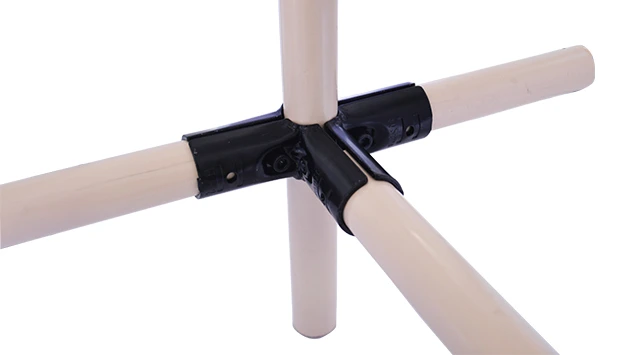
Four Way Straight Lean Pipe Joint
Four way lean pipe joint for 4 pcs 28MM lean pipe connection in straight angle, which used widely in workbench, flow rack, hand trolley frame connection.
If you've ever walked through a manufacturing plant, warehouse, or assembly line, you've probably seen them—those modular structures holding tools, moving parts, or organizing materials. From workbenches where technicians assemble circuit boards to flow racks that keep inventory rolling smoothly, these setups are the backbone of lean manufacturing. And at the heart of nearly every one of these systems? The humble lean pipe joint. Today, we're zeroing in on a critical player in this space: the four way straight lean pipe joint. But not just any joint—we're diving into the age-old debate of aluminum vs. steel. Which one should you choose for your lean system? Let's break it down.
First, let's get clear on what a four way straight lean pipe joint actually does. Think of it as the "connector" that brings lean pipe systems to life. It's the piece that lets you attach four pipes in a straight line (hence "four way straight"), creating sturdy frameworks for everything from simple workbenches to complex conveyor systems. Without a reliable joint, your lean system is just a pile of pipes. So whether you're building a lightweight workstation for small parts or a heavy-duty material rack for pallets, the material of your joint—aluminum or steel—will shape how well that system performs, lasts, and adapts over time.
Aluminum Four Way Straight Lean Pipe Joints: Lightweight, Agile, and Modern
Aluminum has become a favorite in lean manufacturing circles, and for good reason. Let's start with the basics: aluminum is light. Pick up an aluminum four way straight joint, and you'll notice the difference immediately compared to its steel counterpart. This lightness isn't just about ease of carrying—it translates to faster, easier assembly. Imagine your team needing to reconfigure a workbench layout to accommodate a new product line. With aluminum joints, one person can loosen the connections, adjust the pipes, and tighten everything back up in minutes, no heavy lifting required. That's a game-changer for teams that value flexibility and hate downtime.
But aluminum isn't just lightweight—it's also corrosion-resistant. Unlike steel, which can rust if not coated, aluminum naturally forms a protective oxide layer that shields it from moisture, chemicals, and even humidity. This makes it a top pick for environments where spills or dampness are common, like food processing facilities or cleanrooms in electronics manufacturing. Ever walked into an ESD (Electrostatic Discharge) workstation in a tech plant? Chances are, the frame is built with aluminum lean pipe and aluminum joints. Why? Aluminum conducts electricity, which helps dissipate static charges—critical for protecting sensitive components like microchips from damage.
Aesthetically, aluminum joints also have an edge. Their smooth, silver finish gives lean systems a clean, modern look that many manufacturers prefer, especially in customer-facing areas or facilities where visual organization matters. And because aluminum pairs seamlessly with aluminum profile and aluminum lean pipe, you can create a cohesive system where pipes and joints blend together, reducing visual clutter.
Of course, no material is perfect. Aluminum joints do have their limitations. The biggest one? Load capacity. While they're more than strong enough for light to medium-duty tasks—think holding bins of screws, small tools, or a single-level workbench—they struggle with heavy loads. If you're building a flow rack that needs to support 200kg per shelf or a turnover trolley hauling stacks of metal parts, aluminum might bend or warp over time. They're also pricier upfront. Aluminum is a more expensive material than steel, so if you're working with a tight budget and don't need the extra perks of aluminum, this could be a sticking point.
Steel Four Way Straight Lean Pipe Joints: The Heavy-Duty Workhorse
If aluminum is the "agile sprinter" of lean pipe joints, steel is the "marathon runner"—built for strength, durability, and long-haul performance. Steel joints are the go-to for teams that need to move heavy stuff, day in and day out. Let's talk numbers: a standard steel four way straight joint can often handle 2–3 times the load of an aluminum joint of the same size. That's why you'll find steel joints in warehouses moving pallets, on factory floors supporting heavy machinery, or in distribution centers where flow racks are stacked with bulk inventory. When you need a joint that won't budge under pressure, steel delivers.
Cost is another area where steel shines. Steel is widely available and cheaper to produce than aluminum, making steel joints a budget-friendly option for large-scale projects. If you're outfitting an entire production line with lean systems, those savings can add up fast. And while steel is heavier, that weight can be an advantage in stability. A steel-based workbench or material rack is less likely to shift or wobble, even when loaded with unevenly distributed weight—something that matters when precision is key, like in automotive assembly.
But steel isn't without trade-offs. The first is rust. Unless coated with zinc (galvanized) or powder-coated, steel joints will corrode over time, especially in humid or wet environments. That means extra maintenance: checking for rust spots, repainting, or replacing corroded joints. Even with coatings, steel is heavier to work with. Assembling a steel-based system often requires two people (or a forklift for large setups), and reconfiguring it? Forget doing that solo. The weight makes adjustments slow and labor-intensive, which can be a hassle if your team needs to rearrange layouts frequently.
Aesthetically, steel joints have a more industrial look—think matte black or silver with visible welds. This isn't a downside for everyone (many warehouses embrace the rugged vibe), but if you're aiming for a sleek, modern workspace, steel might feel out of place next to aluminum profile or glass partitions.

Side-by-Side: The Ultimate Comparison
Still on the fence? Let's put aluminum and steel four way straight lean pipe joints head-to-head with a quick comparison. This table breaks down the key factors you'll want to consider:
| Factor | Aluminum Four Way Straight Joint | Steel Four Way Straight Joint |
|---|---|---|
| Material | Aluminum alloy (often 6063 or similar) | Mild steel (sometimes galvanized or powder-coated) |
| Weight | Light (typically 100–150g per joint) | Heavy (250–350g per joint) |
| Load Capacity | Medium (up to 150kg per joint in ideal conditions) | High (200–400kg per joint, depending on coating) |
| Corrosion Resistance | Excellent (natural oxide layer prevents rust) | Fair (prone to rust without coating; galvanized/powder-coated versions better) |
| Cost | Higher upfront (30–50% more than steel) | Lower upfront (budget-friendly for large projects) |
| Assembly Ease | Easy (lightweight, can be tightened/loosened by hand or with basic tools) | Challenging (heavy, often requires two people and wrenches for tight connections) |
| Compatibility | Best with aluminum lean pipe and aluminum profile | Best with steel pipes or heavy-duty lean tube |
| Typical Uses | Workbenches, ESD workstations, light-duty flow racks, small turnover trolleys | Heavy-duty material racks, conveyors, warehouse flow racks, industrial workbenches |

How to Choose: 5 Key Selection Tips
Now that you know the pros and cons, how do you decide which joint is right for your lean system? Here are five questions to ask yourself before making a purchase:
1. What's your load limit? Start here—this is the most critical factor. If your system needs to support more than 150kg per joint (e.g., stacking heavy boxes or holding machinery), steel is non-negotiable. For lighter loads (small parts, tools, or single-level workbenches), aluminum will work just fine and save you the hassle of heavy lifting.
2. Where will the system live? Moisture, chemicals, or humidity? Aluminum's corrosion resistance makes it the safer bet. A food processing plant with frequent washdowns? Aluminum. A dry warehouse with climate control? Steel (especially galvanized) could last decades without issues. And if you need ESD protection (like in electronics manufacturing), aluminum is the clear winner—its conductivity dissipates static, whereas steel can sometimes trap charges without proper grounding.
3. How often will you reconfigure? If your team rearranges workbenches or flow racks monthly (or even weekly) to adapt to new products, aluminum's lightweight design and easy assembly will save you hours of labor. Steel, on the other hand, is better for "set it and forget it" systems—build it once and leave it be for years.
4. What's your budget? Aluminum costs more upfront, but if you factor in labor savings (faster assembly, easier reconfigurations) and lower maintenance (no rust checks), it might pay off long-term. Steel is cheaper to buy, but don't forget to add costs for coatings (if needed) and extra labor for setup.
5. What pipes are you already using? Compatibility matters! If your facility already has aluminum lean pipe or aluminum profile, stick with aluminum joints—mixing metals can cause galvanic corrosion (a chemical reaction that eats away at materials). If you have steel pipes, steel joints will create a stronger, more unified system.
Real-World Examples: When to Pick Aluminum vs. Steel
Let's ground this in real life. Here are two scenarios where the choice between aluminum and steel made all the difference:
Example 1: The Electronics Workbench
A mid-sized electronics manufacturer needed to build 20 workbenches for their assembly line. Each bench would hold small circuit boards, soldering tools, and bins of microchips—total load per bench: around 80kg. They also needed to reconfigure the benches quarterly to accommodate new product designs. Oh, and ESD protection was a must to avoid frying sensitive components. Their choice? Aluminum four way straight joints paired with aluminum lean pipe. Why? The aluminum joints were lightweight enough for one technician to assemble alone, easy to loosen and adjust during reconfigurations, and their conductivity kept static at bay. Six months later, the team reports zero rust, faster setup times, and no ESD-related product failures.
Example 2: The Warehouse Flow Rack
A large distribution center needed flow racks to move pallets of clothing from receiving to shipping. Each shelf would hold 300kg of boxes, and the racks needed to span 10 meters. They also planned to keep the same layout for at least five years. Their pick? Steel four way straight joints (galvanized to prevent rust) with steel pipes. The steel joints handled the heavy loads without bending, and the galvanized coating ensured they'd stand up to the warehouse's occasional humidity spikes. Three years in, the racks still look brand-new, and the team has never had to replace a joint—proof that steel's durability pays off for long-term, heavy-duty use.
Wrapping It Up: There's No "Best"—Only "Best for You"
At the end of the day, choosing between aluminum and steel four way straight lean pipe joints isn't about which material is "better." It's about which one aligns with your unique needs. Aluminum shines in lightweight, flexible, and corrosion-prone environments—think workbenches, ESD stations, or facilities with frequent layout changes. Steel dominates in heavy-duty, long-term setups where load capacity and cost matter most—like flow racks, industrial material racks, or warehouses with stable layouts.
And remember: your lean system is only as strong as its weakest link. A high-quality joint—whether aluminum or steel—will outlast a cheap one, saving you money on replacements and downtime. So take the time to assess your load, environment, and budget, and don't hesitate to mix and match if needed (though we recommend sticking to one material for compatibility). After all, lean manufacturing is about efficiency—and the right joint is the first step toward building a system that works for you, not against you.
So, what'll it be? Aluminum's agility or steel's strength? Whatever you choose, here's to building a lean system that keeps your operations running smoother, faster, and smarter.