- Company Articles
- Products and Technology
- Product knowledge
- Aluminum Workbench A: A Key Component of Flexible Workstations

Aluminum Workbench A: A Key Component of Flexible Workstations
Related Product
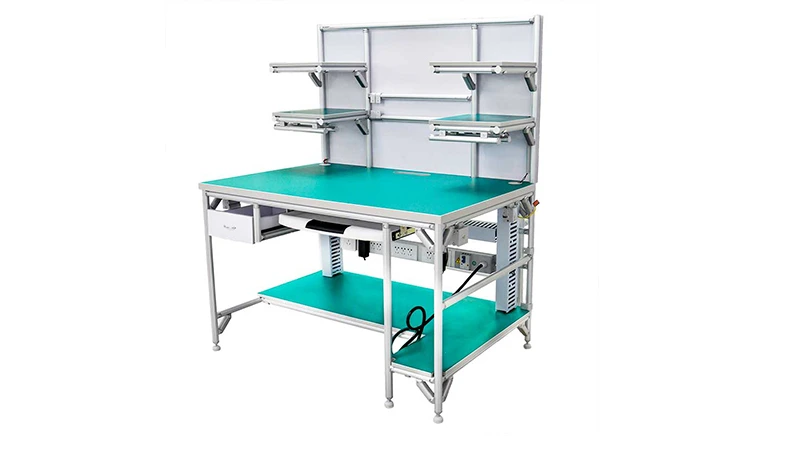
Aluminum Workbench A
Aluminum tube workbench is more flexible and durable, compared with traditional PE/ABS coated steel tube. It is easy to assemble, anti corrosion, rust protection, and recycle use after disassemble.
In the fast-paced world of modern manufacturing, warehousing, and assembly, the workstation isn't just a table—it's the heartbeat of productivity. It's where ideas turn into products, where teams collaborate, and where efficiency either thrives or falters. As industries evolve, so do the demands on these workspaces: they need to be adaptable, durable, and tailored to the unique rhythms of each operation. Enter Aluminum Workbench A—a solution that's redefining what a workstation can be. More than just a piece of equipment, it's a cornerstone of flexible, lean-driven workflows, designed to grow, change, and support your team's best work. Let's dive into why Aluminum Workbench A has become indispensable for businesses aiming to stay agile in an ever-shifting market.
What is Aluminum Workbench A? An Overview
At first glance, Aluminum Workbench A might look like a simple, sturdy table—but that's where its simplicity ends. Designed with the principles of flexibility and functionality in mind, this workstation is a modular system built to adapt to your needs, not the other way around. Unlike traditional workbenches that come in fixed sizes and configurations, Aluminum Workbench A is a blank canvas, crafted from high-quality aluminum extrusion profile and paired with a range of accessories to customize it for almost any task.
Let's start with the basics: Aluminum Workbench A is often described as a "single deck-without caster" model, meaning it features a flat, durable work surface (the "single deck") and is designed for stationary use by default—though mobility can be added later with accessories if needed. This foundational design makes it ideal for settings where stability is key, such as assembly lines, quality control stations, or labs, where precision work demands a steady base. But don't let the "without caster" label fool you: its modularity means it can evolve as your workflow changes, whether that means adding shelves, tool holders, or even converting it into a mobile unit with the right attachments.
What truly sets Aluminum Workbench A apart, though, is its construction. At its core is aluminum profile—a material chosen for its unbeatable combination of strength, lightness, and corrosion resistance. This isn't just any aluminum, either: it's aluminum extrusion profile, a manufacturing process that shapes aluminum into precise, consistent cross-sections, ensuring every piece of the workbench fits together seamlessly. This attention to detail isn't just about aesthetics; it's about reliability. When you're assembling delicate electronics or handling heavy components, you need a workstation you can trust won't warp, bend, or degrade over time. Aluminum Workbench A delivers that peace of mind.
The Heart of Durability: Aluminum Profile in Workbench Construction
To understand why Aluminum Workbench A is so durable, we need to talk about the star of the show: aluminum profile. Aluminum extrusion profile is created by forcing heated aluminum through a die, which shapes it into long, uniform pieces with specific cross-sectional designs—think T-slots, grooves, or channels. These profiles aren't just strong; they're smartly engineered to balance weight and rigidity, making them perfect for a workstation that needs to handle daily wear and tear without weighing your team down.
Let's break down the benefits of aluminum profile for workbench construction: First, it's lightweight. Unlike steel, which can make a workstation cumbersome to move or reconfigure, aluminum is easy to handle, even when building larger setups. This lightness doesn't come at the cost of strength, though. Aluminum has a high strength-to-weight ratio, meaning Aluminum Workbench A can support heavy tools, equipment, or materials—often up to several hundred pounds—without flexing or compromising stability. Second, aluminum is naturally corrosion-resistant. In environments where spills, humidity, or chemicals are common (like in automotive or pharmaceutical settings), this resistance to rust and degradation ensures the workbench will look and perform like new for years, reducing the need for frequent replacements. Third, aluminum extrusion profile is inherently customizable. The T-slots and grooves running along the profiles mean you can easily attach accessories—shelves, hooks, bins, or even lighting—without drilling holes or welding. This "build-as-you-go" flexibility is a game-changer for teams that need to adjust their workspace on the fly.
Compare this to traditional workbench materials, and the advantages become clear. Wooden workbenches, while affordable, are prone to warping, staining, and harboring bacteria—hardly ideal for clean or high-precision environments. Steel workbenches, though strong, are heavy, prone to rust if not properly coated, and difficult to modify without specialized tools. Aluminum Workbench A, with its aluminum profile core, avoids all these pitfalls. It's easy to clean (just wipe it down with a damp cloth), simple to customize, and built to last. For businesses looking to invest in equipment that grows with them, aluminum profile isn't just a material choice—it's a strategic one.

Flexibility Redefined: How Aluminum Workbench A Supports Lean Systems
In today's competitive market, lean systems have become the gold standard for efficient, waste-free operations. Lean principles—focused on eliminating waste, optimizing flow, and continuous improvement—require tools and workspaces that can adapt to changing needs quickly. Aluminum Workbench A isn't just compatible with lean systems; it's designed to be a catalyst for them. Here's how:
Eliminating Waste Through Modularity
One of the biggest wastes in manufacturing is "motion waste"—the time and energy workers spend moving around to access tools, materials, or equipment. Aluminum Workbench A combats this by putting everything within arm's reach, thanks to its customizable layout. Need a shelf for frequently used tools? Attach it to the side of the aluminum profile frame. Want a bin for scrap materials? Slide a hook into the T-slot and hang it under the tabletop. By tailoring the workbench to the specific tasks at hand, you reduce unnecessary movement, letting your team focus on what matters: producing quality work.
Another form of waste lean systems target is "waiting waste"—delays caused by inefficient setup or reconfiguration. Traditional workbenches often require hours (or even days) to modify, whether that means adding a shelf or adjusting the height. With Aluminum Workbench A, reconfiguration takes minutes. Its aluminum profile frame uses simple, tool-free connectors and aluminum profile accessories, so you can add, remove, or rearrange components without stopping production. Imagine a production line switching from assembling Product A to Product B: with a traditional workbench, this might involve swapping out the entire station or bringing in new furniture. With Aluminum Workbench A, you can adjust the height, add a specialized tool holder, or attach a flow rack extension in under an hour, keeping your team productive and on schedule.
Supporting Continuous Improvement
Lean systems thrive on continuous improvement—small, incremental changes that boost efficiency over time. Aluminum Workbench A is a perfect partner for this mindset because it's not a "set it and forget it" solution. As your team identifies new ways to work better, the workbench can evolve with them. Maybe after a few months, you realize a second shelf would reduce clutter: add it. Or perhaps you want to integrate an ESD mat to protect sensitive electronics: the T-slots in the aluminum profile make it easy to secure. This adaptability turns the workbench into a living part of your lean journey, growing smarter as your processes do.

Key Features of Aluminum Workbench A: Beyond the Basics
Aluminum Workbench A isn't just about flexibility and lean support—it's packed with features that make day-to-day work easier, safer, and more efficient. Let's take a closer look at what makes this workstation stand out:
Adjustable Height (Yes, Even Without Casters)
While Aluminum Workbench A is "without caster" by default, many models offer adjustable height legs, allowing you to set the tabletop at the perfect level for your team. This isn't just about comfort; it's about ergonomics. A workbench that's too low forces workers to hunch, leading to back pain and fatigue. One that's too high strains shoulders and arms. Aluminum Workbench A's adjustable legs let you tailor the height to individual team members (typically between 30 and 40 inches), reducing the risk of injury and keeping productivity high throughout the day.
Customizable Tabletops for Every Task
The "single deck" of Aluminum Workbench A is far from one-size-fits-all. Depending on your needs, you can choose from a range of tabletop materials, including aluminum honeycomb panels (lightweight and strong), ESD-safe surfaces (for electronics manufacturing), or even wooden tops (for a warmer, more traditional feel). Each option is designed to meet specific industry standards, whether that means chemical resistance for labs or static control for semiconductor assembly. And because the tabletop is attached to the aluminum profile frame with simple fasteners, you can swap it out if your needs change—no need to buy a whole new workbench.
Built-In Cable Management
In today's tech-driven workplaces, cords and cables are everywhere—power tools, laptops, sensors, you name it. A messy tangle of wires isn't just unsightly; it's a safety hazard and a productivity killer (ever spent 10 minutes untangling a cord?). Aluminum Workbench A addresses this with integrated cable management solutions. The T-slots in the aluminum profile frame can house cable trays or clips, keeping wires organized and out of the way. Some models even feature built-in channels in the tabletop, letting cords run from the floor to your tools without cluttering the workspace. This attention to detail might seem small, but it adds up to a cleaner, safer, and more efficient station.
Ergonomics and Worker Wellbeing: A Closer Look
In any workplace, the health and comfort of your team should be a top priority. Studies show that ergonomic workstations reduce absenteeism, boost morale, and increase productivity by up to 15%. Aluminum Workbench A is designed with this in mind, going beyond basic adjustability to create a space that supports workers through long shifts.
Let's start with height adjustability again—but this time, with a focus on how it impacts daily work. The average worker spends 6-8 hours a day at their workstation; even a small height mismatch can lead to chronic back, neck, or wrist pain over time. Aluminum Workbench A's adjustable legs let you set the tabletop at elbow height, which is the sweet spot for most tasks: when your elbows are bent at 90 degrees, your shoulders relax, and your wrists stay in a neutral position, reducing strain. For tasks that require standing, this adjustability is even more critical—no more stooping or reaching to get the job done.
Another ergonomic feature is the tabletop edge. Aluminum Workbench A often comes with rounded or beveled edges, which prevent sharp corners from digging into forearms during long tasks (think: assembling small parts or typing on a keyboard). Some models also offer anti-fatigue mats that can be placed under the workstation, reducing leg and foot fatigue for standing workers. These small touches might not seem revolutionary, but they make a big difference in how your team feels at the end of the day—and a team that feels good is a team that works better.
Ergonomics isn't just about physical comfort, either; it's about mental clarity. A cluttered, disorganized workstation can increase stress and distract from the task at hand. Aluminum Workbench A's customizable layout—with shelves, bins, and tool holders—lets workers keep only what they need within reach, reducing visual clutter and mental overload. When everything has a place, your team can focus on the work, not on searching for tools or materials.
Integration with Material Handling: Flow Racks and Seamless Workflow
A workstation doesn't exist in a vacuum—it's part of a larger ecosystem of tools, materials, and processes. For workflows to be truly efficient, materials need to move smoothly from storage to the workstation, and finished products need to flow out just as easily. This is where flow racks come in—and Aluminum Workbench A is designed to integrate with them seamlessly, creating a workflow that feels almost effortless.
Flow racks are gravity-fed systems that use rollers or wheels to move materials from the back to the front, ensuring the first item in is the first item out (FIFO). They're ideal for storing components, parts, or finished goods, and when paired with Aluminum Workbench A, they eliminate the need for workers to walk to a storage area to retrieve materials. Imagine an electronics assembly line: components are stored in a flow rack positioned directly next to the workbench. As the operator uses a part, the next one rolls forward, ready to be picked up. Finished assemblies can then be placed on another flow rack extension attached to the opposite side of the workbench, sending them to the next station without the operator taking a single step. This integration reduces motion waste, speeds up production, and keeps the workspace organized.
Aluminum Workbench A's compatibility with flow racks is thanks to its aluminum profile frame. The T-slots and standardized connectors mean you can attach flow rack extensions directly to the workbench, creating a continuous surface for materials to flow. Whether you need a small, 2-foot extension for lightweight parts or a larger setup for heavy components, the modular design makes it easy to scale. Some suppliers even offer specialized aluminum guide rails that bridge the gap between the workbench and the flow rack, ensuring materials glide smoothly without getting stuck. This level of integration isn't just about convenience; it's about creating a workflow where every step feels intentional, reducing delays and keeping your team in the zone.
Applications Across Industries: Where Aluminum Workbench A Shines
Aluminum Workbench A isn't a one-trick pony. Its versatility makes it a valuable asset in a wide range of industries, each with unique needs and challenges. Let's explore how it's making an impact across different sectors:
Electronics Manufacturing
In electronics manufacturing, precision is everything. Whether you're assembling circuit boards, testing semiconductors, or packaging devices, you need a workstation that's stable, clean, and ESD-safe (to prevent static electricity from damaging sensitive components). Aluminum Workbench A checks all these boxes. Its aluminum profile frame is non-conductive, and it can be paired with ESD mats or grounding accessories to protect delicate parts. The customizable layout also shines here: you can add specialized tool holders for tweezers, soldering irons, or magnifying glasses, keeping everything within arm's reach for intricate work.
Automotive Assembly
Automotive assembly lines are fast-paced, high-stakes environments where durability and flexibility are key. Workers handle heavy tools, greasy parts, and tight deadlines—so their workstations need to keep up. Aluminum Workbench A's robust aluminum profile frame can withstand the daily abuse of wrenches, impact drivers, and dropped components, while its corrosion resistance stands up to oils and chemicals. Its modular design also allows for quick changes: one day, it might be a station for assembling door panels; the next, it could be reconfigured with a flow rack extension to handle engine parts. And because it's lightweight, it's easy to move (with casters added) when the assembly line layout changes.
Medical Device Production
In medical device manufacturing, cleanliness and compliance are non-negotiable. Workstations must be easy to sanitize, resistant to harsh cleaning chemicals, and designed to prevent contamination. Aluminum Workbench A excels here: aluminum is non-porous, so it doesn't harbor bacteria, and it can be wiped down with disinfectants without damage. Its smooth, seamless surfaces leave no crevices for dirt or debris to hide, making it ideal for sterile environments. Plus, its modularity allows for the addition of HEPA filters, UV lights, or specialized storage for cleanroom tools, ensuring compliance with strict industry regulations.
Warehousing and Logistics
In warehouses, workstations are often used for picking, packing, or quality control—tasks that require quick access to tools, labels, and shipping materials. Aluminum Workbench A's customizable shelves and bins keep essentials organized, while its integration with flow racks ensures packages and parts move efficiently. Its durability also makes it a great fit for high-traffic areas: even in busy warehouses, where forklifts or pallet jacks might bump into it, the aluminum profile frame holds up, reducing the need for repairs or replacements.
Comparing Aluminum Workbench A to Traditional Workstations
To truly appreciate Aluminum Workbench A, it helps to compare it to the traditional workstations that have dominated factories and labs for decades. Let's break down how it stacks up against wooden, steel, and plastic alternatives:
| Feature | Aluminum Workbench A | Wooden Workbench | Steel Workbench | Plastic Workbench |
|---|---|---|---|---|
| Durability | High: Corrosion-resistant, scratch-resistant, and warp-free | Low: Prone to warping, staining, and damage from moisture | High: Strong but prone to rust without proper coating | Low: Can crack or bend under heavy loads |
| Weight | Lightweight (easy to move with casters) | Heavy (difficult to reconfigure) | Very heavy (almost impossible to move without equipment) | Lightweight (but not strong enough for heavy use) |
| Customization | High: Tool-free reconfiguration with aluminum profile accessories | Low: Requires drilling or sawing to modify | Medium: Possible but requires tools and expertise | Low: Limited to pre-drilled holes or adhesive attachments |
| Maintenance | Low: Wipe clean with soap and water; no painting or sealing needed | High: Requires sanding, staining, or painting to maintain | Medium: Needs regular coating to prevent rust | Medium: Can scratch easily; hard to repair |
| Cost Over Time | High initial cost, but low long-term costs (durable, no replacements needed) | Low initial cost, but high long-term costs (frequent replacements) | High initial cost, medium long-term costs (repairs, coating) | Low initial cost, high long-term costs (easily damaged) |
As the table shows, Aluminum Workbench A isn't just better in one or two areas—it's a well-rounded solution that excels in durability, flexibility, and long-term value. While wooden or plastic workbenches might seem cheaper upfront, their high maintenance and replacement costs add up over time. Steel workbenches are strong but lack the flexibility and corrosion resistance of aluminum. For businesses looking to invest in a workstation that will grow with them, Aluminum Workbench A is the clear choice.
Accessories That Enhance Functionality: From Casters to Tool Holders
One of the best things about Aluminum Workbench A is that it's a platform for customization—and that platform is made even more powerful by a wide range of accessories. These add-ons let you tailor the workbench to your exact needs, turning a basic station into a specialized tool for your unique workflow. Let's explore some of the most popular accessories:
Casters and Mobility Kits
While Aluminum Workbench A is designed as a stationary workstation, you can easily add mobility with caster accessories. Heavy-duty swivel casters (with or without brakes) can be attached to the aluminum profile legs, turning the workbench into a mobile unit that can be moved around the shop floor as needed. This is perfect for tasks that require the workstation to be near different machines or for cleaning and reorganizing the workspace.
Shelves and Storage
No workstation is complete without storage, and Aluminum Workbench A has you covered. Adjustable shelves, bin rails, and drawer units can be attached to the aluminum profile frame, giving you space to store tools, materials, or documents. Some shelves even feature dividers or clear bins, making it easy to organize small parts or supplies. For taller items, you can add overhead racks that hang from the frame, keeping the tabletop clear while still keeping essentials within reach.
Tool Holders and Hooks
Tools scattered across the tabletop are a productivity killer. Aluminum Workbench A offers a range of tool holders, from magnetic strips for screwdrivers to pegboards for power tools. These holders attach directly to the T-slots in the aluminum profile frame, so you can position them exactly where you need them—no drilling required. Some models even include specialized holders for soldering irons, tape dispensers, or scissors, ensuring every tool has a home.
Flow Rack Extensions
As we discussed earlier, flow racks are a great way to move materials efficiently. Flow rack extensions for Aluminum Workbench A attach to the side of the frame, creating a gravity-fed system for parts or finished products. These extensions come in various lengths and can be paired with roller track or ball transfer units, depending on the type of materials you're handling (heavy vs. lightweight, fragile vs. durable).
ESD Mats and Grounding Kits
For electronics or lab work, ESD safety is critical. ESD mats can be placed on the tabletop, and grounding kits can be attached to the aluminum profile frame, ensuring static electricity is safely discharged. These accessories are easy to install and compatible with most Aluminum Workbench A models, making it simple to create a compliant workspace.
Sustainability: Aluminum's Eco-Friendly Edge
In today's world, sustainability isn't just a buzzword—it's a business imperative. Consumers, regulators, and employees all expect companies to reduce their environmental impact, and choosing eco-friendly equipment is a great way to start. Aluminum Workbench A is a sustainable choice, thanks to the properties of aluminum and its manufacturing process.
First, aluminum is 100% recyclable. Unlike plastic, which degrades over time, aluminum can be melted down and reused indefinitely without losing quality. This means that when your Aluminum Workbench A eventually reaches the end of its life (which could be decades from now), its aluminum profile can be recycled into new products, reducing waste and conserving resources. In fact, recycling aluminum uses 95% less energy than producing new aluminum from raw materials—so choosing recycled aluminum profile (which many suppliers offer) further reduces your carbon footprint.
Second, aluminum's durability means less frequent replacement. A well-maintained Aluminum Workbench A can last 15-20 years, whereas wooden or plastic workbenches might need to be replaced every 3-5 years. Fewer replacements mean less waste, fewer resources used in manufacturing, and lower shipping emissions (since you're not constantly ordering new furniture). This longevity also makes aluminum a cost-effective choice over time, even if the initial price is higher than less durable materials.
Finally, aluminum extrusion profile is produced with energy-efficient processes. Modern extrusion facilities use renewable energy sources and closed-loop water systems, minimizing their environmental impact. When you choose Aluminum Workbench A, you're supporting a supply chain that prioritizes sustainability, from raw material extraction to manufacturing.
Conclusion: The Future of Flexible Workstations
In a world where change is the only constant, businesses need tools that can keep up. Aluminum Workbench A isn't just a workstation—it's a flexible, durable, and sustainable solution that grows with your team, supports lean systems, and prioritizes worker wellbeing. Its aluminum profile construction ensures it can handle daily wear and tear, while its modular design lets you adapt it to new tasks, industries, or workflows.
Whether you're assembling electronics in a cleanroom, packing orders in a warehouse, or conducting research in a lab, Aluminum Workbench A delivers the reliability, flexibility, and efficiency you need to stay competitive. It's more than just a piece of equipment; it's an investment in your team's productivity, your company's sustainability, and your ability to thrive in an ever-evolving market.
So, if you're looking to upgrade your workstations, don't settle for rigid, short-lived solutions. Choose Aluminum Workbench A—a key component of the flexible workstations that will define the future of manufacturing, warehousing, and beyond. Your team, your bottom line, and your workflow will thank you.